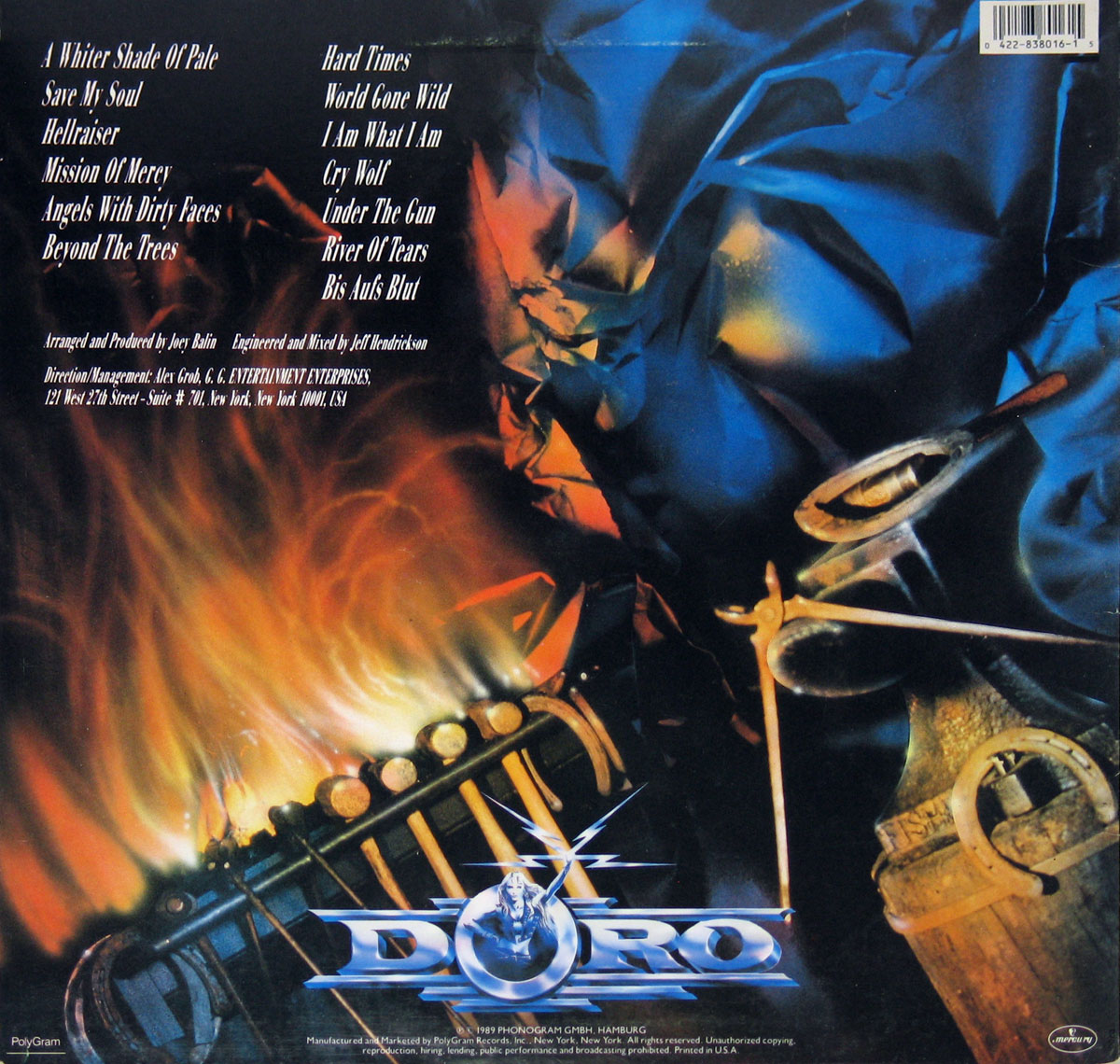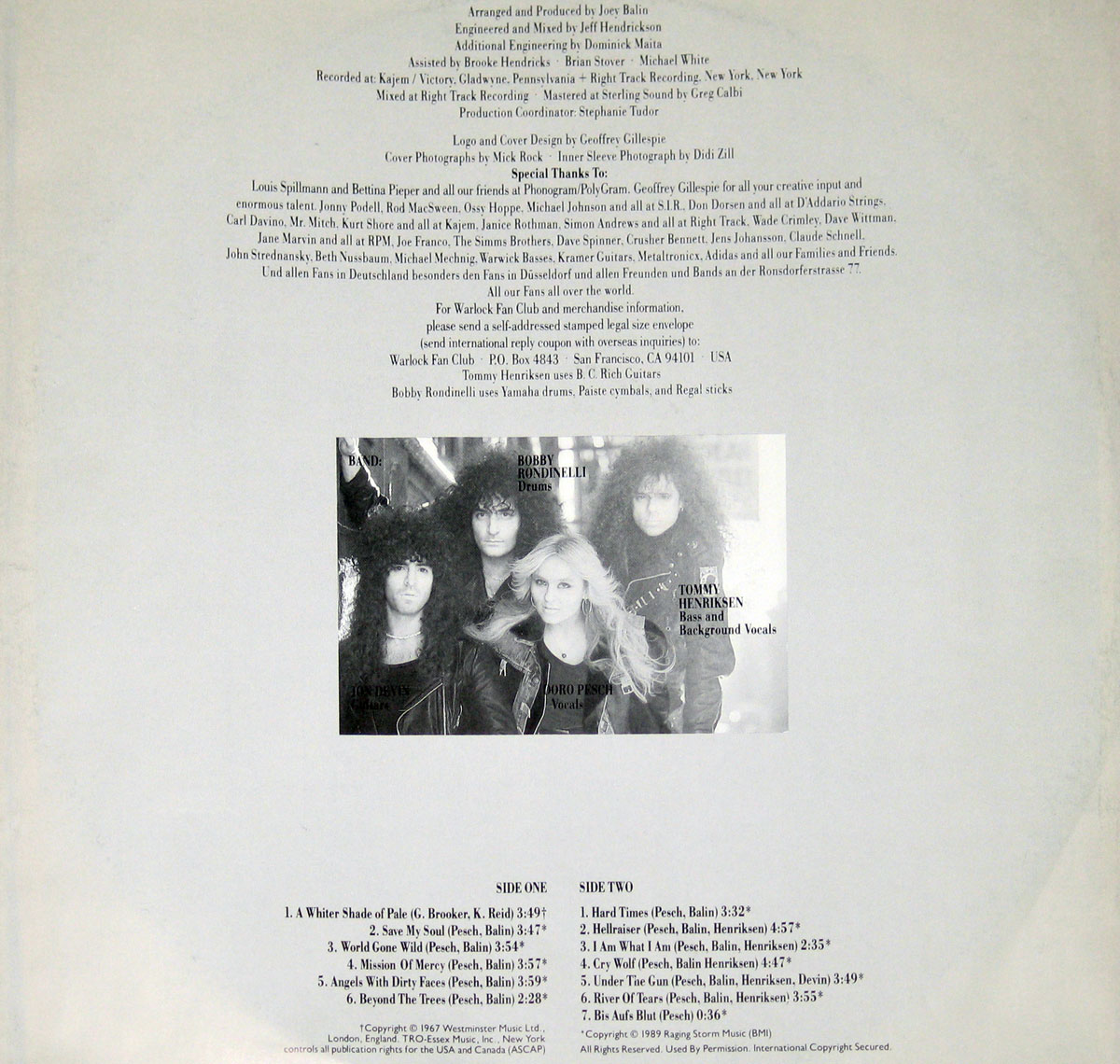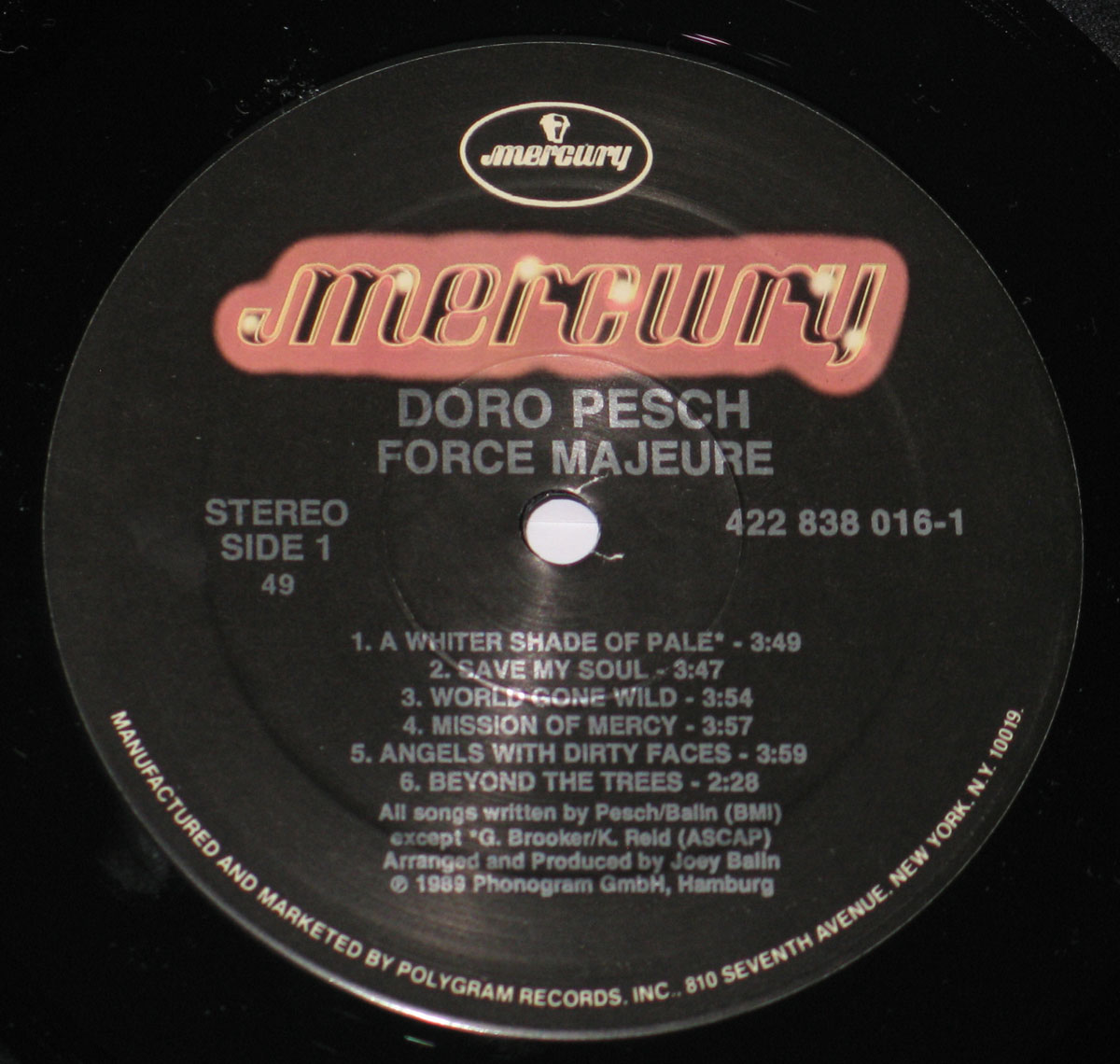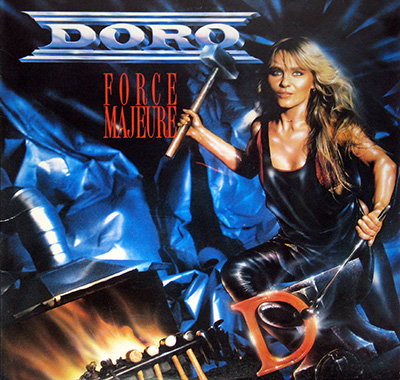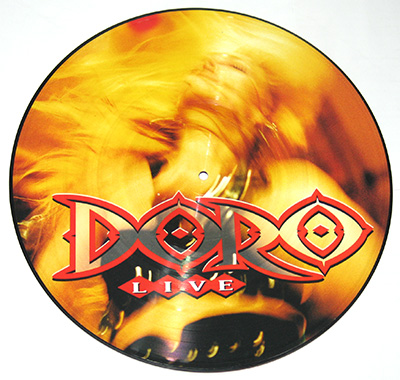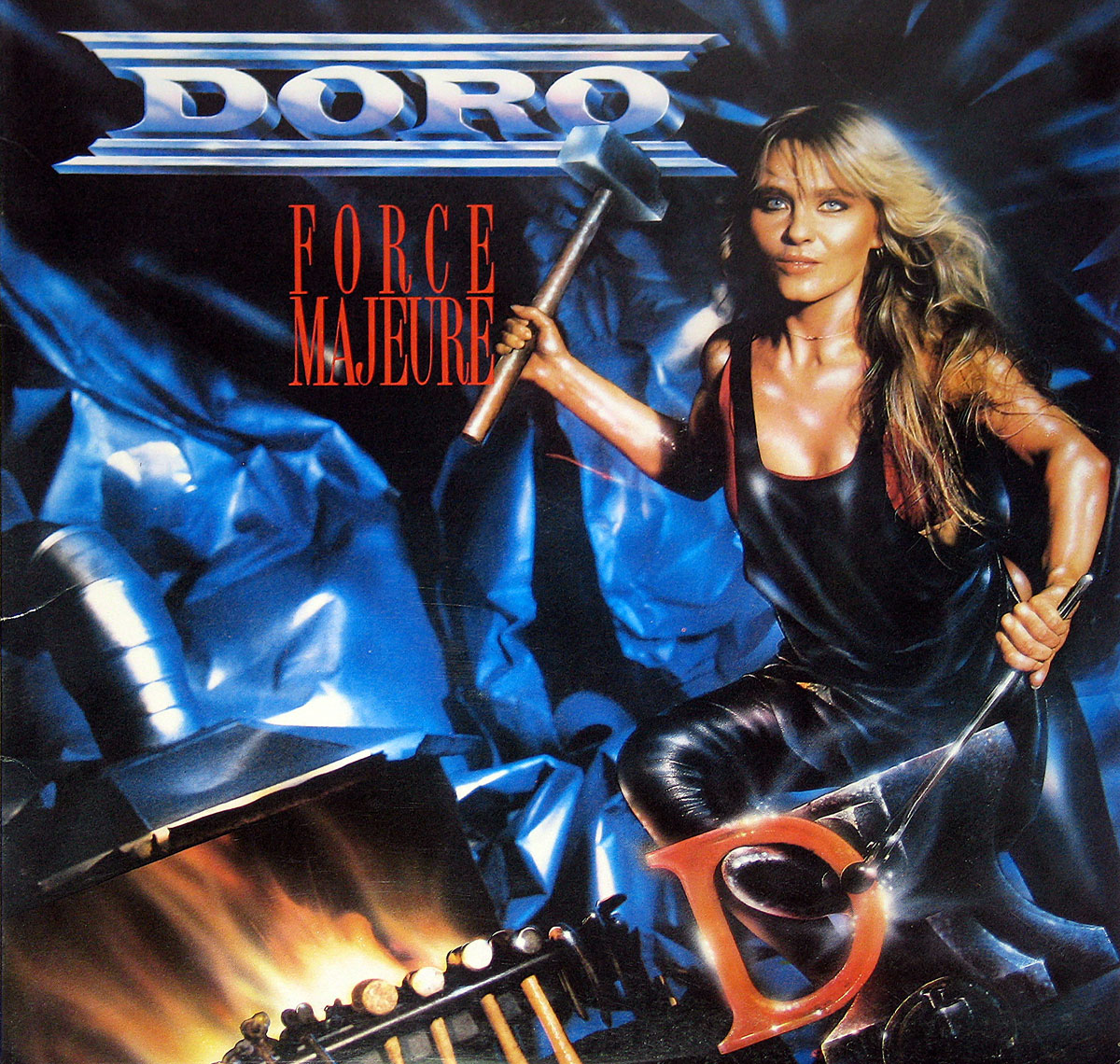
"Force Majeure" (1989) Album Description:
"Force Majeure" is the sound of a name being taken away and a singer refusing to go quietly. What should have been the next Warlock move arrived instead as Doro's first solo album, cut in the United States in 1989 with a sharper, more American hard-rock frame around her voice. You can hear the shift immediately: less dungeon fog, more hot lights, chrome edges, and controlled impact. But the bite is still there. This thing does not purr; it bares its teeth in lipstick and leather.
The trick of the album is that it starts by wrong-footing you. Opening with "A Whiter Shade of Pale" looked almost like provocation to anyone expecting pure Teutonen-Stahl, and that little shock still works because the rest of the record keeps slipping between polished surfaces and blunt-force attack. Underneath that glossy skin sits a much messier story: lineup collapse, legal trouble over the Warlock name, a German metal singer in the American machine, and a record that keeps asking whether survival has to sound like surrender. It doesn't. Not here.
West Germany in 1989: export metal, cracked pavement, restless ambition
In 1989, West Germany was still West Germany, with the Wall not yet down and the whole atmosphere carrying that odd mix of confidence and unease. German metal had already learned how to travel. The scene was no longer content with just sweating in Kellerclubs under low ceilings; labels wanted crossover, bigger choruses, American reach, the whole Vollgas package. You can feel that pressure on "Force Majeure." It is not the sound of a local scene staying local. It is the sound of a band identity breaking apart while the market keeps shouting, louder please.
Where it sits beside its peers
Put it next to Helloween in that period and the difference is immediate: Helloween were all lift, velocity, and bright melodic charge. Put it near U.D.O. and you get the opposite problem, because Udo was still working with steel-toed stomp and factory-floor bark. Running Wild were pushing their music toward salt spray and cannon smoke, Bonfire leaned cleaner and more melodic, and the Scorpions had already turned German hard rock into an export model with arena manners. Doro lands in the middle of that traffic jam. "Force Majeure" is too hard to be pop fluff, too lacquered to pass for underground purity, and too stubborn to apologize for either.
How the record actually feels
The album hits with a very particular kind of late-80s pressure. The drums are tight and forward, the guitar tone has that bright American cut rather than the darker continental grind, and Doro's voice keeps dragging the whole thing back toward danger whenever the arrangements get a little too well-behaved. "Hard Times" and "Hellraiser" move with real Zugkraft, the kind of push that feels built for road speed and stage monitors. "Mission of Mercy" has muscle without bloat. "Angels With Dirty Faces" still smells faintly of old Warlock smoke. Then "River of Tears" cools the room without turning soft.
What makes the record work is tension. The choruses want width, radio, repeat value. The verses keep trying to scratch the paint. Even the quieter spaces do not really rest; "Beyond the Trees" feels less like peace than a held breath. And that tiny German sting at the end, "Bis aufs Blut," is exactly the sort of move that stops the album from becoming just another transatlantic hard-rock product. One phrase, one mood, one little reminder: the roots were never fully packed away.
The people in the room, and what they did
By this point, the old Warlock chemistry was gone as a working force. Doro was effectively carrying the flag by herself, and that changed the music whether anybody admitted it or not. The guitarist on the album was Jon Levin, even though older credits and writeups sometimes muddy that detail, and his job here was practical: keep the riffs clean, fast, and sharp enough to cut through glossy production. Tommy Henriksen's bass does more than sit in the corner; it helps give the album some body when the upper end gets flashy. Bobby Rondinelli drums like a man who has no interest in being decorative. Good. That nonsense ruins records.
Joey Balin was the key architect. As producer and arranger, he pushed the material toward a sleeker American hard-rock frame without bleaching Doro out of it. Jeff Hendrickson and Dominick Maita helped give the recording that hard, separated studio air where every hit lands with definition, and Greg Calbi's mastering kept the whole thing lean instead of swampy. Claude Schnell's keyboard touches are used sensibly, which is rarer than it should be in 1989. Geoffrey Gillespie and Mick Rock handled the visual side with exactly the kind of lacquered attitude this phase needed: not raw Ruhrgebiet menace, more midnight neon with a steel spine under it.
Cause and effect: why the band story matters here
This album makes more sense when you stop treating the name change like a footnote. Warlock had already been bleeding pieces by the time "Triumph and Agony" pushed the band into a bigger international lane. Once Doro was left as the only original member, the old gang logic was over. Then the legal fight over the Warlock name slammed the door on continuity anyway. So "Force Majeure" is not just a debut; it is a forced rebuild. That matters, because you can hear the music trying to hold onto identity while changing tools in mid-flight.
That is why the album never sounds fully settled, and I mean that as praise. Some records are too comfortable with their own strategy. This one keeps glancing over its shoulder. It wants the wider stage, the cleaner sound, the bigger hooks, but it also wants to punch a hole through the backdrop and remind you that Doro did not come out of nowhere. She came out of Dusseldorf metal, leather, pressure, and the kind of scene that respected nerve before polish.
No real scandal, just a very metal misunderstanding
There was no grand public controversy around "Force Majeure" in the tabloid sense. No banned sleeve, no censor panic, no sermon from the pulpit. The real noise came from inside metal itself. Some fans heard the opening cover and the glossier production as a betrayal; others filed the album as a hidden Warlock record because of the name-change mess and the way early marketing played with that association. That is the common misconception that still hangs around it. Not that the music was fake, but that the identity was simple. It wasn't. It was in transit, and transit is always ugly.
I can still picture a record like this sitting in the import bin after midnight-shop hours, wedged between stricter Teutonic steel and shinier American product. The kid who bought it either rolled his eyes at track one or came back a week later humming "Hard Times" and pretending it was an accident.
Why it still bites
What saves "Force Majeure" from becoming a period piece is that Doro never sounds passive inside it. Even when the production smooths the walls, she attacks from the center. Her voice carries abrasion, command, and that slightly wounded insistence she has always had when the song turns personal. The album may wear late-80s hard-rock clothes, sure, but it is not posing in them. It is working in them. Big difference. One is costume. The other is survival.
So no, this is not the old Warlock gang kicking down the door one more time. And it is not some soft-focus commercial sellout either, despite what purists muttered into their beer. "Force Majeure" is a transitional record with real nerve: half street-fight, half label strategy, half Doro refusing to disappear. Yes, that is three halves. Heavy metal has never been good at arithmetic.