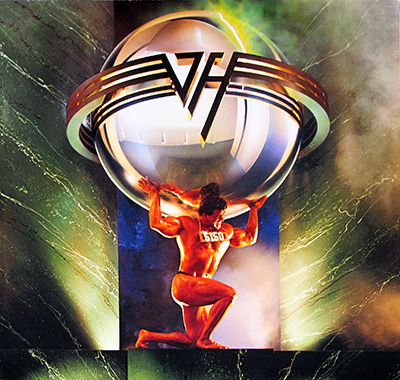
- 5150 is the first album recorded with new lead singer Sammy Hagar, who replaced David Lee Roth.
5150 marks the moment Van Halen slammed into a new era, rebuilt inside the walls of their own 5150 Studio and powered by Sammy Hagar’s high-voltage vocals. This 1986 German pressing captures the band’s sharp pivot into a cleaner, melodic hard-rock sound, driven by Eddie’s shimmering guitar-synth blend and standout tracks like “Why Can’t This Be Love” and “Dreams.” Produced by Mick Jones and Donn Landee, and wrapped in Aaron Rapoport’s iconic globe-lifting artwork, this release remains a prized collector piece for its bold reinvention and unmistakable 80s punch.
There are albums that mark a new chapter, and then there’s 5150 — the sound of a band crashing into its own future at full throttle. The first Van Halen record without David Lee Roth could’ve been a disaster, but instead it turned into a neon-lit, adrenaline-soaked rebirth. Cue Sammy Hagar stepping in like he was born for the job, and suddenly the band sounded like they’d swapped late-night bar fights for a sunrise joyride in a supercharged convertible.
1986 was a strange, high-voltage year for rock. Europe was riding the last wave of classic metal while MTV polished every riff into something glossy enough to sell hair spray. Hard rock bands were in a full sprint toward bigger choruses, shinier productions, and stadium-sized optimism. Germany, where this pressing comes from, was especially hungry for American arena rock — anything that sounded like it could blast through an Autobahn windshield at 180 km/h. 5150 slid right into that moment like it owned the place.
Van Halen didn’t ease into this era — they crash-landed into it. Roth was out, egos were bruised, and fans were sharpening their keyboards for angry fan-mail, but Eddie had one thing Roth didn’t: a direct phone line to Sammy Hagar’s lungs. With Donn Landee running the controls inside 5150 Studios, the band locked themselves in and built a new sound from scratch, driven by urgency, adrenaline, and the kind of stubborn confidence only Eddie Van Halen could maintain during chaos.
5150 doesn’t just shift gears — it swaps the entire engine. The riffs are cleaner, the keyboards shimmer instead of snarl, and Sammy pushes everything into melodic overdrive. Tracks like “Why Can’t This Be Love” feel like radio anthems designed to blast out of convertible speakers, while “Dreams” floats on that unmistakable 80s optimism. Meanwhile, the title track dives back into the band’s heavier DNA, reminding listeners that even with synthesizers in orbit, the engine room still had Eddie’s fingerprints scorched into the metal.
1986 gave us a buffet of polished rock: Bon Jovi’s Slippery When Wet, Europe’s The Final Countdown, and Ozzy’s Ultimate Sin — all big hooks wrapped in even bigger production. But 5150 felt different. It didn’t just chase the trends; it bent them. The guitar-synth fusion had more muscle than Europe, more optimism than Ozzy, and more actual band chemistry than half the MTV rotation. It was a hard-rock album disguised as a pop meteor.
Of course, hardcore Roth fans acted like someone had spray-painted graffiti across their childhood. Some called it a sellout, others claimed Van Halen had gone “soft.” Meanwhile, the rest of us just turned the volume up and let the keyboards melt our eyebrows. The real controversy wasn’t the music — it was the emotional breakup between Roth loyalists and the new Hagar era. The album didn’t just divide fans; it redrew battle lines.
Behind the scenes, Eddie was finally steering the ship the way he always wanted — cleaner sound, more keyboards, more melodic ambition. Sammy gave him vocal flexibility that Roth never indulged, and suddenly the songs stretched wider and soared higher. It wasn’t tension-free — Van Halen never operated without sparks flying — but the friction produced heat rather than smoke. This was reinvention disguised as unity.
Critics didn’t know what to do with 5150 at first. Was it metal? Pop-rock? Synth-driven AOR with an identity crisis? Over time, though, the verdict settled: this was the proof that Van Halen could survive a seismic lineup change without losing their swagger. Today, collectors view this LP as the birth certificate of the Hagar era — the moment the band proved they weren’t defined by one singer but by the engine humming underneath it all.
The album’s title, 5150, wasn’t plucked out of thin L.A. smog — it comes from the California police code “5150,” used when someone is deemed mentally unstable and taken into psychiatric hold. Eddie Van Halen loved the rebellious edge of it and slapped the number onto his home studio, which then became the birthplace of this entire record. Naming the album after that code felt like a wink from the band: a cheeky warning that what you’re about to hear is wild enough to qualify as legally insane, in the best possible way.
American Heavy Metal / Hard Rock
American Heavy Metal / Hard Rock blends high-energy guitar riffs, melodic hooks, and that unmistakable arena-rock attitude. The genre dominated the mid-1980s with a mix of flashy production and tight musicianship, shaping MTV culture and pushing stadiums into overdrive.
WB Warner Bros – Cat#: 925 394 1 W5150 LC 0392
Record Format: 12" LP Vinyl Stereo Gramophone Record
Total Weight: 230 gram
1986 – Made in Germany
5150 – USA
Unknown mixing studio/location.
Unknown mastering studio/location.
Disclaimer: Track durations shown are approximate and may vary slightly between different country editions or reissues. Variations can result from alternate masterings, pressing plant differences, or regional production adjustments.
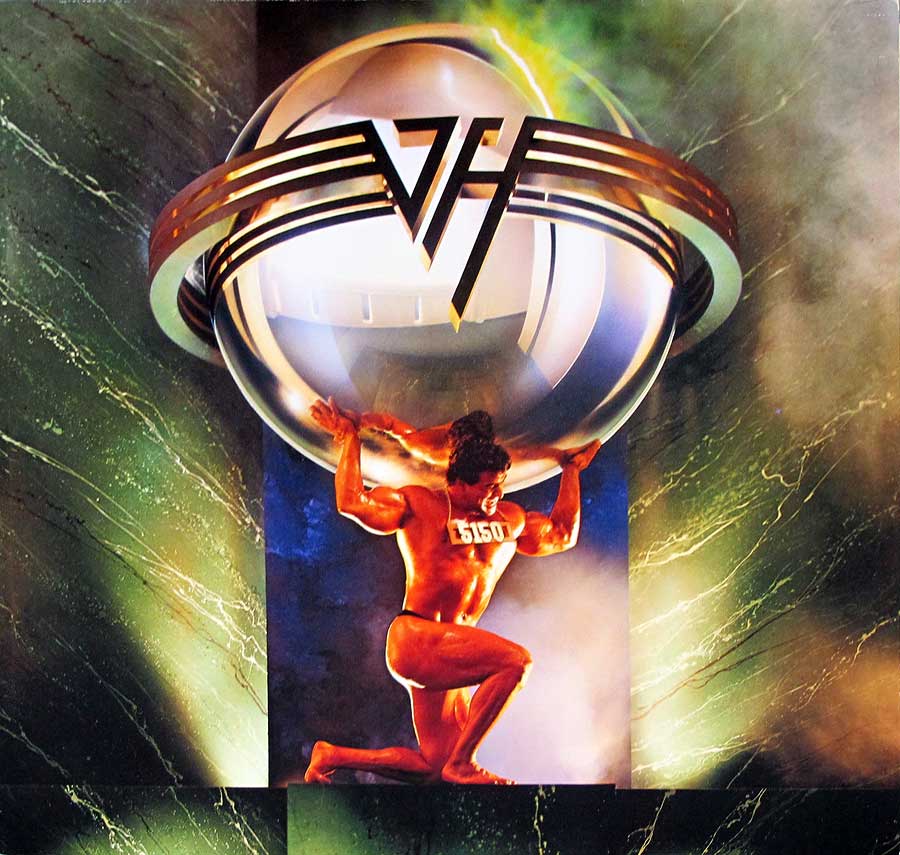
The artwork is absolutely based on Atlas — the Titan from Greek mythology condemned to hold up the sky. The bodybuilder on the 5150 sleeve isn’t a literal mythological drawing, but the kneeling stance, the strain running through the shoulders, and the whole “world-on-his-back” posture are straight out of the classic Atlas visual vocabulary. The twist is how the celestial sphere is swapped for a gigantic chrome orb wrapped in the Van Halen logo, turning the myth into an unapologetic 80s hard-rock power statement shaped by bodybuilding aesthetics and airbrushed arena-rock attitude.
Surrounding the central vertical strip is a textured marbled pattern in deep green, black, and amber tones. The background resembles heavy stone or polished granite, a familiar visual trend in mid-80s rock design. Lighting from behind and below throws sharp shadows across the figure's arms, torso, and legs, enhancing the sense of weight and physical tension. This German pressing uses high-contrast color separation, giving the print a crisp finish that collectors value.
The outer edges fade subtly into darker green, while the central frame pushes the eye upward toward the chrome sphere and the oversized Van Halen emblem. The layout feels engineered for impact on a record-store wall: metallic shine, dramatic contrast, and an instantly recognizable emblem anchoring the artwork. The cover condition in this photo appears clean, with no visible ring-wear, tears, or color fade — exactly the kind of preservation that makes original German pressings desirable.
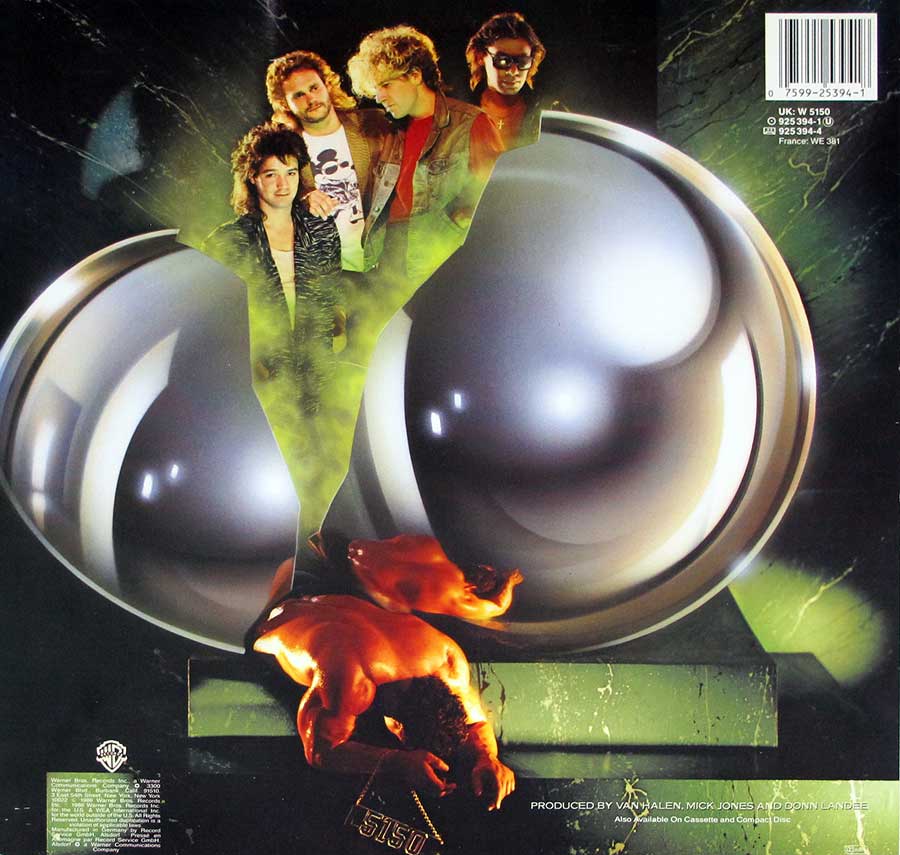
The back cover flips the front’s Atlas concept into collapse. The massive chrome sphere is cracked open vertically, exposing a sharp green-lit tear. Inside that rupture stand the four band members, arranged in a narrow strip as if emerging from the broken shell. Their faces and clothing show the soft-edged photo-retouching of the era: denim, leather, and layered textures that match the mid-80s hard-rock aesthetic. The chrome halves dominate both sides, with exaggerated reflections and bright white hotspots printed cleanly on this German edition.
The Atlas-like bodybuilder from the front now lies face-down beneath the shattered sphere, collapsed onto a blocky green pedestal textured like dark marble. His left arm hangs toward the viewer and the “5150” tag rests near his hand. The surrounding background keeps the same marbled black-green pattern from the front cover, running diagonally with subtle streaking. Color separation is sharp here — no muddying or heavy bleed — something collectors immediately look for in this pressing.
The upper-right corner contains a full barcode block. “7599-25394-1” centered above the bars, with three lines of catalog data beneath it: “UK: WX 5150”, “925 394-1 (U)”, and “925 394-4 (C)”, followed by “France: WE 381”. These variations help confirm territory-specific distribution. The lower-left corner includes the Warner Bros shield logo and a dense block of production and copyright text printed in tiny white lettering. The bottom-right corner reads: “Produced by Van Halen, Mick Jones and Donn Landee” with the line “Also Available On Cassette and Compact Disc” directly underneath. All typography remains crisp, showing this copy’s well-preserved print clarity.
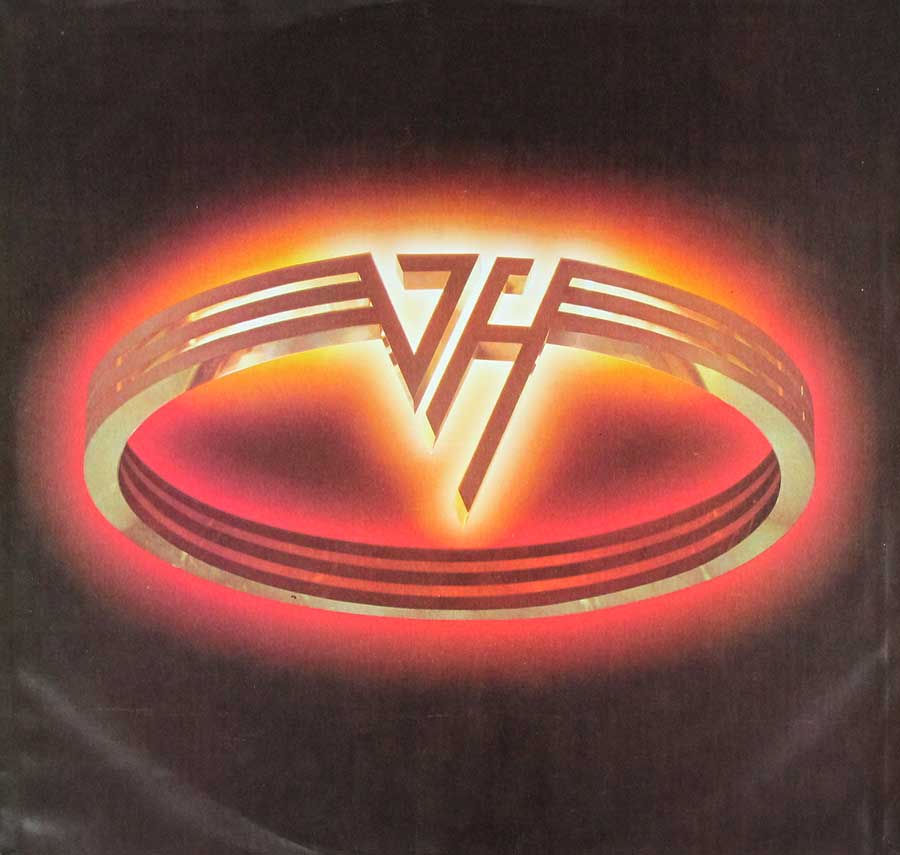
The custom inner sleeve features an oversized rendering of the classic Van Halen winged-ring logo, centered against a near-black background with a strong red-orange halo radiating outward. The emblem is drawn as a metallic band with three horizontal bars on each side, forming a circular ring that frames the stylized “VH” monogram. The glow is intense and well-defined, clearly intended to make the logo look like it’s heating up from the inside — a perfect match for the mid-80s hard-rock aesthetic that favored bold gradients and high-impact graphics.
Surface detail shows smooth color transitions from deep red at the core to brighter orange highlights, with the metallic band itself rendered in a brushed-silver texture. The edges are sharp, indicating this German pressing used high-quality print plates for the sleeve. No track text or liner notes appear here; the sleeve is purely visual, functioning almost like a promotional poster hidden inside the record. The black background shows mild reflective shine, suggesting a semi-gloss paper stock rather than matte.
Condition-wise, the image displays no creasing, seam splits, or heavy wear. The dark background can often reveal storage marks on older copies, but this example remains clean, retaining the strong contrast between the glowing ring and the surrounding darkness. For collectors, this variant is noteworthy for presenting the VH emblem at full size without distraction — a detail that makes this inner sleeve one of the standout visual components of the European 5150 releases.
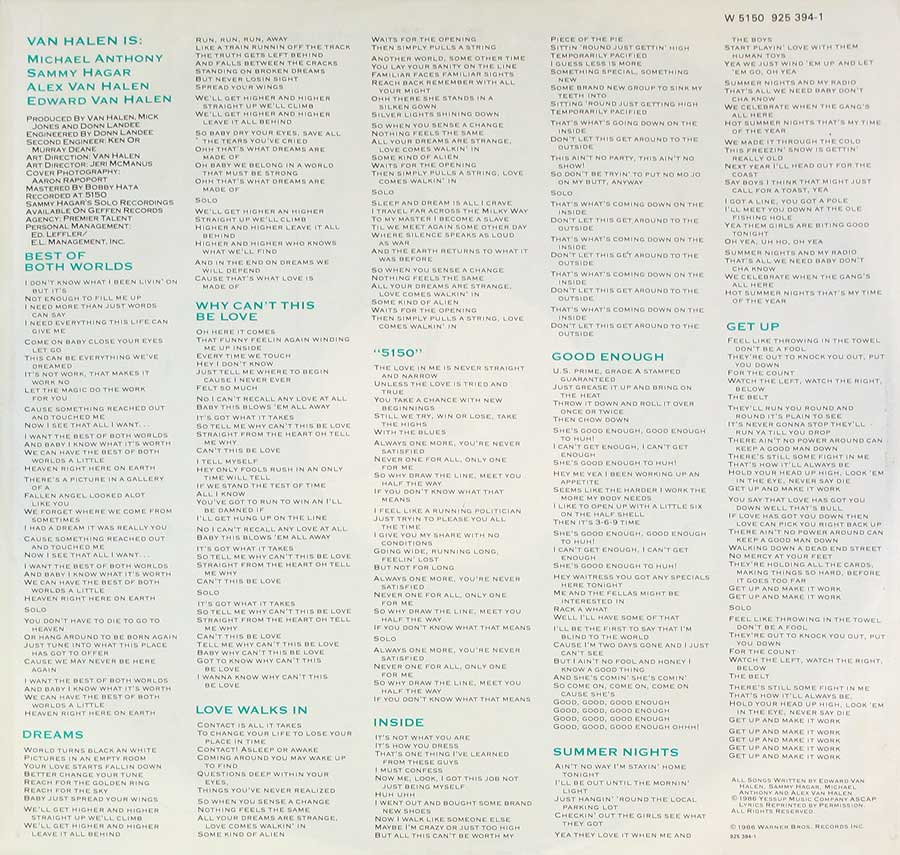
The reverse side of the custom inner sleeve is fully dedicated to printed lyrics, arranged in tight vertical columns across a bright white background. Every song title is set in a turquoise-blue typeface that stands out clearly against the neutral paper tone. Under each title, the lyrics are printed in compact black text blocks with even spacing and consistent alignment. The column layout mirrors the production style Warner Bros used throughout the mid-80s — functional, readable, and designed to fit maximum content without visual clutter.
The far-left column begins with the band lineup printed in the same turquoise style: Michael Anthony, Sammy Hagar, Alex Van Halen, and Edward Van Halen. Immediately below sits the production credit block, listing Van Halen, Mick Jones, and Donn Landee as producers, followed by engineering, art direction, mastering, and management details. These credits are printed in the same small black font used for the lyrics, keeping everything stylistically unified. No images appear on this side; the entire layout is built around clean typography and structure.
The upper-right corner includes the catalog reference “W 5150 925 394-1,” printed in black and set apart from the lyric columns to help identify the sleeve variant. Along the bottom edge, the copyright line notes that all songs were written by Van Halen and Sammy Hagar, published by Warner-Tamerlane Publishing Corp., with the © 1986 Warner Bros. Records Inc. attribution. Print edges appear sharp, with no yellowing or ink bleed — a sign this German pressing has been stored well and retains its original clarity, which is especially important for white-background inner sleeves prone to discoloration.
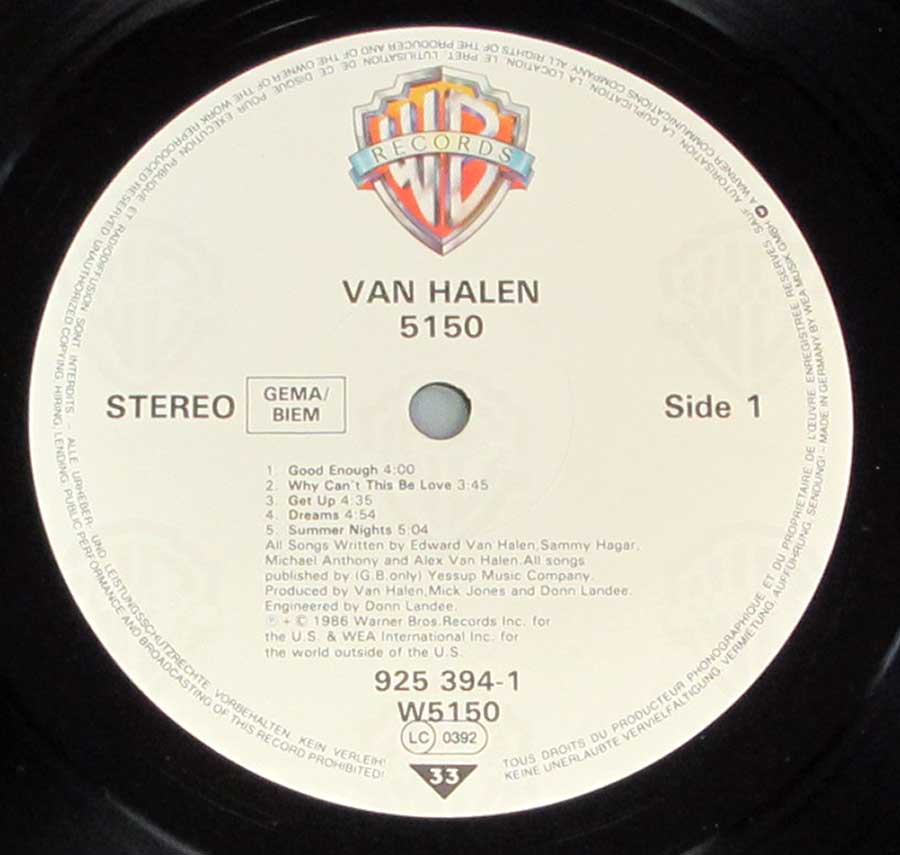
The Side One label of the German pressing uses Warner Bros’ classic cream background with the multicolor shield logo placed prominently at the top. All text is printed in high-contrast black, making the layout readable even with small font sizes. “VAN HALEN — 5150” sits centered beneath the logo, followed by the five tracks for Side One listed in a clean, left-aligned block. Each song title is paired with its runtime, printed in the same weight and spacing typical of mid-80s Warner Bros European pressings.
On the left side is the “STEREO” designation and the rights box marked “GEMA / BIEM,” confirming this as a German/European distribution issue. The right side displays “Side 1” in bold text. Beneath the tracklist appears the songwriting and publishing line, crediting Edward Van Halen, Sammy Hagar, Michael Anthony, and Alex Van Halen, followed by the production credits naming Van Halen, Mick Jones, and Donn Landee. The pressing year and copyright line match Warner Bros Records Inc. 1986.
At the bottom of the label is the full catalog information: “925 394-1” above “W5150,” both printed cleanly with no smudging. The label code “LC 0392” appears inside a small oval, followed by the standard 33 RPM icon. The outer rim text is printed in both German and French, wrapping cleanly around the circumference with no break in the type. Print sharpness suggests a well-preserved copy with minimal label wear, no spindle damage, and clean edges — all important details for identifying a high-grade German pressing.
All images on this site are photographed directly from the original vinyl LP covers and record labels in my collection. Earlier blank sleeves were not archived due to past storage limits, and Side Two labels are often omitted when they contain no collector-relevant details. Photo quality varies because the images were taken over several decades with different cameras. You may use these images for personal or non-commercial purposes if you include a link to this site; commercial use requires my permission. Text on covers and labels has been transcribed using a free online OCR service.
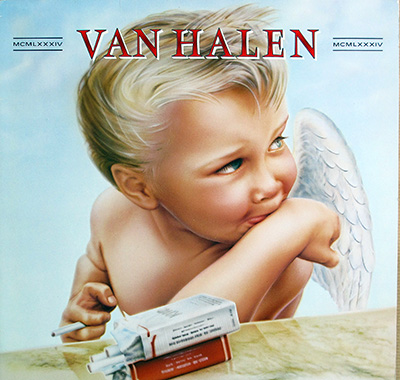
Van Halen's 1984 is a landmark album in the band's discography, marking a significant shift in their musical style and showcasing their versatility and willingness to experiment with new sounds.
- 1984 (France) - 1984 ( Club Edition ) - 1984 (Germany)5150 lands like a fresh charge after the band’s big lineup shift, locking into a melodic hard-rock sound powered by Eddie’s razor-sharp guitar-synth combo and Hagar’s high-energy delivery. This German pressing shows off the album’s bright mid-80s production style, giving the songs a clean, confident punch that still holds up decades later.
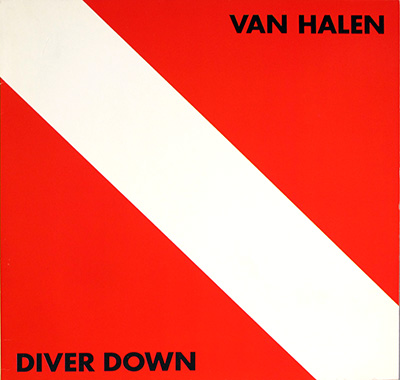
Released in 1982, this hard rock LP blends fiery originals with a surprising number of covers. Produced by Ted Templeman, the album highlights Van Halen’s versatility with hits like “(Oh) Pretty Woman” and “Little Guitars,” while also featuring Jan van Halen’s unique clarinet cameo.
Diver Down 12" Vinyl LP
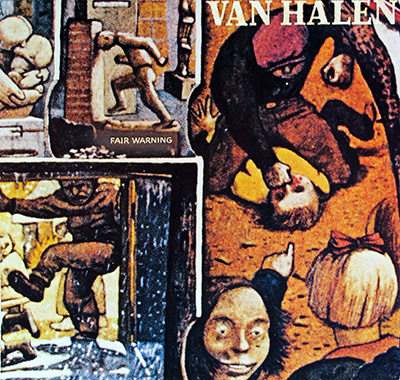
Darker and almost thematic in contrast to the preceding three albums, the writing and recording of "Fair Warning" was affected by the increasing tensions between Eddie Van Halen and David Lee Roth.
Fair Warning 12" Vinyl LP
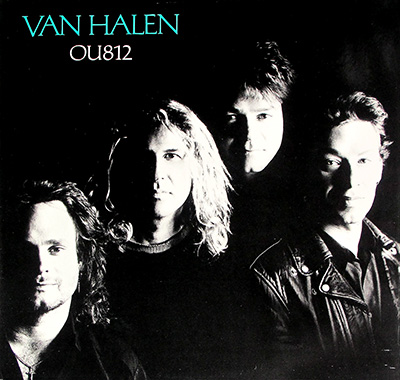
The title OU812 is a phonetic play on the phrase "Oh, you ate one too," which is a humorous way of saying "me too." The band members of Van Halen chose the title as a joke, and it reflects the band's playful sense of humor
OU812 12" Vinyl LP
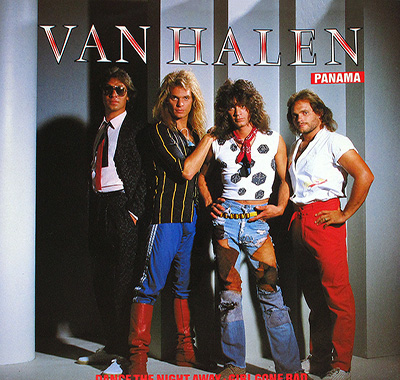
One of hard rock's most iconic anthems, Van Halen's "Panama" exploded onto the scene in 1984. Featured on their groundbreaking album "1984", the song became an instant classic and the third single released from the record.
Panama 12" Vinyl Maxi Single
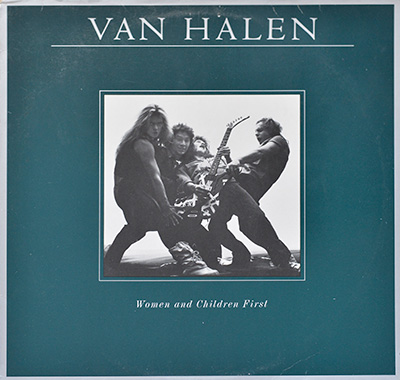
“Women and Children First” is the 1980 and third official full-length studio album by the American Hard Rock band “Van Halen”. It was recorded from December 1979 until February 1980 at the “Sunset Sound” in Los Angeles
- Women and Children First (1980, Germany) - Women and Children First (1980, Netherlands)