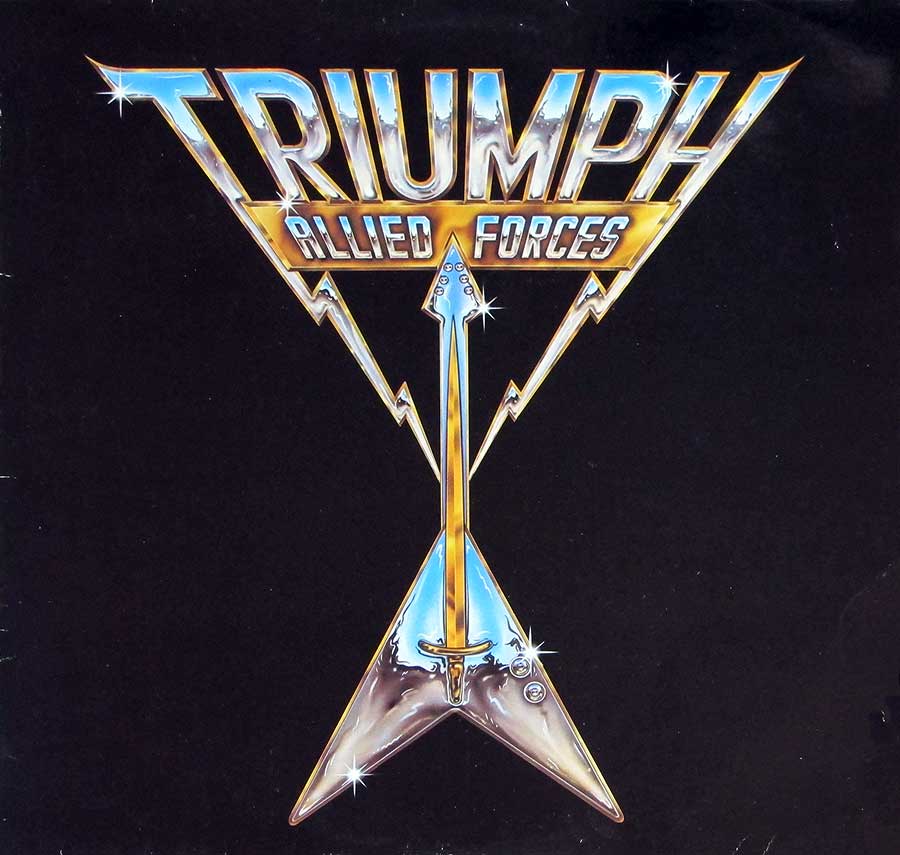
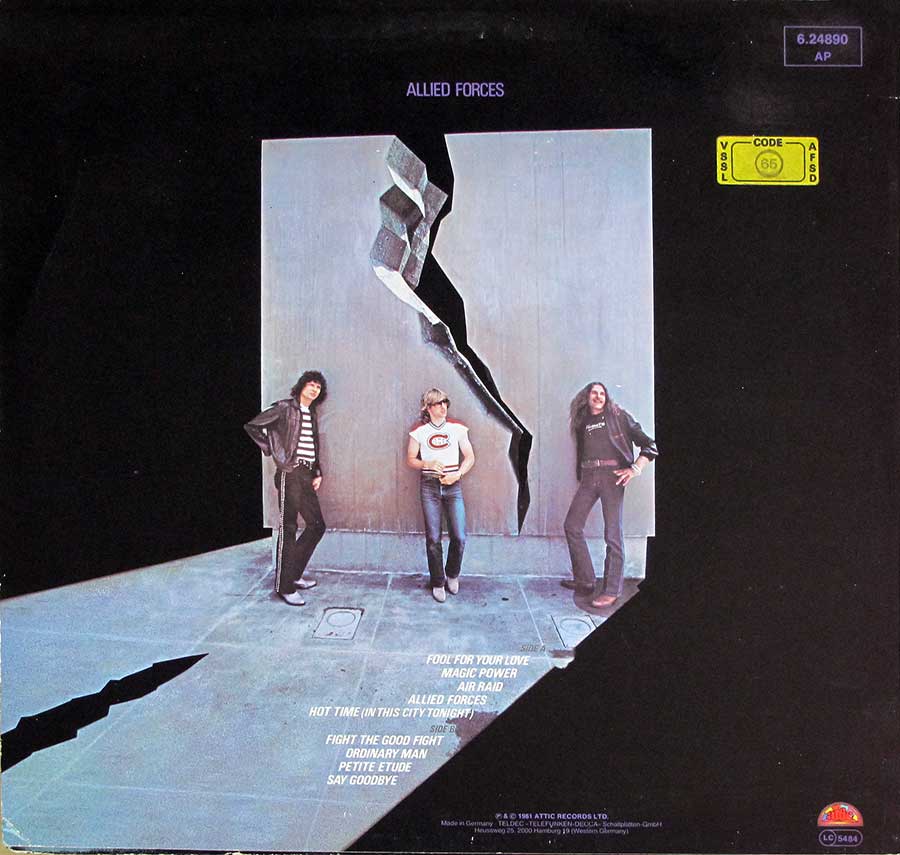
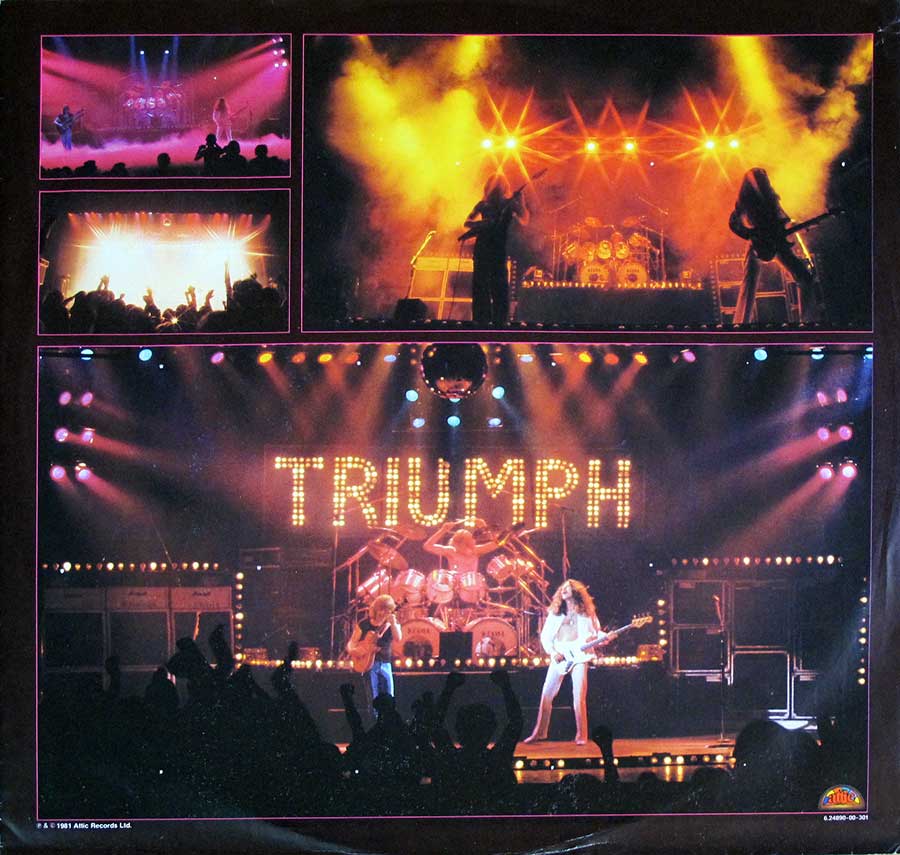
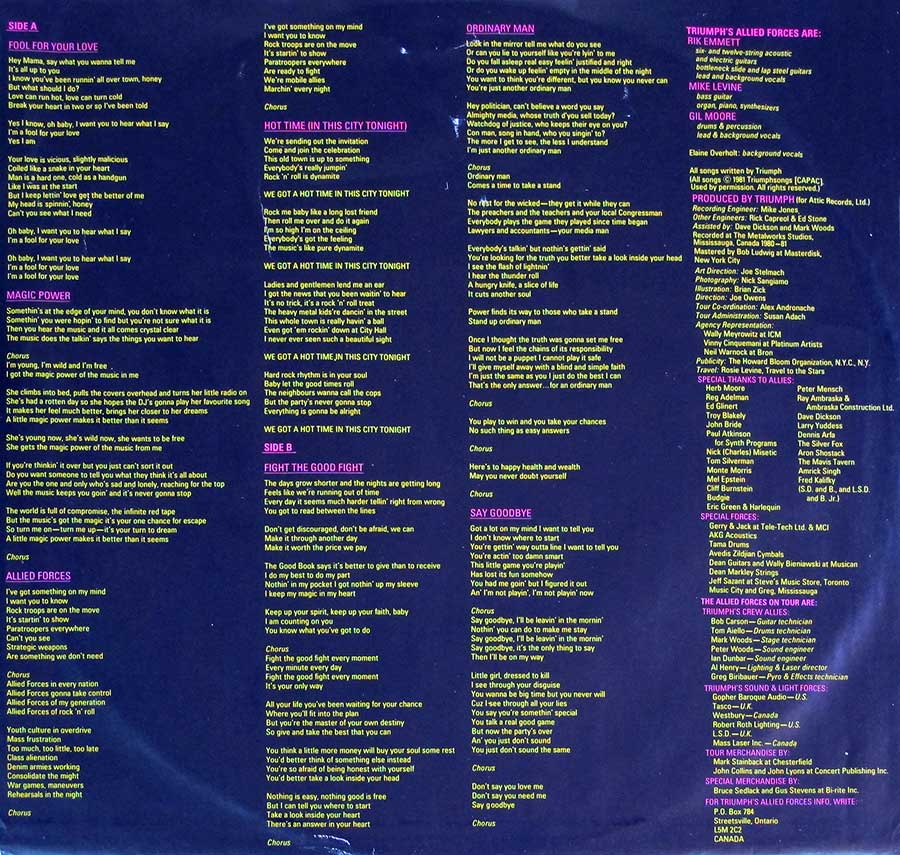
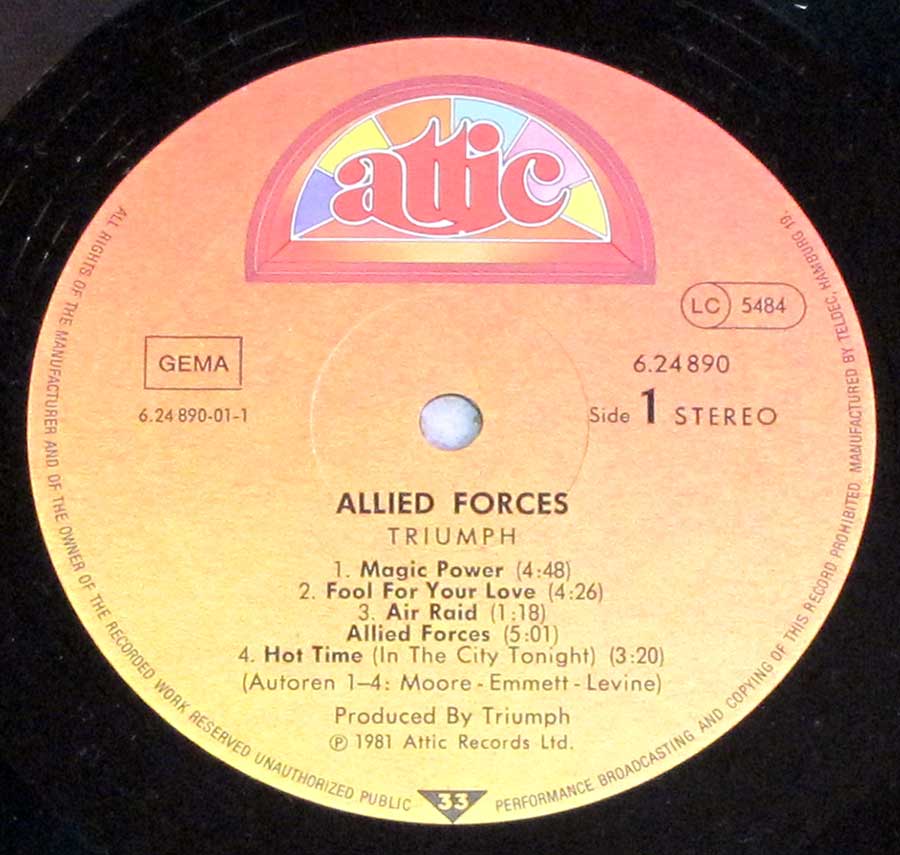
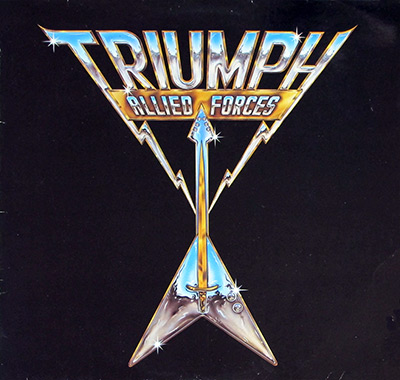
"Allied Forces" (1981) Album Description:
Triumph at Full Voltage
By 1981, Triumph were no longer just another hard-rock power trio grinding it out north of the border. “Allied Forces” is the sound of a band stepping onto the big stage with both boots on, confident enough to write anthems without apology and tight enough to make them hit like steel girders. This record captures Triumph at the exact moment when ambition, discipline, and crowd-tested muscle locked into place.
1981: Big Riffs, Bigger Rooms
The early ’80s were a strange and glorious crossroads. Punk had already burned the house down, New Wave was repainting the walls, and hard rock responded by getting louder, cleaner, and unapologetically epic. In 1981, albums like Van Halen’s “Fair Warning” and Rush’s “Moving Pictures” proved that precision and power could coexist. “Allied Forces” lives squarely in that moment: arena-sized hooks, but still played by humans with calloused fingers.
Arriving Here the Hard Way
Triumph didn’t drift into this album by accident. Years of relentless touring had sharpened them into a road-ready machine, and by the time they entered Metalworks Studios, they knew exactly what worked in front of thousands of raised fists. Producing the album themselves wasn’t ego; it was control. They wanted a record that sounded like Triumph, not a label committee’s idea of Triumph.
The Sound of Controlled Power
“Allied Forces” balances muscle and melody with surprising grace. The guitars bite but never blur, the rhythm section hits like a freight train that somehow keeps perfect time, and the vocals aim straight for the cheap seats without losing sincerity. Songs like “Magic Power” and “Fight the Good Fight” don’t just ask for belief; they demand it, fists in the air, chorus shouted back at the stage.
Standing Among Its Peers
Compared to other hard-rock records of 1981, this album sits in a sweet spot. It doesn’t chase the flash of Los Angeles glam, nor does it dive into prog-rock complexity. Instead, it shares DNA with bands who understood momentum: solid songs, clear messages, and choruses built to survive bad sound systems and spilled beer. Triumph sounded Canadian only in the sense that they worked twice as hard.
No Scandals, Just Volume
There was no major controversy around “Allied Forces,” unless you count critics grumbling that it was too earnest, too clean, or too optimistic. Some muttered the dreaded word “commercial.” Fans, meanwhile, turned it up louder. The record didn’t need outrage; it had conviction.
Three Voices, One Direction
What makes this album hold together is the band dynamic. This is a group pulling in the same direction, even when sharing vocal duties and spotlight. You can hear trust in the way the songs breathe, stretch, and then slam back together. No indulgent solos for their own sake, just players serving the song and the moment.
From New Release to Permanent Fixture
At the time, “Allied Forces” confirmed Triumph’s rise; decades later, it explains their staying power. Fans still reach for it not out of nostalgia alone, but because it delivers exactly what it promises. The production hasn’t aged badly, the songs haven’t shrunk, and the intent still feels honest.
Closing the Sleeve
Listening to my copy of “Allied Forces” today, I still hear sweat, ambition, and that unmistakable early-’80s belief that rock music could lift a room full of strangers into the same chorus. Decades later, the vinyl still smells faintly of beer, electricity, and confidence that hasn’t learned how to apologize.