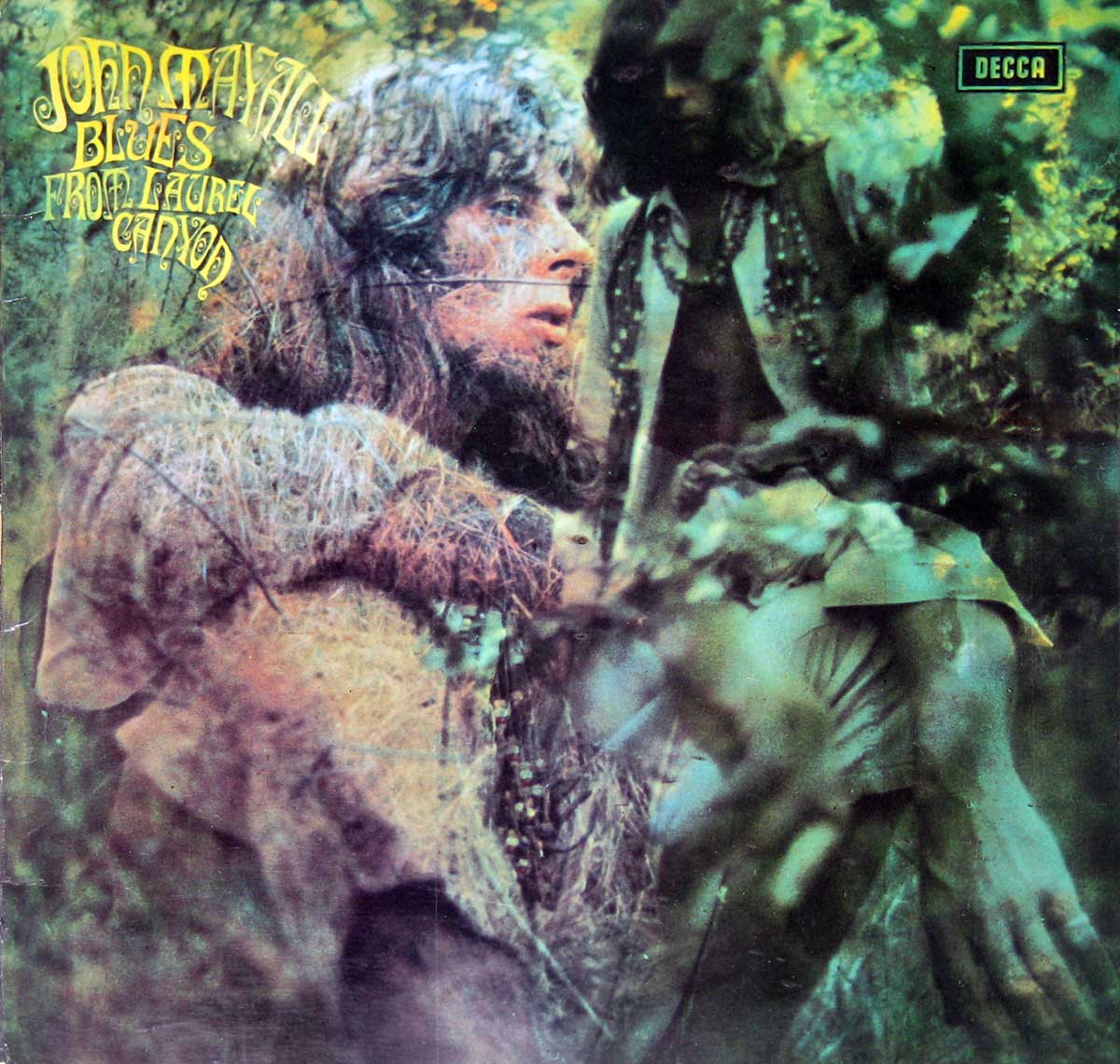
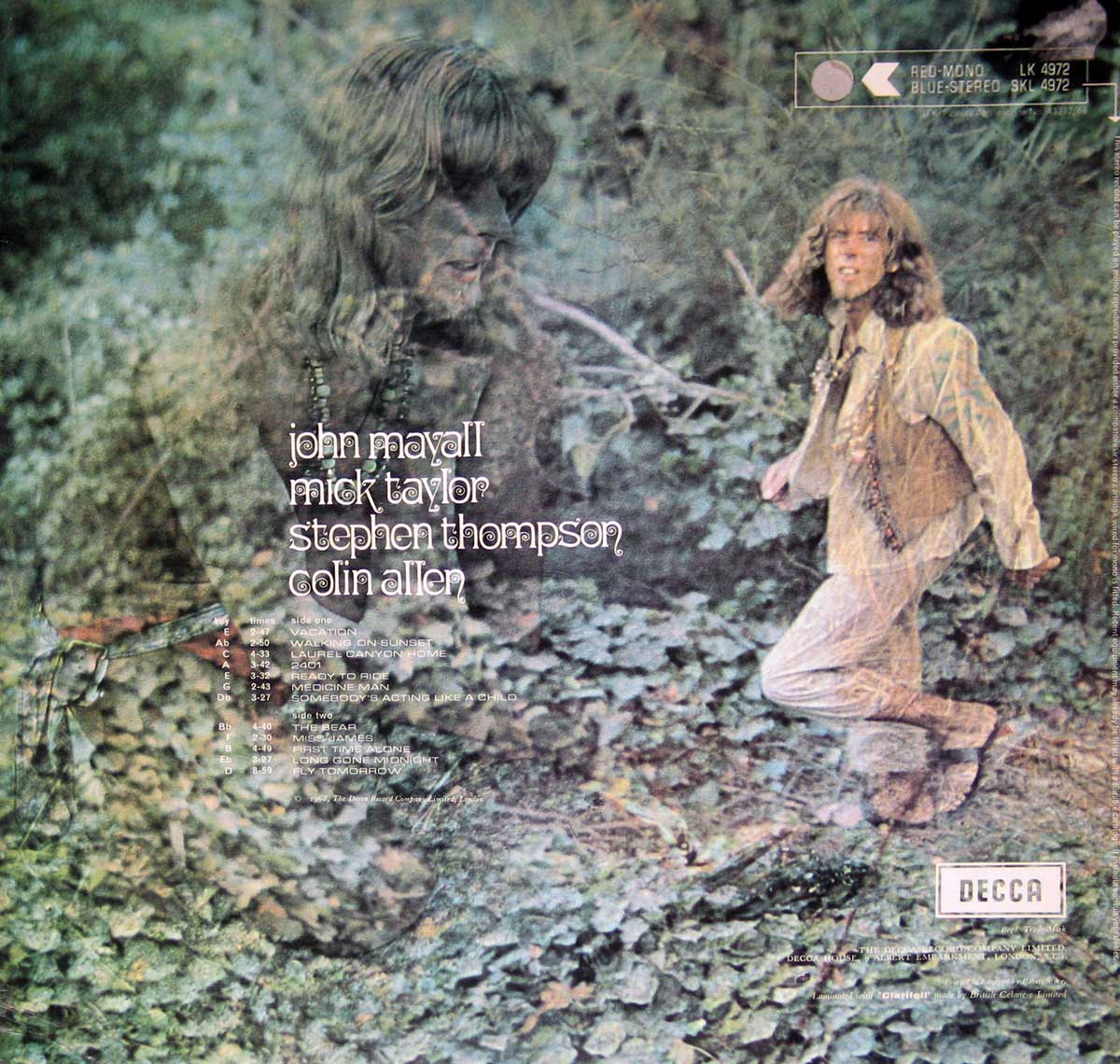
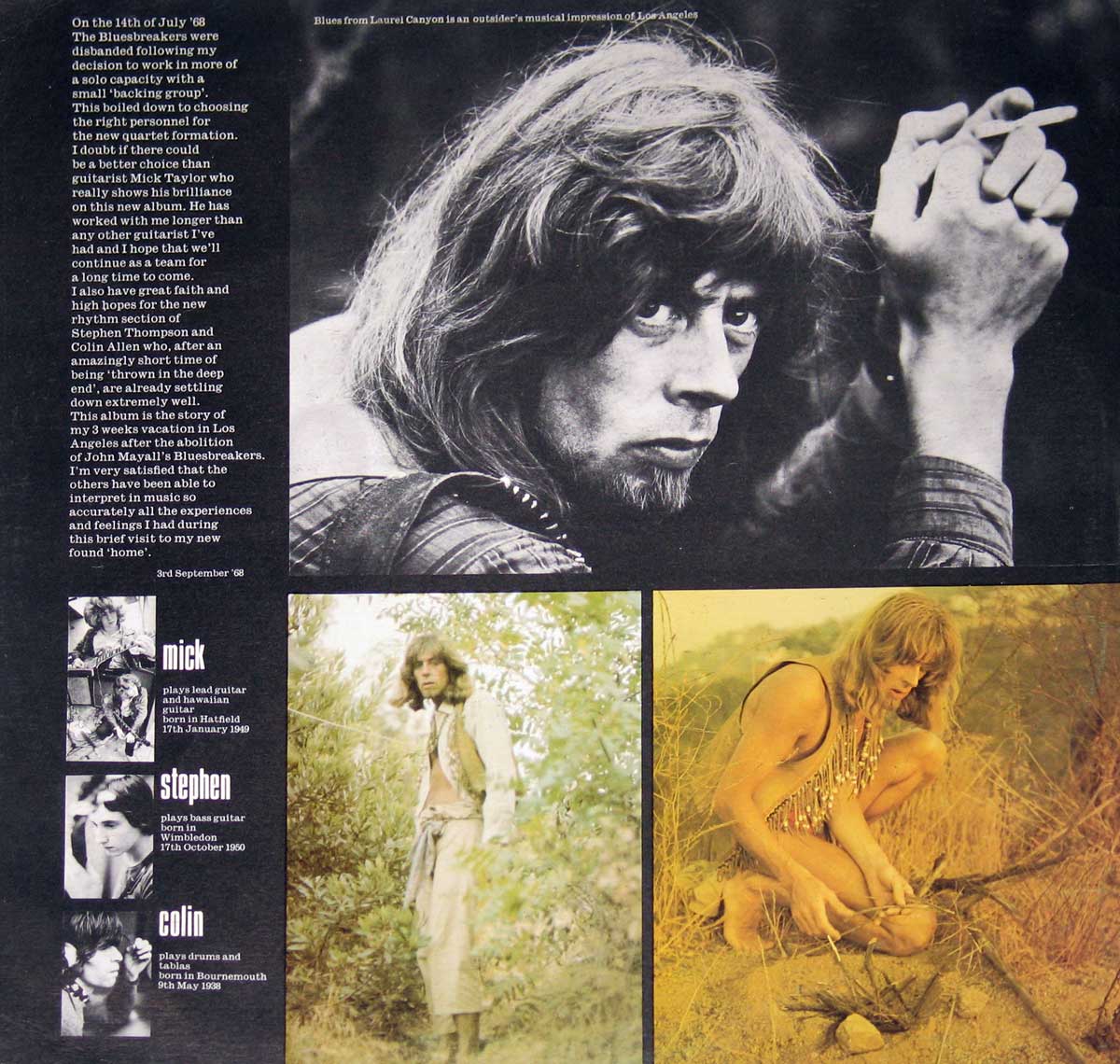
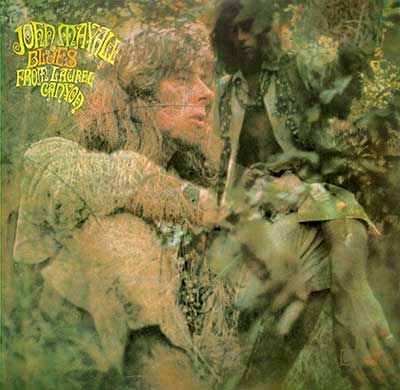
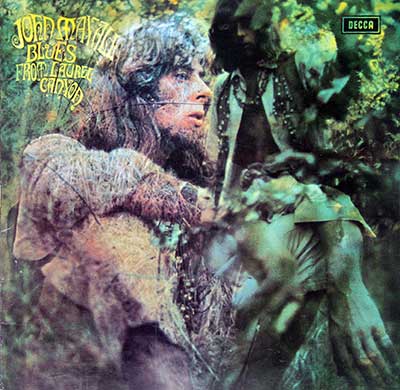
John Mayall, that tireless blues troubadour, that British blues boombox, has once again uprooted himself, this time trading the smog-choked streets of London for the sun-drenched canyons of Los Angeles. On "Blues from Laurel Canyon," released in 1968, Mayall delivers a sonic postcard from this new frontier, a collection of songs that capture the spirit of change and experimentation that permeated the Sunset Strip in the late '60s.
Forget your dusty Delta blues and your Chicago shuffles. Mayall and his band of merry pranksters are channeling the electric mudslide of Jimi Hendrix and the psychedelic swirl of Cream, filtering it through the lens of their own British blues sensibilities. This is blues rock for the Age of Aquarius, baby, steeped in reverb and dripping with wah-wah.
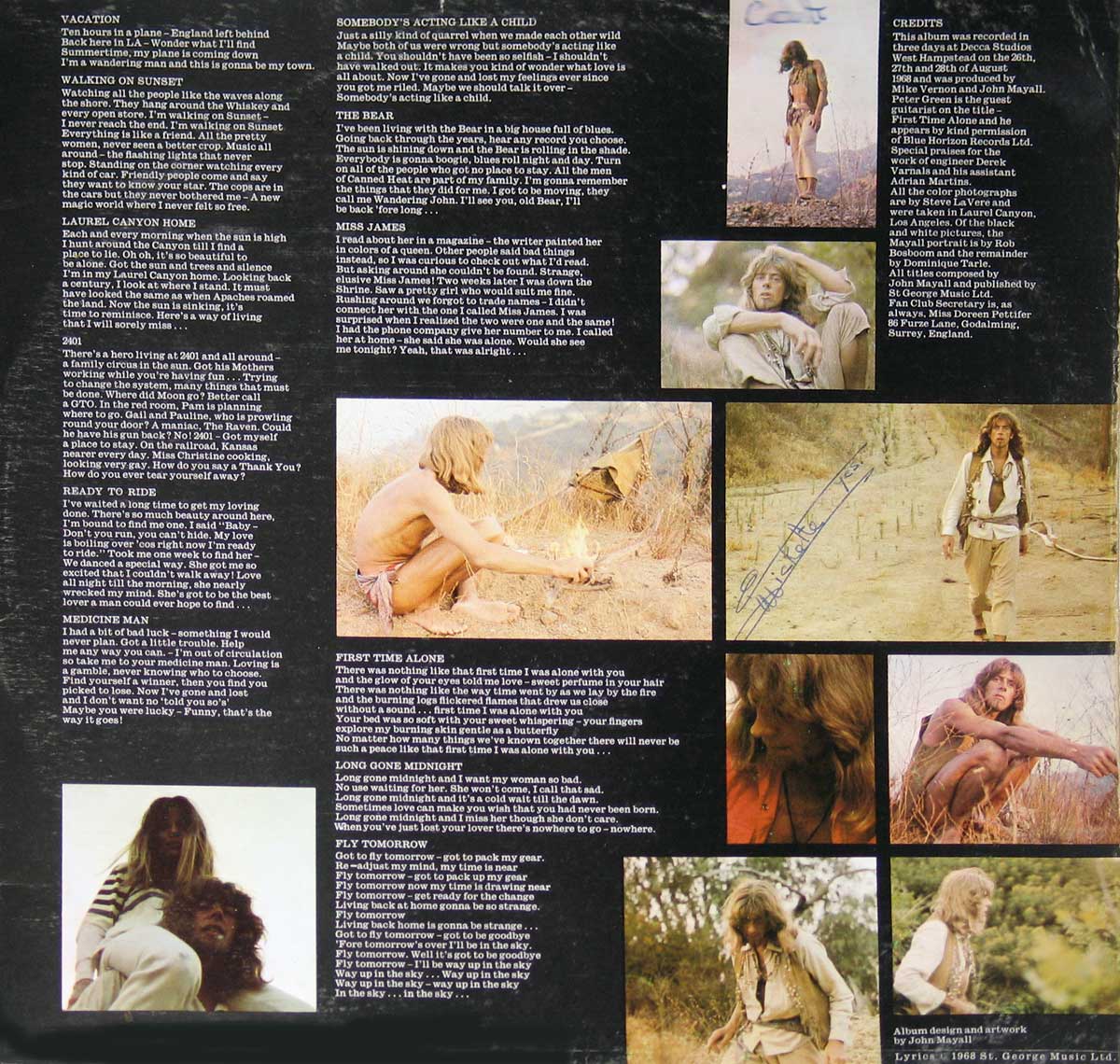
Mayall's songwriting on this album is sharp and observant, drawing inspiration from the characters and landscapes of his new Californian home. He sings of Hollywood hustlers and canyon dwelling hippies, of desert sunsets and freeway traffic jams. His lyrics are infused with a sense of wonder and possibility, reflecting the optimism of a generation on the cusp of cultural revolution. He paints a vivid picture of his time in Laurel Canyon, detailing his encounters with fellow musicians like Canned Heat and Frank Zappa, as well as his romantic escapades.
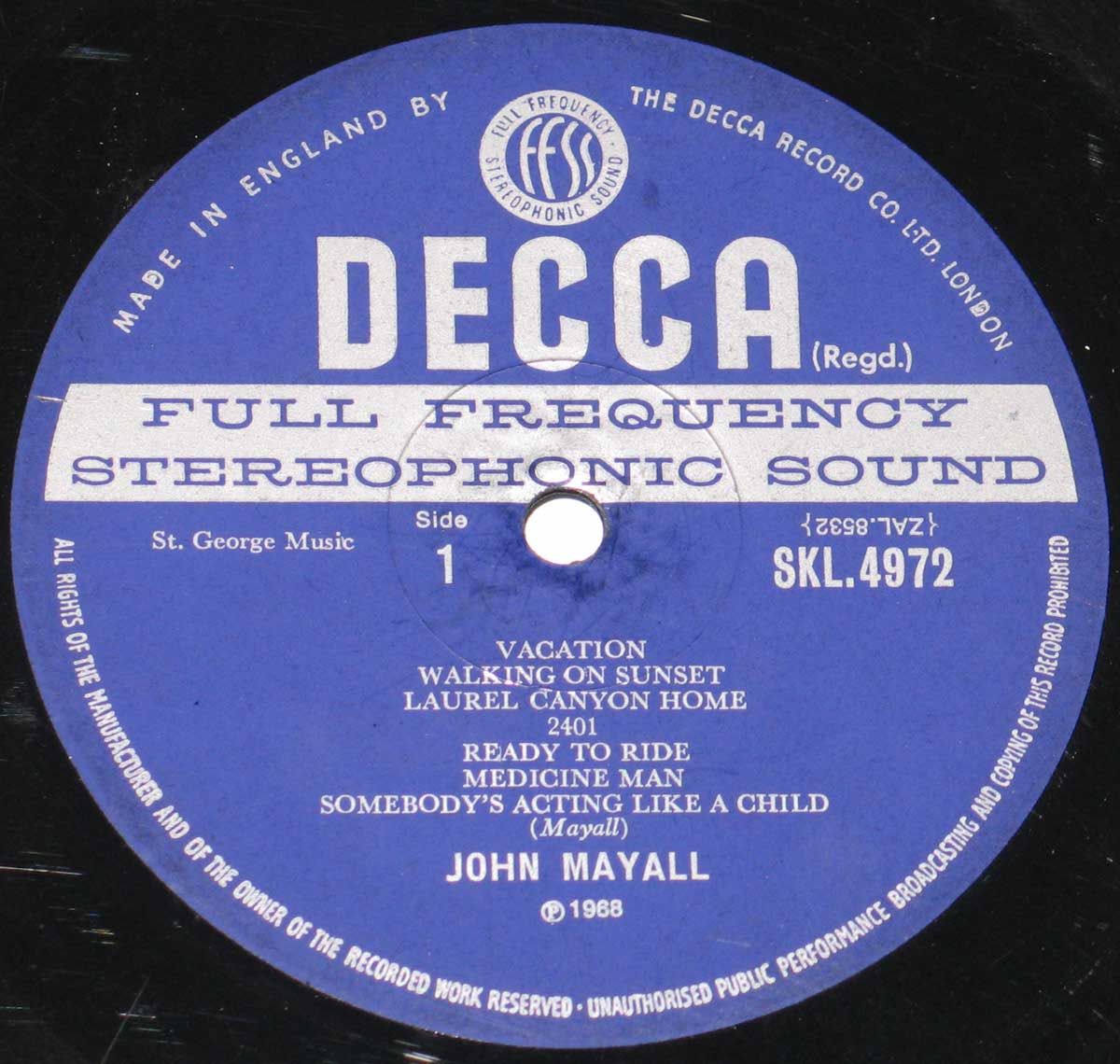
The album's production, overseen by the legendary Tom Wilson, is crisp and clean, capturing the raw energy of the band's live performances. The recording sessions took place at Decca Studios in West Hampstead, London, a far cry from the sun-drenched canyons of Laurel Canyon, but the band manages to conjure the spirit of their new home nonetheless. This juxtaposition of British recording location and California-inspired content adds another layer of intrigue to the album.
One cannot discuss "Blues from Laurel Canyon" without mentioning the young guitar virtuoso Mick Taylor. Still in his teens at the time of recording, Taylor's incendiary playing is a highlight throughout the album, showcasing his raw talent and potential. It's no wonder he would soon be recruited by the Rolling Stones.
"Blues from Laurel Canyon" is not without its controversies. Some critics accused Mayall of cultural appropriation, claiming that he was co-opting the blues for his own commercial gain. Others dismissed the album as a pale imitation of American blues rock. But for those willing to listen with an open mind and an open heart, "Blues from Laurel Canyon" is a revelation, a testament to the enduring power of the blues to cross boundaries and transcend genres.