Historical Context
In the early 1980s, the music world was caught in the seismic aftershocks of disco’s collapse. The neon-lit dance floors of the late ‘70s had been set ablaze by mainstream disco fever, only to be snuffed out by industry fatigue and a backlash from rock traditionalists. Amidst this cultural shift, one band refused to let the groove die quietly—Supermax.
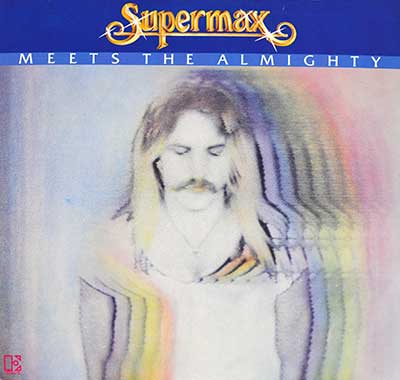
Led by Austrian visionary Kurt Hauenstein, Supermax had always existed on the fringes, blending elements of space-disco, reggae, and funk with deep, entrancing rhythms. Unlike the superficial glitz of late-stage disco, Supermax leaned toward the mystical and the experimental. Their 1981 release, Meets Almighty, arrived at a time when synth-driven music was evolving, reggae was breaking into European consciousness, and dance music was looking for a new identity. The album was a daring step toward a genre-fluid soundscape, built for both the dance floor and the inner mind’s eye.
Musical Exploration and Genre Fusion
Meets Almighty is a sonic trip through interstellar grooves, combining funk, reggae, psychedelic rock, space disco, and electronic textures. Where mainstream disco had become formulaic, Supermax infused the genre with new life, stretching its boundaries and injecting deep basslines that drew heavily from dub reggae.
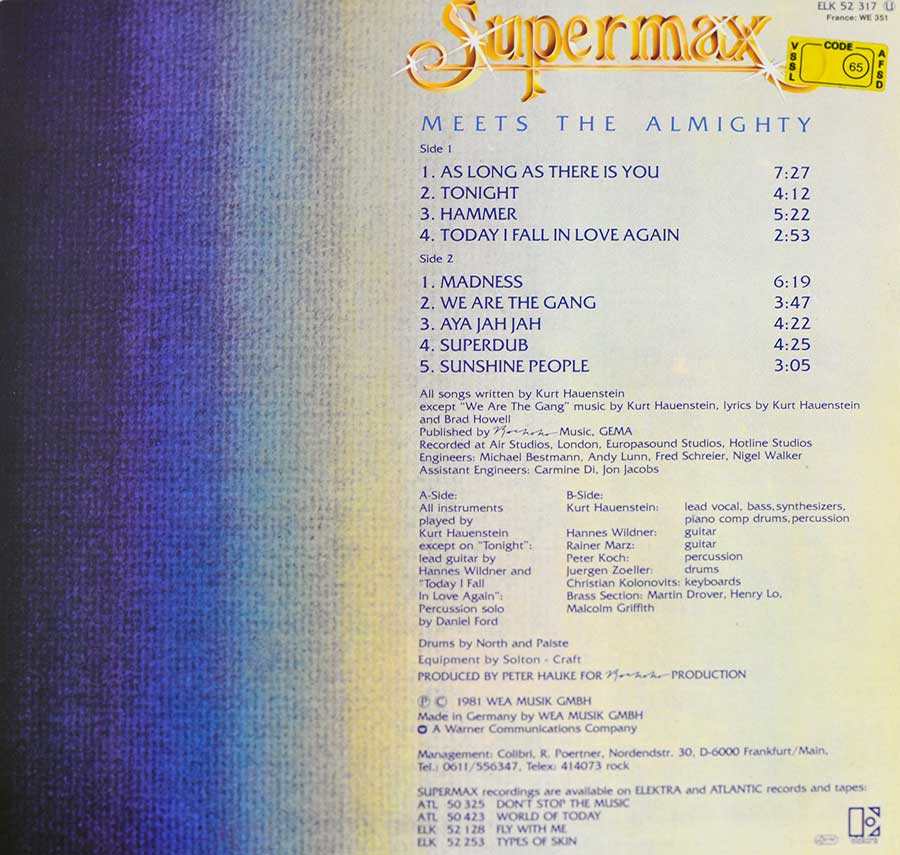
Tracks like "As Long as There is You" and "Tonight" float in a hazy mix of reverb-laden synths and hypnotic bass, embodying the hypnotic allure of Supermax’s signature sound. Meanwhile, "Hammer" drives with a pounding beat reminiscent of Giorgio Moroder’s robotic disco but layered with live, organic instrumentation that keeps it grounded in funk. The use of analog synthesizers and echoing vocal effects adds an ethereal quality that was uncommon for disco-rooted acts of the time.
On the second side, "Aya Jah Jah" reveals the band’s deep admiration for reggae’s spiritual essence. The track is a slow-burning dub odyssey, with its deep bass and spaced-out delays giving the listener a taste of Supermax’s more meditative side. The album concludes with "Superdub" and "Sunshine People", reinforcing the band’s love for the trippy, open-ended structures of Jamaican dub while still keeping feet moving with funk-driven basslines.
Production Team & Recording Studio
Helmed by renowned German producer Peter Hauke, Meets Almighty was recorded at multiple studios, most notably Air Studios in London, Europa Sound Studios, and Hotline Studios. Hauke, known for his work in progressive rock and experimental production techniques, brought a textured, multi-layered sound to the album, blending traditional recording methods with early digital effects. His experience in sculpting sonic landscapes with artists like Nektar and Omega ensured that Supermax’s fusion of electronic and organic instrumentation felt seamless.
The album’s engineering team included Michael Bestmann, Andy Lunn, Fred Schreier, and Nigel Walker, a group well-versed in capturing both the precision of electronic elements and the raw energy of live performance. Their work on tracks like "Madness" demonstrates an exceptional balance between studio wizardry and the visceral punch of funk-driven grooves.
Controversies & Unique Position in Music
Supermax had always courted controversy, not just for their genre-defying sound but for their outspoken social and political stances. Hauenstein was one of the few white European artists openly addressing issues of racial harmony and global unity in his music. The band was even banned from performing in certain countries due to their racially integrated lineup—a bold statement during a time when apartheid still cast a shadow over parts of the world.
While Meets Almighty didn’t spark the same level of controversy as earlier Supermax releases, it did cement the band's outsider status. In a time when European disco acts were fading or shifting toward more mainstream pop sensibilities, Supermax doubled down on their identity as cosmic groove travelers.
Differences Between Releases
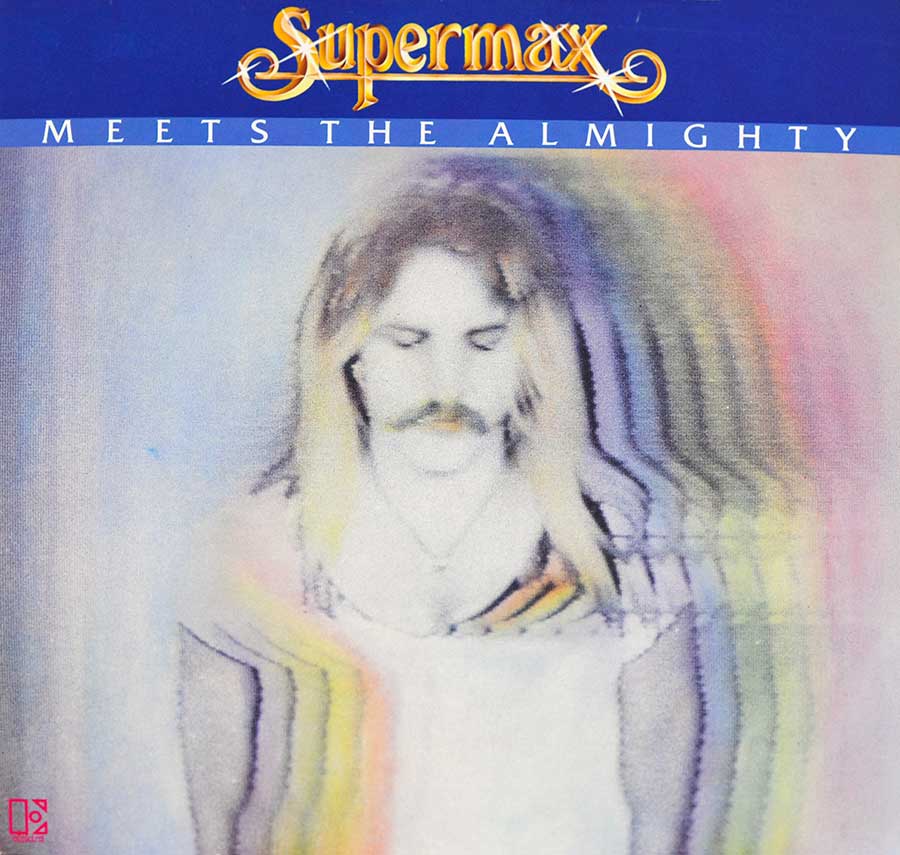
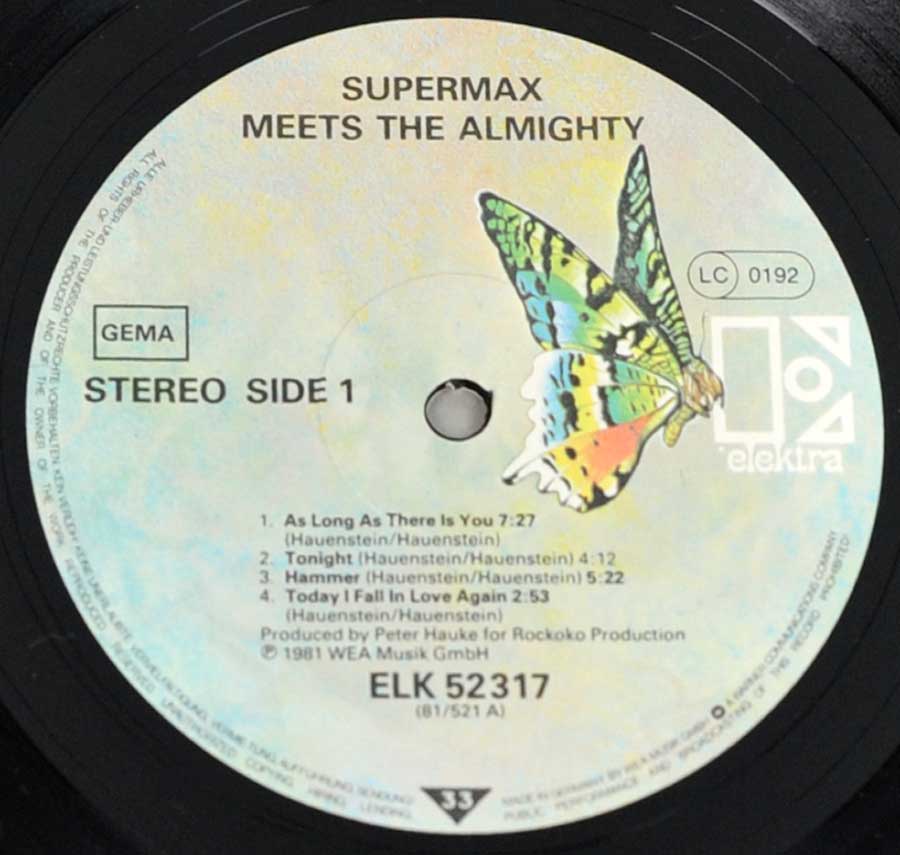
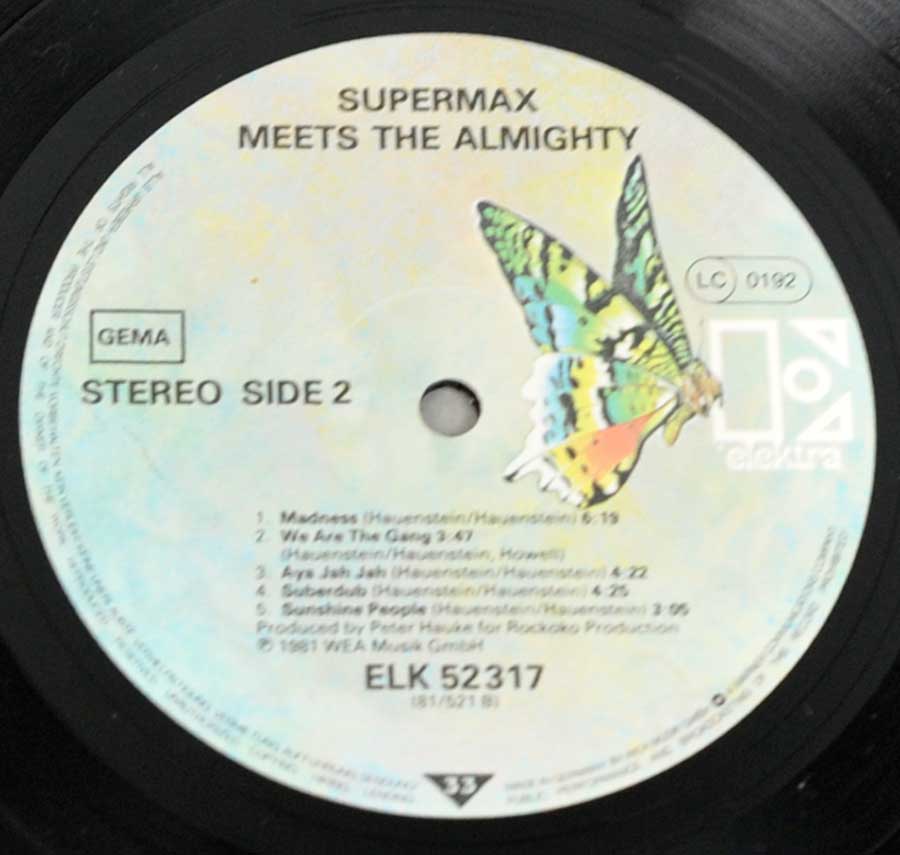
The album saw different pressings across various countries, with slight variations in mixes and artwork. The German edition under Elektra ELK 52317 remains the definitive version, featuring the cleanest sound production. Some later European and North American pressings introduced minor tweaks in track sequencing, with certain remasters slightly altering the reverb and delay effects—particularly on "Superdub" and "Aya Jah Jah."
Certain releases also featured different inner sleeve designs, reflecting the shifting aesthetic of the early 1980s, where album packaging was transitioning from the vibrant, illustrated gatefolds of the ‘70s to more minimal, graphic-heavy designs. The original German pressing retained a gatefold cover, providing fans with additional photography and artwork that encapsulated the album's otherworldly atmosphere.