>In the golden haze of the late 1970s, disco was riding high, but a new sound was emerging from the undergroundÑone that fused funk, reggae, psychedelic rock, and electronic grooves into a hypnotic, dance-driven experience. Fly With Me, released in 1979 by Supermax, stands as a pivotal entry into this movement, embodying what would later be called "acid disco" with its spacey, trance-like energy and hypnotic beats.
Historical Context: Breaking Boundaries in a Changing Music Scene
By 1979, disco had reached its commercial peak, with acts like Chic and Donna Summer dominating airwaves, but backlash was already brewing. Meanwhile, European artists were experimenting with fusions of electronic music, funk, and reggae. Supermax, the brainchild of Austrian musician Kurt Hauenstein, stood apart from the mainstream. Unlike the polished productions coming out of New YorkÕs Studio 54 scene, HauensteinÕs vision was rawer, more experimental, blending deep bass grooves with spacey synthesizers, extended instrumental sections, and a cosmic mysticism.
Musical Exploration: Psychedelic Funk Meets Reggae Hypnosis
Fly With Me captures the essence of late-70s sonic adventurism. The album kicks off with "African Blood," a sprawling, eight-minute odyssey of deep, dub-infused basslines and swirling synths. The hypnotic repetition and layered percussion establish the albumÕs signatureÑmusic meant not just for dancing but for transcendence.
The title track, "Fly With Me," is an invitation into a different kind of discoÑa slower, funkier groove driven by pulsating bass and dreamlike vocals. This is not the fast-paced, four-on-the-floor disco of the Bee Gees, but something closer to what Giorgio Moroder and Kraftwerk were experimenting withÑhypnotic, electronic-tinged, and strangely futuristic.
"It AinÕt Easy" brings in a soulful melancholy, while "AinÕt Gonna Feel" stretches out again into extended instrumental exploration, layering wah-wah guitars over synth atmospheres. "Reggae Fever" further cements SupermaxÕs affinity for dub and reggae influences, while the closing track, "ItÕs a Long Way to Reach Heaven," is a slow-burning, groove-laden finale that feels almost spiritual in its execution.
Genre Fusion: The Acid Disco Revolution
SupermaxÕs sound was difficult to pin down. Too funky for traditional rock audiences, too spacey for straight disco lovers, too experimental for reggae purists. What Fly With Me achieved was a unique fusion that would later be recognized as acid discoÑmusic meant to create a trance-like state on the dance floor, mirroring the psychedelic experiences of the era.
Production and Recording: The Sound Architects
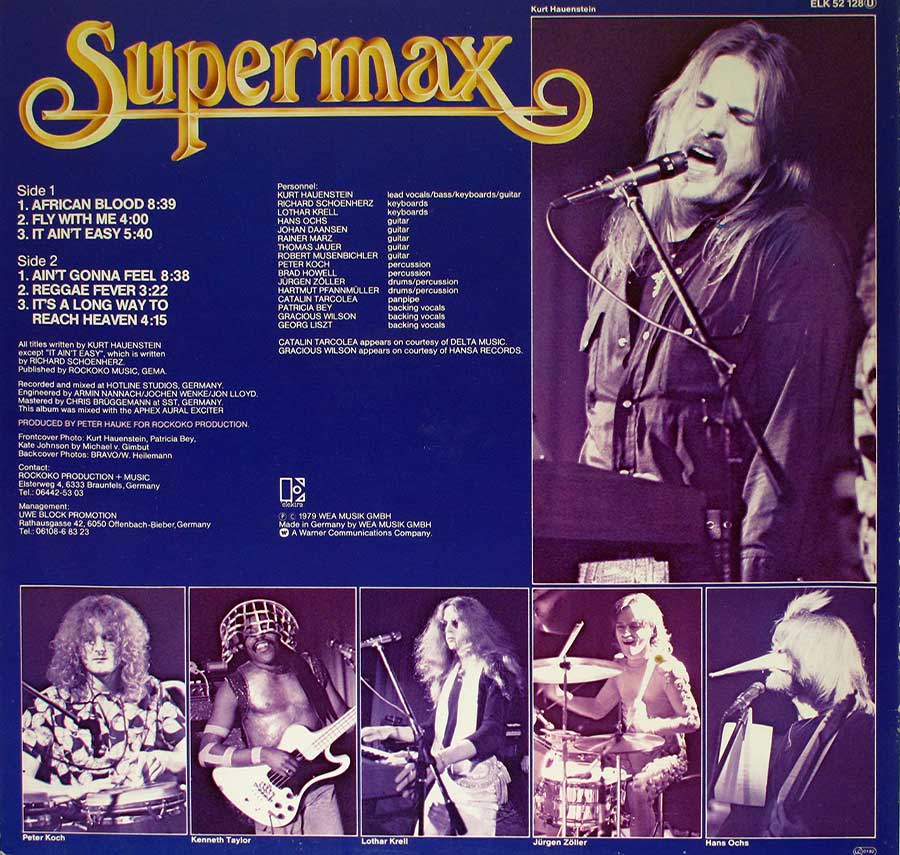
The album was produced by German studio mastermind Peter Hauke, whose expertise in progressive rock and electronic music helped shape the immersive, atmospheric soundscapes of Fly With Me. Recorded at Hotline Studios in Germany, the sessions involved an intricate layering of live instrumentation, synthesizers, and the use of the Aphex Aural Exciter, a technology that added harmonic richness to the recordings.
Engineering duties were handled by Armin Nannach, Jochen Wenke, and Jon Lloyd, ensuring that each trackÕs deep, rolling basslines and ethereal vocals retained their hypnotic qualities. The final mastering was done by Chris Bruggemann at SST, Germany, giving the album a crisp yet warm analog sheen.
Visual Identity: The Psychedelic Dream
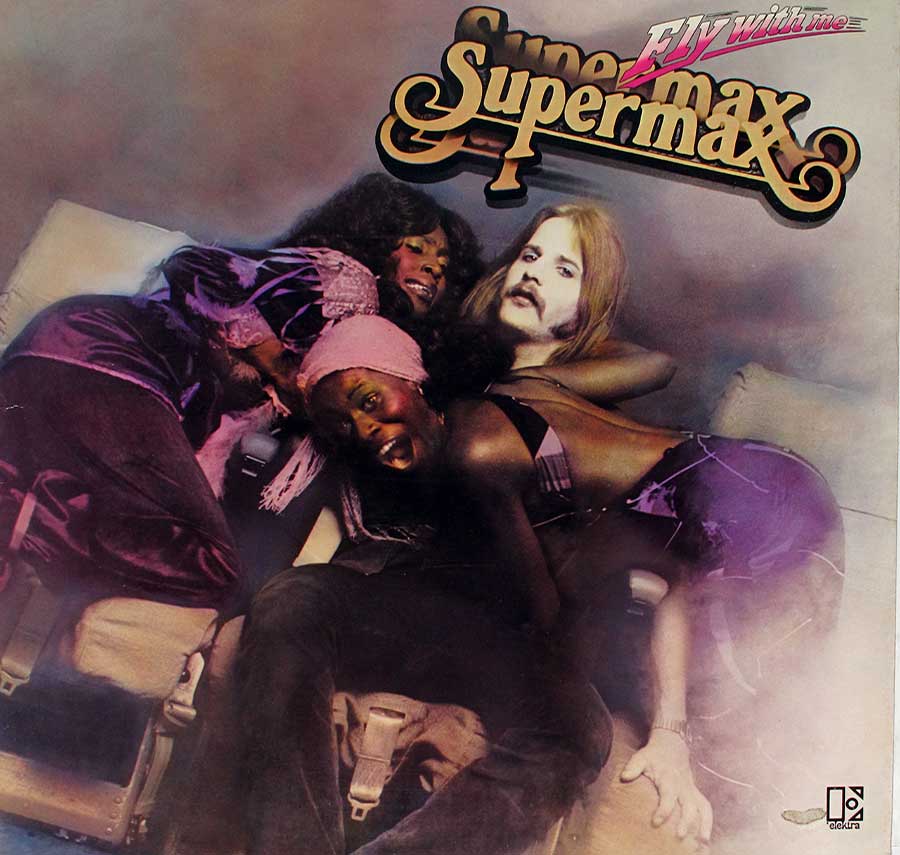
The albumÕs cover artwork also played a crucial role in its mystique. The front cover, featuring Hauenstein reclining among vibrant, expressive women in a surreal, dreamlike setting, perfectly matched the albumÕs sonic worldÑsensual, cosmic, and otherworldly. The back cover, dominated by a moody blue palette, presented a more serious tone, with live performance images reinforcing the bandÕs raw energy.
Alternate Versions and Differences Between Releases
The original 1979 German pressing on Elektra Records (ELK 52 128) featured the standard six-track listing, but later international versions of the album slightly altered the track order or featured different artwork depending on the market. Some pressings also included slight variations in mixing, particularly in the reverb-heavy production of "Fly With Me," which was toned down in certain remastered editions.