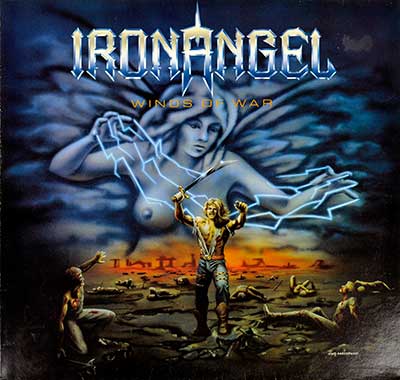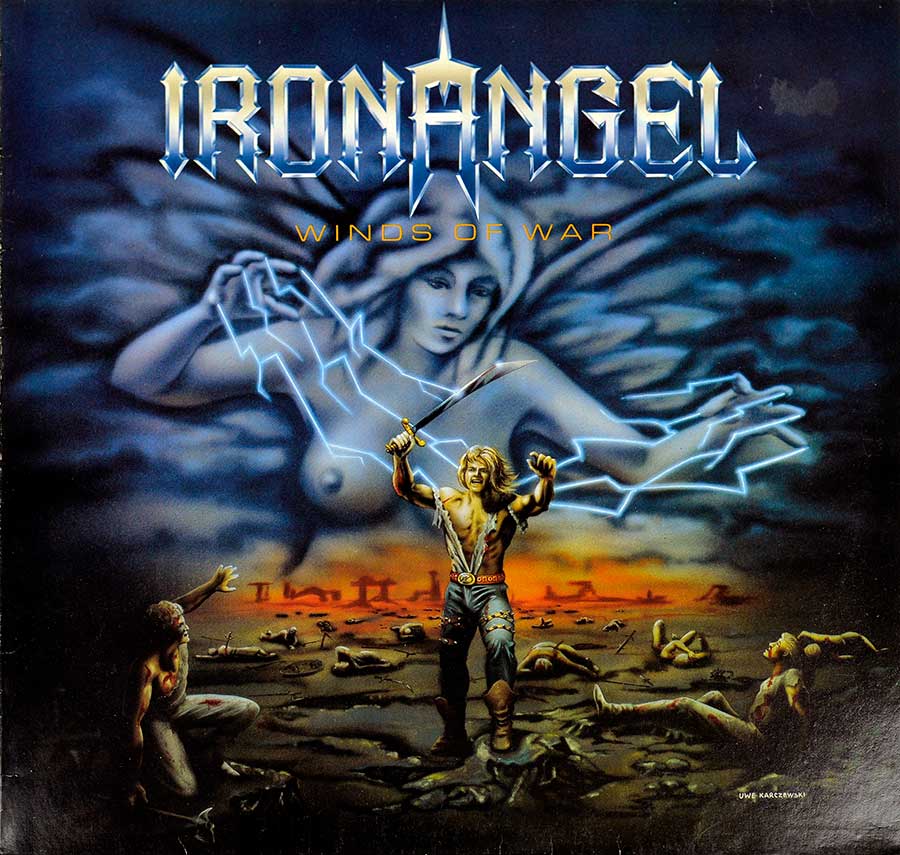
"Winds of War" (1986) Album Description:
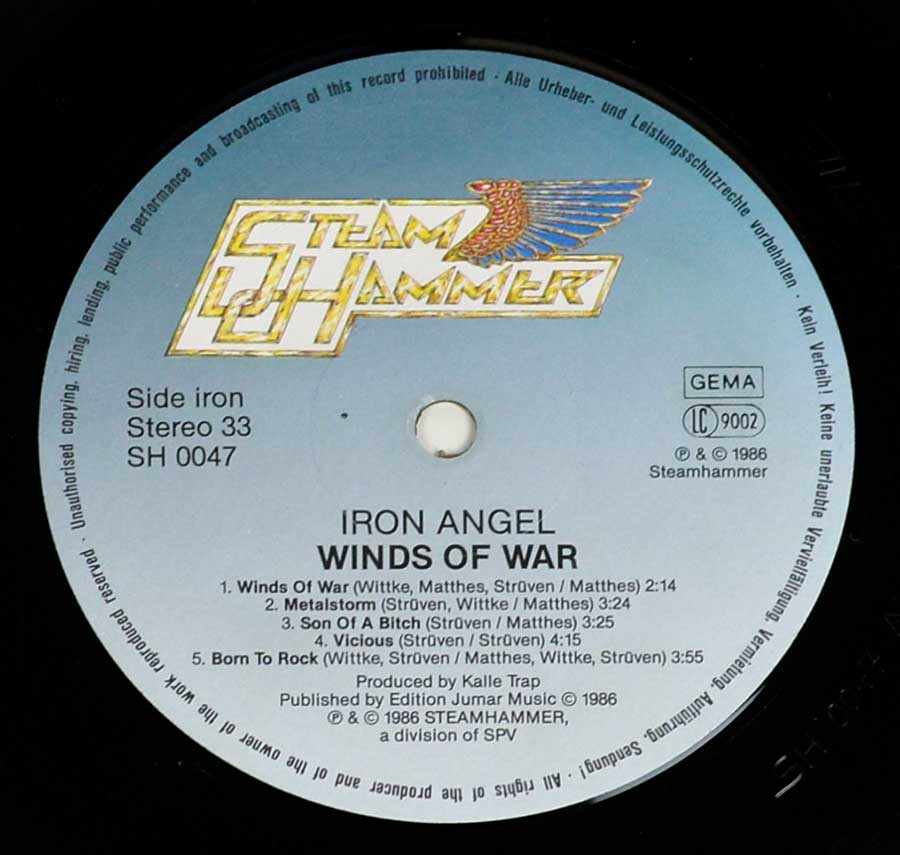
By the time Iron Angel cut "Winds of War" in April 1986, West Germany was still a divided nerve case, and after Chernobyl the country had one more reason to distrust the air. You can hear some of that static in the record, though not in a tidy slogan-and-footnotes way. The title piece is barely two minutes, more like a warning flare than a song, and then "Metalstorm" comes charging in with that twin-guitar battery and Mike Matthes kicking the drums like he means to split the floorboards.
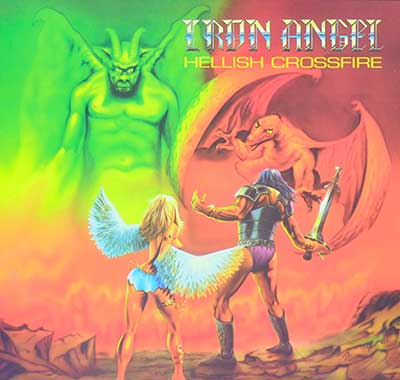
What makes this album worth arguing about is that it is not pure Teutonic thrash, no matter how many lazy labels get stapled onto it. It swerves. One minute Iron Angel are still throwing sparks from the same back-alley speed metal forge that gave us "Hellish Crossfire," the next they are reaching for bigger choruses, more lift, more space, more fist-in-the-air menace. That wobble is the whole story, and it is exactly why the record pulls me back in.
What was in the air in Germany
The German metal underground in 1986 was moving like a pack that had smelled blood. Sodom were still dragging filth across the floor on "Obsessed by Cruelty." Destruction came in harder and tighter on "Eternal Devastation." Kreator sharpened everything to a butcher's grin on "Pleasure to Kill." Helloween had already shown on "Walls of Jericho" that speed metal could carry melody without turning into wallpaper. Iron Angel sat somewhere in the middle of that racket: not as rabid as Sodom, not as murderous as Kreator, not as polished as Helloween, but full of German steel and bad intent.
How this thing actually sounds
I can still picture a record shop turntable spitting out "Metalstorm" on a grey afternoon while some bloke near the import bin tried to act unimpressed. It did not work. Peter Wittke and Sven Struven make a proper axe team here; they slash, lock in, then suddenly open the song up with harmonies that feel less decorative than tactical. Dirk Schröder is not smooth and thank heavens for that. He rasps, barks, overshoots, claws back in, and gives the album the kind of friction clean-throated singers often kill stone dead.
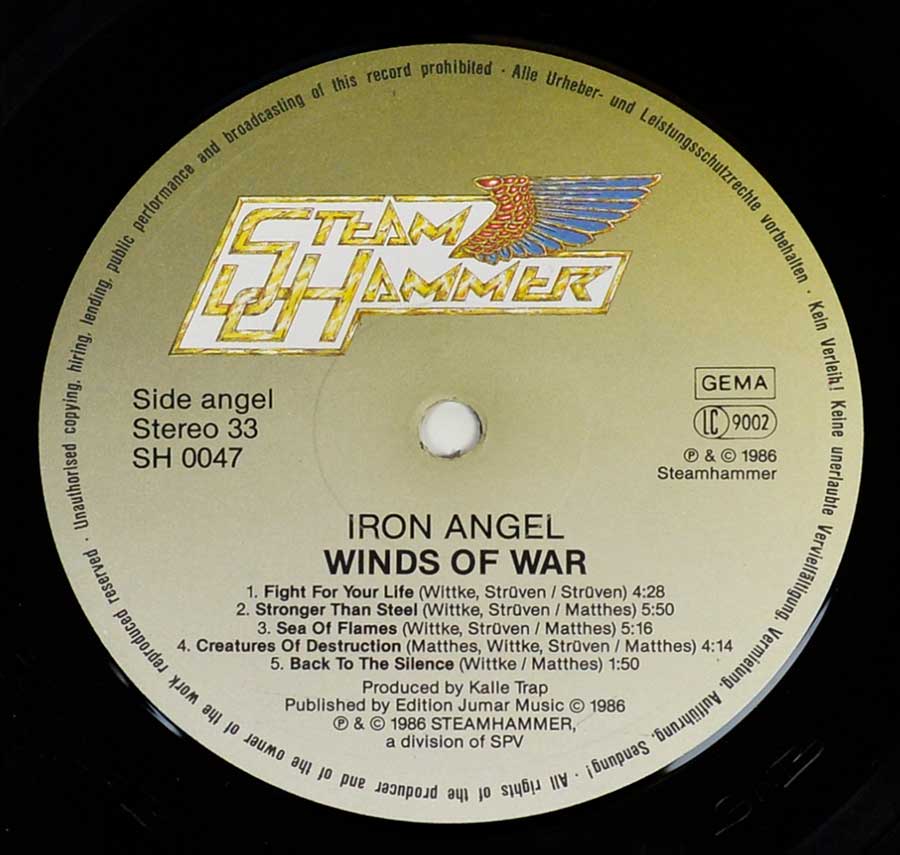
The attack changes from track to track. "Vicious" bites fast and ugly. "Stronger than Steel" stretches out and lets the riffs breathe. "Sea of Flames" carries a broader, almost windswept feeling, helped by guest guitar from Jürgen R. Blackmore. Even "Born to Rock," which still makes some purists pull a face, has its purpose. It stomps in like a barroom chant wearing a studded jacket and dares you to call it soft.
Who did what, and why it mattered
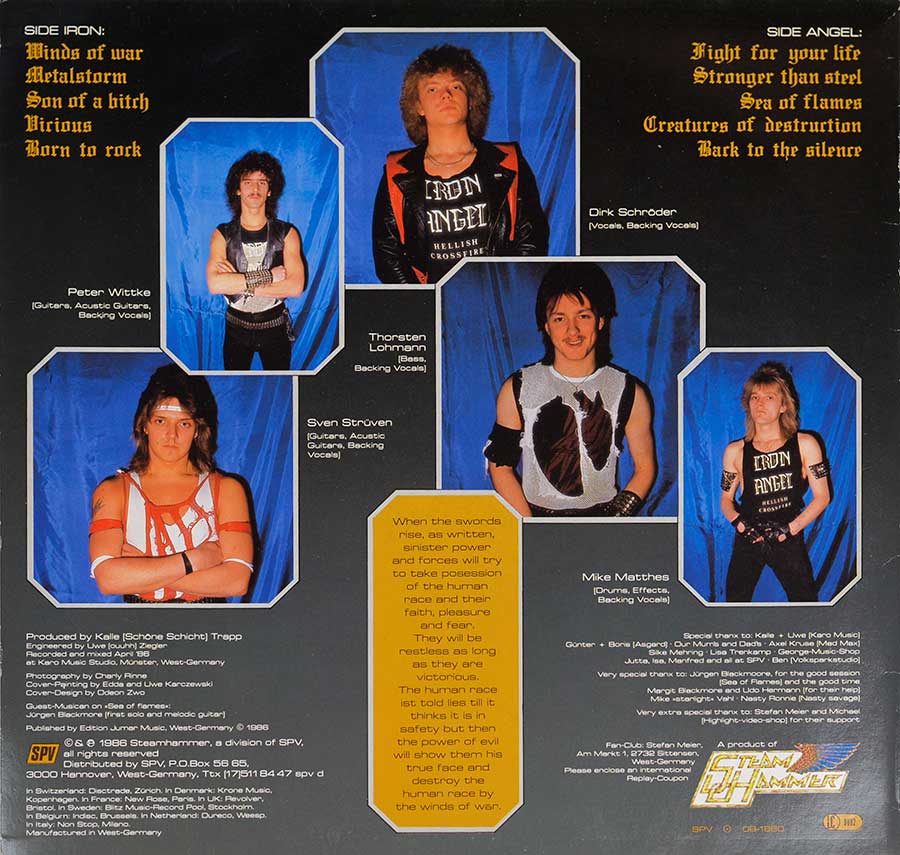
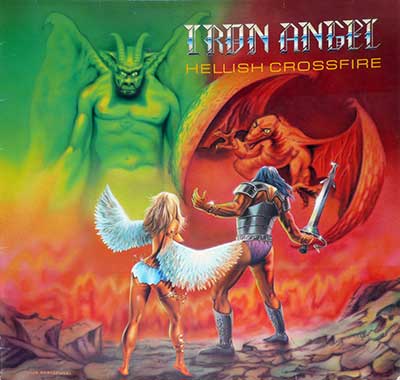
The practical crew mattered here. Kalle Trapp produced it at Karo Music Studio in Muenster, with Uwe Ziegler engineering, and they did not drown the band in studio soup. The riffs keep their bite. The drums hit with shape instead of blur. The whole mix has enough air for the hooks to swagger in without sanding the edges off the speed metal charge. Charly Rinne handled the photography, while Edda and Uwe Karczewski gave the sleeve that painted, war-dream look that fits the music better than any tidy realism would have.
The strain inside the band
What I like about "Winds of War" is that you can hear a band pulling in two directions at once. The record still carries the core five on the studio floor: Schröder, Wittke, Struven, Lohmann and Matthes. But the ground was already shifting. Thorsten Lohmann would be out before the German tour with King Diamond, Guenther Moritz would step in live, and the broader fight over musical direction helped crack the band not long after. Some songs on this album want the alleyway. Some want the stage lights. That push-and-pull gives the whole thing a live wire under the skin.
No scandal, just the real argument
There is no famous scandal attached to this release, and that itself tells you something. The argument was musical, not tabloid. Some listeners wanted "Hellish Crossfire" part two and heard compromise instead. Others heard a speed metal band refusing to stay in one lane like obedient little soldiers. The common misconception is that Iron Angel suddenly turned into a different band altogether. Not really. The bones were still there. The posture changed. That is a different thing, and a more interesting one.
So no, "Winds of War" is not the nastiest German metal record of 1986, and pretending otherwise would be pub nonsense. But it has something a lot of more perfectly behaved records do not. It sounds like a band choosing, mid-swing, what kind of beast it wants to be. That hesitation leaves marks. Perfect albums pose for the camera. This one still throws elbows.
References
- Metal Archives: Iron Angel - "Winds of War"
- Wikipedia: "Winds of War" album page
- Wikipedia: Iron Angel band history
- Kreator - "Pleasure to Kill" (1986)
- Destruction - "Eternal Devastation" (1986)
- Sodom - "Obsessed by Cruelty" (1986)
- Helloween - "Walls of Jericho" (1985)
- vinyl-records.nl: high-resolution album cover photos