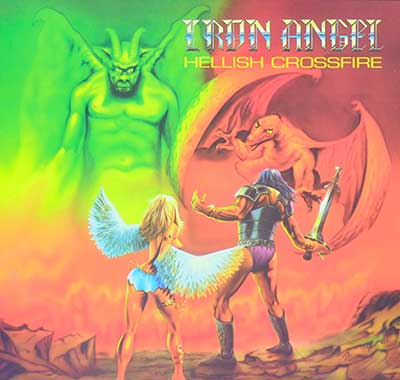
In the smoldering crucible of Germany's mid-80s metal scene, a band called Iron Angel emerged from the shadows, clutching their debut LP, "Hellish Crossfire." It was 1985, and the world was awash in a sea of spandex, hairspray, and power ballads. But Iron Angel weren't interested in playing that game. They were raw, they were furious, and they were here to unleash a sonic apocalypse.
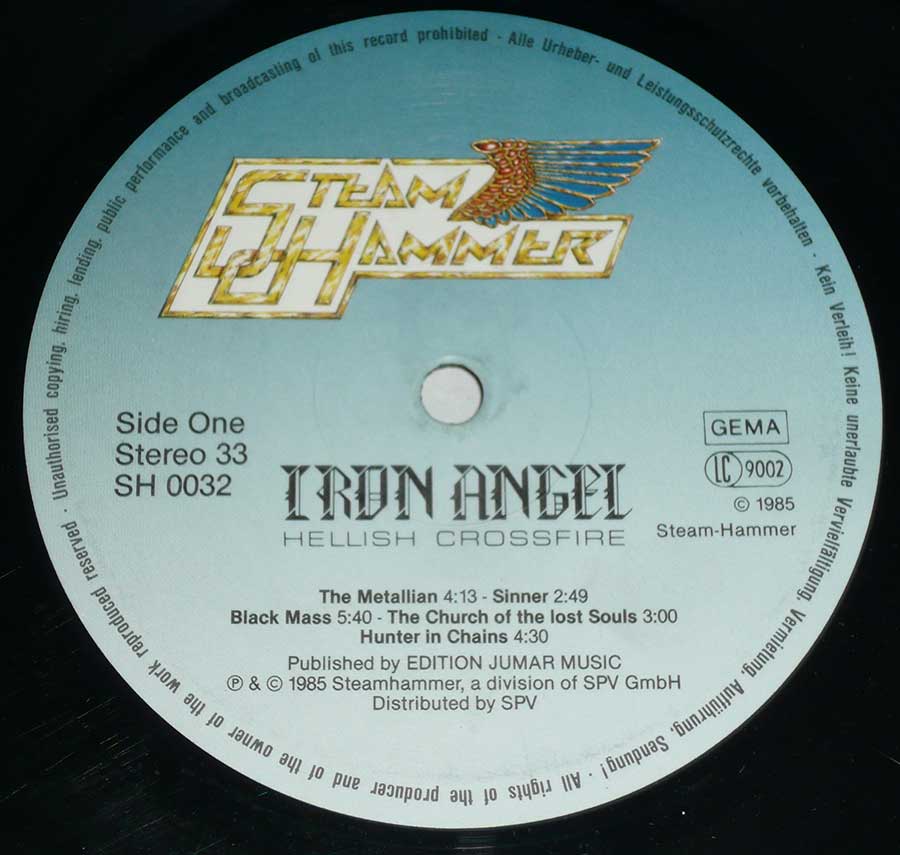
Steamhammer Records, a label known for its eclectic roster, took a gamble on these young thrashers. And it paid off. "Hellish Crossfire" was a relentless assault of speed metal fury, a whirlwind of breakneck riffs, pummeling drums, and vocalist Dirk Schröder's guttural howls. It was a sound that owed a debt to the pioneers of the New Wave of British Heavy Metal, but Iron Angel pushed the boundaries of speed and aggression to new extremes.
The album's production was raw and unpolished, a true reflection of the band's underground roots. Recorded at Horus Sound Studio, "Hellish Crossfire" captured the raw energy and intensity of Iron Angel's live performances. There were no studio tricks or overdubs here, just pure, unadulterated metal mayhem.
The album's lyrics delved into dark and apocalyptic themes, exploring the horrors of war, the dangers of nuclear annihilation, and the bleakness of the human condition. It was a far cry from the party anthems and love songs that dominated the charts at the time. Iron Angel's music was a reflection of the anxieties and fears of a generation growing up in the shadow of the Cold War.
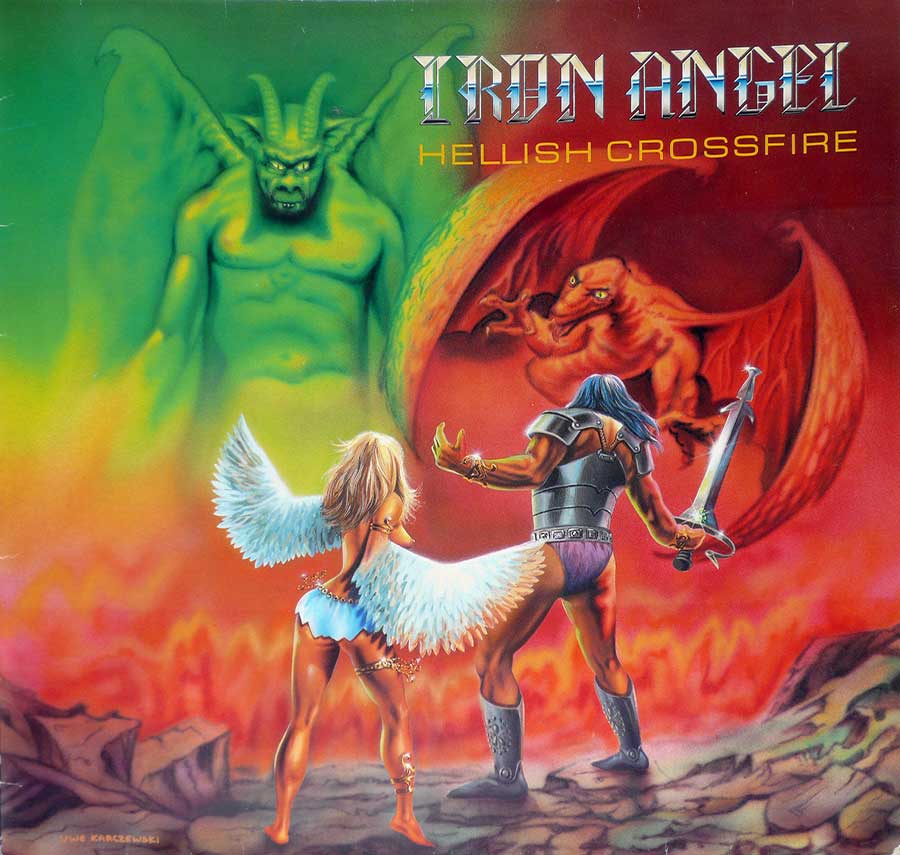
"Hellish Crossfire" wasn't without its controversies. The album's cover art, depicting a demonic figure wielding a sword, was deemed too extreme by some retailers, who refused to stock it. But this only served to fuel Iron Angel's rebellious spirit and solidify their reputation as a band that refused to compromise their artistic vision.
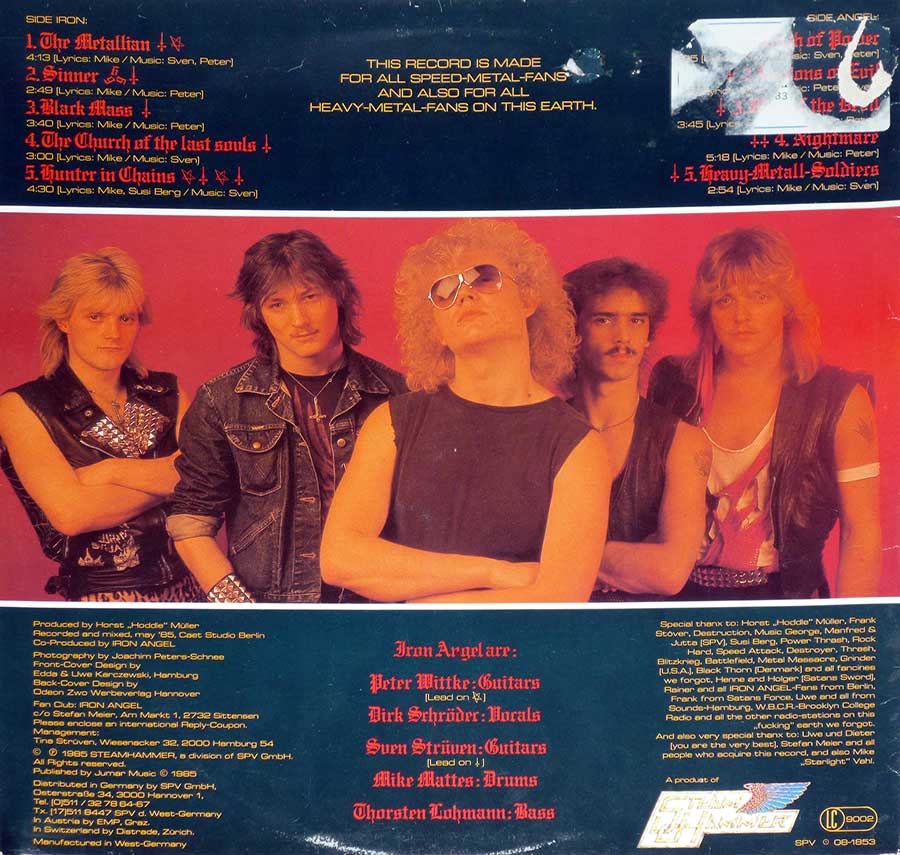
One of the standout tracks, "The Metallian," became an anthem for the burgeoning thrash scene, with its infectious riff and rallying cry for metalheads to unite. The song's popularity helped to propel the album to cult status, with fans clamoring for more of Iron Angel's aggressive sound.
Another fan favorite, "Rush of Power," showcased the band's ability to blend speed and melody, creating a sound that was both brutal and catchy. The song's lyrics, which dealt with the intoxicating allure of power, resonated with listeners who felt disillusioned with the political and social climate of the time.
While "Hellish Crossfire" didn't achieve mainstream success, it garnered a cult following among metalheads who craved something heavier, faster, and more extreme. It was an album that spoke to a generation of disenfranchised youth who felt alienated by the commercialism and conformity of mainstream culture.
Iron Angel's legacy may not be as widely known as some of their contemporaries, but their influence on the development of thrash and speed metal cannot be denied.