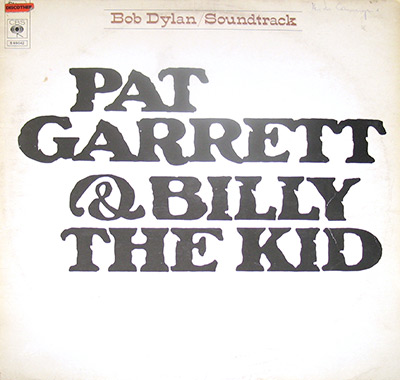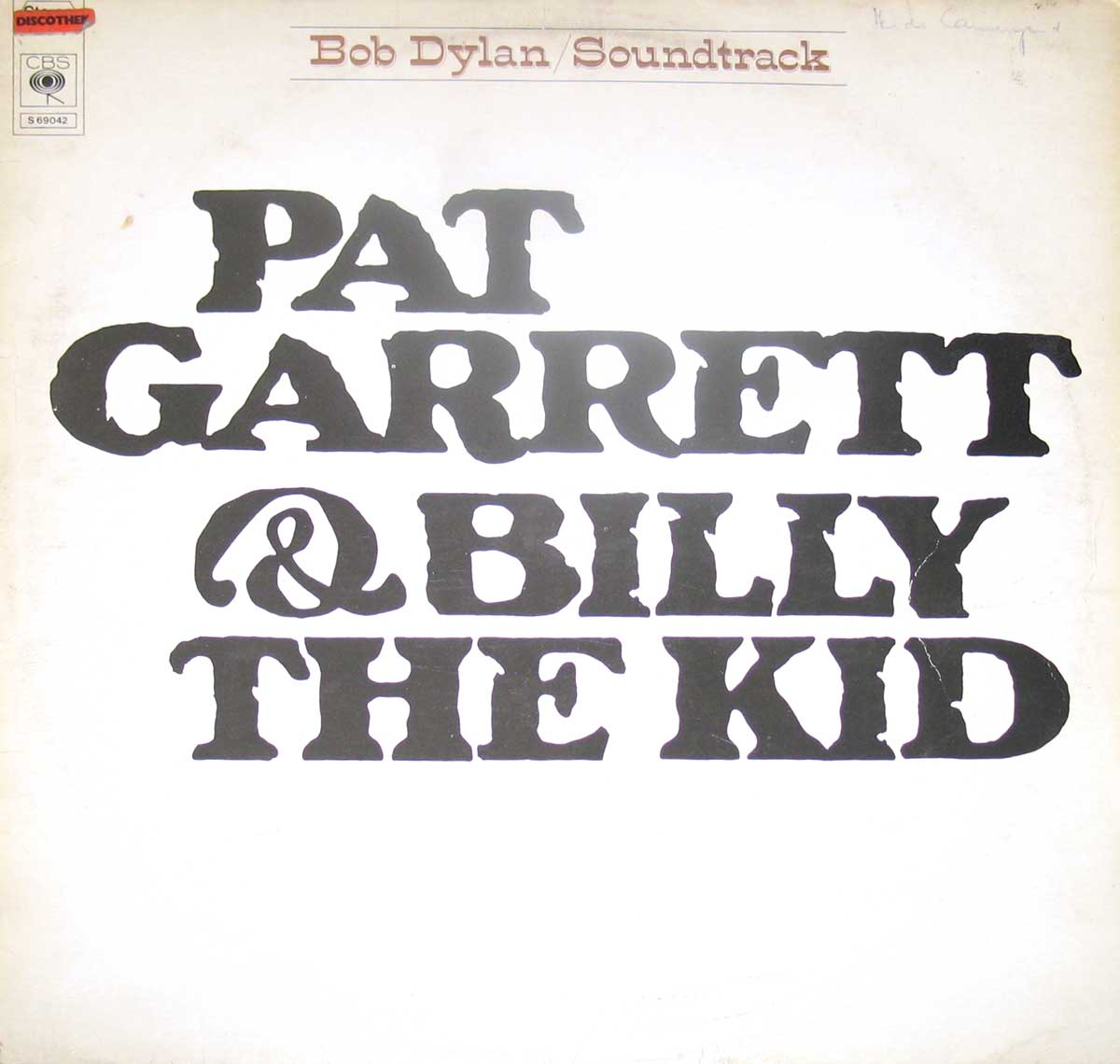
"Pat Garrett & Billy The Kid" (1973) Album Description:
The movie wants dust, sweat, and bad choices. The soundtrack gives it exactly that — and Dylan doesn’t “score” this thing so much as stalk it. Little themes drift in like heat off the road. A banjo twitches, a guitar line squints into the sun, and suddenly you’re in Peckinpah-land where every goodbye takes too long and every smile has a bruise under it.
Here’s the hook people miss: Dylan barely sings. He mostly circles the film like a wary animal, dropping instrumentals and half-spoken moods… and then he opens one door in the middle of the record and the whole room goes quiet.
1973: What Was in the Air
America in 1973 felt like the party ended and the lights came on. Vietnam was grinding toward an exit, Watergate was turning politics into a late-night creep show, and the counterculture glow had a hangover you could taste. Music didn’t march in neat lines either — it splintered. Glam was glittering and sneering, singer-songwriters were sharpening confession into craft, and the loud bands were learning how to fill arenas without sounding like they’d been shrink-wrapped.
So this soundtrack landing in that year makes sense. It doesn’t posture. It just sits in the corner, cigarette ember bright, watching the room and reporting back in small, tense phrases.
Genre Context: Where This Fits (and Where It Refuses To)
If you were living on a diet of Led Zeppelin muscle, Pink Floyd’s slow-bloom hypnosis, Bowie’s glam theater, the Stones’ decadent swagger, or Neil Young’s jagged honesty, this record can feel almost… underfed. That’s not a flaw. It’s the job. Western soundtrack music isn’t supposed to chase you down the street. It’s supposed to haunt the spaces between gunshots and regrets.
And Dylan leans hard into that “in-between” role. No big orchestral heroics. No tidy crescendos. Mostly texture, timing, and nerve.
How It Sounds: Attack, Space, Tension
The record moves like a camera pan across dry country. “Main Title Theme (Billy)” opens wide — not loud, wide — with a loose, loping gait that feels like boots on packed earth. “Cantina Theme (Workin’ for the Law)” has that barroom sway, a little crooked, like the room itself is leaning.
The “Billy” motifs are fragments, not monuments. Short statements. A melody that shows up, leaves, shows up again… like somebody you can’t quite trust.
Then “Knockin’ on Heaven’s Door” arrives and it’s almost rude how simple it is. No fireworks. Just a plain line, a plain voice, and a chorus that lands like a hand on your shoulder when you don’t want to be touched.
Key People: What They Actually Did
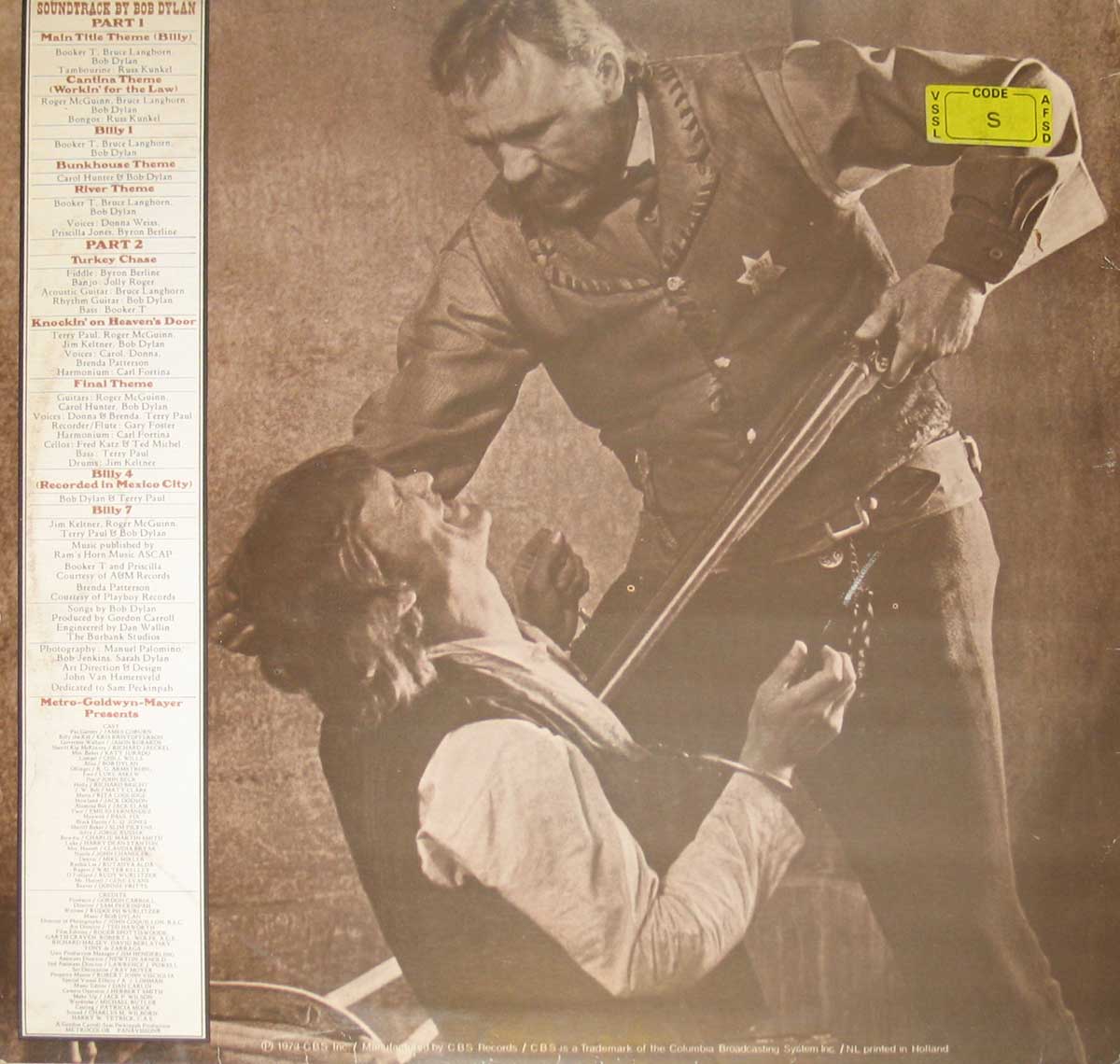
The page says it outright: this is Dylan in the film and Dylan on the soundtrack, with Sam Peckinpah steering the movie and Gordon Carroll producing it. That matters because Peckinpah’s pacing is the real metronome here — long looks, sudden violence, sorrow that hangs around after the scene cuts.
The musicians around Dylan don’t “decorate” the songs. They give the cues muscle and movement: Bruce Langhorne brings that rangy guitar presence, Roger McGuinn flashes bright strings through the dust, Jim Keltner and Russ Kunkel keep the rhythm human (never stiff, never too clean), and Booker T. Jones and Terry Paul anchor things when the melodies start wandering. It’s a loose crew on purpose. A fixed band would have sounded too proud of itself.
Tracklisting: The Record You Actually Hear
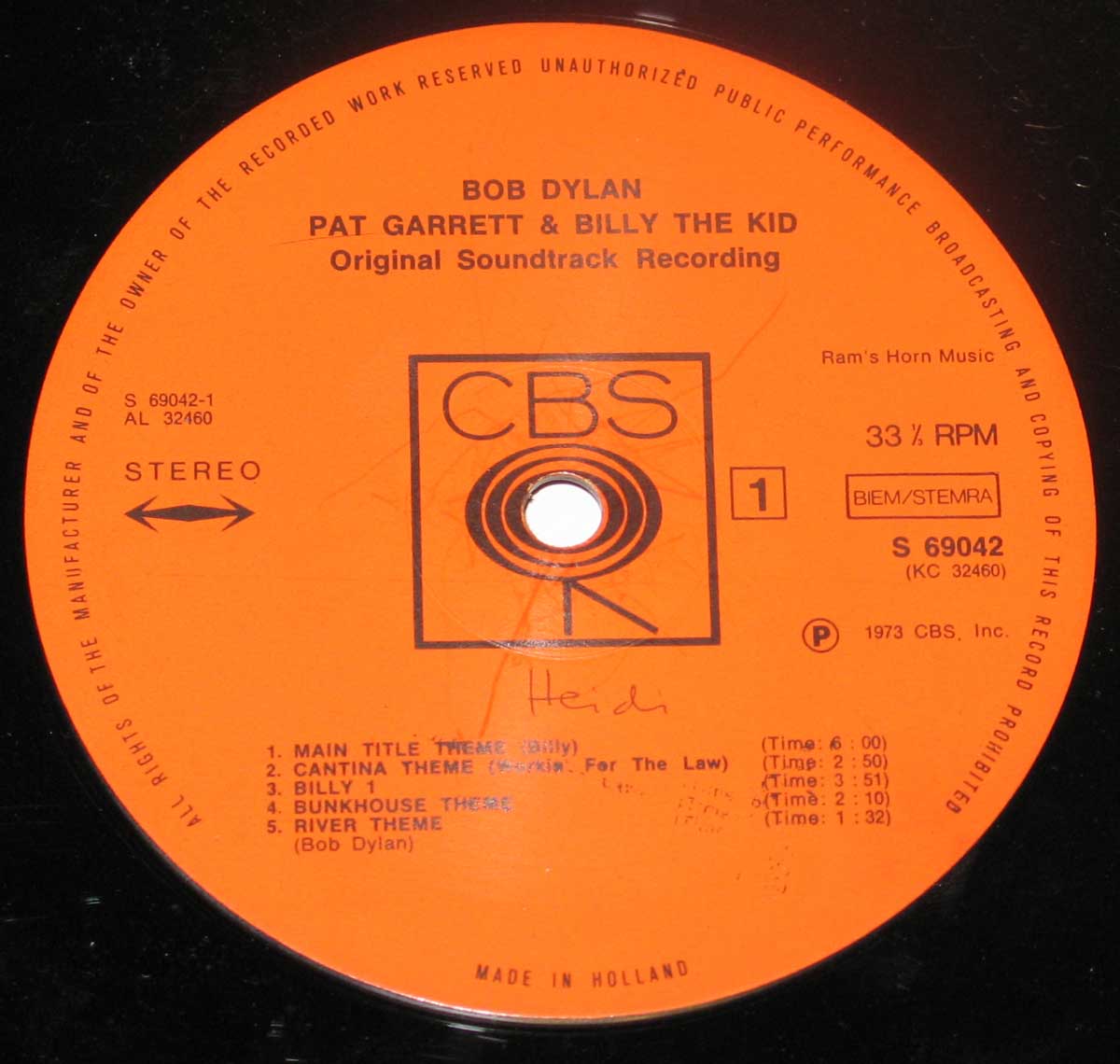
- Part I: Main Title Theme (Billy), Cantina Theme (Workin' for the Law), Billy 1, Bunkhouse Theme, River Theme
- Part II: Turkey Chase, Knockin' on Heaven's Door, Final Theme, Billy 4 (Recorded in Mexico City), Billy 7
Controversy (or the Lack of It)
No big public scandal attached to this release — not the kind that sells newspapers, anyway. The noise was mostly critical grumbling: some people wanted a “real Dylan album” and acted offended that they got instrumentals, atmosphere, and patience instead.
The common misconception is that this record is basically one famous song and a lot of filler. That’s lazy listening. The instrumentals are the point: they set the light, the distance, the dread. They make the hit song feel inevitable rather than random.
One Quiet Personal Anchor
First time I ran into this one was late-night radio — not the song, the weird little themes around it. The DJ let “River Theme” breathe for a minute, and I remember thinking: this isn’t background music. This is the background catching up with you.
References
- Vinyl-Records.nl (high resolution album cover photos)
- This album page (canonical)
- BobDylan.com: "Pat Garrett & Billy the Kid" (album page / liner notes)
- Discogs: "Pat Garrett & Billy The Kid" (master release / credits)
- Film background: "Pat Garrett and Billy the Kid" (1973)
This is soundtrack music with a Western spine: minimal, stubborn, and allergic to sentimentality. It doesn’t beg you to love it. It just keeps walking — and if you follow, that’s on you.