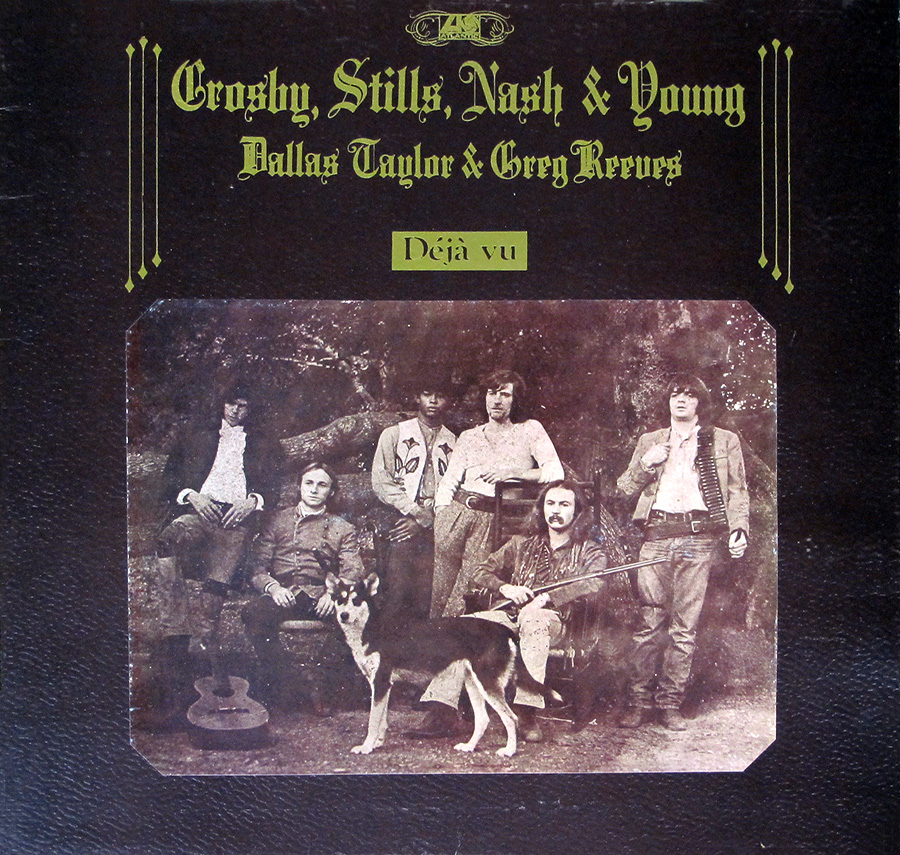
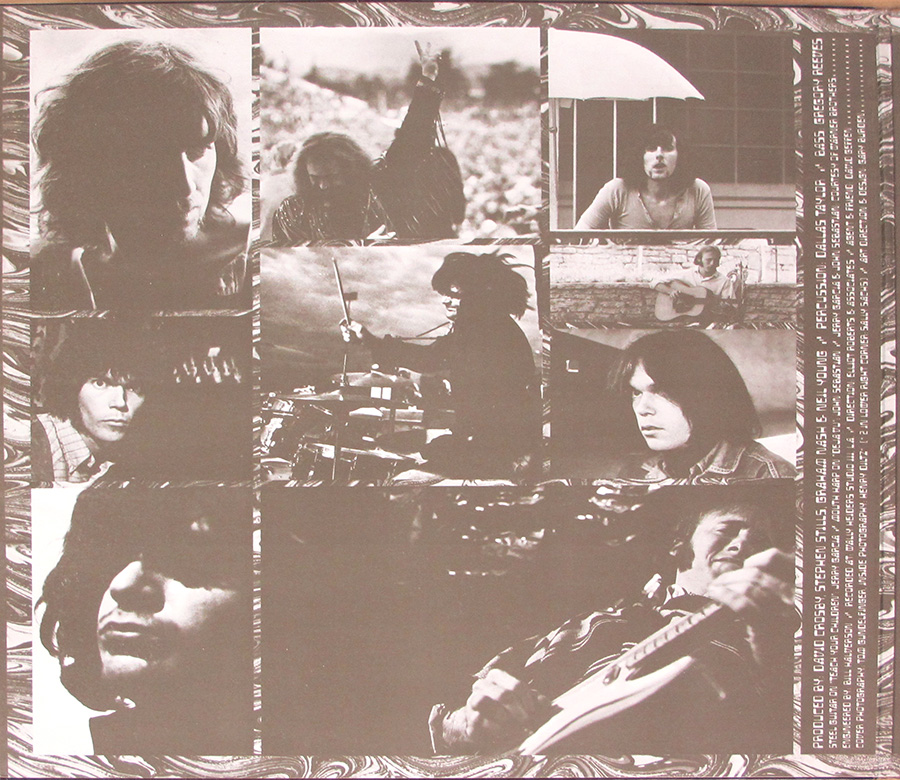
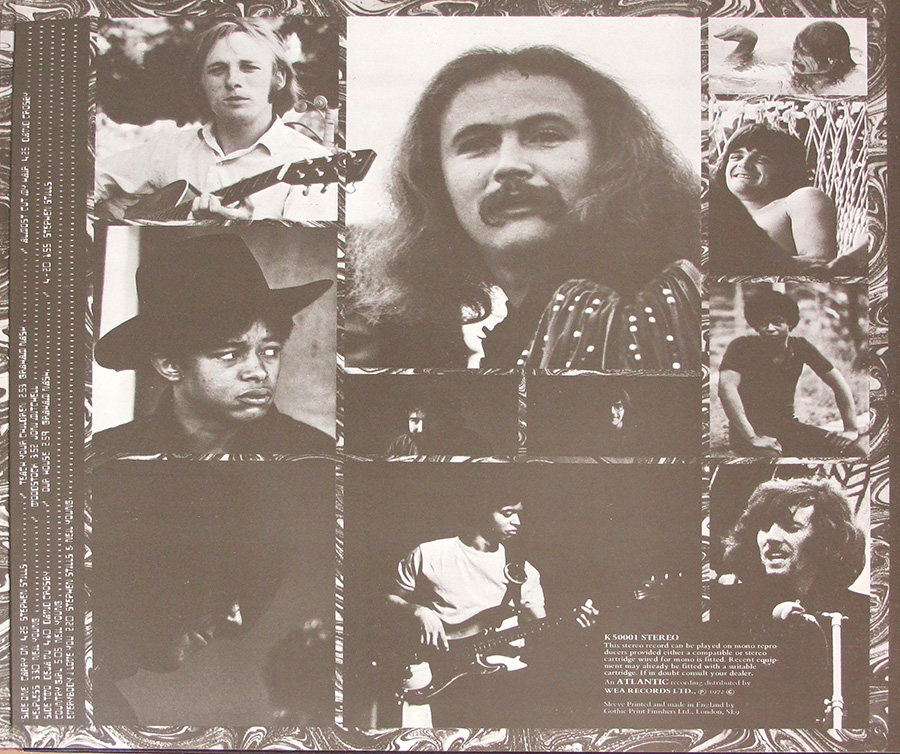
Band-members, Musicians and Performers
- David Crosby : Guitars, vocals
- David Crosby – Vocals, Guitar
A sweet-voiced troublemaker who could stack harmonies like stained glass, then crack them with one perfectly timed opinion. Read more... David Crosby, the kind of singer-songwriter who made the 1960s feel both smarter and more combustible, hit first as a key voice in The Byrds in the mid-60s, where folk-rock got electrified and suddenly sounded like the future. After that, I watched him pivot into Crosby, Stills & Nash from 1968 onward, turning harmony into a weapon and a comfort blanket at the same time, then kick the whole thing wider with Crosby, Stills, Nash & Young starting in 1969, when the songs got longer, the stakes got heavier, and the era started leaving fingerprints on every chorus. Reunions kept flaring up through the 70s and later decades, because some chemistry refuses to stay dead. David Crosby Wiki
.
-
Stephen Stills : Guitars, bass guitar, keyboards, vocals.
Stephen Stills (Full-name; Stephen Arthur Stills, 3 June 1945) is an American musician, singer, and songwriter, best known as a member of the rock band Crosby, Stills, Nash & Young. He was born on January 3, 1945, in Dallas, Texas, and began playing guitar at a young age. In the mid-1960s, he moved to New York City, where he formed the band Buffalo Springfield with Neil Young and others. After the band's breakup, Stills formed
Crosby, Stills, Nash & Young
with David Crosby, Graham Nash, and Neil Young.
Read more »
Throughout the 1970s, Stills released several solo albums, including "Stephen Stills" and "Stephen Stills 2," which featured hit songs such as "Love the One You're With" and "Change Partners." In the 1980s, he reunited with Crosby, Stills, Nash & Young for several tours and albums.
In addition to his work with CSNY, Stills has collaborated with a wide range of artists, such as Manassas, Ringo Starr, and Bonnie Raitt. He was inducted into the Rock and Roll Hall of Fame in 1997 as a member of Crosby, Stills, Nash & Young. Stills continues to tour and record music, and continues to be a respected figure in the music industry.
-
Graham Nash : Guitars, keyboards, vocals.
Graham Nash has etched an indelible mark on the tapestry of popular music. His crystalline vocals, gift for songwriting, and unwavering social advocacy have made him a beloved and enduring figure.
Early Life and The Hollies
Born in Blackpool, England, in 1942, Graham Nash's musical journey began with childhood friend Allan Clarke. Their shared passion for music gave rise to The Hollies, a pop group that soared to fame during the British Invasion of the 1960s. Nash's songwriting talents shone on hits like "Stop Stop Stop," "On A Carousel," and "Carrie Anne," laying the foundation for his future success.
Crosby, Stills, Nash & Young: Finding Harmony
more...
In 1968, Nash's life took a transformative turn when he met David Crosby and Stephen Stills in Los Angeles. The trio's vocal harmonies blended seamlessly, giving birth to Crosby, Stills & Nash (CSN). Nash's contributions, such as "Marrakesh Express," "Teach Your Children," and "Our House," became generational anthems. Even when expanded to the quartet Crosby, Stills, Nash & Young (CSNY), Nash’s voice and perceptive songs played a vital role in the group's sound and message.
Solo Success amidst Unwavering Activism
Alongside his work with CSN(Y), Nash embarked on a successful solo career. His 1971 album, Songs For Beginners, showcased his introspective songwriting, with songs like "Chicago" and "Military Madness" highlighting his commitment to social activism. An outspoken voice against nuclear power and environmental degradation, Nash used his platform to raise awareness and inspire change.
Photography: A Second Artistic Passion
Nash is not only a musician but also a renowned photographer and collector. His passion for photography manifested early on, and he has amassed an impressive collection of works. His own photography has been exhibited worldwide, offering a glimpse into Nash's creative eye.
Legacy and Influence
Graham Nash’s influence is undeniable. With two inductions into the Rock and Roll Hall of Fame, first as a member of The Hollies, then with CSN, his musical contributions are recognized as cornerstones of rock history. Beyond that, his commitment to social justice sets an example for artists who seek to use their voice for greater good.
- Neil Young : Guitars, keyboards, piano, harmonica, vocals
Neil Young, born: Neil Percival Young, born on 12 November 1945, in Toronto, Ontario, Canada, is a legendary singer, songwriter, and guitarist. Renowned for his distinctive voice, poetic lyrics, and versatile musical style, Neil Young has established himself as one of the most influential and enduring musicians of his generation.
Read more »
Young's passion for music was evident from an early age. He began playing the ukulele at the age of five, and by his teenage years, he had already taken up the guitar and harmonica. Inspired by artists like Elvis Presley and Chuck Berry, he formed his first bands, The Jades and subsequently The Squires, in his early teens. These early experiences ignited Young's desire to pursue a career in music.
In the mid-1960s, Neil Young co-founded the band Buffalo Springfield, which became a prominent part of the burgeoning folk-rock scene. Their self-titled debut album in 1966 showcased Young's songwriting skills and featured the classic track "For What It's Worth," which became an anthem for the 1960s counterculture movement. Despite internal conflicts,
Buffalo Springfield
released three albums before disbanding in 1968.
Following the breakup of Buffalo Springfield, Young embarked on a highly successful solo career that would span several decades. His debut solo album, "Neil Young," was released in 1968, and he followed it up with a string of critically acclaimed albums, including "Everybody Knows This Is Nowhere" (1969), which introduced his backing band, Crazy Horse. This album featured the classic tracks "Cinnamon Girl" and "Down by the River," solidifying his reputation as a masterful songwriter and guitarist.
Throughout the 1970s, Neil Young released
a series of influential albums
that showcased his musical versatility. Albums like "After the Gold Rush" (1970) and "Harvest" (1972) brought him widespread commercial success and produced timeless classics such as "Heart of Gold" and "Old Man." Young's music during this period was characterized by his introspective lyrics, melodic hooks, and his ability to effortlessly switch between acoustic folk and electric rock.
Neil Young's career took various creative turns in the subsequent decades. He formed several different backing bands, including the country-rock-oriented Stray Gators and the hard-hitting Crazy Horse, with whom he would collaborate intermittently throughout his career. Young continued to experiment with his sound and tackle a diverse range of topics in his music, often using his platform to address social and political issues.
Young's discography is vast and diverse, and he has released numerous critically acclaimed albums, including "Rust Never Sleeps" (1979), "Freedom" (1989), and "Harvest Moon" (1992). His willingness to explore different genres, from rock and folk to country and grunge, has solidified his status as an iconoclastic artist who refuses to be confined by conventional boundaries.
In addition to his solo work, Neil Young has collaborated with various musicians, including
Crosby, Stills, Nash & Young,
with whom he produced politically charged anthems like "Ohio" and "Woodstock." He has also been an advocate for environmental causes, most notably with his involvement in the annual Farm Aid concerts, which raise funds and awareness for family farmers.
Neil Young's contributions to music have earned him numerous accolades and inductions into prestigious halls of fame, including the Rock and Roll Hall of Fame in 1995. His artistic integrity, unwavering commitment to his vision, and ability to connect with audiences through his honest and emotive music have made him an enduring and beloved figure in the world of rock and folk music.
Even after decades in the industry, Neil Young remains an active musician, continually creating new music and captivating audiences with his live performances. His legacy as a singer, songwriter, and guitarist continues to inspire generations of musicians, ensuring that his influential voice will resonate for years to come.
.
- Greg Reeves: Bass guitar, percussion
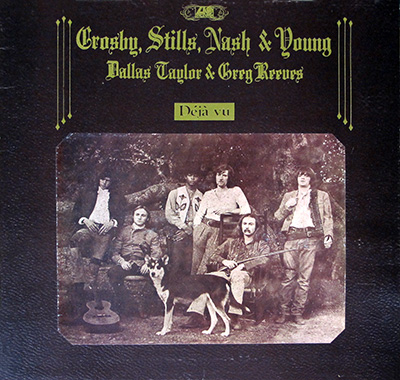
Greg Reeves (Full-name; Gregory Allen Reeves ) an American bass guitar player who is known for his work with Crosby, Stills, Nash & Young. He was born in 1948 and began playing bass guitar in the 1960s. He was a member of the band Poco, before joining Crosby, Stills, Nash & Young in 1969. He appeared on the album "Déjà Vu" which was released that year and was the band's first album as a quartet.
more...
Reeves played bass guitar on the album, and his playing is featured on several of the album's most popular songs, including "Teach Your Children" and "Our House." After the album's release, he left the band to continue his solo career.
After leaving CSNY, he worked with other artists such as Joe Cocker and Diana Ross and released solo albums. He is not as well known as other musicians of his era and his contributions to the music industry are not as extensively covered as many others. However, his bass playing on "Déjà Vu" is considered to be one of the highlights of the album and his contributions to the band's sound are considered to be significant.
.
- Dallas Taylor: Drums, Percussion.
Dallas Taylor (Full-name; Dallas Woodrow Taylor Jr. ) was an American musician, best known as the drummer for the rock band
Crosby, Stills, Nash & Young.
He was born on 5 April 1944, in Los Angeles, California. Taylor began his career in the 1960s as a session drummer, working with artists such as The Monkees and John Sebastian.
In 1969, he joined Crosby, Stills, Nash & Young as their drummer and played on their debut album "Déjà Vu". He also played on the live album "4 Way Street" which was released in 1971, and was known for his powerful drumming style. He left the band after the tour in support of "4 Way Street" but still performed with them on a few occasions later.
After leaving CSNY, Taylor continued to work as a session drummer, working with a variety of artists such as Manassas, Stephen Stills' band, and Joan Baez. He also released a solo album "Dallas" in 1972. He struggled with drug addiction and passed away on January 15, 1975, at the age of 30. Despite his relatively short career, his contribution to the music of Crosby, Stills, Nash & Young is widely acknowledged and respected.
- Jerry Garcia: Pedal steel guitar on Teach Your Children
- Jerry Garcia – guitar, vocals
The person who could make one bent note feel like a whole road trip across America. Read more... Jerry Garcia, was an American musician, singer, and songwriter best known as the lead guitarist and one of the key vocalists of the Grateful Dead. I keep coming back to him because his playing feels human in the best way: warm, curious, and never in a hurry to show off. Beyond the Dead (1965–1995), he also performed with New Riders of the Purple Sage (1969–1971), Old & In the Way (1973–1974), Legion of Mary (1974–1975), Reconstruction (1979), and the Jerry Garcia Band (1975–1995)—basically a lifetime of side-quests that somehow all sound like home. Jerry Garcia Wiki
- John Sebastian: Harmonica on Déjà vu
John Sebastian (Full-name: John Benson Sebastian) was born on 1 August 1942,
John Sebastian is an American musician, singer, and songwriter, best known as the leader of the rock band The Lovin' Spoonful. He was born on 17 March 1944, in New York City. Sebastian began his career in the 1960s as a member of The Lovin' Spoonful, which he formed with Zal Yanovsky in 1965. The band released several hit albums and had hit songs such as "Do You Believe in Magic," "Summer in the City," and "Daydream."
After The Lovin' Spoonful broke up in 1968, Sebastian embarked on a successful solo career, releasing several albums and had hit songs such as "Welcome Back" and "Daydream." He has been known for his folk-rock and blues-rock style, blending elements of folk, rock, and blues music. He also composed music for film and television, such as the theme song for the TV series "Welcome Back Kotter".
Sebastian has been active in the music industry for many decades and has collaborated with a wide range of artists. He was inducted into the Songwriters Hall of Fame in 2000 and continues to perform and record music. He is considered one of the most influential musicians of his generation and one of the greatest songwriters of all time.
|