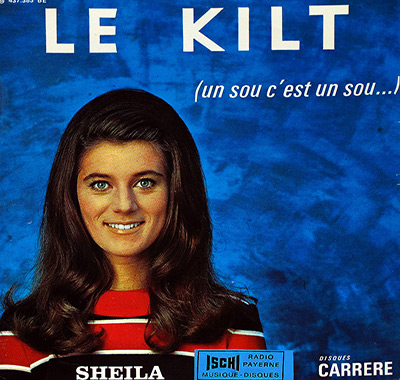
"Le Kilt (Un Sou C'est Un Sou...)" (1967) Album Description:
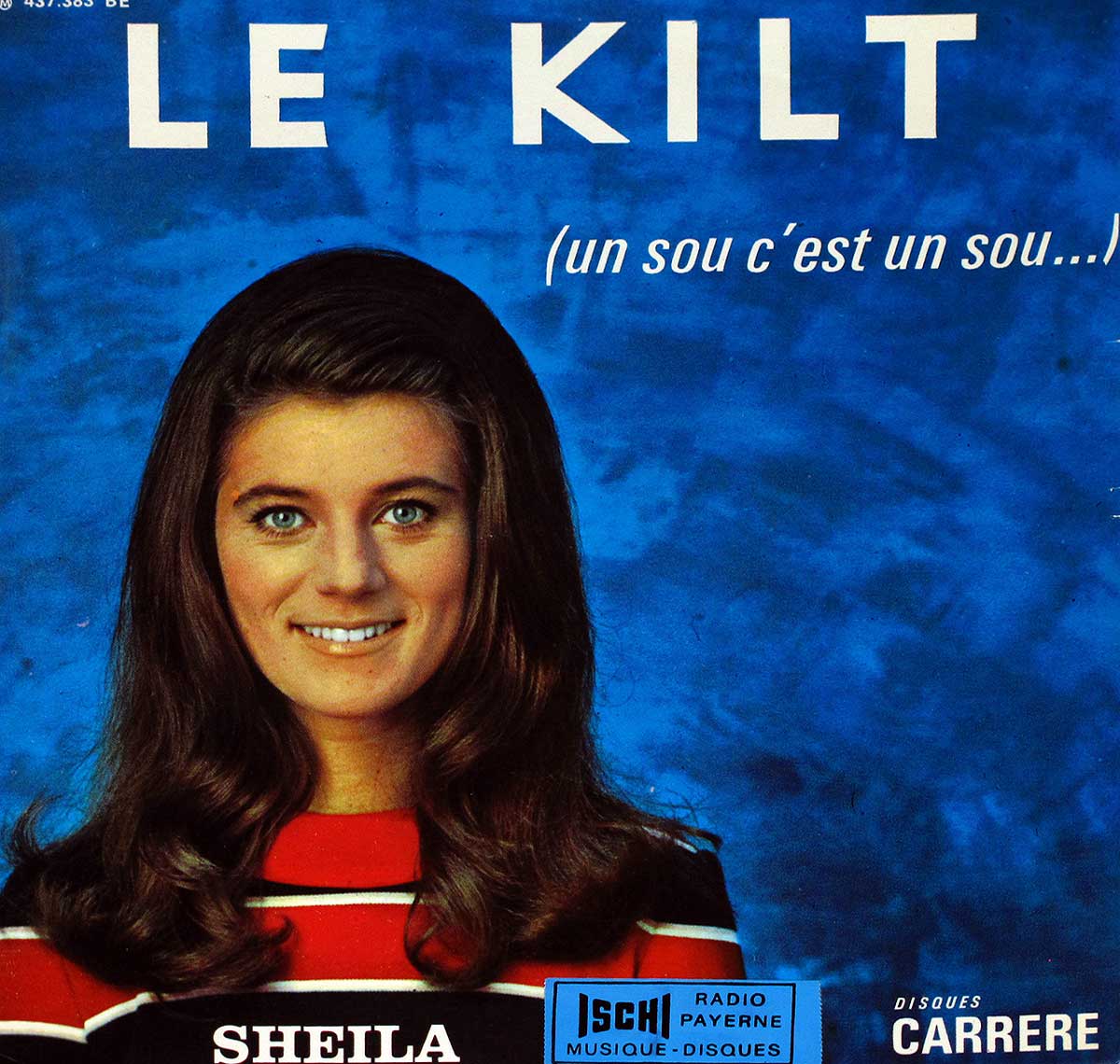
"Le Kilt (Un Sou C'est Un Sou...)" is the sort of Sheila record that can fool you if you only skim the sleeve and move on. The bracketed phrase looks like a second song title, but it belongs to "Le Kilt" itself, one of those cheeky mid-1960s French pop titles that already sounds half-sung before the needle drops. By 1967 Sheila was not scrambling for attention anymore. She was in full yé-yé working order, turning out bright, efficient records that slid into the shops, onto the radio, and into people’s heads with almost suspicious ease.
What I like here is not some fake idea of rarity or "importance" with a capital I. It is the compactness of the thing. Picture sleeve. Sharp title. A hit, yes, but not the all-conquering monster some lazy summaries pretend it was. "Le Kilt" reached the French charts and did well enough to matter, yet the real fascination is smaller than that: how a record this light can still carry the whole smell of a period. And the deeper you look, the messier the catalogue trail gets.
The old boilerplate version of this page got too much wrong to trust. It treated this as a simple two-song single from 1965 and then wandered off into invented drama about an A-side and B-side that are not even the right story. The record belongs to 1967, and collectors run into it in more than one French 7-inch form, including a super 45 tours EP issue and a single issue. That matters, because French pop discography in this period is full of these little format wrinkles. Ignore them and you flatten the whole scene into mush.
Sheila herself was already well past the hopeful-newcomer stage by then. "L'École est finie" had broken the door down years earlier, and by 1967 she was operating like a seasoned hit machine: polished, quick on the uptake, and smarter than the sugary image often allowed. "Le Kilt" did not give her career its first spark. That part is fantasy. What it did was keep her run of 1960s hits moving, and it reached No. 5 in France, which is respectable, catchy, and real. No need to inflate it into myth.
I can picture this one in exactly the right place: a wire record rack, a slightly glossy sleeve, maybe a soft crease near the opening, the kind of 7-inch somebody bought for fun rather than for posterity. That is why it still works. Not because it is profound. Quite the opposite. Good yé-yé often wins by moving fast, smiling at you, and getting out of the way before you can accuse it of trying too hard. "Le Kilt" has that trick. It flirts, it bounces, and it leaves the room before the serious people have finished clearing their throats.
So this is not a grand monument in Sheila’s catalogue, and I would not want it to be. It is brisk, stylish, and just sly enough to remind you that French pop in the 1960s was often better built than its reputation suggests. The title still has a little swing in it. The sleeve still does its job. And once a record like this gets under your skin, you stop asking whether it is heavyweight enough and start wondering why so many so-called important records feel twice as dead.