"Sanctuary" (1980) Album Description:
By the time "Sanctuary" landed in this Dutch 12-inch form, Iron Maiden were already past being a rumour traded between tape hounds and readers of the weekly music papers. Britain in 1980 was all hard edges, stale politics, cheap pints, and young metal bands forcing their way out of club basements while punk’s aftershock still rattled the walls. This EP catches Maiden right in that ugly useful gap between hunger and control. It does not sound settled. It sounds like a band that still had grit under its nails and no real interest in washing it off.
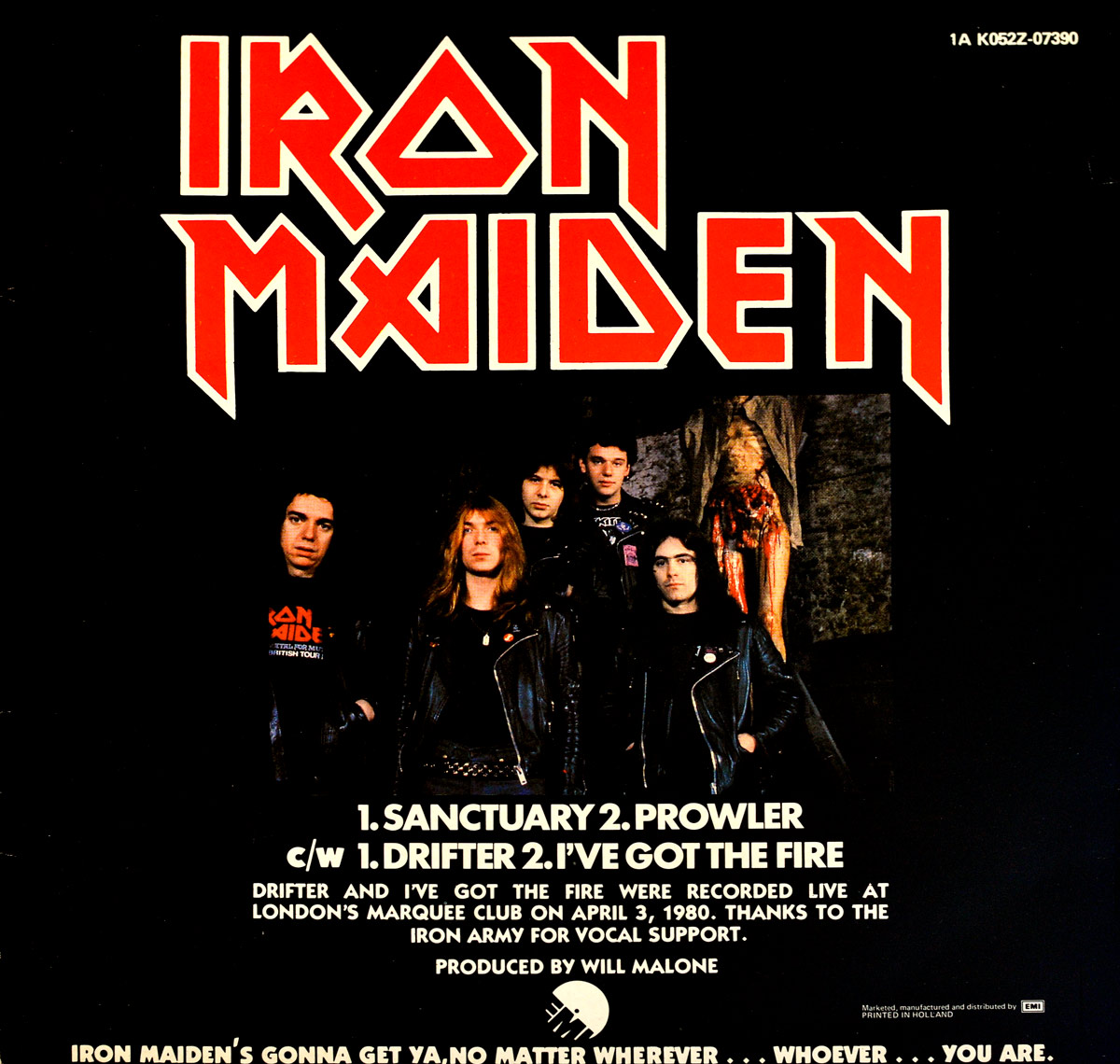
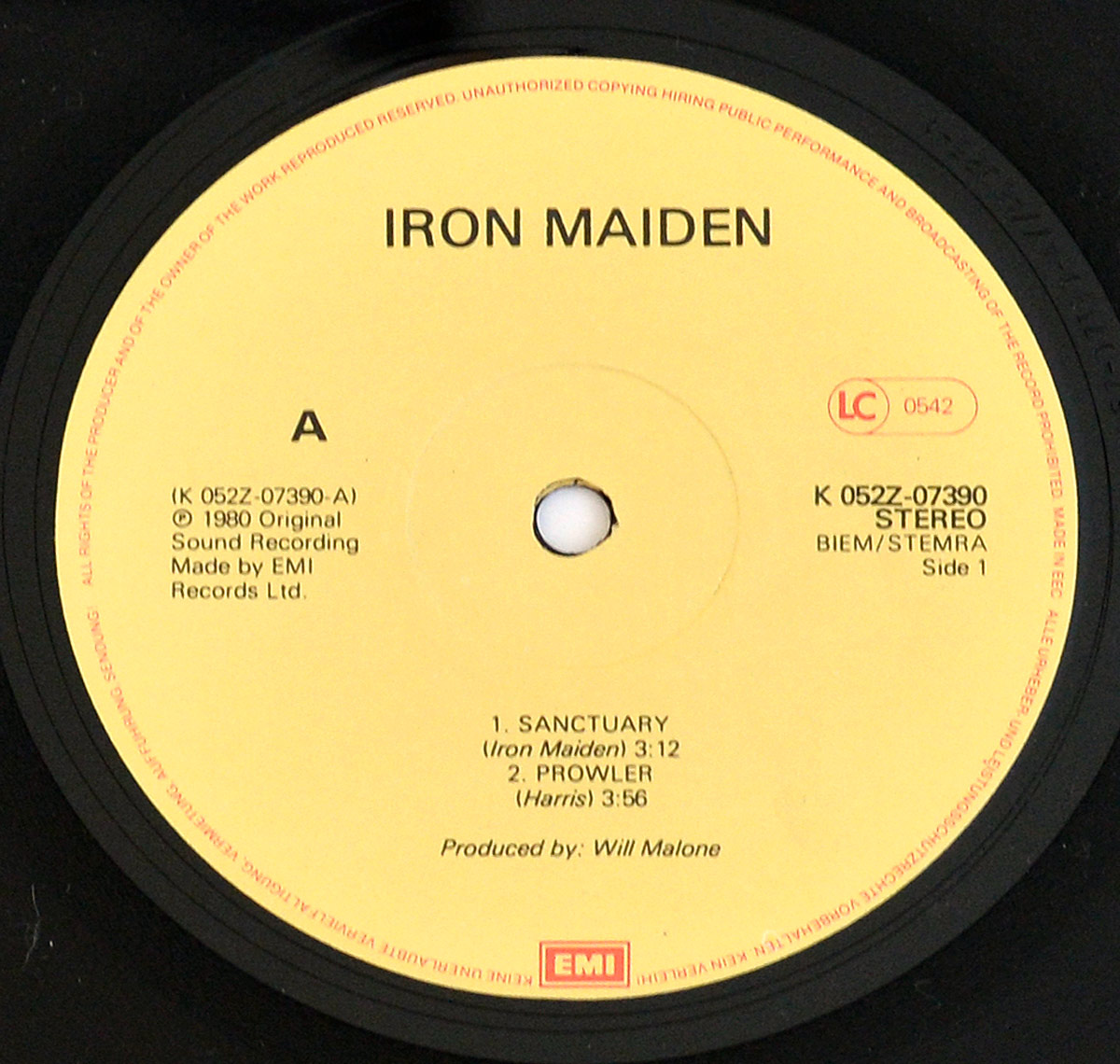
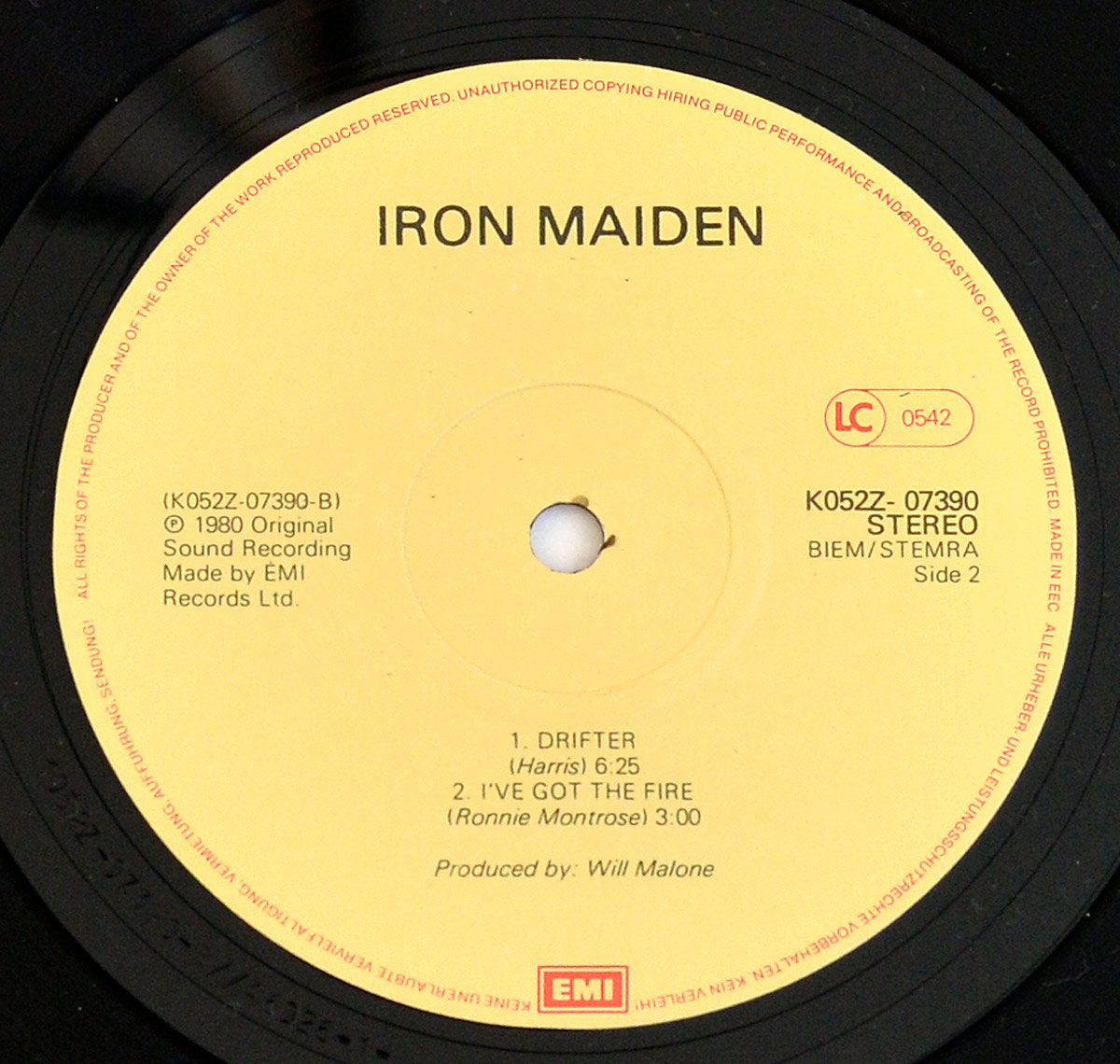
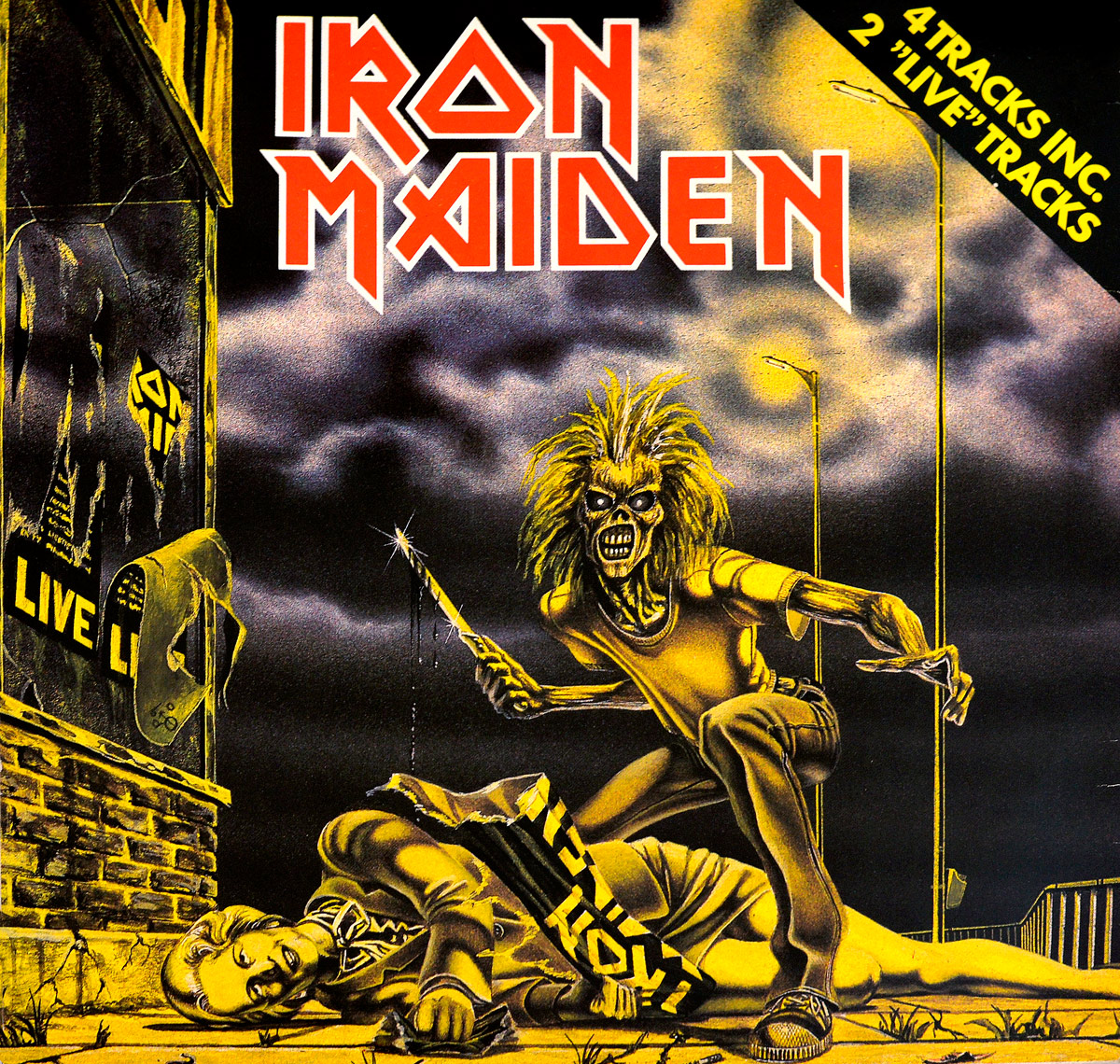
That is why this Netherlands pressing is more interesting than the usual early-Maiden mist around it. One side throws two sharp studio cuts at you, the other side jumps into the Marquee with two live recordings, and the sleeve keeps leaking clues if you bother to look past the obvious scandal bait: warmer inks, softer blacks, that barking corner flash about the live tracks, pale yellow EMI labels, and matrix text that says more than half the collector chatter ever does. Open the hidden part and the record stops being a slogan and starts behaving like evidence.
The lazy version of the story says this was the birth of the beast. Not quite. By spring 1980 Maiden had already dragged themselves through "The Soundhouse Tapes", the "Metal for Muthas" appearance, "Running Free", and the debut LP. What "Sanctuary" really catches is the moment after the door had been kicked open but before anyone had tidied the room. In the same stretch, Saxon were going for heavier road-burn weight, Angel Witch were freezing the air with occult chill, Def Leppard were already sniffing out cleaner hooks, Samson still had pub-floor bruises on them, and Diamond Head were stretching riffs into bigger shapes. Maiden went more direct than most of them. Faster in the wrist. Dirtier in attitude.
The line-up was still twitchy, and that matters. Steve Harris had built the thing through stubbornness more than comfort, Clive Burr had given the rhythm a sharper lift than the earlier set-up, Dennis Stratton was still in the picture before the chemistry shifted later that year, and Paul Di’Anno still sounded like the bloke out front rather than a future monument in a band shirt. That instability gives the record its charge. The playing is tight enough to hold, but there is still a sense that somebody might shove the tempo, lean too hard into the chorus, or start grinning at the wrong moment. Good. Early NWOBHM should feel like that.
"Sanctuary" itself moves with clipped attack and no wasted pleasantries. The riff gets in first, the vocal snaps back, and the whole thing has that compact street-level shove that later Maiden, for all their scale and craft, sometimes left behind. "Prowler" still carries the sly grime of the first album, less heroic than the band would soon become and better for it. There is bite in these studio sides, but not the polished bite of a band already thinking about arenas. More like a switchblade pulled in bad light.
Then Side Two changes the air. "Drifter" and "I've Got the Fire" were recorded live at the Marquee Club on 3 April 1980, and they sound like it: crowded, vocal, a little ragged around the edges, absolutely alive. The so-called Iron Army vocal support is not some neat backing-choir touch either. It feels like the room leaning in. Plenty of live tracks from the era sound dutiful, inserted because somebody wanted extra value for money. These do not. They drag sweat, shove, and a bit of club-room chaos onto the record, which is exactly what this release needed.
Will Malone tends to get treated like a suspicious character in early Maiden talk, mostly by people who think every origin story ought to arrive bleeding onto the tape. That gets old. His job here was practical: keep the thing from turning to mush, stop the guitars from blurring, leave the rhythm section enough space to move, and make sure the band’s aggression translated onto vinyl without collapsing into thin noise. He did not tame them into respectability. He just made sure the punch landed. Derek Riggs, meanwhile, handled the visual end with all the tact of a brick through a shop window.
The sleeve did what it was built to do. Britain had Thatcher. Maiden had Eddie. Somewhere between tabloid instinct and smart provocation, the band and their camp realised that putting the future Iron Lady on the pavement under Eddie’s knife was cheaper than buying an advertising campaign and a lot harder to ignore. It is not subtle. It was never supposed to be. The common myth is that this was some grand forbidden object; in truth, it was rude, opportunistic, and memorable, which in 1980 heavy metal was often the more useful combination anyway.
On a cluttered desk late at night, this Dutch copy always looks a shade less glamorous than the legend around it. Then the yellow EMI labels catch the lamp, the run-out codes come into focus, and the whole thing stops looking ordinary.
What makes this Netherlands 12-inch worth holding onto is not fake rarity theatre. It is shape, timing, and nerve. Four tracks. Two of them live. A sleeve that still smirks. Pressing details that separate this copy from the prettier stories people tell after the fact. And a band not yet trapped inside its own mythology. That is Iron Maiden’s NWOBHM at the interesting stage, before the banners got bigger, before the epics stretched out, and before anyone had learned to iron the shirt.