A Hard Rock Odyssey Through the Cosmos
UFO’s Space Metal isn’t just an album—it’s a sonic time capsule capturing the raw power of early hard rock as it teetered on the edge of heavy metal. Released in 1976, this double LP is a deep dive into the band’s formative years, blending blues-drenched riffs with interstellar ambition. Michael Schenker’s searing guitar work collides with Phil Mogg’s urgent vocals, delivering a mix of cosmic escapism and street-level grit. From hypnotic jams to breakneck rockers, Space Metal stands as a testament to UFO’s relentless evolution—an essential relic for vinyl purists and hard rock devotees alike.
Space Metal isn’t a neat studio statement or a forward-looking manifesto. It’s a double-LP snapshot of UFO in motion, caught between club sweat, long van rides, and the sudden realization that something bigger was forming. Released in 1976, this record captures the band just before liftoff, when ambition was high and the edges were still rough enough to draw blood.
By the mid-1970s, British hard rock was mutating fast. Blues rock was stretching toward heavier shapes, prog was flirting with excess, and metal hadn’t yet decided what it wanted to be. In that space between certainty and chaos, Space Metal landed as a German-issued compilation that unintentionally documented a genre mid-evolution.
This album wasn’t conceived as a grand artistic statement but assembled from necessity and momentum. Drawing from UFO’s earliest records and live material captured in Japan, it reflects a band constantly touring, constantly improving, and barely pausing long enough to look back. Milton Samuel and the band themselves shaped it with the simple goal of letting the music speak louder than the packaging.
Sonically, Space Metal breathes like a live set stretched across four sides of vinyl. Long grooves such as “Star Storm” drift and expand, while tighter cuts like “Loving Cup” and “Shake It About” keep one foot planted in blues-rock tradition. The playing favors feel over polish, groove over perfection, and that’s exactly where its charm lives.
Compared to the tightly constructed albums emerging in 1976, this record feels almost rebellious in its looseness. While bands like Rainbow were sharpening their attack and Thin Lizzy were perfecting dual-guitar elegance, UFO were still letting songs stretch out and breathe. It’s less about precision and more about atmosphere, a quality many later records would sand down.
You can hear a band testing its limits here. There’s hunger in the performances, but also restlessness, the sense that UFO were outgrowing their early identity even as they were documenting it. This tension—between where they’d been and where they were heading—gives the album its restless pulse.
At the time, Space Metal was often treated as a convenient compilation rather than a milestone. Decades later, it reads differently: a raw archive of a band assembling its future vocabulary in real time. For collectors, it’s less about hits and more about context, the sound of hard rock quietly hardening into metal.
Hard Rock, Progressive Rock, Heavy Space Metal
Nova – Cat#: 6.28 363 (628363)
Manufactured under License from Beacon Records LTD London, England
Record Format: Double 12" Full-Length Vinyl LP
Total Weight: 420g
1976 – Germany
Disclaimer: Track durations shown are approximate and may vary slightly between different country editions or reissues. Variations can result from alternate masterings, pressing plant differences, or regional production adjustments.
-
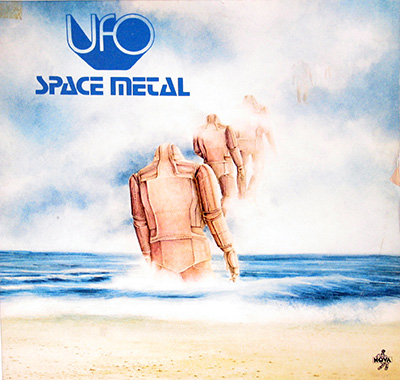
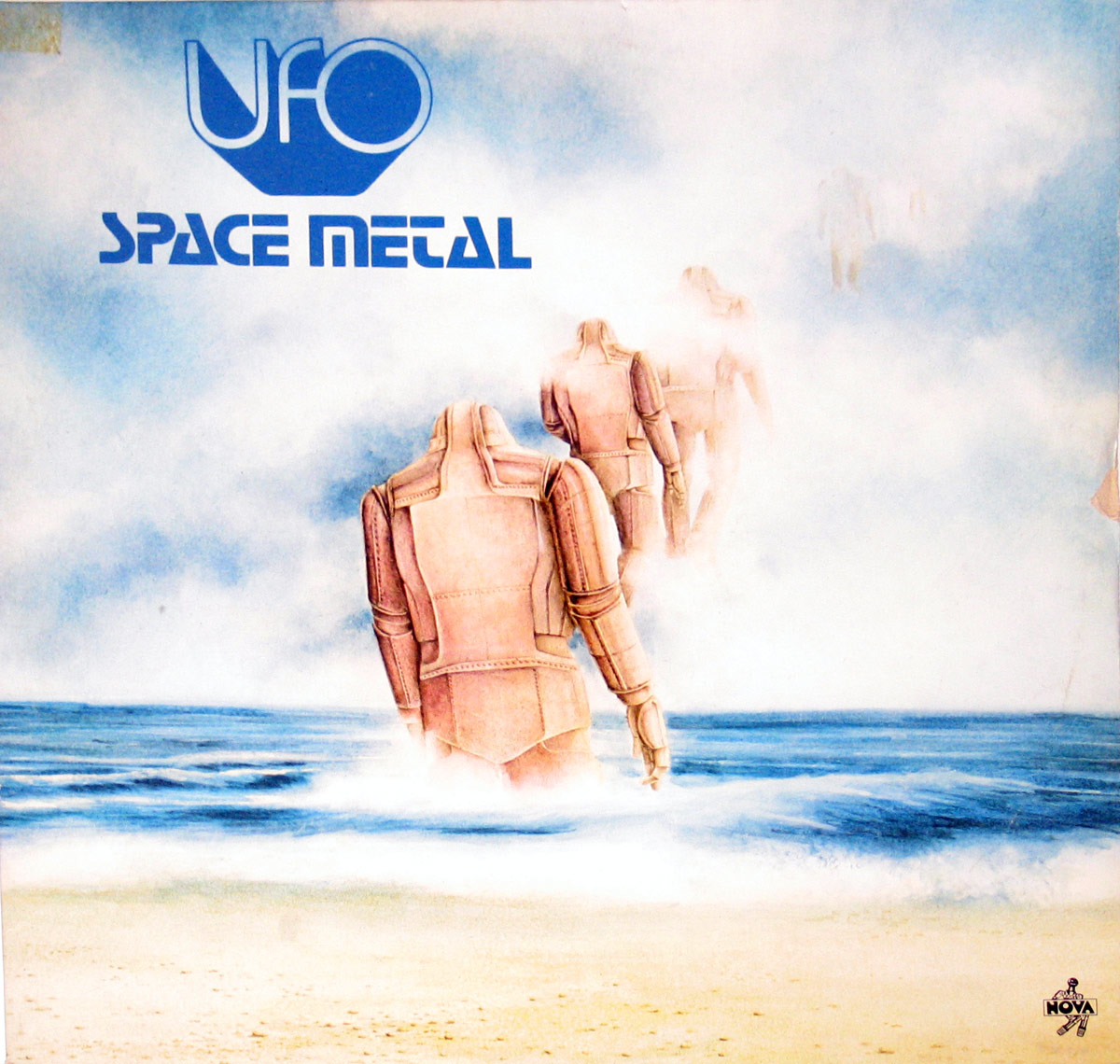
The album cover of Space Metal by UFO presents a haunting, surreal landscape where humanoid robotic figures without heads wade through the shallow waters of a vast ocean, stepping toward a misty, dreamlike horizon. The background is composed of soft blues and whites, with clouds and fog merging seamlessly with the water, creating an otherworldly, almost alien atmosphere.
The figures are constructed of what appears to be metallic armor or padded space suits, rendered in warm, muted browns that contrast subtly with the cold tones of the surrounding environment. Their rigid, structured forms exude a sense of purpose as they march forward in an enigmatic procession, fading into the distance as they disappear into the thick mist.
At the top of the cover, the band's name, UFO, is prominently displayed in a bold, futuristic blue font, with sharp angles and geometric symmetry that evoke a sci-fi aesthetic. Directly beneath it, the album title, Space Metal, is presented in a similarly styled font, reinforcing the cosmic, futuristic theme of the artwork.
The overall composition conveys a sense of isolation and exploration, fitting seamlessly with the band's space-themed hard rock sound. The blend of mystery, science fiction, and classic rock iconography makes this cover a visually striking piece of album art.
-
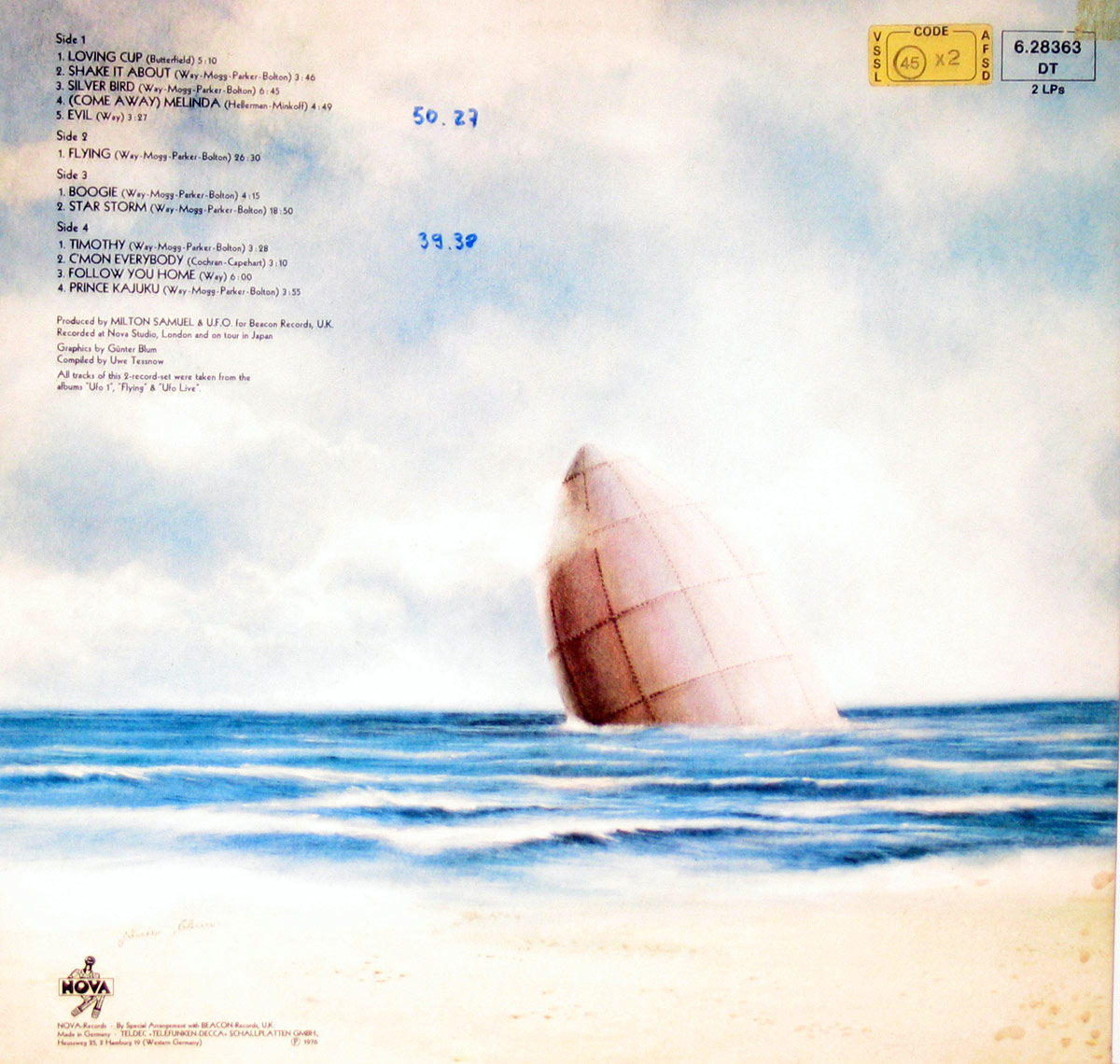
The back cover of Space Metal by UFO continues the surreal, science fiction-inspired theme of the front. The landscape features an expansive ocean stretching toward the horizon, where the water meets a soft, cloud-filled sky. The sand in the foreground appears smooth, undisturbed, and bathed in a muted light, enhancing the dreamlike quality of the scene.
The most striking element is a massive, metallic capsule-like structure, partially submerged in the ocean. Its surface is adorned with a grid-like pattern, resembling reinforced plating or stitched-together panels, and its rounded form suggests an escape pod, spacecraft fragment, or mysterious object from another world. The way it tilts as it emerges from or sinks into the waves adds to the eerie, enigmatic nature of the artwork.
In the upper-left corner, the album's tracklist is presented in a clean, legible font, detailing the contents across four sides of this double LP. Handwritten blue numbers, "50.27" and "39.39," appear next to the text, possibly indicating total playtime or cataloging information. The upper-right corner contains a yellow sticker with classification codes and the catalog number 6.28363 DT, signifying that this is a two-LP release.
At the bottom left, the Nova label logo is displayed, along with small-print credits noting that the recordings were originally released by Beacon Records in the UK and later compiled by Uwe Tessnow. The text also confirms that the tracks on this release are sourced from UFO's albums UFO 1, Flying, and UFO Live, solidifying its status as a compilation.
Overall, the back cover of Space Metal complements the front artwork perfectly, reinforcing the album’s themes of mystery, isolation, and interstellar exploration.
"Space Metal" Record Label Details: Yellow and Green Colour NOVA 6.28 363-1 © Copyright ℗ Sound Copyright
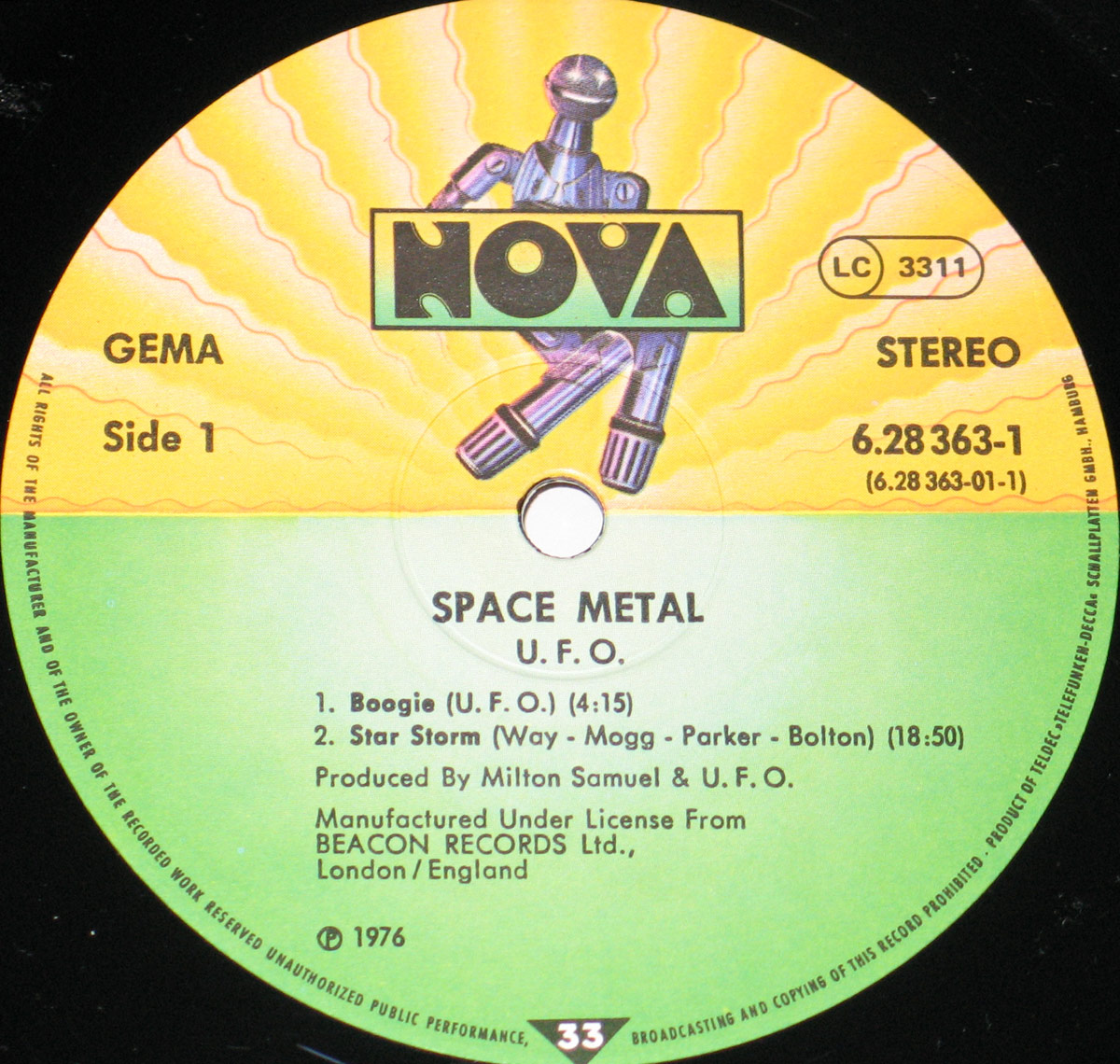
This is a close-up of the Side One record label from Space Metal by UFO, a 12-inch double LP vinyl release. The label design is visually striking, divided into two primary color sections: the upper half is a bold yellow with an illustration of a humanoid robot with metallic limbs extending outward, positioned behind the NOVA logo. The background radiates in a sunburst pattern, giving a futuristic, almost cosmic feel to the design.
The bottom half of the label is a soft green, creating a contrast with the yellow. It contains key album details in black text, clearly identifying the record as Space Metal by UFO. Below the album title, the tracklist is printed, specifying the two songs on Side One:
Production credits note that the album was produced by Milton Samuel & UFO. Additional text states that it was Manufactured Under License From Beacon Records Ltd. in London, England.
On the right side of the label, the catalog number 6.28 363-1 is displayed in bold, along with the GEMA rights management designation and "STEREO" format marking. A small LC (Label Code) number, LC 3311, is also present.
At the bottom of the label, the year of release, 1976, is printed alongside a legal disclaimer stating that unauthorized broadcasting, copying, or performance of the record is prohibited.
Encircling the label’s outer edge is a fine-print copyright warning, characteristic of vinyl records from this era. The bold "33" at the bottom indicates that this is a 33 1/3 RPM long-play record.
Overall, the label’s design effectively blends sci-fi aesthetics with classic rock iconography, reinforcing the album’s space-themed concept.
Telefunken Teldec 6.24 836 , 1981 , Germany
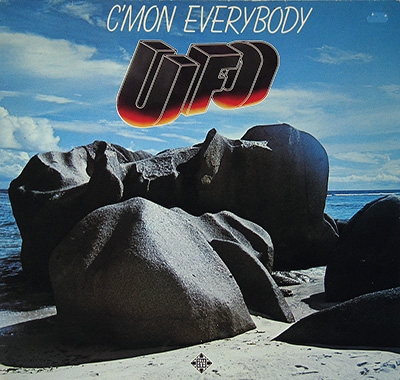
C'mon Everybody is a compilation album with early recordings by the British Hard Rock band: UFO. The title of this UFO album comes from a song , which was released on their 1979 album
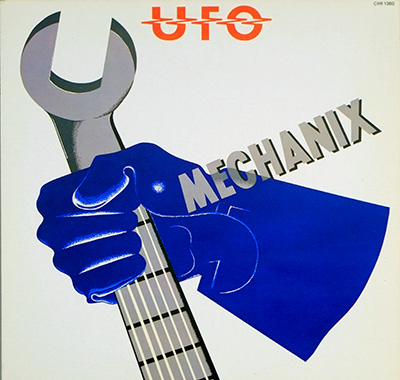
C'mon Everybody 12" Vinyl LPReleased in 1982, Mechanix marks UFO’s shift toward a more refined 1980s hard rock sound. Combining tight guitar work, strong melodies, and Phil Mogg’s powerful vocals, the album bridges classic heavy rock with a modern, high-energy edge. Tracks like “We Belong to the Night” highlight its confident, anthemic drive.
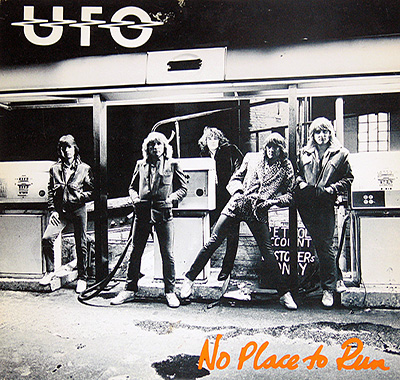
The album was generally well-received by critics, who praised the band's songwriting and musicianship. "No Place to Run" is considered one of UFO's most successful and critically acclaimed albums
No Place To Run (USA) No Place To Run (West-Germany)
- , - , -
This was the final UFO studio album to feature Michael Schenker on lead guitar until he returned to the band in 1993.
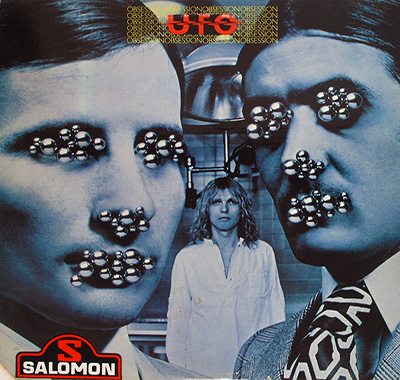
Obession 12" Vinyl LP
Chrysalis CHR 1059 , 1974 , England
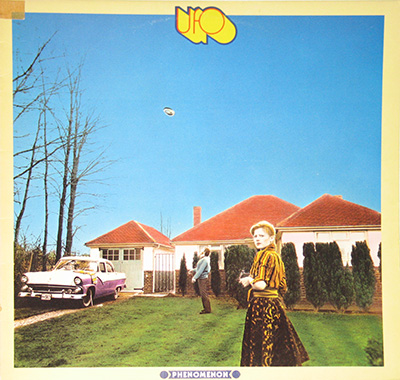
Phenomenon is the album by the British rock band UFO, released in May, 1974. Guitarist Michael Schenker joined UFO in June, 1973 arriving in the UK directly from his German band, Scorpions, and without speaking a word of English.
Phenomenon . 12" Vinyl LP
Nova 6.28 363 , 1976 , Germany
“Space Metal” is a double LP compilation capturing UFO’s formative hard rock years before their late-70s breakthrough. Drawing from the albums “UFO 1,” “Flying,” and the Japanese-only live release “UFO Lands in Tokyo,” it blends extended space-rock jams with blues-rooted heaviness. Issued in 1976, it documents a band still stretching songs live and shaping the sound that would soon define them.
Chrysalis 300.268 , 1979 , Holland
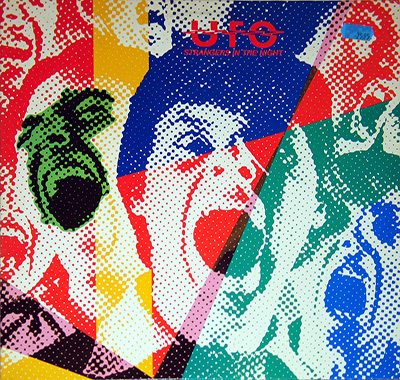
"Strangers in the Night" is a live double album by UFO, which was released in 1979. It was recorded at the Hammersmith Odeon in London, England and the Budokan in Tokyo, Japan during the band's 1977 and 1978 tours.
Strangers in the Night 12" Vinyl LP
Chrysalis CHE 1307 , 1981 , Canada
UFO's 1981 release, "The Wild, the Willing and the Innocent," stands as a rock classic, blending hard rock and melodic finesse. Led by Phil Mogg's vocals and Michael Schenker's guitar,
The Wild The Willing and the Innocent 12" Vinyl LP