- Genuine 1979 USA Release
Alright, folks, gather 'round! Sammy Hagar's takin' a break from the hard rockin' and dippin' his toes into some soul. That's right, the Red Rocker's coverin' Otis Redding's "Sittin' on the Dock of the Bay"! Now, don't you worry, he ain't lost his edge, just showin' y'all he can groove with the best of 'em. This ain't no ordinary cover, though. It's a 12-inch maxi-single, baby! We're talkin' extended mixes, instrumental jams... Hagar's lettin' loose and givin' this classic a whole new flavor.
My 1979 US 12" maxi-single of "Sittin on the Dock of the Bay" is what happens when Sammy Hagar steps away from the hard-rock throttle for a minute and proves he can breathe in a different kind of smoke. It is a bold little detour: a soul classic, re-voiced by a guy better known for redlining arenas, pressed big and loud the way late-’70s rock liked its statements.
It is also the kind of record I love keeping around because it messes with expectations. One side is reverence, the other side is a reminder that Hagar could still swing a hook with confidence, even when he is borrowing someone else’s legendary shoreline.
1979 in the USA was a weird, loud crossroads: rock was getting bigger and shinier, punk and new wave were already poking holes in the inflatable stadium ego, and radio was basically a daily fight over what “real” music even meant anymore. In that climate, a hard-rock singer cutting a soul standard on a 12" format feels less like a novelty and more like survival instinct: broaden the palette, keep the spotlight, don’t blink.
The 12" maxi-single itself screams that era too: bigger grooves, more room to stretch, and a format that treated a song like a place you could live for a while instead of a quick handshake.
What jumps out from the page is the “session gravity” around this release: Steve Cropper is in the musician list, and that is not some random cameo name to drop at a party. When the co-writer of the original is in your orbit, you are not just doing karaoke with a leather jacket on; you are trying to borrow a little of the real electricity.
The label details and that purple Capitol look on the Side One photo give it a very specific kind of late-’70s legitimacy. It reads like a serious release, not a tossed-off backstage joke, even if the concept alone probably made a few eyebrows do backflips.
Hagar’s cover of "(Sittin’ on) the Dock of the Bay" works because the song is basically built for restraint, and restraint is a dangerous hobby for a hard-rock frontman. The best moments in this kind of cover are the ones where the singer stops performing “rock” and starts performing “time,” letting the spaces between lines do the heavy lifting.
Flip it and you get "I’ve Done Everything for You," which feels like the release valve: less museum, more movement. Together, the two sides play like a mood swing you can hold in your hands: ocean air on one side, road dust on the other.
Here is the part that still gives the song its shadow: "(Sittin’ On) The Dock of the Bay" was co-written by Otis Redding and Steve Cropper, and it was recorded in late 1967, with a final session just days before Redding died in a plane crash on December 10, 1967. That timing is not trivia; it is baked into the way the song feels, like a calm surface that you know is covering something brutal.
The seed of it started in Sausalito, California, where Redding began sketching the lyrics while staying on a houseboat, watching the water and letting his usual swagger soften into something more reflective. When he and Cropper finished it back at Stax in Memphis, the track landed in a space between soul and pop, and that “different” feel worried some people around him at the time.
And then there is the whistle: that simple little fade-out signature that sounds casual, almost tossed away, but ended up becoming part of pop culture’s permanent wiring. The song was released in January 1968 and became a massive hit, which only deepened the strange ache of it: a goodbye note that the world kept replaying.
When Hagar covers it in 1979, he is stepping into a song with a long memory and a very specific kind of silence. You can change the voice, you can change the weight of the guitars, but you cannot remove the fact that this tune carries the aftermath of its own creation.
In 1979, hard rock and heavy metal were busy sharpening their teeth: big riffs, bigger confidence, and albums that felt like engines. Put this next to the era’s heavy hitters and it stands out immediately, because instead of trying to out-muscle the room, it leans back and lets the groove do the talking.
Quick reality check from the same year: Highway to Hell was pure forward motion, Overkill was speed and grit, and Lovedrive was the glossy power-trip version of loud. This Hagar 12" is smaller in scope, but it is sneakily brave in a different way: it risks softness without apologizing for it.
I cannot point to some big documented scandal around this release from what is on the page, but the concept alone tells you the likely reaction pattern. Some rock fans probably called it a detour, some soul purists probably rolled their eyes, and a third group did the sensible thing: turned it up and judged it with their ears instead of their identity badge.
The personnel list reads like a purposeful assembly rather than a fixed band snapshot, which is exactly what you want for a cover that needs both muscle and taste. When you have a song this famous, the tension is not between bandmates; it is between ego and the original recording, and the only winning move is respect.
The smartest choice here is letting the song’s architecture stay intact while still making room for Hagar’s character. He does not need to “win” against Otis Redding; he just needs to survive the comparison with something honest left in his hands.
The original "(Sittin’ On) The Dock of the Bay" is one of those untouchable recordings that keeps getting covered because people cannot help themselves; it is musical gravity. This 1979 Hagar pressing lives more like a collector’s side-story: a late-’70s rock artifact that shows a big-voiced frontman trying on tenderness without losing his spine.
For me, the legacy is personal and tactile: the purple Capitol label close-up, the feel of a 12" single that was meant to be played loud, and the weird joy of hearing a hard-rock icon step onto a dock he did not build. It is not the definitive version, and it is not trying to be.
I file this one under “surprisingly human”: a record that reminds me rock stars are not just riff machines, they are listeners too. Decades later, the grooves still smell faintly of flash photography, sea air that never touched my living room, and that stubborn late-’70s belief that a great song can survive any wardrobe change.
Heavy Metal Ballad
Capitol 8511 - East Memphis Music Corp / Time Music
Record Format: 33 1/3 RPM 12" Vinyl Stereo Gramophone Record
Total Weight: 230g
1979 – USA
Disclaimer: Track durations shown are approximate and may vary slightly between different country editions or reissues. Variations can result from alternate masterings, pressing plant differences, or regional production adjustments.
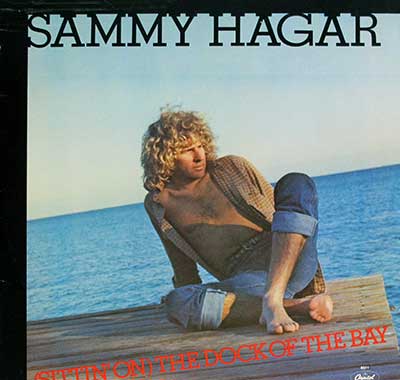
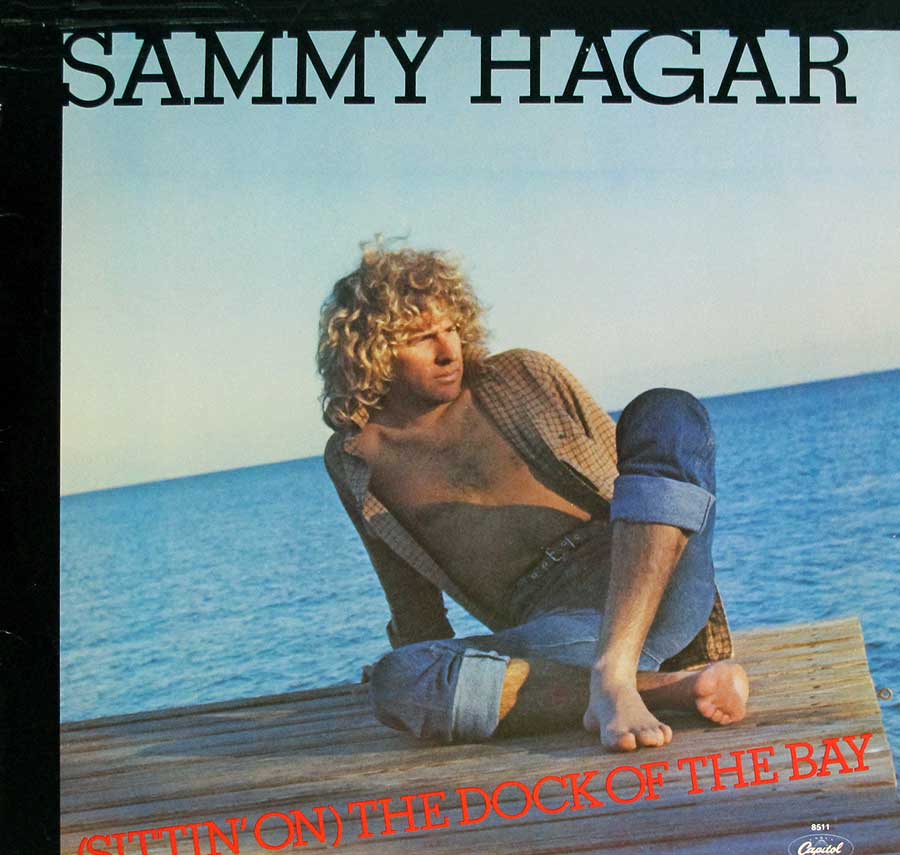
This front cover captures Sammy Hagar in a deliberately stripped-down, late-1970s visual style that stands apart from his louder hard-rock imagery. The person is seated directly on a weathered wooden dock, barefoot, with rolled-up denim jeans and an open, casual checked shirt exposing his chest. The pose is relaxed but intentional: knees bent, body turned slightly sideways, head angled toward the open water rather than the camera.
The background is minimal and uncluttered, dominated by a flat horizon line where a calm blue sea meets a pale, almost washed-out sky. There are no boats, buildings, or visual distractions. This emptiness matters, because it reinforces the reflective mood tied to the song choice rather than projecting bravado or stage energy. The dock planks run horizontally across the image, adding texture and grounding the composition in something physical and tactile.
Typography is bold and functional. The artist name SAMMY HAGAR is printed across the top in large, black, all-capital block letters with strong spacing, immediately readable from a distance and typical of late-70s Capitol design. The song title (SITTIN’ ON) THE DOCK OF THE BAY is set diagonally near the bottom in red lettering, creating contrast against the wood and water while subtly breaking the otherwise calm layout.
In the lower right corner, the small but crucial details appear: the Capitol Records logo and catalog number 8511, confirming this as the original USA 12" maxi-single pressing. These identifiers are essential for collectors, as they anchor the sleeve to its exact release and distinguish it from later reissues or international variants.
Overall, the cover communicates restraint, confidence, and a conscious stylistic shift. Nothing here is accidental: the bare feet, the open shirt, the empty horizon, and the oversized typography all signal a reflective detour rather than a hard-rock assault, making this sleeve instantly recognizable and historically specific within Hagar’s late-1970s catalog.
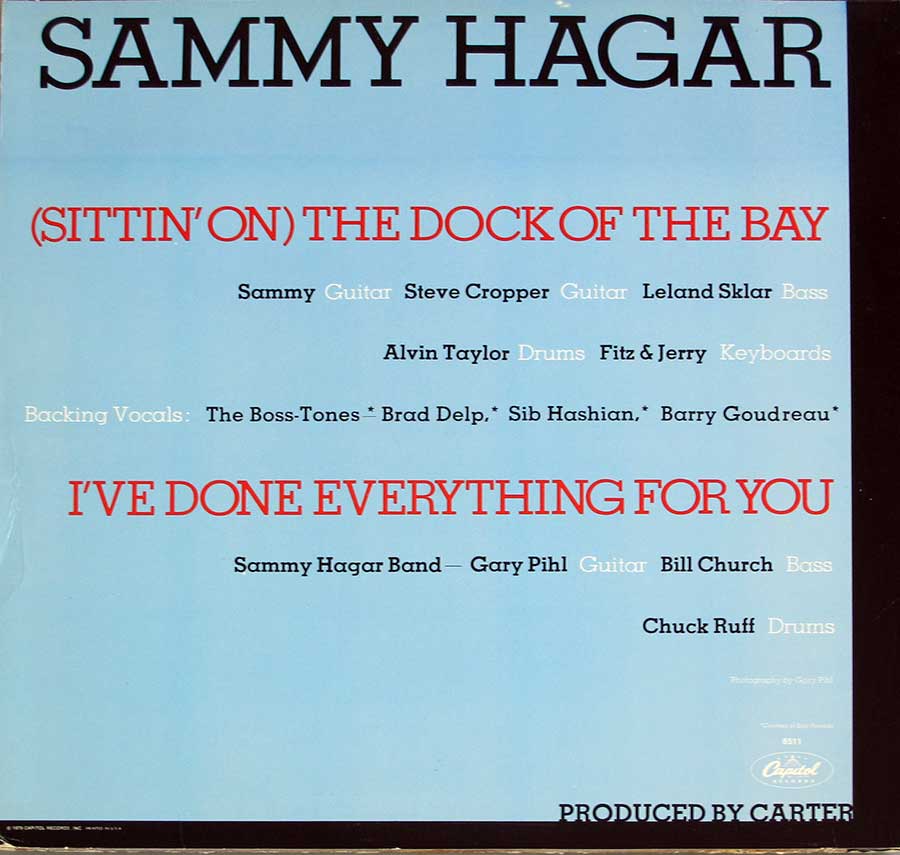
This back cover is a clean, information-forward design typical of late-1970s US 12" maxi-singles, prioritizing credits and clarity over imagery. The entire background is a flat, pale blue field with no photographs or textures, giving the typography maximum contrast and making every line of text immediately readable under normal light.
At the very top, SAMMY HAGAR is printed in large, black, all-capital block letters, evenly spaced and centered. Directly below, the A-side title (SITTIN’ ON) THE DOCK OF THE BAY appears in bold red lettering, standing out sharply against the blue background. Beneath this title, the primary musician credits are laid out in a structured line format, listing guitar, bass, drums, and keyboards with names such as Steve Cropper, Leland Sklar, Alvin Taylor, and Fitz & Jerry.
A separate line clearly identifies the backing vocals, naming The Boss-Tones along with Brad Delp, Sib Hashian, and Barry Goudreau, all set in smaller but still legible black type. This explicit crediting is important for collectors, as it documents the session-heavy nature of the release and links it directly to recognizable late-1970s rock voices.
Lower on the sleeve, the B-side title I’VE DONE EVERYTHING FOR YOU is printed in the same red font as the A-side, maintaining visual balance. Under that, the Sammy Hagar Band lineup is credited, including Gary Pihl on guitar, Bill Church on bass, and Chuck Ruff on drums. In the bottom right corner, the small but essential details appear: the Capitol Records logo, catalog number 8511, and the production credit Produced by Carter, confirming this as the original US pressing.
Overall, this back cover functions as a precise documentation panel rather than a visual statement. The restrained color palette, disciplined typography, and full personnel listing make it especially valuable for archival and collector reference, clearly tying this sleeve to its exact 1979 Capitol maxi-single release.
All images on this site are photographed directly from the original vinyl LP covers and record labels in my collection. Earlier blank sleeves were not archived due to past storage limits, and Side Two labels are often omitted when they contain no collector-relevant details. Photo quality varies because the images were taken over several decades with different cameras. You may use these images for personal or non-commercial purposes if you include a link to this site; commercial use requires my permission. Text on covers and labels has been transcribed using a free online OCR service.
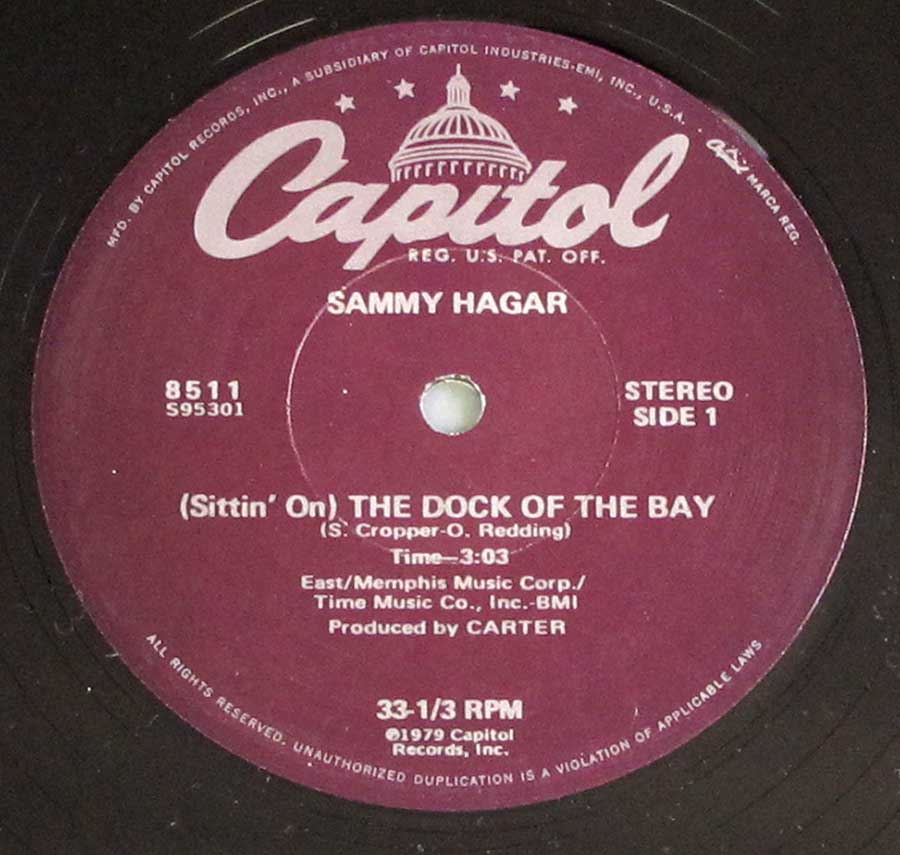
This is the Side One label of the 12" maxi-single SAMMY HAGAR - Sittin On The Dock Of The Bay, printed on the classic late-70s Capitol purple label design. The label field is a deep purple/maroon tone with crisp white text, sitting inside the black vinyl grooves that form dark concentric rings around it. The center spindle hole is visible, with a faint circular impression around it that’s typical of a played record, and the label is well-centered with no obvious off-center print drift.
The top half is dominated by the big Capitol logo: a flowing script wordmark with the stylized dome of the U.S. Capitol building above it, plus small stars arranged along the top arc. That dome graphic is the label’s long-running identity mark—instantly recognizable on turntables and in record bins—and it signals the brand rather than an album-specific artwork element. Around the outer rim, small English text includes the manufacturing statement indicating it was made by Capitol in the U.S.A., along with rights-reserved language about unauthorized duplication.
Collector-critical identifiers are printed clearly: the catalog number 8511 appears on the left, with an additional code S95301 directly below it (kept exactly as printed, since this is one of those numbers collectors love arguing about). On the right side, STEREO and SIDE 1 are stacked, confirming channel format and side designation. The main title line reads (Sittin’ On) THE DOCK OF THE BAY, followed by the songwriter credit (S. Cropper - O. Redding) and the printed duration Time-3:03.
Publishing and production info is also right here on the label: East/Memphis Music Corp. and Time Music Co., Inc. are listed with the rights society BMI. Near the bottom, the line Produced by CARTER is centered and easy to read, and the speed marking 33-1/3 RPM sits in bold near the lower rim. The sound copyright line shows 1979 Capitol Records, Inc., which locks this label to its release era without needing any outside guesswork.
This Side One label is the purple Capitol Records design used on this 12" maxi-single, with high-contrast white typography and the signature Capitol dome logo. Everything that matters for identification is printed on the label itself: side, stereo format, speed, catalog number, track title, writers, publishing, and the producer credit.
Geffen Records 924 144 / WX 114 , 1987 , EEC
This is the 1st Issue of SAMMY HAGAR later issues of this album have been renamed into "I Never Said Goodbye"
Self-Titled ( Not I Never Said Goodbye ) 12" Vinyl LP
East Memphis Music Corp / Time Music, Capitol 8511 , 1979 , USA
1979 US 12" maxi-single on Capitol (Cat. 8511) where Sammy Hagar takes on the Otis Redding and Steve Cropper classic with a late-’70s rock sheen. A fun collector curveball: big sleeve, bold credits, and that unexpected mood-shift away from pure hard rock.
Geffen Records GHS 2006 , 1981 , USA
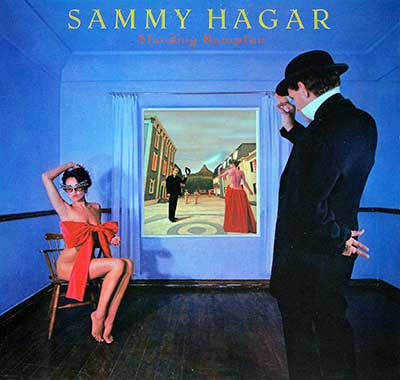
Standing Hampton is the Sammy Hagar solo album, his first after moving from Capitol Records to Geffen. Five of its singles charted in either the mainstream rock or pop singles charts.
Standing Hampton ( USA ) 12" Vinyl LP
Geffen Records GEF 85456 (GHS 2006) LC 7726 , 1981 , Holland
"Standing Hampton" is the Sammy Hagar solo album, his first after moving from Capitol Records to Geffen. Five of its singles charted in either the mainstream rock or pop singles charts.
Standing Hampton ( Holland ) 12" Vinyl LP
Geffen Records GHS 24043 , 1984 , USA
VOA is the last solo album Sammy Hagar released before joining Van Halen. Around the same time Sammy Hagar joined Van Halen, guitarist Gary Pihl joined Boston. The title is a reference to the Voice of America broadcast network.
VOA 12" Vinyl LP
Geffen Records GEF 25893 , 1984 , Holland
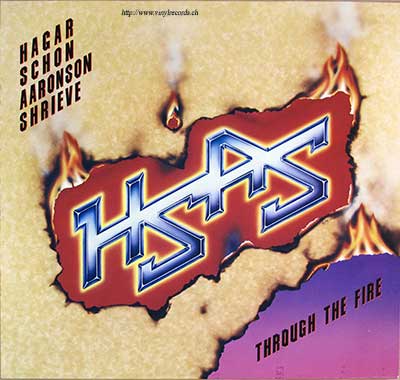
This album "HSAS Hagar Schon Aaronson Shrieve - Through the Fire" is a semi-live album, recorded during two live performances at the Warfield in San Francisco, entitled Through the Fire.
Through The Fire 12" Vinyl LP