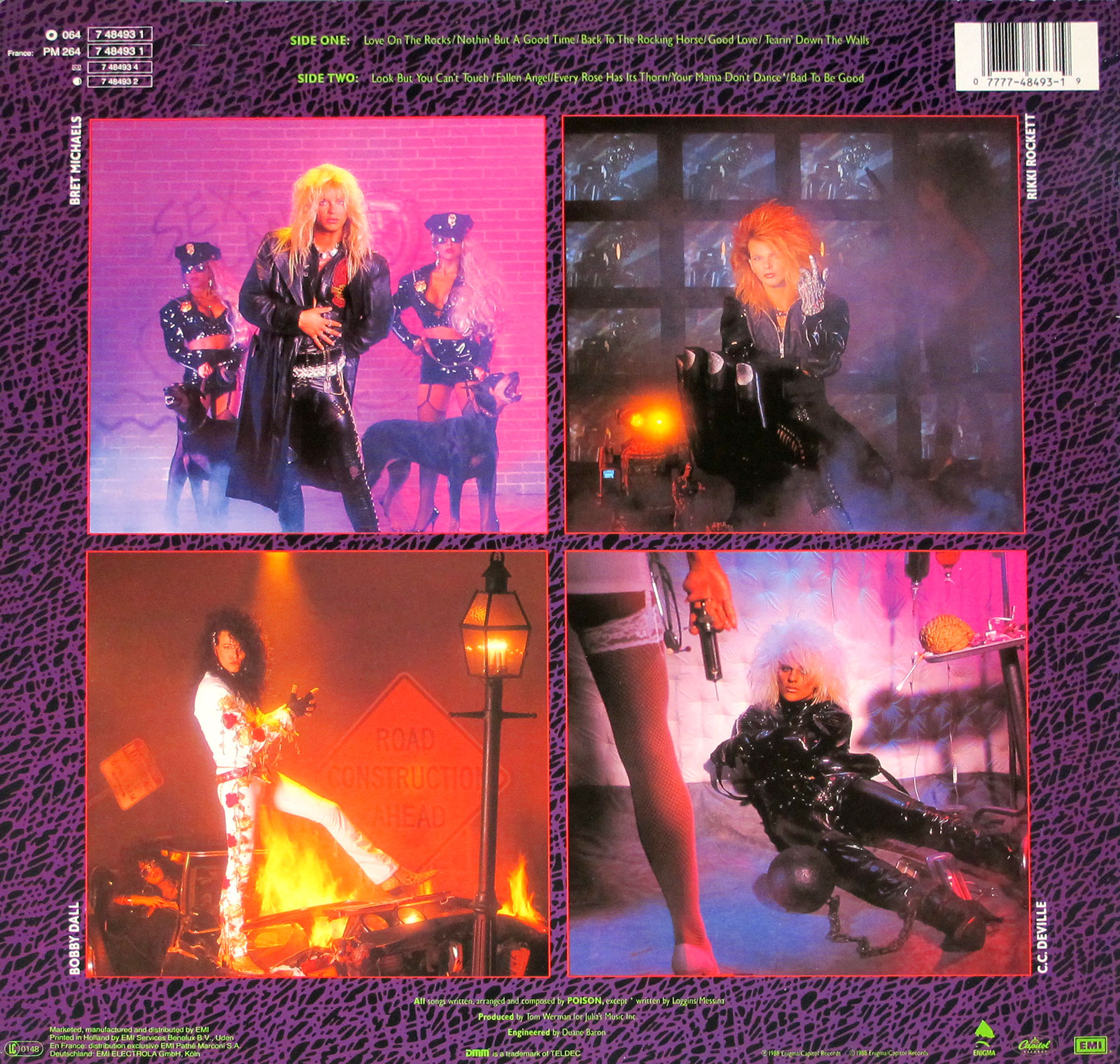
Ah, Open Up and Say… Ahh!—the neon-tinted, hair-sprayed, controversy-courting sophomore strike from Poison, released on 3 May 1988. This was the album that solidified their place atop the late-’80s glam metal pantheon, while also making conservative record retailers clutch their pearls in horror. A masterpiece of excess, indulgence, and shameless arena-ready hooks, this record didn’t just arrive—it strutted in, slammed down a bottle of Jack, and demanded you turn it up to eleven.
The Late ’80s Glam Circus: A Contextual Dive
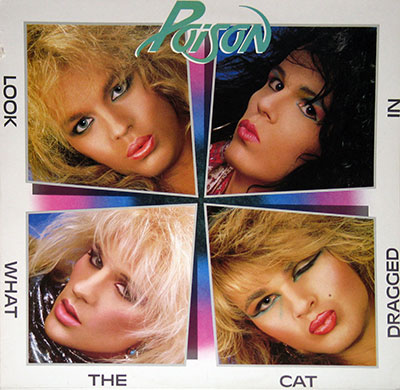
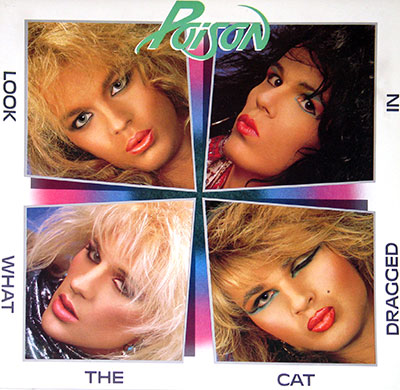
To understand Open Up and Say… Ahh!, you need to understand 1988. The Reagan era was gasping its last breath, Wall Street excess was peaking, and Sunset Strip sleaze had fully infiltrated mainstream rock. Poison was riding the tsunami created by their 1986 debut Look What the Cat Dragged In, an album that took the Mötley Crüe formula—big hair, big hooks, big trouble—and slathered it in an even glossier sheen of mascara and neon Spandex.
Glam metal was at its most decadent, a glitter-drenched middle finger to the grunge-fueled storm brewing in the Pacific Northwest. Poison, at this point, was leading the charge, competing with bands like Def Leppard, Bon Jovi, and Cinderella for dominance of FM radio and MTV rotation. It was the age of hedonism, and Poison was its house band.
The Sound of the Strip: Musical Direction and Exploration
Musically, Open Up and Say… Ahh! was a refinement of the party-hard ethos Poison had already established. It blended hard rock riffage with pop-metal accessibility, effectively a crossbreed of Van Halen’s technical prowess and KISS’s cartoonish grandeur. Unlike the rougher edges of Look What the Cat Dragged In, this album found the band polishing their sound for mass consumption.
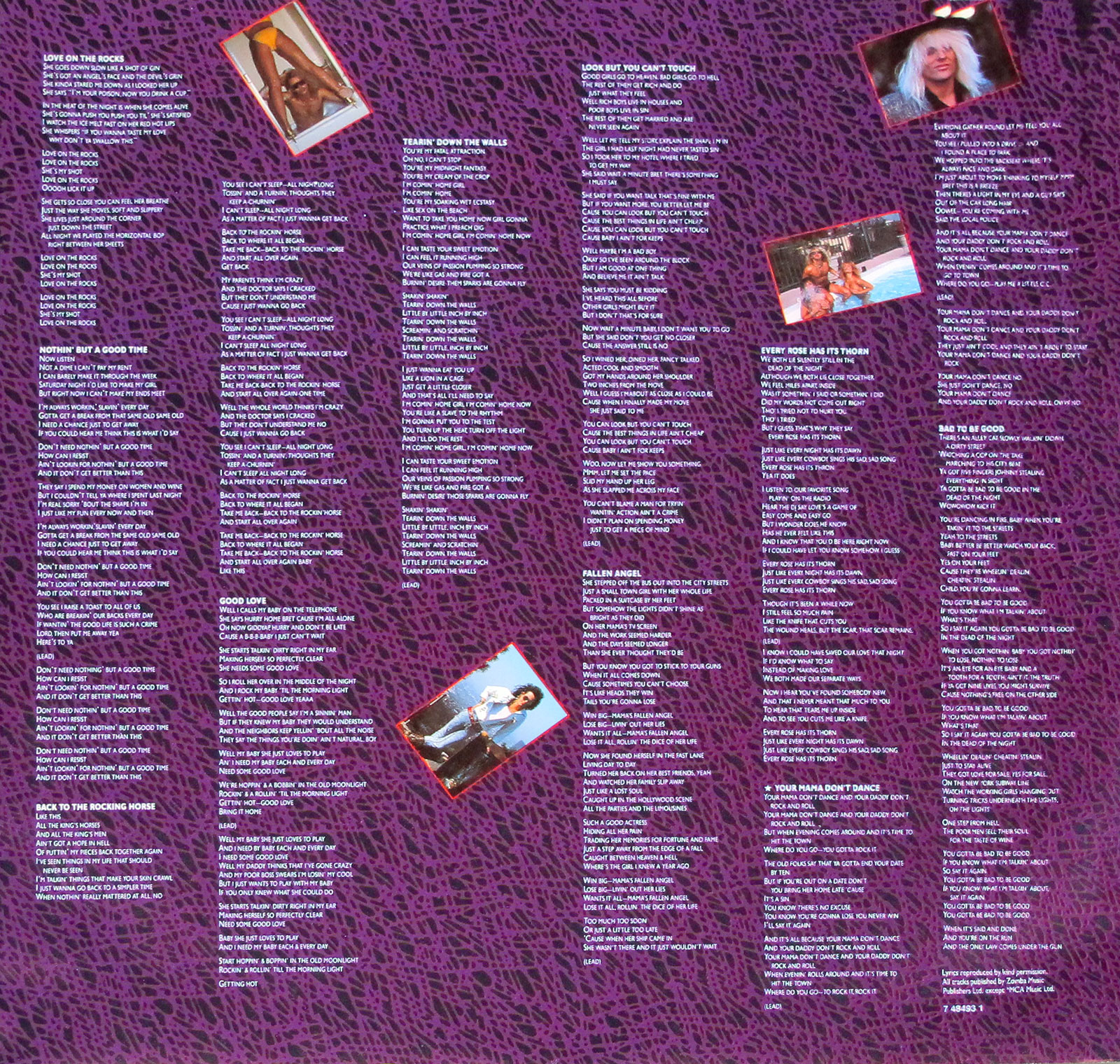
It opens with “Love on the Rocks,” an ode to cheap booze and cheaper thrills, complete with a riff that feels like a sleazier take on Aerosmith’s Rocks era. “Nothin’ But a Good Time” follows, an unrepentant party anthem that served as a manifesto for an entire generation of Aqua Net warriors.
Then there’s the ballad—“Every Rose Has Its Thorn.” It’s Poison’s “Stairway to Heaven,” their “Dream On,” their “Home Sweet Home,” except this one drips with genuine heartbreak. Bret Michaels, in full cowboy balladeer mode, croons about love gone wrong with the kind of sentimental sincerity that makes drunk dudes at karaoke bars weep to this day.
But the album isn’t all leather and longing. “Your Mama Don’t Dance,” a cover of the 1972 Loggins & Messina hit, gets the glam-metal treatment, proving Poison could take a harmless oldie and inject it with sleazy, amphetamine-laced energy. Then there’s “Fallen Angel,” an underrated gem chronicling the age-old tale of a small-town girl chewed up and spit out by the Hollywood machine.
The Scandalous Cover That Got Censored
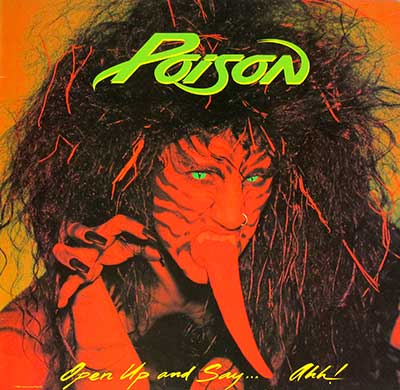
The real controversy, though, wasn’t in the lyrics—it was in the album’s original cover art. Designed to be as eye-grabbing as a red-light district window, it featured a model named Bambi in full demonic, tiger-striped face paint, her cat-like green eyes staring seductively as a long, exaggerated red tongue slithered out of her mouth. If you were flipping through records in 1988, this thing stopped you dead in your tracks.
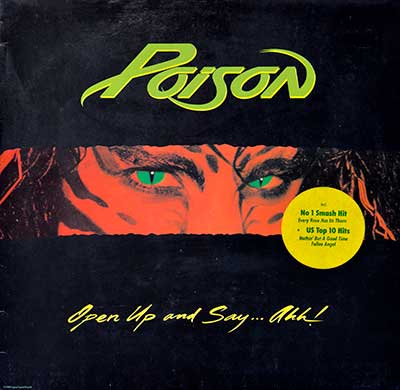
Predictably, moral crusaders and nervous retail chains threw a fit. Stores like Wal-Mart refused to stock the album, deeming the cover “too raunchy.” Poison, already riding the controversy train, ultimately relented, replacing it with a toned-down version that showed only the model’s eyes peeking through a black frame. A more “family-friendly” censorship, but it did nothing to dull the impact of the music within.
The Magicians Behind the Madness: Production & Recording
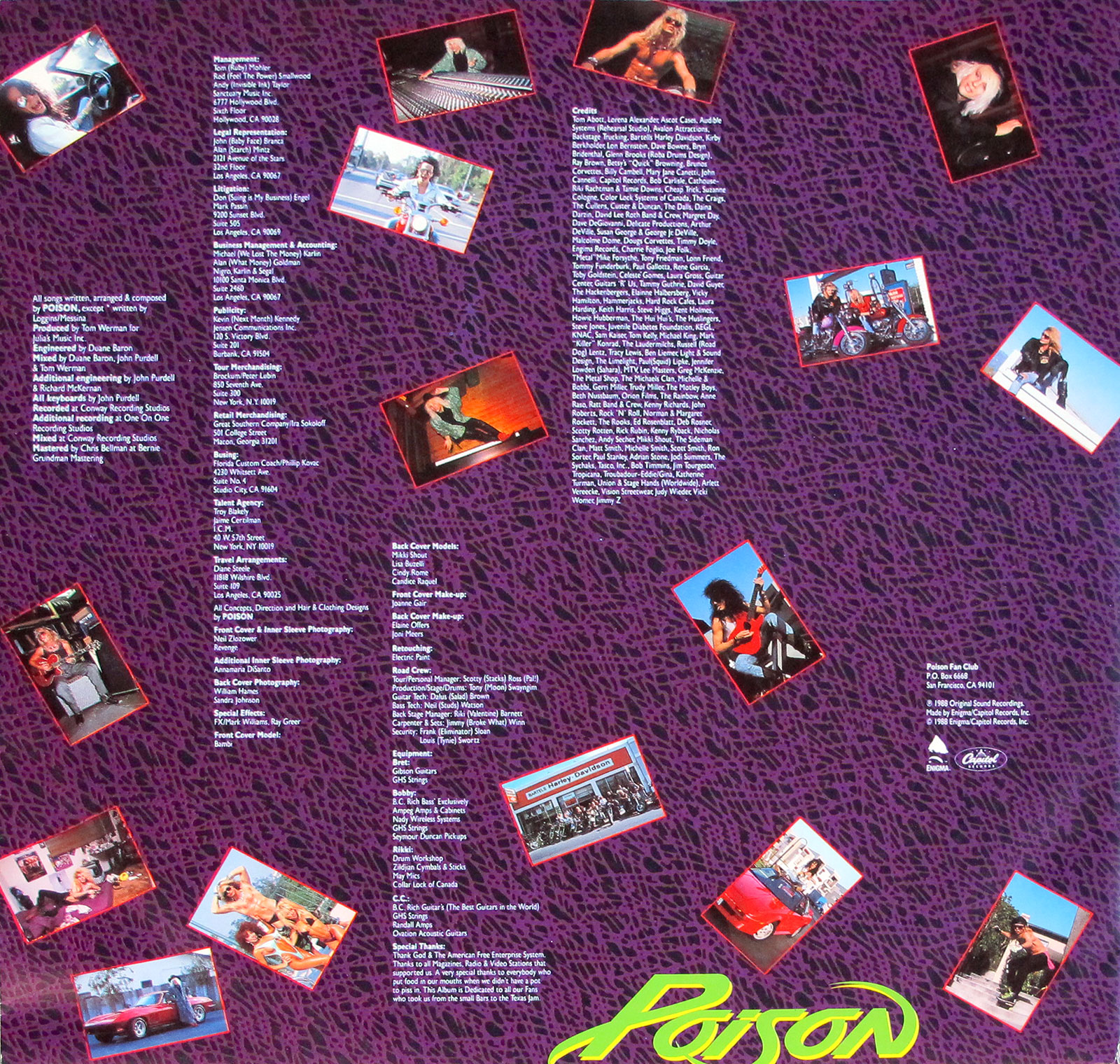
Behind the board for this sonic spectacle was Tom Werman, a legendary producer who had already crafted hits for Cheap Trick, Ted Nugent, and Mötley Crüe (Shout at the Devil, anyone?). He was an architect of ‘80s metal bombast, and with Open Up and Say… Ahh!, he fine-tuned Poison’s sound into a radio-ready juggernaut.
The album was recorded at Conway Recording Studios and One on One Recording Studio, two Los Angeles institutions where everyone from Metallica to Madonna had laid down tracks. One on One, in particular, was hallowed ground—this was the same place Metallica would record …And Justice for All the same year, proving that L.A. studios in 1988 were churning out both the hardest and glossiest sounds in rock.
On engineering duties was Duane Baron, a name synonymous with polished yet hard-hitting rock production. Having worked with Mötley Crüe and Ozzy Osbourne, Baron knew how to capture energy without losing commercial appeal. His mixing finesse is evident in the album’s sonic clarity—every riff, every snare hit, every Bret Michaels vocal wail rings out with razor-sharp precision.
Differences in Releases: Censored vs. Uncensored Chaos
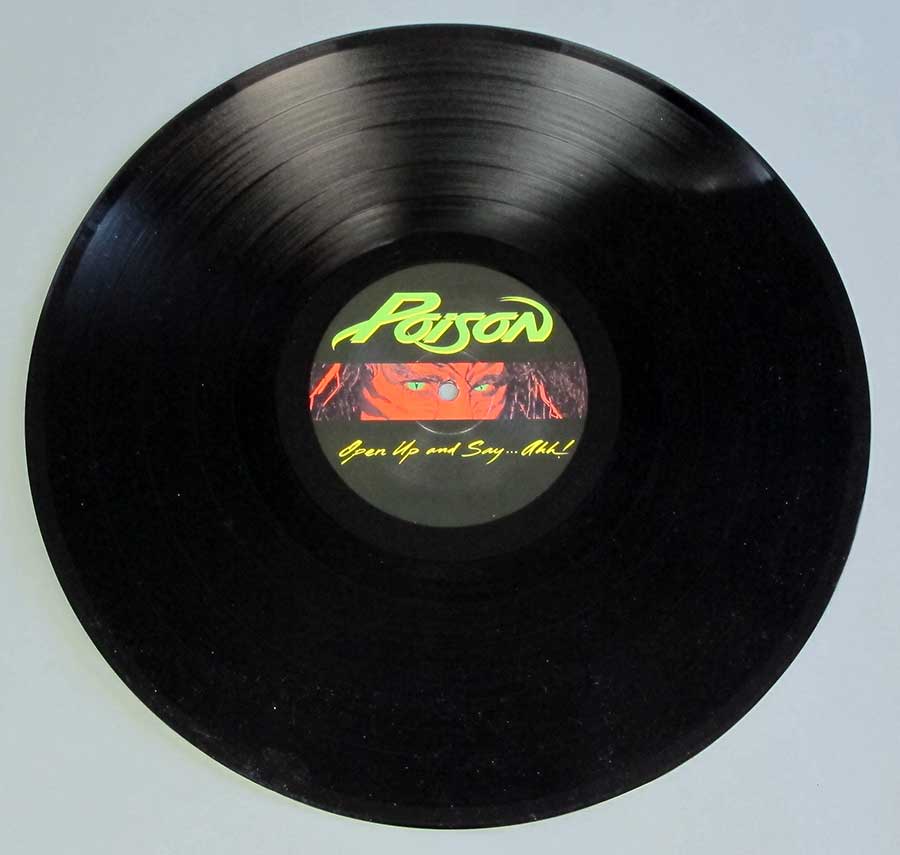
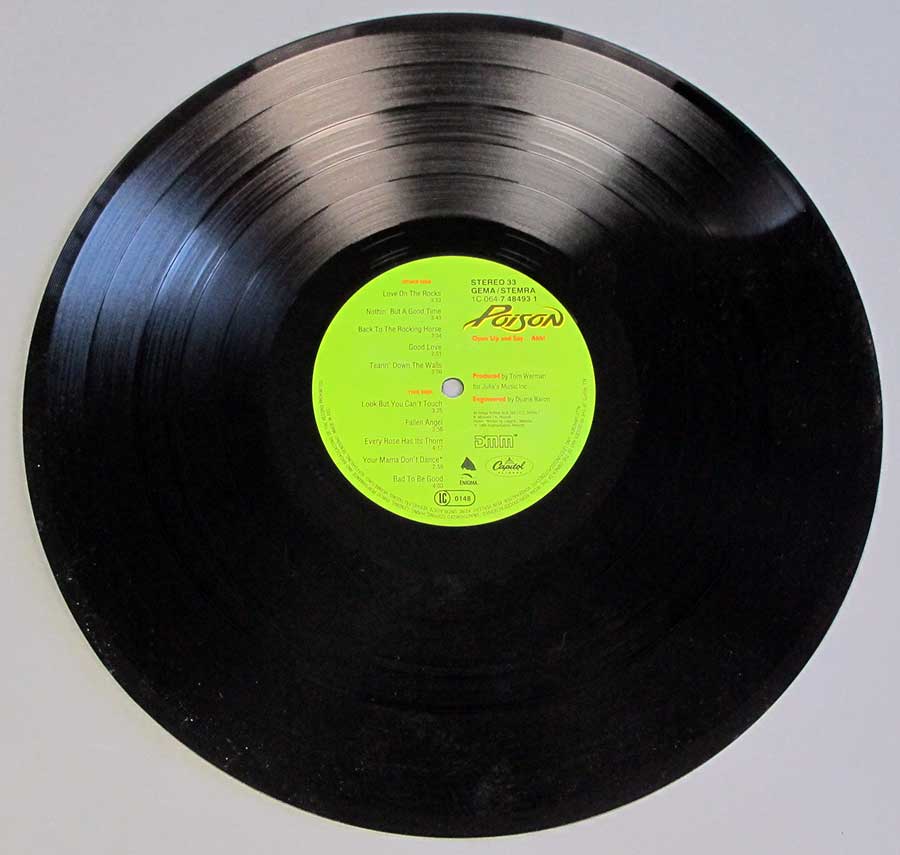
Beyond the censored cover fiasco, there were other differences in how Open Up and Say… Ahh! was presented across various pressings. Early vinyl releases in Europe had a distinct mastering job that some audiophiles argue gives it a warmer, fuller sound compared to the U.S. pressings. German and Dutch versions included minor variations in the label art and track layout, though the core music remained the same.
The DMM (Direct Metal Mastering) pressing, found in some European releases, offered a crisper high end and tighter bass response—something collectors and audiophiles still hunt down. Meanwhile, the cassette and CD versions, which were exploding in popularity by 1988, had slight differences in track sequencing to accommodate format limitations.