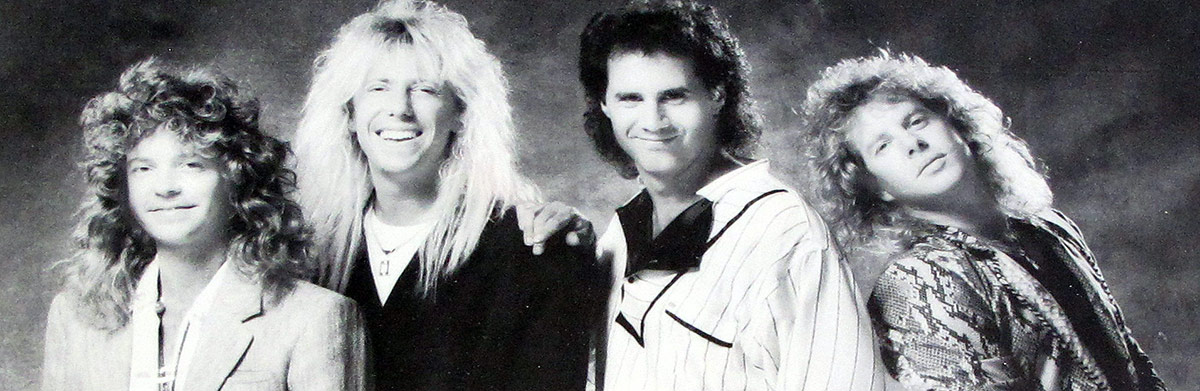
"Night Ranger" Band Description:
Night Ranger hit the American hard rock moment like a clean punch to the sternum: twin guitars, big hooks, and a chorus built to survive bad speakers, bad decisions, and even worse hair spray. This was a band that could play mean, write pop-smart, and still sound like it belonged on a stage with the lights hot enough to melt guilt into the floor.
By the late 1960s and into the 1970s, the West Coast rock ecosystem was already busy mutating: British hard rock swagger got spliced with California polish, and the clubs became laboratories for volume. The guys who would become Night Ranger came up in that era, learning how to play loud without playing dumb, soaking in the lesson that a riff can be as memorable as a lyric if you swing it right.
The actual Night Ranger story starts at the tail end of the 1970s, when the band existed as Ranger, a leaner name for a group with a not-so-lean ambition. The core engine formed around vocalist/drummer Kelly Keagy, bassist/singer Jack Blades, and the twin-guitar attack of Brad Gillis and Jeff Watson, with keyboards added to widen the frame when the music demanded it.
That twin-guitar setup was the tell, right away. Gillis played with a flash and bite that came from real miles, not bedroom mythology, while Watson’s “eight-finger tapping” approach gave the band a second vocabulary, almost like a second lead singer who spoke in harmonics and speed. Put them together and you got a band that could sound like a bar fight and a radio ad at the same time, which is basically the 1980s in one sentence.
The early 1980s were a weird, perfect storm: new wave was sneering from the left, heavy metal was barrelling in from the right, and AOR radio sat in the middle like a big, hungry gatekeeper. Night Ranger understood the assignment. They weren’t trying to be punk-approved or metal-pure; they were trying to win the room, then win the car stereo on the drive home.
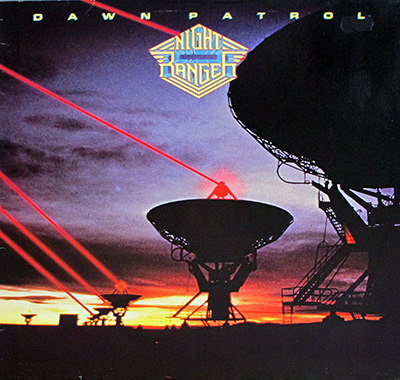
Their first album, "Dawn Patrol" (1982), introduced the blueprint: tight songs, sharp playing, choruses with bright edges, and enough muscle to keep them off the pop shelf. “Don’t Tell Me You Love Me” gave them early traction, and it also made the point that this band could do urgency without sounding like it was faking the sweat.
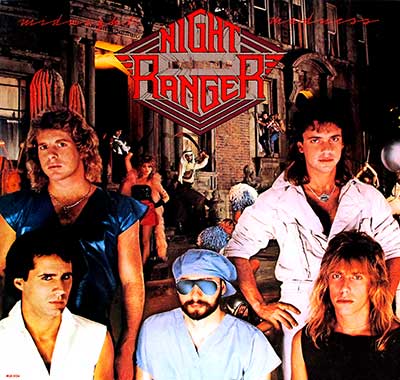
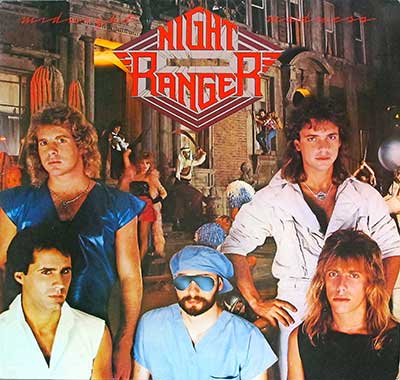
Then came the big one: "Midnight Madness" (1983), the record that turned Night Ranger from “promising” into “inescapable.” “Sister Christian” became the era’s power-ballad lightning rod, and the band suddenly had the kind of mass audience that makes promoters smile and purists roll their eyes in synchronized disgust.
Here’s the part the rock world always pretends it doesn’t understand: a band can write a huge ballad and still be a hard rock band. Night Ranger took heat for “going soft,” as if choruses are a moral failure. The reality was simpler and more brutal: they were good enough to make tenderness loud, and that scares people who confuse volume with sincerity.
"7 Wishes" (1985) kept the momentum rolling, leaning into the band’s talent for melodic hard rock that didn’t apologize for wanting to be memorable. Songs like “Sentimental Street” and “When You Close Your Eyes” showed the group’s sweet spot: big hooks, clean drama, and just enough guitar heat to remind you the amps were still on.
Offstage, Night Ranger carried the usual 1980s luggage: constant touring, label pressure, and the high-stakes math of keeping five personalities pointed in the same direction. The era rewarded a certain kind of shine, and the band walked the line between being a real players’ band and being a product that had to fit a marketing frame. That tension didn’t kill them, but it never stopped trying.
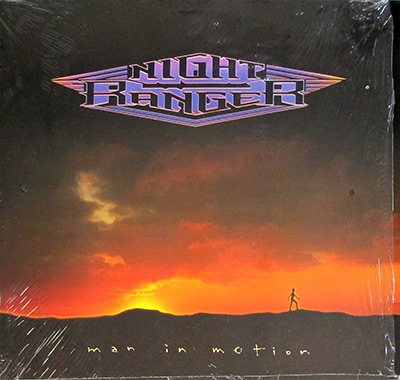
The late 1980s records, like "Big Life" (1987) and "Man in Motion" (1988), landed in a changing climate. Radio tastes were shifting, MTV’s attention span was fickle, and hard rock was getting squeezed between heavier sounds and shinier pop. Night Ranger kept swinging for the same goal: songs that hit hard, sing easy, and leave a mark, even when the industry started acting like the party was already over.
Lineup adjustments and the constant push to “update” a sound became part of the story, too. Keyboards, in particular, were always a strategic choice: add them and you widen the cinematic feel; pull them back and you sharpen the attack. Either way, the identity stayed anchored in the voices and the guitars, with Blades and Keagy sharing lead vocals and harmonies that gave the band its emotional spine.
By the early 1990s, the ground under mainstream rock moved fast and without mercy. "Feeding Off the Mojo" (1991) arrived in a world already leaning toward grit, irony, and the next wave that would rewrite the rules again. Night Ranger didn’t vanish because they forgot how to play; they got hit by a cultural weather system that treated 1980s precision like a crime scene.
The truth is Night Ranger’s best work from that 1982–early 1990s run holds up because it’s built on craft, not costume. The band had real players, real songs, and a real understanding of how to make hard rock feel both tough and human. Plenty of groups had louder image-making; Night Ranger had the tougher trick: they could make a crowd sing and still make guitar players pay attention.
<