VA - Underground Concert Album Description:
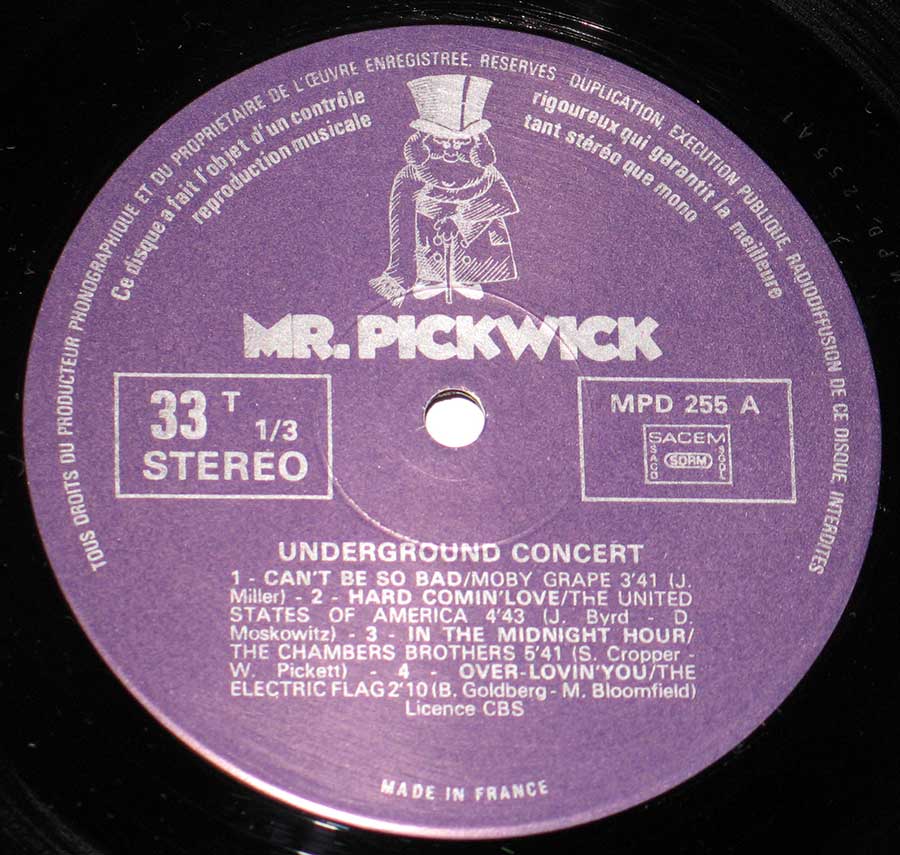
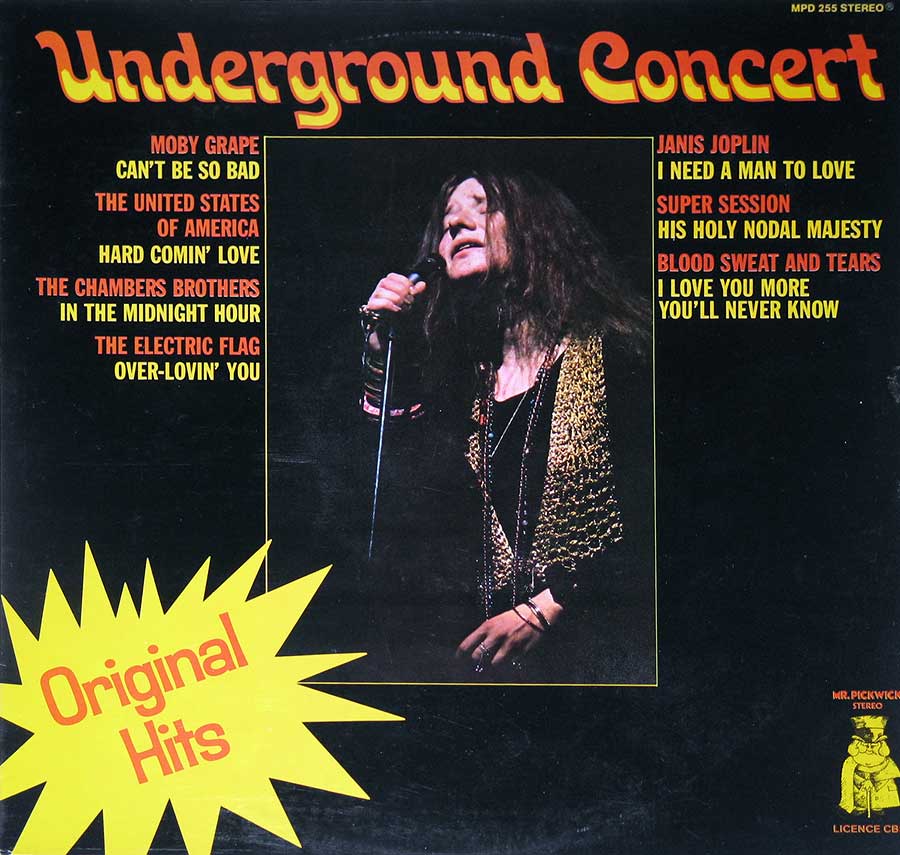
VA - Underground Concert (1975, France) - 12" Vinyl LP Album. I first bumped into this one the way these records always find you: half-hidden in a crate, sleeve a bit tired, that Mr. Pickwick label staring back like it knows a secret. France. MPD 255. 1975 on paper — but the music inside has late-60s color bleeding through it like wet poster ink.
The title says "Underground Concert". Sure. And I'm the King of Denmark. It plays more like a back-alley mixtape someone stapled together for pocket money — and that's exactly why it works. No polite introductions. No safety rail.
Side One: four matches struck in the dark
Moby Grape comes out first with "Can't Be So Bad" — not a grand statement, more a nervous grin with electricity behind the eyes. Then The United States of America shove in "Hard Comin' Love" and everything gets slightly untrustworthy, like the floor is moving a few millimeters per beat.
The Chambers Brothers hit "In The Midnight Hour" and it stops being theory. It becomes sweat. The Electric Flag finish the side with "Over-Lovin' You" — horns and grit and that sense somebody's pushing the meters into the red on purpose. I'm not pretending it's subtle. I'm grateful it isn't.
Side Two: the room gets hotter, the edges get softer
Janis Joplin tears into "I Need A Man To Love" and the whole compilation suddenly feels less like a bargain-bin Frankenstein and more like a real night you weren't invited to. That voice doesn't "showcase talent" — it grabs your collar.
Then you get "His Holy Modal Majesty" (often misspelled as "Nodal" on listings, which is… honestly fitting here). Bloomfield / Kooper / Stills stretch the air until it shimmers. It's the acid-psych part where the lights smear, the drum hits leave a ghost-image, and you start believing the wallpaper is breathing.
Blood, Sweat & Tears close it with "I Love You More Than You'll Ever Know" — big, bruised, and dramatic. Some people roll their eyes at that kind of intensity. I don't. I've got enough tasteful understatement in my kitchen cupboards already.
This record isn't a sacred artifact. It's a practical object: cardboard, vinyl, ink, a French budget label, and seven tracks that still kick when the needle drops clean. I don't play it to learn history. I play it when I want the room to feel slightly dangerous again.