- 1971 German Pressing, Acid/Psych Prog Rock
"Savage Rose: Refugee" emerges from the grooves of a 12" Vinyl LP Album, a musical odyssey crafted by the Danish Acid/Psych Prog Rock band. Released in 1971, this marks the fifth official studio album by Savage Rose. With each track, "Refugee" delves into the eclectic realms of acid, psych, and prog rock, showcasing the band's evolving sonic landscape. A testament to their musical maturity, this album cements Savage Rose's status as pioneers in the Danish rock scene.
"Refugee" hits my turntable like a band that finally stopped pretending everything was fine and just let the chaos speak for itself. You can hear the early-70s exhaustion baked straight into the grooves — the world was a mess, the music scenes were mutating, and Savage Rose basically said, “Whatever, let’s make something honest.” It’s dramatic, intense, and somehow still feels more grounded than half the polished nonsense released today.
Denmark in 1971 wasn’t exactly Woodstock 2.0, but the political tension and counterculture fallout made sure nobody was writing cheerful sing-alongs. Europe felt uneasy, America felt angry, and musicians everywhere were trying to decide whether to rebel, escape, or just lie down for a minute.
Psychedelic rock had shed the peace-and-love costume by then. The flowers wilted, the colors darkened, and suddenly everyone was experimenting with bigger sounds and darker themes. “Refugee” fits this shift perfectly — less tie-dye, more “don’t make eye contact, things might explode.”
By album five, Savage Rose were way past the “let’s find our sound” phase. The Koppel brothers were busy stitching classical training onto psychedelic freakouts, like two kids who discovered the art-supply closet and refused to pick just one crayon.
Meanwhile, Annisette’s voice — already capable of peeling paint off walls — went fully volcanic. The band had toured hard, pushed harder, and reached that magical moment where exhaustion and ambition collide. That collision is exactly what you’re hearing.
The whole album feels like a confession delivered under pressure. Piano lines weave in and out like they’re arguing with the organ, the rhythms stomp instead of swing, and Annisette delivers vocals like she’s trying to outshout whatever demons the year 1971 threw at her.
Songs like “Revival Day” and the title track don’t ease you in; they greet you like someone opening the door mid-storm and yelling, “Well? Are you coming in or not?” Subtle it is not — but powerful, absolutely.
Look at the class of ’71: The Doors brooding in “L.A. Woman,” Yes showing off in “Fragile,” Jethro Tull writing an existential crisis set to flute. Savage Rose didn’t bother joining the cool-kids table. They just made the record they felt like making — dramatic, spiritual, raw.
They sounded neither British nor American. Honestly, they barely sounded Danish. And that outsider energy is exactly why “Refugee” still stands out instead of blending into some nostalgic playlist.
Critics weren’t sure what to do with the album. Half said it was too much, the other half said it wasn’t enough — classic critic behavior. Fans argued over whether the band had gone too dark or finally grown up. It’s the usual story: when a band evolves, half the audience panics.
Savage Rose didn’t bother explaining themselves. They just kept going, probably assuming people would either catch up or stay confused. Both outcomes happened.
You can hear the internal tensions all over the record. The Koppel brothers were chasing big ideas like they were running out of time, while Annisette kept raising the emotional stakes with those sharp-edged vocals that sound one breath away from starting a revolution.
This was not a “zen studio retreat.” More like a pressure cooker — and honestly, pressure cookers make the best albums.
“Refugee” didn’t top charts, but it built a long-term reputation that most commercial hits would kill for. Collectors know exactly why early German pressings still feel electric: the album’s emotional voltage hasn’t faded one bit.
Put a clean copy on the turntable today and it still punches with that raw blend of gospel fire, psychedelic haze, and real-world weariness. No nostalgia goggles needed — the album genuinely still holds up.
What gets me about “Refugee” is how fearless — and slightly unhinged — it still sounds decades later. It’s messy in all the right ways, intense without apology, and full of that early-70s “we might not survive this decade, so let’s at least make noise about it” spirit.
This is one of those records I pull out whenever I want to feel something real — or at least remind myself that some bands refused to play it safe even when the world practically begged them to.
Danish Acid Psych Rock
Danish Acid Psych Rock blends the trippy, mind-bending atmosphere of late-60s psychedelia with the raw, emotional edge that Savage Rose made their trademark. Expect swirling organs, dramatic vocal lines, and a moody, almost cinematic intensity. It’s psych rock with a European twist — less West-Coast sunshine, more Nordic fire and spiritual urgency.
Gregar Records / RCA Victor – Cat#: LSP-10353 / ATRS-5847
Standard sleeve.
Record Format: 12" LP Vinyl Gramophone Record
1971 – Made in Germany
Disclaimer: Track durations shown are approximate and may vary slightly between different country editions or reissues. Variations can result from alternate masterings, pressing plant differences, or regional production adjustments.
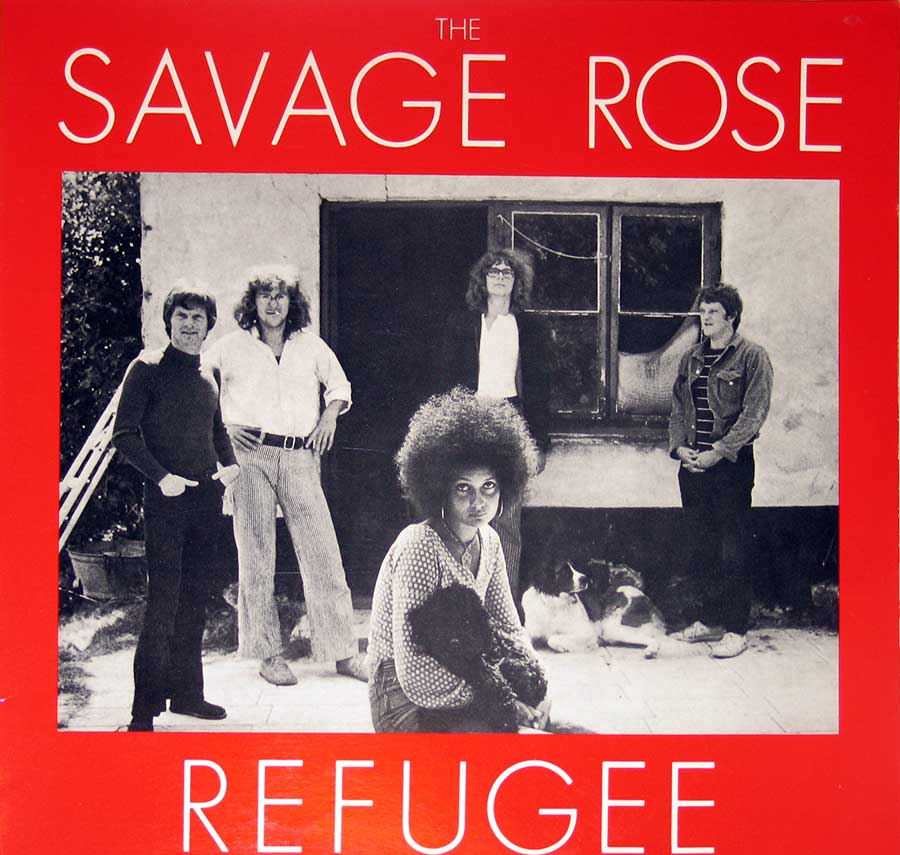
The front cover of Refugee captures the group standing outside a weathered white house, framed within a thick red border that instantly identifies this early-1970s design style. The band members are arranged in a loose semicircle, each with a distinct stance: one with hands resting in pockets, another standing with legs apart in relaxed confidence, and one leaning casually near the right edge. Their clothing matches the era’s rough, practical style — denim, simple shirts, modest textures.
At the front sits Anisette, the unmistakable focal point, positioned lower than the others and staring directly into the camera with a steady, unflinching expression. Her large, rounded afro creates a powerful silhouette, contrasting sharply with the straight lines of the house behind her. She holds a dark, curly-haired dog on her lap, while a second dog lies behind her near the doorway, adding an unexpected domestic stillness to the scene.
The house itself tells its own story through small visual details: cracked plaster, worn paint, and a windowpane with a broken lower-left corner patched casually from the inside. These imperfections add authenticity that vinyl collectors know well — signs that the photo was never staged to look glamorous. Instead, it plays like a snapshot of the band’s real environment during the Refugee era, a choice that fits the album’s raw, expressive tone.
The typography is clean and bold, with “THE SAVAGE ROSE” stretched across the top in large white capitals and “REFUGEE” centered along the bottom. The red framing dominates the overall composition and helps distinguish this German pressing from other editions. Every small element — the uneven shadows, the slight tilt of the window frame, the varying postures — offers useful reference points that collectors rely on when comparing pressings, sleeve variations, and print quality.
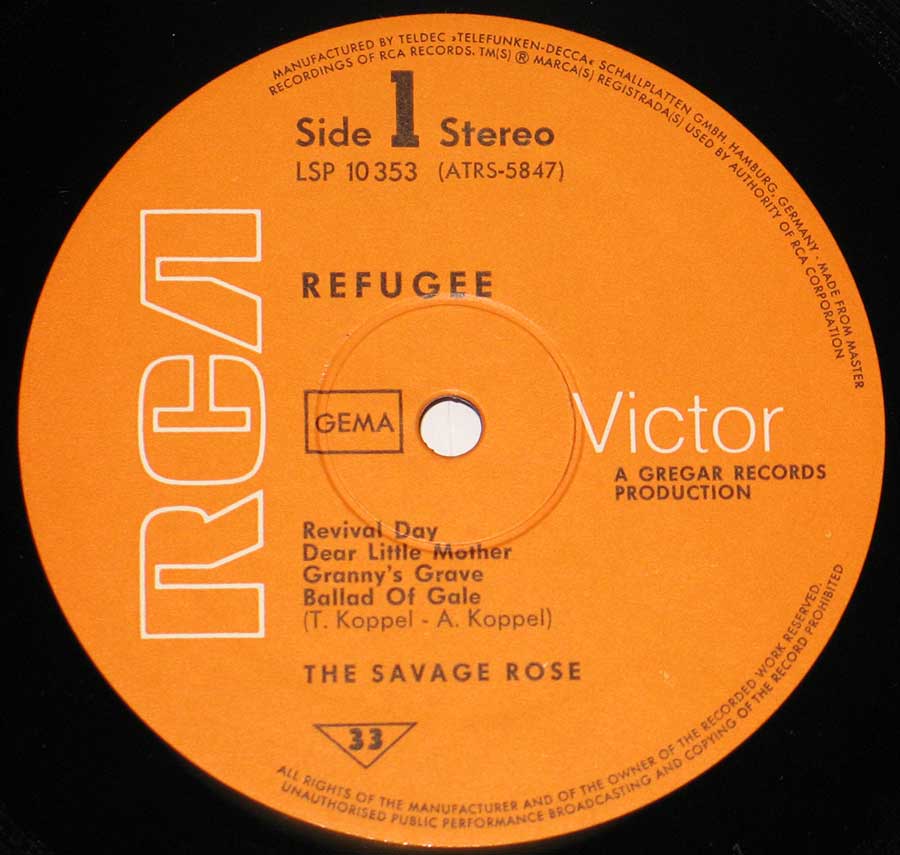
The Side One label of Refugee is pressed in the classic early-70s RCA Victor orange, a matte, slightly textured surface that collectors associate immediately with German TELDEC manufacturing. The bold vertical RCA logo dominates the left half of the label, printed in a sharp white outline that contrasts cleanly against the orange background. The word “Victor” sits on the right, aligned with precision, matching the minimalist typography standards of the era.
Across the top is the clear “Side 1 Stereo” marking, followed by the catalog number “LSP 10353 (ATRS-5847).” The GEMA rights box sits centered above the spindle hole, printed with tight edges that help distinguish authentic originals from later reissues. Beneath it, the album title “REFUGEE” appears in straightforward uppercase lettering — no flourish, no decorative styling, just pure functional design as RCA Germany preferred.
The tracklisting is arranged in a clean four-line block listing “Revival Day,” “Dear Little Mother,” “Granny’s Grave,” and “Ballad of Gale,” with the T. Koppel / A. Koppel writing credit directly below. The bottom portion displays “THE SAVAGE ROSE” aligned centrally, followed by the 33 RPM triangle symbol, a detail collectors always check to confirm correct pressing lineage.
The circular text around the outer edge includes TELDEC manufacturing credit and copyright warnings in small, tightly spaced lettering typical for German RCA pressings. Even the slight shift in ink density near the spindle hole is visible, a common characteristic of this particular production run. Every small element here — layout, spacing, printing weight, and alignment — serves as a reliable reference point for authentication and comparison against later reissues.
The back cover photo for this album is unfortunately missing because the original digital file didn’t survive one of my early-2000s hard-disk failures. Those drives were basically ticking time bombs, and this one decided to shed some of its magnetic particles at exactly the wrong moment.
The damage wasn’t repairable, and the image vanished before I could migrate the archive to newer disks. Considering this site spans decades of scanning, photographing, and babysitting ancient hardware, the occasional casualty is sadly part of the history.
If the album re-enters my hands in a future collection reshuffle, I’ll re-photograph the missing back cover and restore the gallery properly.
All images on this site are photographed directly from the original vinyl LP covers and labels in my collection. Side Two labels and blank inner sleeves are often omitted when they contain no collector-relevant details. Image quality varies because they were taken over several decades with different cameras. You may use these images for personal or non-commercial purposes with a link back to this site; commercial use requires permission.
Savage Rose has always been one of those bands where the music tells the story faster than any biography. The group formed in 1967, and the creative pulse came straight from Thomas and Anders Koppel. Their combination of classical training, raw experimentation, and absolute conviction is what shaped the band’s entire identity.
Thomas was the main architect of that early sound. His piano work and compositions gave the band its emotional core, while Anders handled organ, percussion, and the unusual textures that helped Savage Rose stand out in the late-60s psychedelic scene. They didn’t do it alone, though — the original lineup included several other musicians whose playing gave those first albums their depth.
Before things shifted, Thomas was married to Ilse Maria Lanser (later known as Ilse Maria Koppel). She contributed to the band’s early recordings, adding subtle but important colors like harpsichord and vocal layers. These details are exactly what pull me back into the vinyl sleeves again and again, especially when comparing early Polydor pressings.
From the very beginning, the unmistakable voice at the front was Annisette Hansen. She didn’t arrive later — she was part of the initial formation, and her voice was the emotional spearhead of everything Savage Rose recorded. That mix of vulnerability and attack gave the band its identity long before any personal relationships developed behind the scenes.
Over time, the creative bond between Thomas and Annisette grew into a personal partnership, and they eventually married. That connection kept the heart of Savage Rose remarkably stable across decades, even as lineups shifted and the musical landscape changed. Their shared artistic drive is a big part of why the band’s early catalog still feels so focused and fearless.
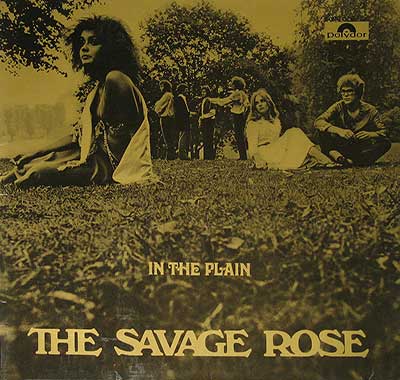
Albums like “In the Plain” (1968, their second studio record) and “Refugee” (1971, their fifth) show exactly how quickly the band evolved. The blend of psychedelic rock, folk, classical influences, and gospel energy makes these records a joy to handle as a collector. Every pressing variation — Polydor layouts, RCA Victor label fonts, dead-wax etchings — adds another layer to the story.
Whenever I study those sleeves and spin those records, it becomes clear how tightly the band’s personal history is woven into its sound. The family connections, the lineup changes, the push toward new musical territory — it all reinforces why Savage Rose remains one of Denmark’s most distinctive contributions to late-60s and early-70s rock.
Co-founder, pianist, composer. Married first to Ilse Maria, later to Annisette.
Early contributor (harpsichord, vocals). First wife of Thomas.
Ilse Maria Koppel → Ilse Maria Lanser
Lead vocalist and founding member. Later married Thomas.
"Anisette always sparks the same memory for me: a tiny bar in Marseille where the bartender swore it was “sunshine in a glass.” The drink was so sweet and perfumed it felt like liquefied licorice candy, and the locals tossed it back effortlessly. Every sip came with a lecture about tradition, pride, and how people like me never fully understand it."
Annisette Koppel → Annisette Hansen
Polydor 2459 326 , 1969 , Germany
"In The Plain" drops into that dreamy zone where acid-psych meets chamber-like drama, with Annisette driving the whole thing using vocals that feel one breath away from combustion. The Koppel brothers lock in those haunting melodic lines that make the album feel both raw and strangely elegant. A standout Polydor issue that still hits harder than most late-60s psych releases.
Gregar Records / RCA Victor LSP-10353 / ATRS-5847 , Germany
"Refugee" is the fifth studio album by Danish Acid/Psych Prog Rock band Savage Rose, released in 1971. The record expands their dramatic sound with more elaborate arrangements and intense vocal work, marking a pivotal moment in their early catalogue.