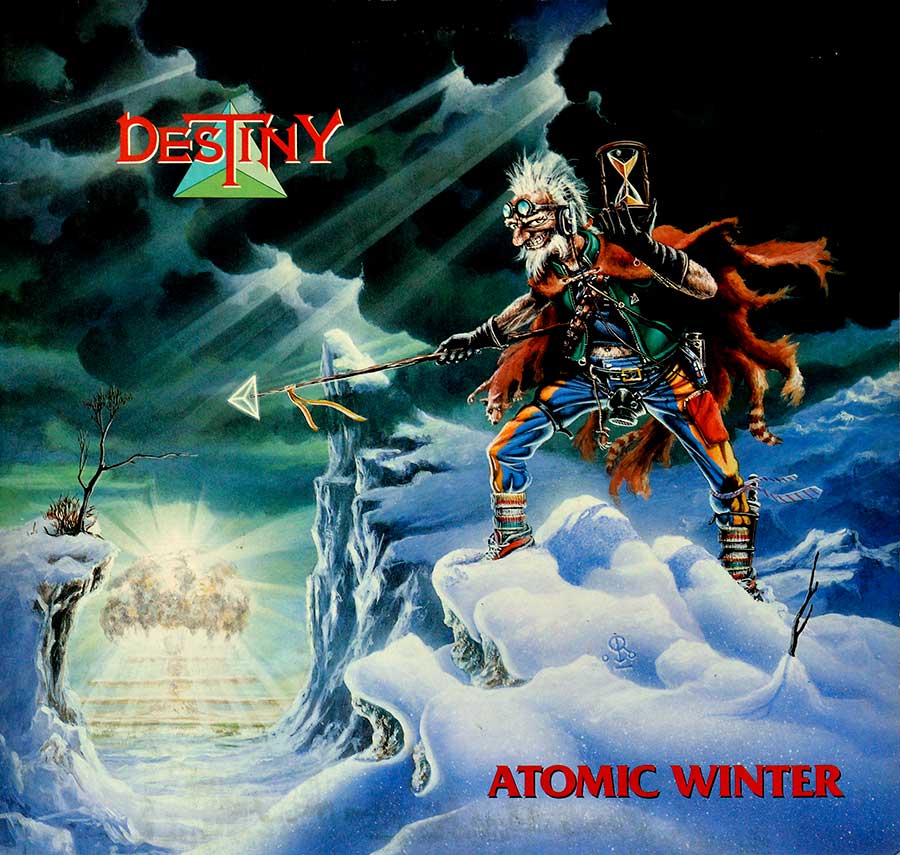
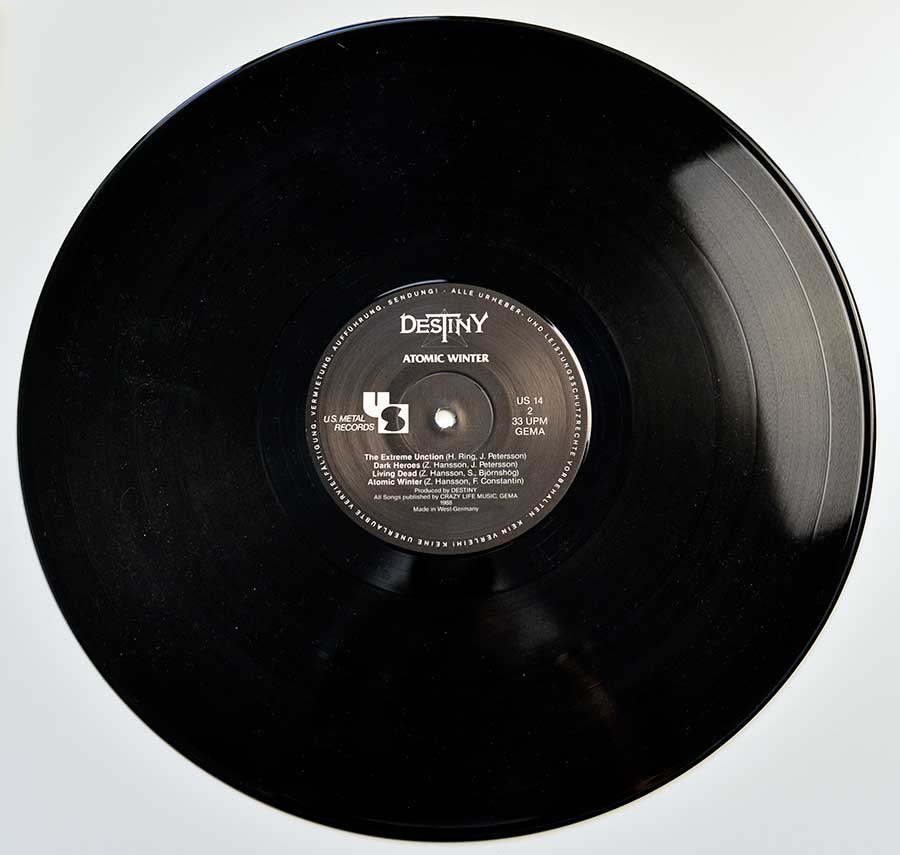
The first thing "Atomic Winter" does is stare you down. Derek Riggs paints the cover like a winter warning label, the kind you ignore right before you slip on black ice. Then the record drops in September 1988 and reminds you that Sweden wasn’t only exporting shiny hair and polite choruses. Some of it was busy sharpening steel in a cold room.
The twist is that Destiny don’t behave like a scene cliché. New singer Zenny Hansson steps in, "Spellbreaker" gets rebuilt instead of nostalgically framed, and suddenly you’re hearing a band making choices, not just playing correct riffs. There’s a whole little Gothenburg machine behind this one — the studio, the voices, the fingerprints — and it only shows itself once you stop listening like a historian and start listening like you’re trapped in the same room with the amps.
1988 in Sweden: split personalities, loud opinions
You could feel the country pulling in two directions. One side had the big, bright, export-ready stuff on the radio. The other side lived in rehearsal spaces, record shops, and basements that smelled like wet coats. Destiny sit closer to that second Sweden — not the extreme underground, not the glam postcard either — but a working heavy metal band trying to sound bigger than their postcode without polishing the edges off.
And yes, the year matters. By 1988, speed was already in the bloodstream, doom had its cathedral echo, and the harsher scenes were getting meaner by the week. Destiny don’t chase the ugliest noise. They chase momentum. Different obsession.
Where it lands: the peer-band contrast (quick and dirty)
- Candlemass: slow heaviness, ceremonial gloom. Destiny move faster and bite with less incense.
- Bathory: fire and myth. Destiny stay human-sized — boots on the floor, not in Valhalla.
- Europe: arena gloss. Destiny keep the lights lower and the corners sharper.
- Helloween: bright speed melody. Destiny are rougher, a little more suspicious of smiles.
- Iron Maiden: the big gallop shadow (and yes, the cover artist overlap makes that unavoidable).
Band chemistry: line-up changes as cause and effect
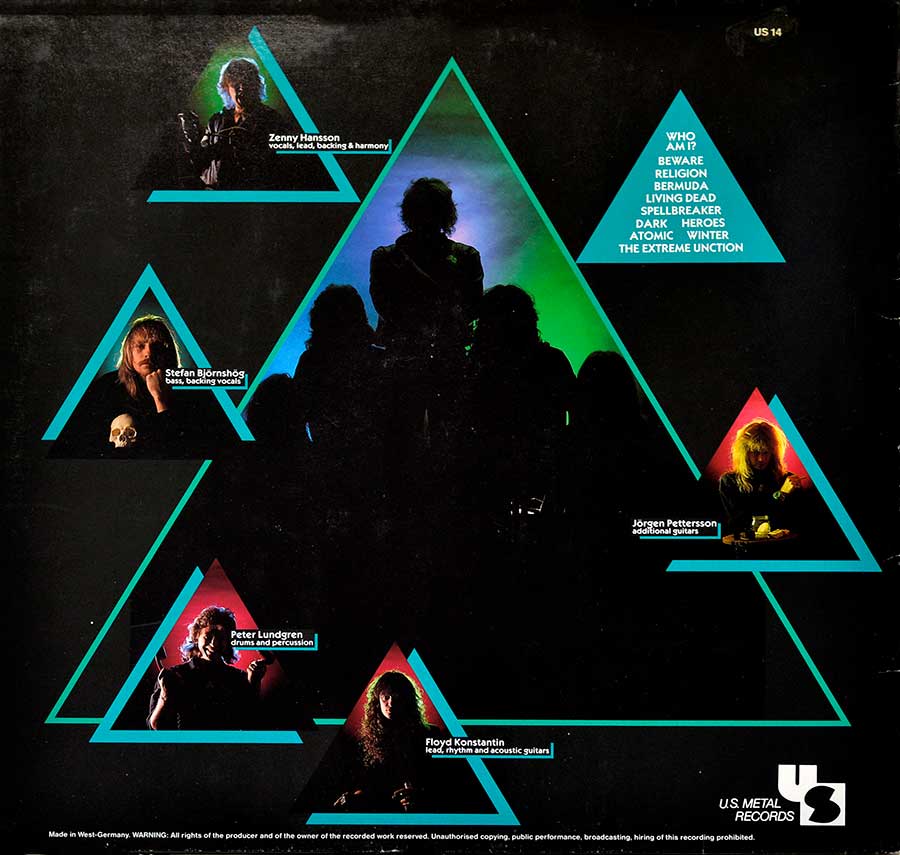
"Atomic Winter" is the sound of a band re-wiring itself. The headline change is Zenny Hansson taking the vocal spot, and that matters because the songs suddenly have room to stretch upward instead of just pushing forward. It also changes the way the riffs feel — not softer, just aimed differently. You can hear the band writing with a voice in mind, not simply stacking parts until it looks like a metal song on paper.
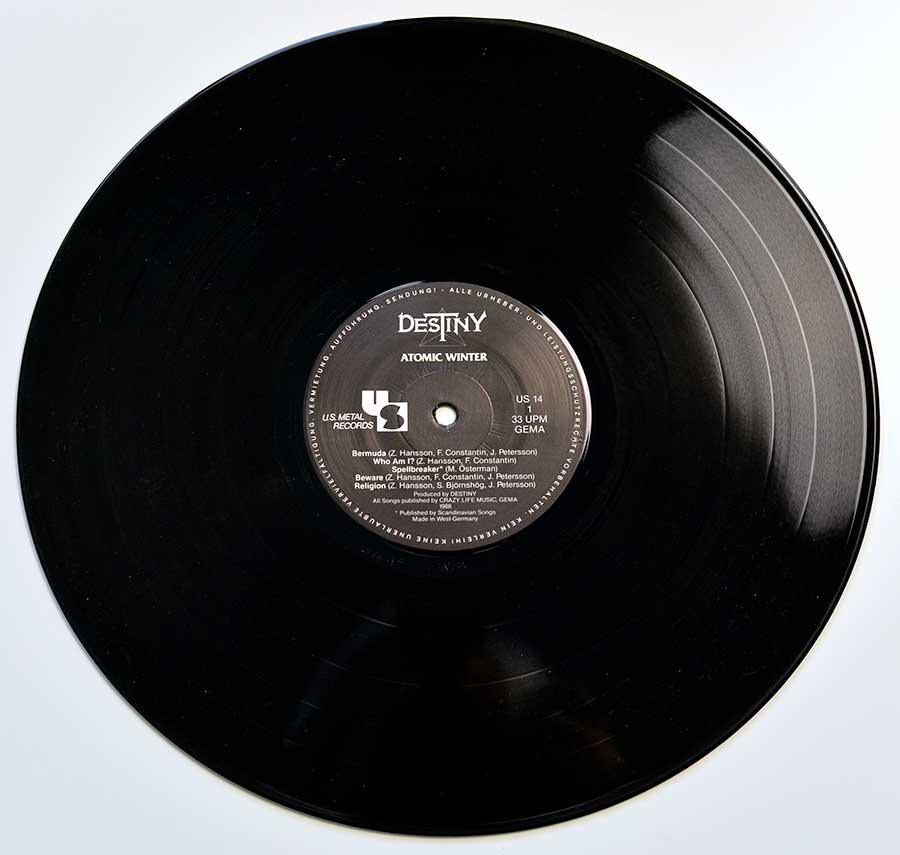
There’s a quiet continuity too: Stefan Björnshög is the anchor presence on bass, and the album even carries a thread back to the older era with a songwriting credit linked to former vocalist Håkan Ring. That’s not drama. That’s a band admitting its past still has usable parts.
Music-A-Matic, Gothenburg: the practical fingerprints
The record is tracked and mixed at Music A Matic in Gothenburg, and you can tell it wasn’t handled by tourists. The engineering and mixing credits point straight at people who know how to keep guitars thick without turning everything into oatmeal. Ilbert and Chips handle the shape of the sound, Henryk Lipp is in the technical mix and also drops in on keys, and the album keeps that late-80s discipline: hard edges, clear lanes, no fog machine hiding sloppy playing.
The backing voices are a small gang rather than a single polite overdub, so when the choruses rise, it feels like bodies in a room, not a studio trick trying to sound brave. It’s that Swedish habit of turning a rehearsal space into a choir loft — except the choir is wearing denim and refusing eye contact.
How it sounds: attack, space, and that particular cold speed
Side A moves like a disciplined shove. The guitars don’t float; they lunge. Drums snap and push the tempo without showing off, and the bass sits where it can do damage, not where it can be admired. When Destiny slow down, they don’t get pretty — they get tense, like they’re holding something back and not sure they should.
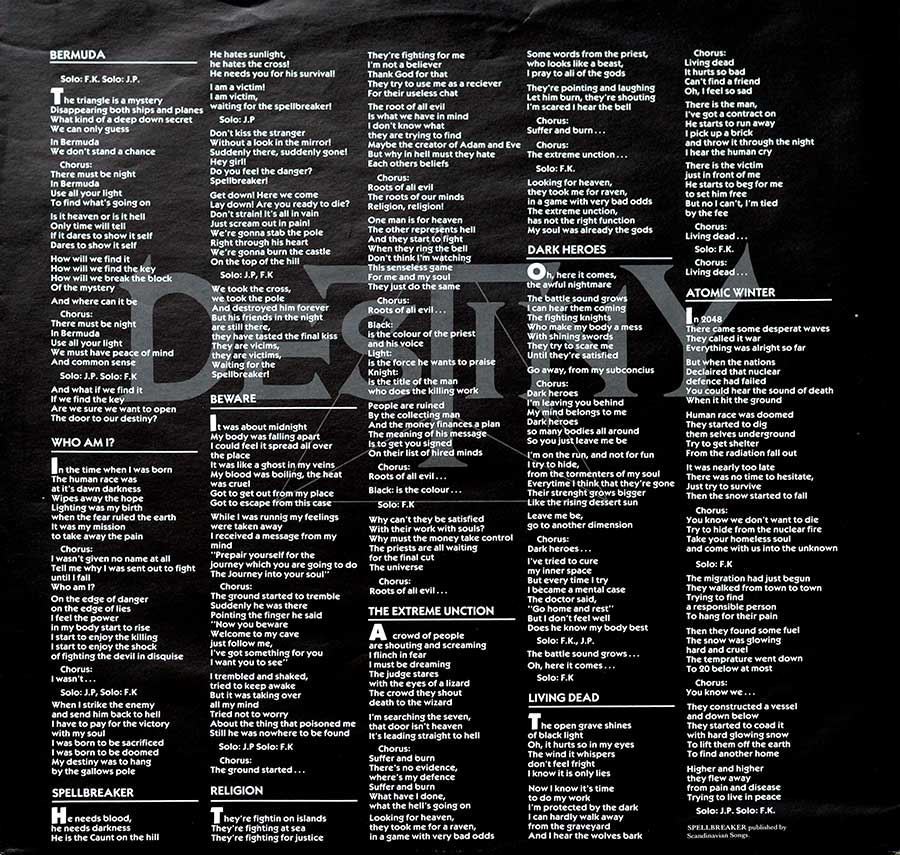
"Spellbreaker" is the perfect tell: it isn’t treated like a museum piece from the debut days. It gets rebuilt, tightened, and pushed into the new vocal shape. And when the title track stretches out, it earns the minutes with pressure and pacing, not prog manners.
Key people (and what they actually do)
- Vocals: Zenny Hansson — brings lift and bite; the songs lean into him instead of wrestling him.
- Guitars: Jörgen Pettersson, Floyd Konstantin — keep the riffs direct and the leads sharp, not decorative.
- Bass: Stefan Björnshög — anchors the record; heavy metal that forgets the bass is just cosplay.
- Keyboards: Henryk Lipp (guest) — adds atmosphere in small doses, not syrup.
- Drums: Peter Lundgren — drives the record with control; speed with steering, not speed with panic.
- Engineering/Mixing: Ilbert and Chips — carve separation and impact; the guitars hit without turning to sludge.
- Artwork: Derek Riggs — sells the temperature before the first note, and the band live up to it.
Controversy check: none, but people still get it wrong
No famous scandal hangs off this release. No censorship story. No tabloid mess. The usual confusion is more boring: people shove it into the wrong genre box (some call it thrash when it really isn’t), or they hear the Riggs connection and start expecting Destiny to sound like someone else. That’s on the listener, not the band.
One quiet personal anchor
I can picture this one being played too loud in a small shop on a grey afternoon, the kind where the door keeps letting in cold air and nobody bothers to apologize for it. The cover would pull you in first. Then the snare crack would make the decision for you.
"Atomic Winter" doesn’t beg to be loved. It just keeps moving, keeps cutting, and leaves you with that late-80s Swedish feeling: the world is freezing, the coffee is black, and the band is absolutely not here to make you comfortable.
References