The Electrifying Spanish Funk-Soul LP That Marked the Band's Evolution and Legacy
Released in 1982, Bestial is the eighth and penultimate studio album by Spanish funk-rock pioneers Barrabás. Known for their infectious blend of Latin rhythms, funk grooves, and rock energy, the band delivers a powerful and dynamic record that showcases their signature style. Bestial marks a significant chapter in Barrabás' journey, featuring long-time vocalist José Luis Tejada in his final appearance with the group.
Bestial is late-era Barrabás sounding lean, confident, and slightly dangerous in a very 1982 way: polished enough for a big room, but still built on sweaty groove and stubborn personality. It’s their eighth and penultimate studio album, and you can hear a band that knows the clock is ticking, so they make every minute count.
Barrabás always had that rare trick of making rock move its hips without turning it into a cartoon, and Bestial keeps that identity intact. The lineup here puts José Luis Tejada up front on vocals (and harmonica), with Jorge Eduardo Maning on guitar (and vocals), Jesús Gordaliza on bass (and vocals), Armando Pelayo on keyboards, and José María Moll on drums (and vocals).
By 1982, Spain was shaking off the old gray shadows and letting pop culture breathe again, louder and more curious than before. While new scenes were sprinting toward synths, punk edges, and nightlife electricity, Barrabás stayed rooted in funk-soul muscle and Latin rhythm, then dressed it for the era so it could walk into any club in Europe and not get laughed out of the room.
Bestial wasn’t made in a cozy local bubble: it was recorded at Musicland in Munich, Germany, with Kristian Schultze and Hans Menzel listed as sound engineers. That choice matters, because you can feel the “international room sound” in the way the album snaps and shines—like Barrabás aimed the grooves outward instead of inward.
The album hits with thick, strutting momentum—bass that walks like it owns the sidewalk, keyboards that add gloss without going soft, and a rock edge that keeps the funk from getting too polite. It’s dance-floor aware, but it never forgets it’s still a band, not a jukebox.
The Lion (Don't Kill the Lion) opens with that big-statement energy: dramatic, bold, and made to linger in the air after the needle drops. (Be My) Rebel follows the opposite strategy—less sermon, more swagger—like they’re testing how catchy they can get before anyone accuses them of being “accessible” (the horror).
Later, Leather Queen brings the attitude, sharp and slightly theatrical, while Big Brother closes with a colder stare that feels more streetlight than sunshine. The mood shift is part of the charm: this record knows how to flirt and how to bite.
Put Bestial in a 1982 stack and it makes sense instantly: that year loved groove, but it also loved sheen. Where some artists leaned fully into glossy futurism, Barrabás kept the rhythm human and the heat physical—more band-in-a-room energy, less laboratory perfection.
There’s a quiet “end of chapter” feeling under the shine, because the page itself notes this is the final Barrabás appearance of long-time vocalist José Luis Tejada. That kind of knowledge changes the listen: the performances feel like a band pushing forward anyway, even while one era is clearly closing its suitcase.
This isn’t the Barrabás album people name first when they’re speed-running the band’s story, and that’s exactly why it’s fun. For collectors, Bestial plays like a late-career snapshot where the craft is tight, the grooves still hit, and the band sounds more seasoned than nostalgic—still moving, not just reminiscing.
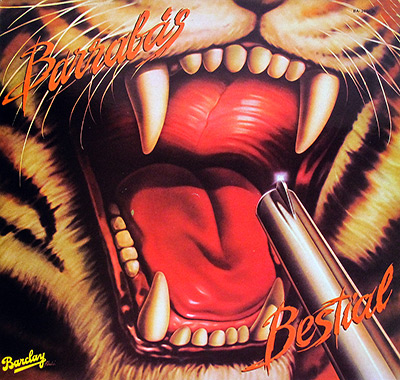
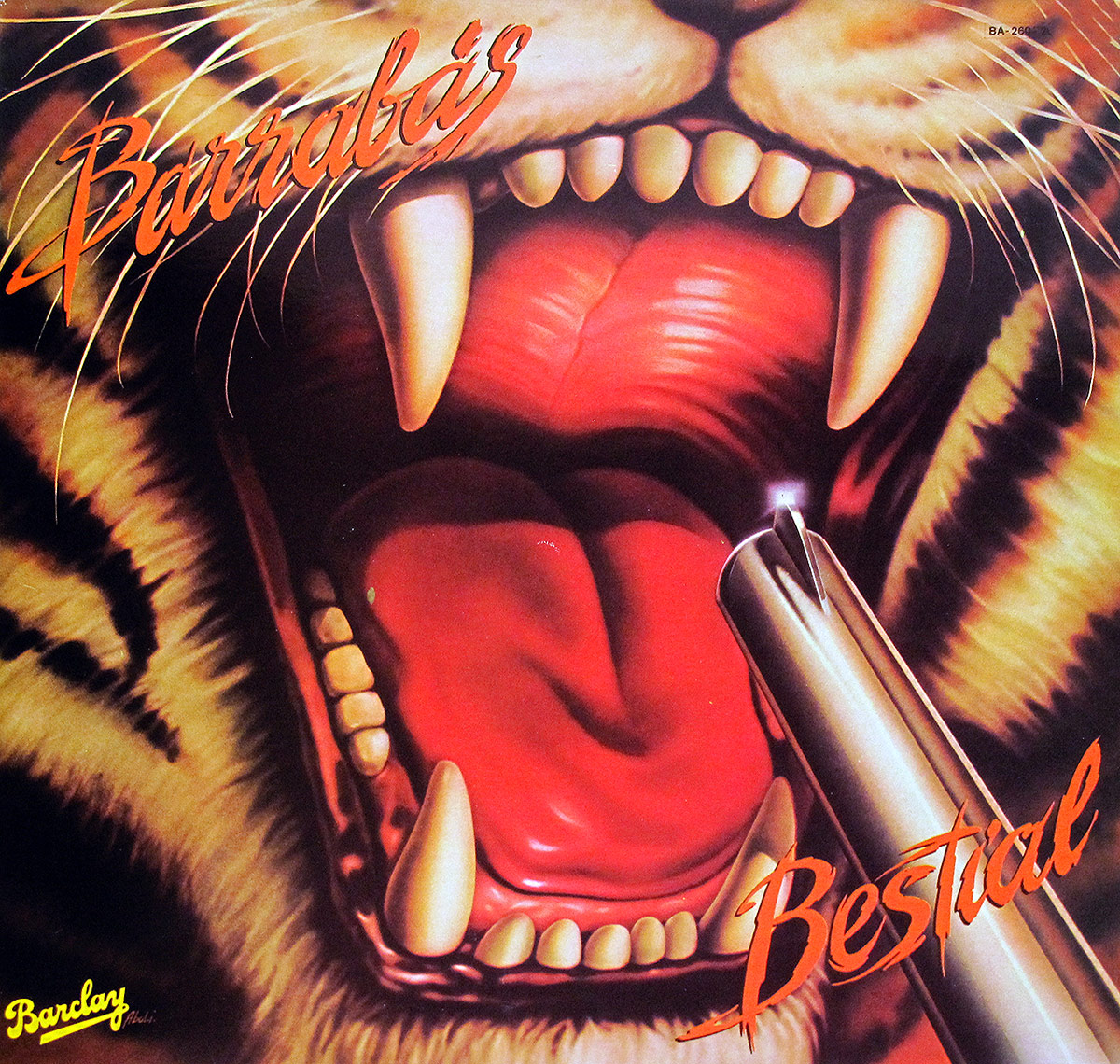
That cover image says the quiet part out loud: a roaring tiger mouth with a shotgun pointed right into it, like somebody dared the album to blink first. I file Bestial under “records that still have teeth,” because it doesn’t try to time-travel back to the early days—it stands right where 1982 is standing and makes the room deal with it. Decades later, the grooves still smell faintly of warm amps, cheap aftershave, and confidence that refuses to retire.
The album: "BARRABAS - Bestial" was produced by: Fernando Arbex , Jose Ma Moll Sound Engineer: Kristian Schultze, Hans Menzel Recorded at Musicland, Munich, Germany Album Cover Illustration: Aboli |
| Spanish Funk Soul |
| Barclay 200.418 |
| 12" Vinyl Stereo Gramophone Record Total Album (Cover+Record) weight: 230 gram |
Release date: 1982 Release country: Made in France |
Band Members and Musicians on: BARRABAS - Bestial |
|
Complete Track Listing of: "BARRABAS - Bestial" |
The Songs/tracks on "BARRABAS - Bestial" are
|
Album Cover Photo Gallery of: BARRABAS - Bestial |
| Front Cover Photo of "BARRABAS - Bestial" Album |
The album cover of "Bestial" by Barrabas features an intense and dramatic illustration. The primary visual element is an extreme close-up of a roaring tiger's mouth, with its sharp fangs prominently displayed. The tiger's lips are curled back, revealing a set of large, gleaming canines and a pink tongue. The fur is detailed with bold black stripes contrasting against a golden-yellow base. The inside of the mouth is a deep red, with smaller teeth lining the lower jaw. A notable and striking addition to the composition is a silver shotgun barrel pointed directly into the tiger's open mouth, positioned at the bottom right. The barrel reflects light and has a faint glow near the muzzle, suggesting a charged or imminent action. The typography is bold and aggressive, complementing the album's title and theme. The Band's name, "Barrabas," is written in a stylized cursive script in the top left corner, with sharp strokes and a fiery orange hue. The album title, "Bestial," is positioned at the bottom right in a similar intense, jagged script. The background is dark, allowing the tiger's fur and the bright text to stand out. The "Barclay" record label logo appears in the bottom left corner in a small, yellow cursive font. The overall composition exudes power, aggression, and intensity, reflecting the album's likely energetic and forceful musical style. |
| Back Cover Photo of "BARRABAS - Bestial" Album |
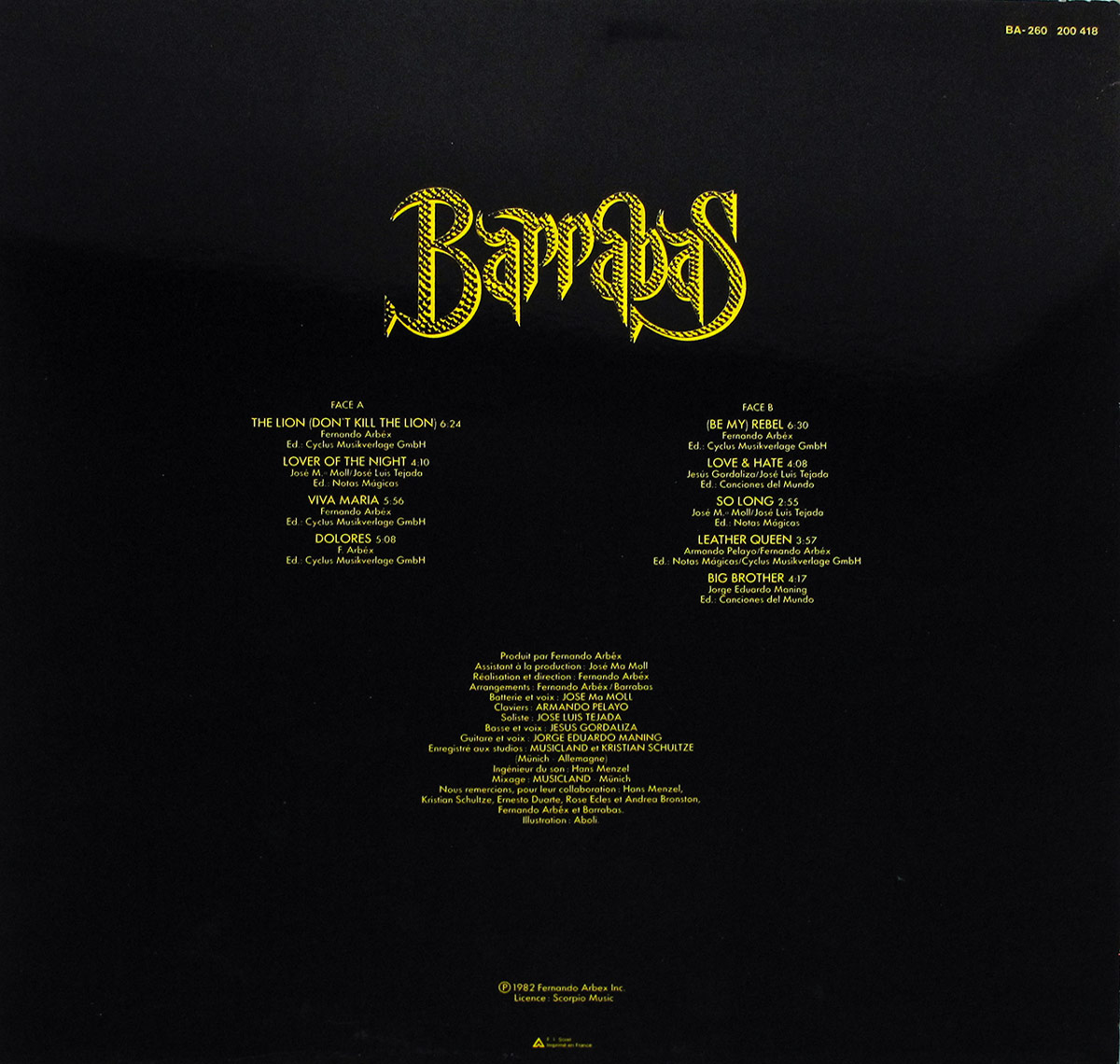
The back cover of "Bestial" by Barrabas features a minimalistic yet striking design. The background is entirely black, creating a stark contrast with the bright yellow text. At the top center, the band's name, "Barrabas," is displayed in a bold, gothic-style font with intricate, sharp details, giving it an aggressive and mysterious appearance. Below the band name, the album's tracklist is divided into two sections, "Face A" on the left and "Face B" on the right. Each track is listed with its duration and songwriting credits. The text is arranged in a clean, structured manner using a formal serif font, ensuring readability against the dark background. Further down, the lower portion of the cover contains detailed production credits, including the album's producer, assistant producer, recording location, and engineering team. The names of contributing musicians and special acknowledgments are also included. At the very bottom, the copyright notice states that the album was released in 1982 under Fernando Arbex Inc., with a licensing note mentioning Scorpio Music. The layout maintains a classic, no-frills aesthetic, allowing the emphasis to remain on the essential information while keeping the design visually striking through its high-contrast black and yellow theme. |
Close-up Photo of "BARRABAS - Bestial" Record Label
|
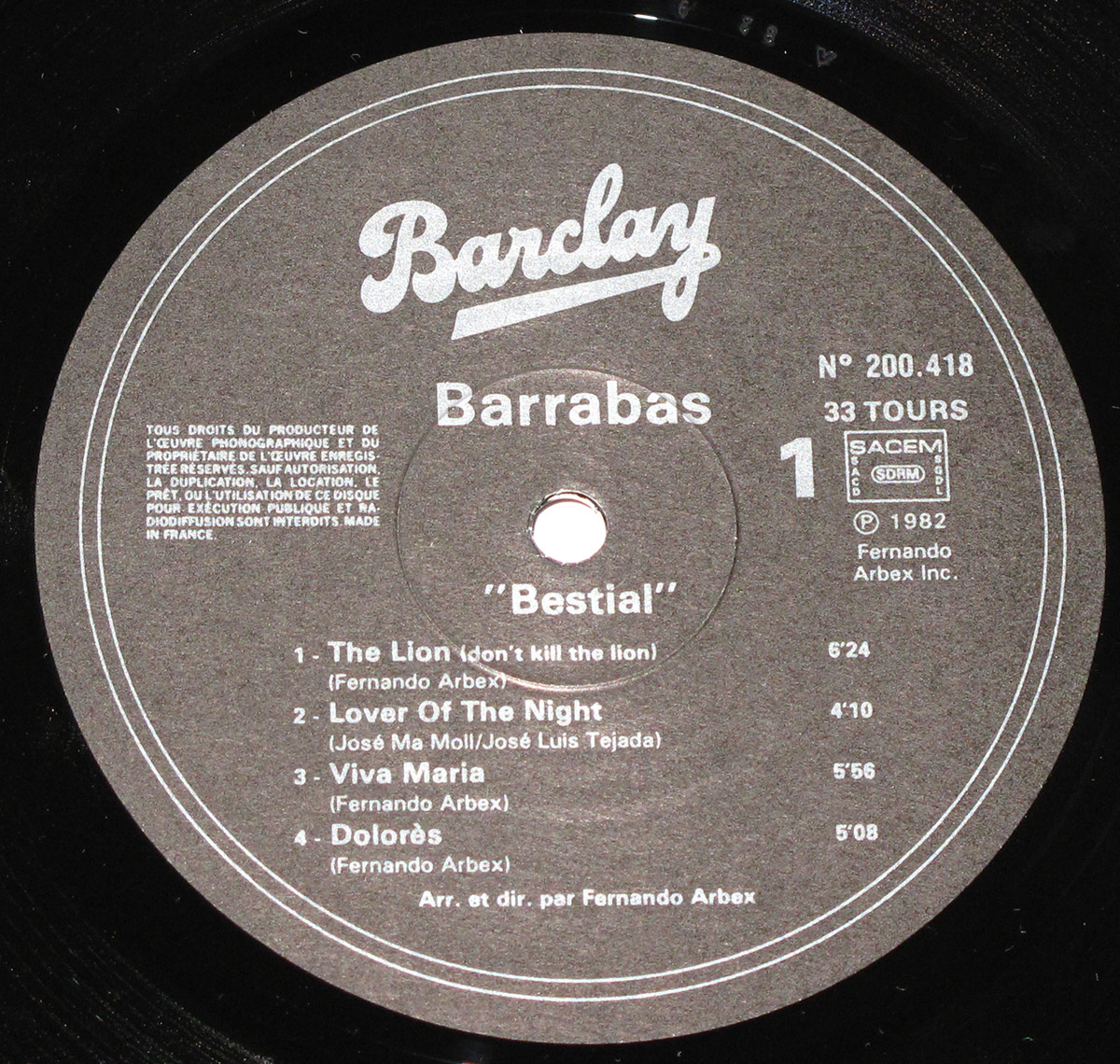
This close-up image of the vinyl record label from "Bestial" by Barrabas features a simple yet classic design. The label is circular with a dark gray background, contrasting with the bright white text. At the top, the "Barclay" logo is prominently displayed in an elegant cursive font, slightly slanted, giving it a vintage appeal. Just below the logo, the band's name, "Barrabas," is printed in bold, capitalized letters, followed by the album title, "Bestial," enclosed in quotation marks. The tracklist for Side 1 is clearly printed, listing four songs: "The Lion (Don't Kill the Lion)," "Lover of the Night," "Viva Maria," and "Dolores," along with the respective songwriters and durations. Additional technical details are present on the label, including the catalog number ("N° 200.418"), the format ("33 Tours," indicating 33 RPM speed), and the "SACEM SDRM" rights organization logo. The copyright date, "1982," is positioned towards the right side along with the mention of "Fernando Arbex Inc." as the production entity. Surrounding the label, a thin white circular border encloses the information, enhancing readability. A block of small French text at the left warns against unauthorized reproduction, public performance, and broadcasting of the record. The center hole of the record is visible, slightly reflecting light, emphasizing the texture of the vinyl material. The overall design is minimalistic, prioritizing clarity and functionality, while maintaining a classic aesthetic that aligns with the album's era. |
References:
Barrabas Bestial is a studio album by the Spanish band Barrabás, released in 1982. The band was formed in the early 1970s and was one of the most influential Latin funk bands of the era. The band's sound combined elements of rock, funk, soul, and Latin rhythms, and their music was widely popular across Europe
Visit: Bestial 12" Vinyl LP
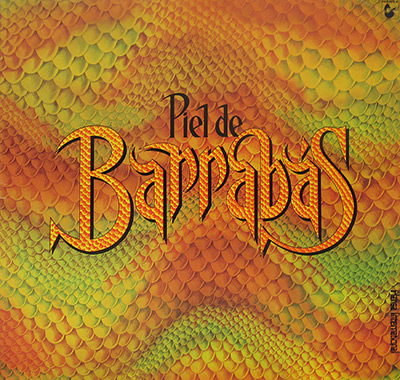
"Piel de Barrabás" is a notable album in the history of Latin funk music. While it may not have had the same raw energy and innovation as the band's earlier work, its commercial success and catchy hooks helped
Visit: Piel de Barrabás 12" Vinyl LP
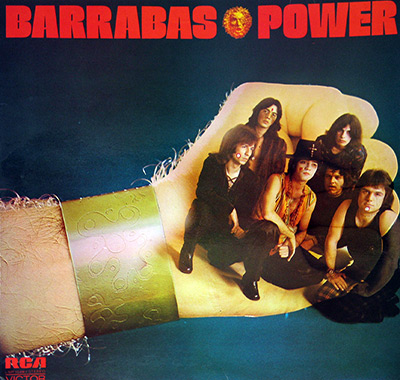
"Power" is Barrabás' 1972 studio album. The album showcases the band's unique fusion of Latin, funk, and rock music and features iconic tracks such as "Wild Safari" and "Woman." It was a commercial success and helped establish the band as a major force in the Latin funk genre.
Visit: Power 12" Vinyl LP
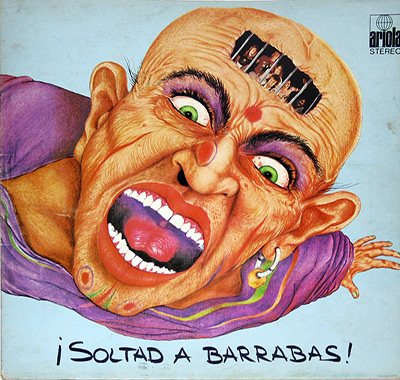
Soltad a Barrabás is a seminal album in the history of Latin funk music. Its fusion of different musical styles and its socially conscious lyrics continue to inspire musicians and fans around the world. Barrabás proved that music can be both entertaining
Visit: Soltad a Barrabas 12" Vinyl LP
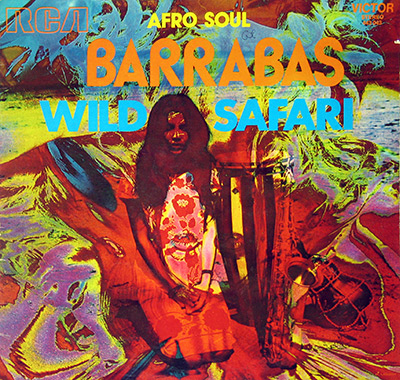
"Wild Safari" is a classic of funk, soul, and rock music. The album's concept, themes, and innovative sound continue to resonate with music lovers today. The album's success established Barrabas as one of the most important bands of the Spanish music scene and paved the way for their continued success
Visit: Wild Safari 12" Vinyl LP