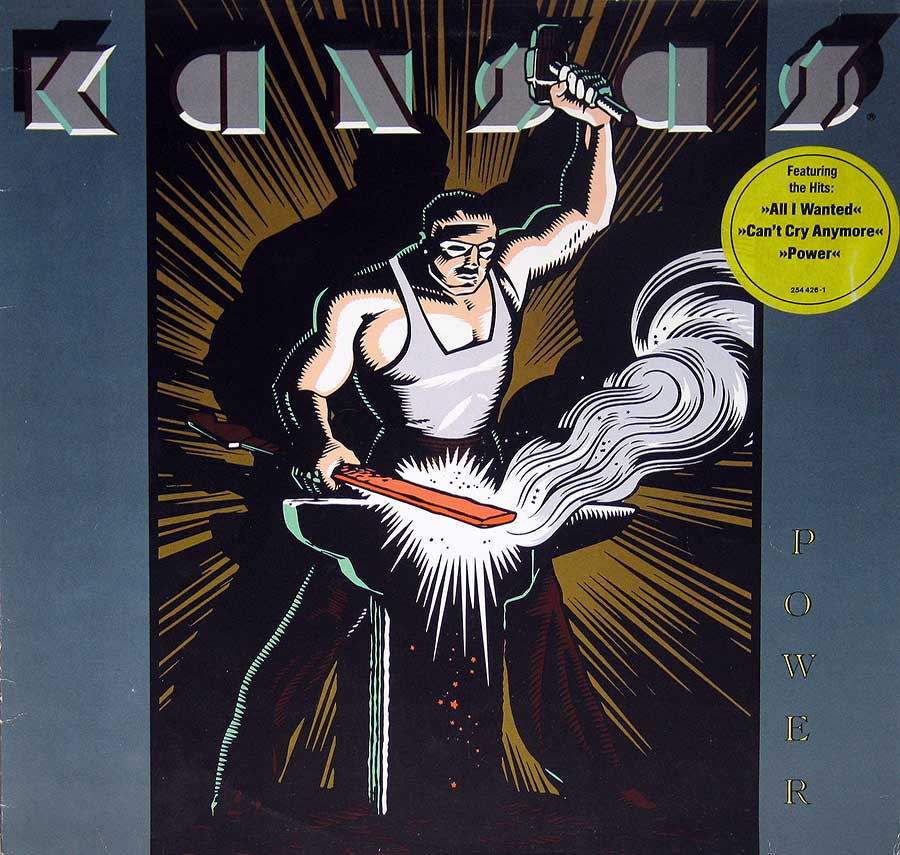
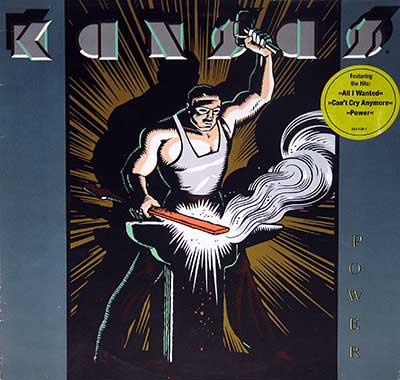
The year is 1986. Hair metal reigns supreme, synths are as ubiquitous as spandex, and MTV dictates the airwaves. Yet, amidst this sonic landscape, a band from the heartland of America, Kansas, unleashed a thunderous 12" vinyl LP titled "Power." This wasn't your typical 80s rock record. It was a curious amalgamation of prog-rock roots, hard rock riffs, and an almost arena-ready bombast.
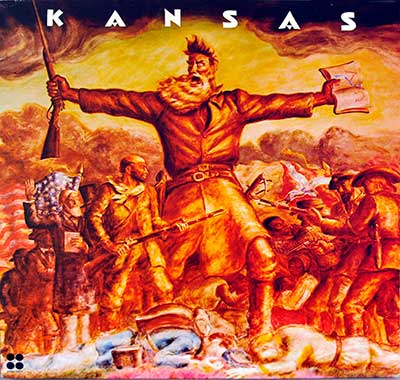
Hailing from Topeka, Kansas, the band had already made their mark in the 70s with a string of albums that blended complex instrumentation with a distinctly American sensibility. But "Power" was different. It was a conscious effort to embrace the prevailing sounds of the era while staying true to their progressive core.
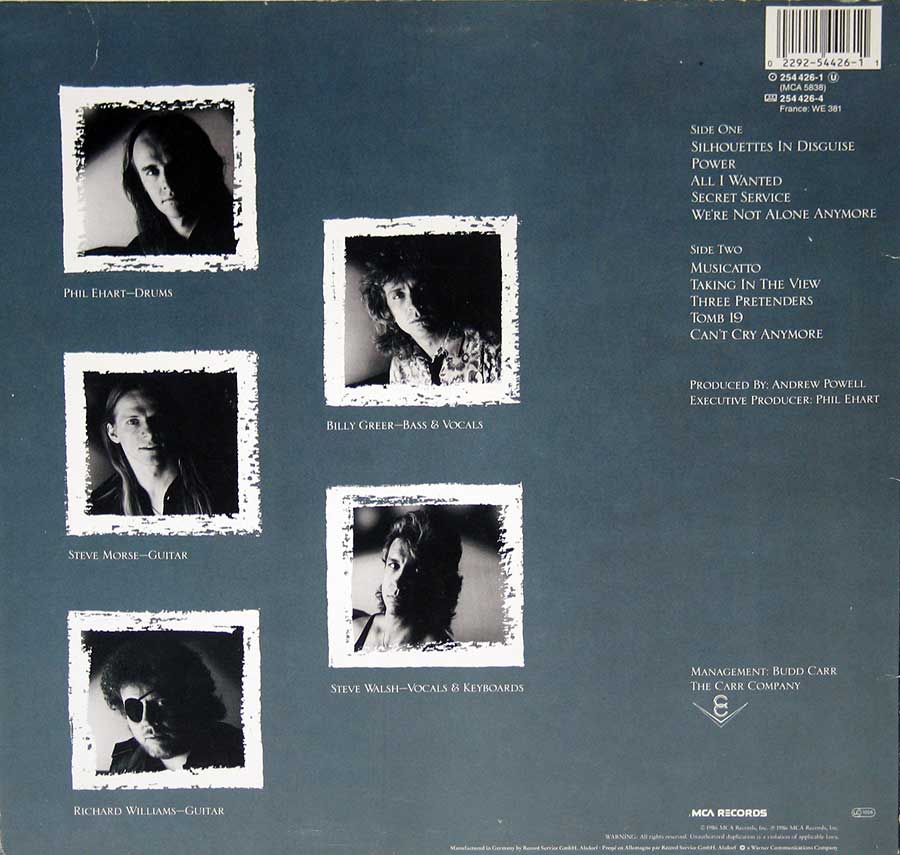
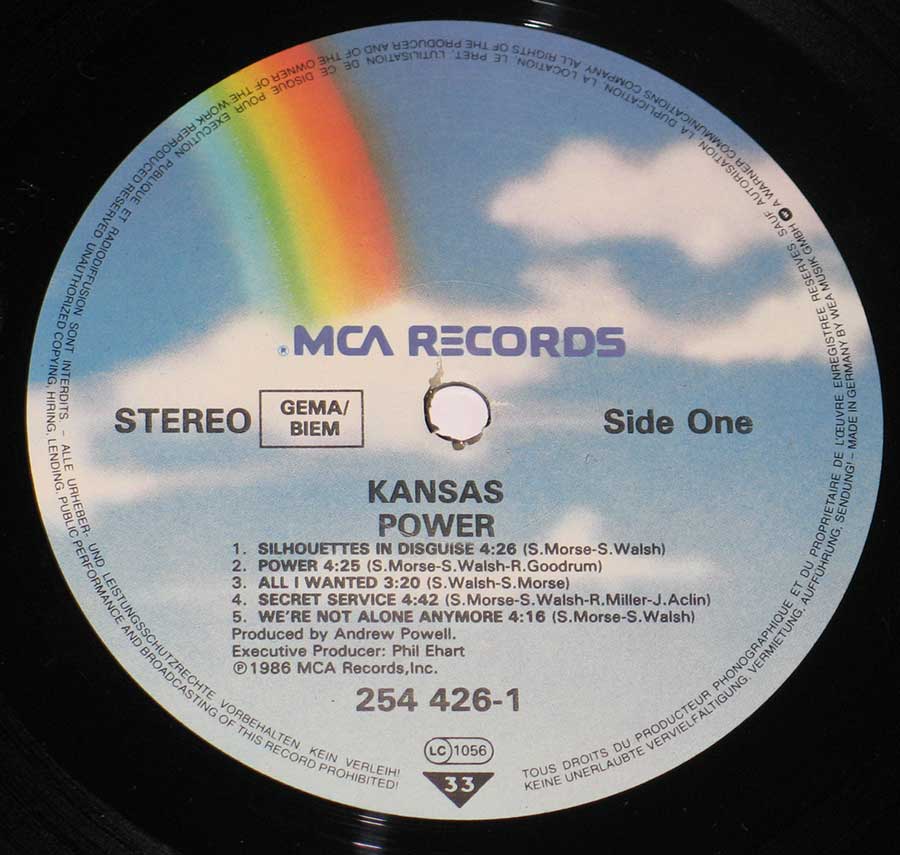
The album opens with "Silhouettes in Disguise," a track that immediately sets the tone. It's a full-on rocker with Kerry Livgren's searing guitar work and Steve Walsh's soaring vocals. The rhythm section, anchored by Phil Ehart and Dave Hope, provides a solid foundation for the band's musical explorations.
One of the standout tracks, "All I Wanted," showcases Kansas's ability to write a catchy, radio-friendly tune without sacrificing their musical complexity. The song features a memorable chorus and a driving beat that makes it an instant earworm. The track also found its way onto the Billboard charts, peaking at number 19 on the Mainstream Rock chart, a testament to the band's ability to adapt to the changing musical landscape.
The album's title track, "Power," is a bombastic anthem with a driving rhythm and powerful vocals. It became a staple of the band's live shows, a moment of pure rock and roll energy that resonated with audiences. The song's lyrics, exploring themes of ambition and determination, struck a chord with listeners and became an anthem for those striving for success.
"Power" was recorded at the renowned Chateau Recorders in North Hollywood, California, under the watchful eye of producer Andrew Powell. Powell, known for his work with Alan Parsons Project, brought a polished sheen to the album while allowing the band's raw energy to shine through.
However, the album wasn't without its controversies. Some long-time fans felt that Kansas had sold out, abandoning their prog-rock roots for a more commercial sound. But others embraced the band's evolution, seeing it as a natural progression in their musical journey. The addition of Steve Morse, a virtuosic guitarist known for his work with Dixie Dregs, added a new dimension to the band's sound, further fueling the debate among fans.
Regardless of the divided opinions, "Power" was a bold statement from a band that refused to be pigeonholed. It was an album that dared to bridge the gap between prog-rock and hard rock, between the heartland and the Sunset Strip. It may not have been their most commercially successful album, but it remains a testament to Kansas's unwavering commitment to their craft and their willingness to take risks in an ever-changing musical landscape.