"Too Much Pressure" (1980) Album Description:
Britain in early 1980 felt like wet coats, stale chips, and a bus that was late on purpose, and "Too Much Pressure" sounds like Coventry shoved that whole mood onto tape and dared you to dance to it. The Selecter don’t do polite revival theatre: the guitars chop, the organ grinds, the horns bite when they feel like it, and Pauline Black with Gaps trade lines like they’re clocking the room. If you came for a cute ska postcard, wrong record.
Before it was a band, it was a B-side with a grin
The Selecter didn’t begin as a heroic “formation story.” It began as a track. Back in 1977, Neol Davies cut an instrumental called “The Kingston Affair” with John Bradbury and Barry Jones, the kind of thing you’d file away and forget until it suddenly becomes useful.
Useful arrived in 1979: “Gangsters” needed a flip, the budget was gone, and that instrumental reappeared under a new name — “The Selecter.” The name got printed, the name got attention, and then Davies did the practical Coventry move: build the actual band to match the noise people already thought existed.
Pauline Black came in via audition and the front line snapped into focus. Gaps brings that easy, streetwise lilt; Black cuts cleaner, cooler, sharper. Two lead voices doesn’t just add variety — it adds tension. The good kind.
Where it sits in the 1980 pile-up
People call it “ska revival” because people love putting music in labeled jars. 2 Tone was never a jar. It was a shove: Jamaican rhythm logic strapped to British nerves, played like the floor might turn ugly if the groove slips.
The Specials could feel like a headline you didn’t want to read but couldn’t ignore. Madness made pop out of mischief. The Beat ran slick and anxious. Bad Manners turned some nights into a pint-spilling rugby scrum. The Bodysnatchers hit with a different kind of snap altogether.
The Selecter land right where I like it: tougher than the grin merchants, less preachy than the sternest corners, and always built for a room that’s one bad look away from trouble.
How it sounds when the needle drops
The guitars don’t strum. They slice. Short upstrokes, clean edges, no wasted motion. Desmond Brown’s Hammond organ is the grime under the fingernails — warm, a little overdriven, human in a way that keeps the whole thing from sounding like a demo polished to death.
The rhythm section keeps it springy, but nobody relaxes into it. That’s the trick. It dances, but it doesn’t lounge.
Things that hit every time:
- Guitar + snare: little slaps, clipped and unapologetic.
- Organ: fills the gaps like someone muttering commentary under their breath.
- Horns: not constant celebration — more like sudden, well-timed warnings.
- Feel: danceable, yes, but wired. Always wired.
Horizon Studios: capture the set, don’t sand it down
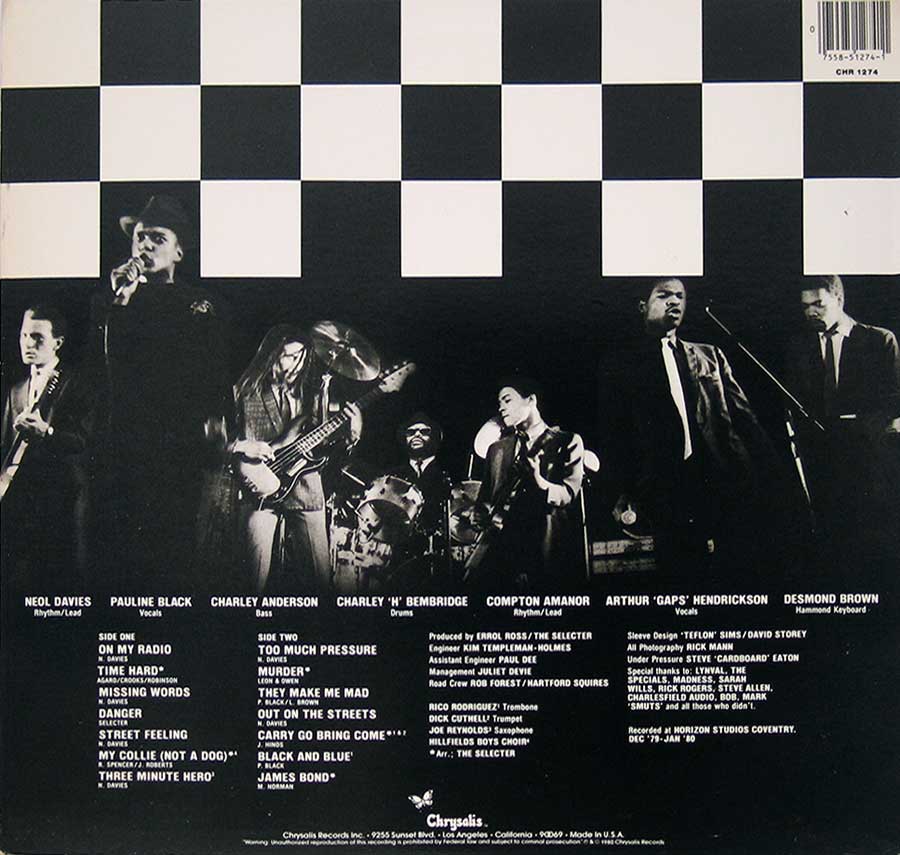
The album was recorded at Horizon Studios in Coventry from December 1979 into January 1980 and released on 15 February 1980 — fast enough that you can practically smell the gig sweat still drying. The production credit goes to Errol Ross and the band, and the record has that “get it down, keep it moving” energy.
Also worth saying out loud: not everyone in the Selecter camp loved how it came out. There’s a faint sense of something being held back, like the band wanted it rougher, louder, more dangerous. Maybe that’s why it still nags — it doesn’t feel “finished,” it feels caught.
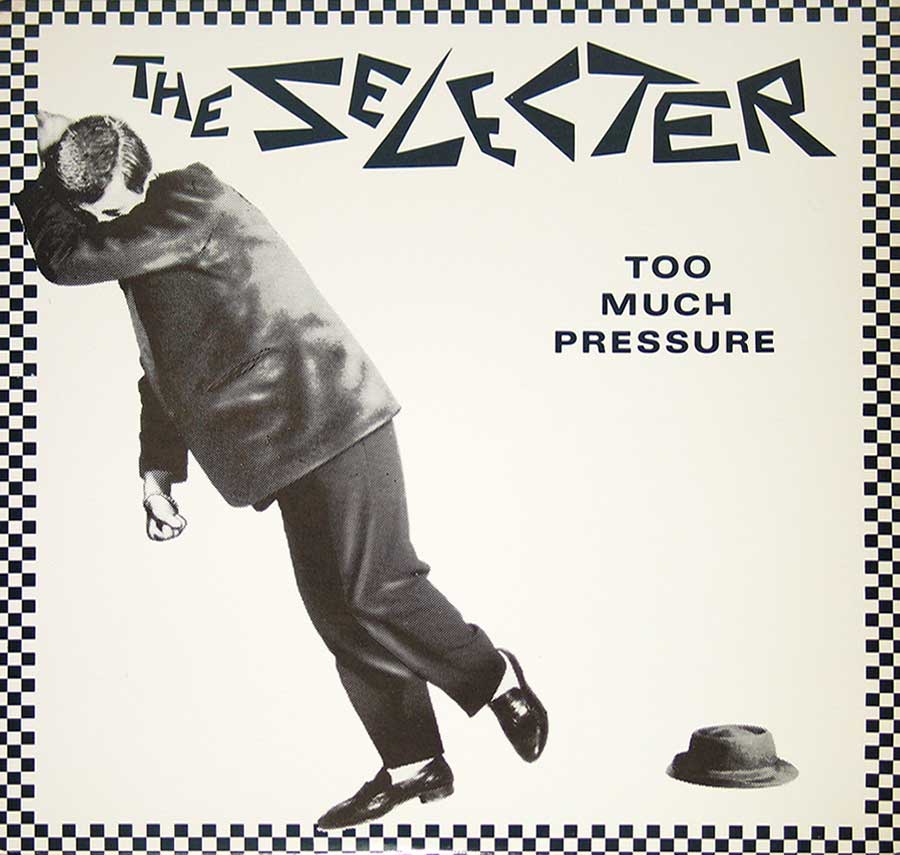
Kim Templeman-Holmes engineers it with separation you can actually hear — edges stay sharp without turning sterile. The sleeve ties into the same blunt, no-fantasy aesthetic: design credited to “Teflon” Sims and David Storey, photography by Rick Mann, and that cover image of Steve Eaton looking like he’s just stepped out of a real street, not a marketing meeting.
Guests and extra names drift through the credits like locals leaning into the doorway: Rico Rodriguez and Dick Cuthell bring brass muscle, and the small-print details include Joe Reynolds and the Hillfields Boys Choir. That’s the part I always like — the sense of a city in the room, not a sealed-off “album project.”
Songs: small knives you can skank to
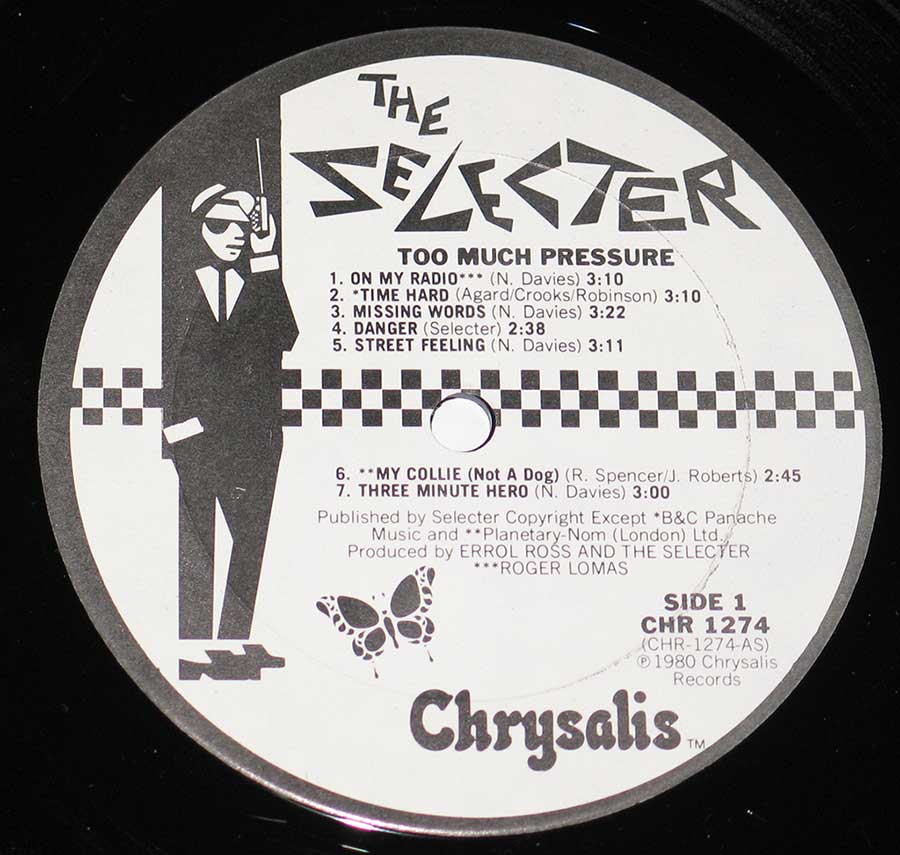
“On My Radio” is the sly joke: a song moaning about what radio won’t play, becoming the kind of tune radio couldn’t ignore. “Three Minute Hero” doesn’t romanticize work — it points at the grind and smiles just sharply enough to make it sting. The title track “Too Much Pressure” isn’t a metaphor so much as a weekday.
Then they mess with you. “My Collie (Not a Dog)” flips a familiar melody into a cannabis wink, like the band refusing to stay solemn just because the country is in a mood. “James Bond” drags spy glamour through Coventry pavement. And “Black and Blue” shows up with no interest in soothing anybody.
For all the chatter about scenes, the hard fact is the simplest one: the album hit No. 5 in the UK, because people recognized themselves in it — and because it moved. Fast.
The trouble wasn’t “the record” — it was the rooms it walked into
There wasn’t some neat, album-specific scandal attached to "Too Much Pressure." The ugliness sat around it. 2 Tone bills could pull in the wrong crowd along with the right one, and some nights the music had to fight for air in a room full of tribal uniforms and cheap bravado.
The lazy misconception is the one that needs stomping: that this is just party music in black-and-white clothes. Listen to the delivery. Listen to the bite. This is dancing with your shoulders up because you don’t trust the street behind you.
One quiet anchor
Late-night radio, volume low, trying not to wake anyone: “On My Radio” comes in bright, almost cocky, and the rest of the album keeps that brightness while showing you the cracked paint up close. It’s the sound of wanting out, but still having to catch the last bus home.
References (verification links)
- Vinyl Records Gallery: The Selecter "Too Much Pressure" (high-resolution cover photos + credits)
- The Selecter (official site)
- Neol Davies (official background on the track/band origin)
- 2-tone.info: The Selecter (history + context)
- "Too Much Pressure" (release date, recording, credits overview)
- Discogs master entry: "Too Much Pressure" (release variants + credit detail)
- Classic Pop: "Too Much Pressure" feature/interview