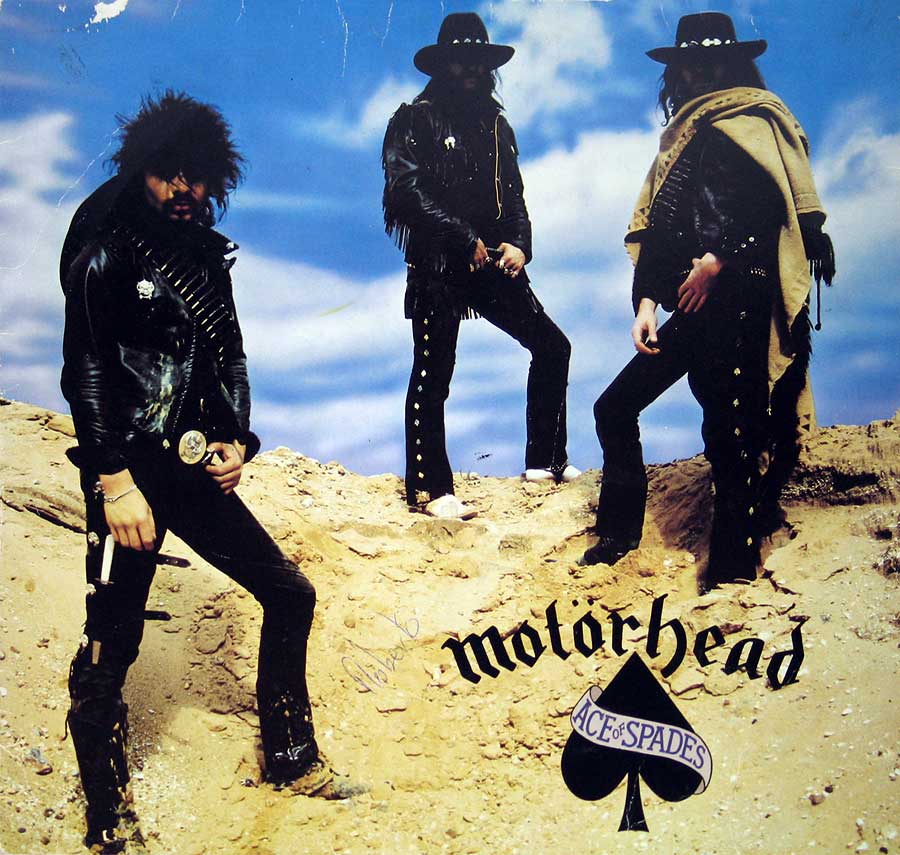
"Ace of Spades" (1980) Album Description:
"Ace of Spades" landed in 1980 like a brick through the respectable front window of British heavy music. Motörhead were never a neat NWOBHM poster act, no matter how often they get filed there by people who like tidy shelves and easy answers. This was British Heavy Metal, Hard Rock, speed before the speed-metal boys had properly printed the labels, and a nasty dose of rock and roll that refused to wash its hands before dinner.
The real trick is not simply that the album is fast. Plenty of bands were running hot in 1980. The trick is that "Ace of Spades" sounds like chaos being forced through a steel pipe by three men who knew exactly where the exits were. Open the rest and the thing starts to make uncomfortable sense: the scene, the producer, the sleeve, the West-German Bronze pressing, and that famous title track behaving like a bad decision with perfect timing.
Britain in 1980 was not short of metal noise. Iron Maiden had their street-prowl gallop, Saxon were dragging steel-toecap anthems across the stage, Girlschool had the grit and nerve, Angel Witch had the haunted cellar glow, Def Leppard were already aiming at something shinier, and Diamond Head were building riffs big enough to make later thrash bands take notes. Into that lot came Motörhead, looking less like a movement than a pub fight that had learned how to tune.
That is why the NWOBHM label fits and does not fit. Motörhead shared the era, the audience, the denim, the sweat, the smell of warm amplifiers, but they did not behave like a new wave anything. Lemmy always pushed the rock and roll angle, and for once the man was not just being difficult for sport. "Ace of Spades" does not stride like Iron Maiden or flex like Saxon. It lunges.
Bronze, West Germany, and the weight of the thing
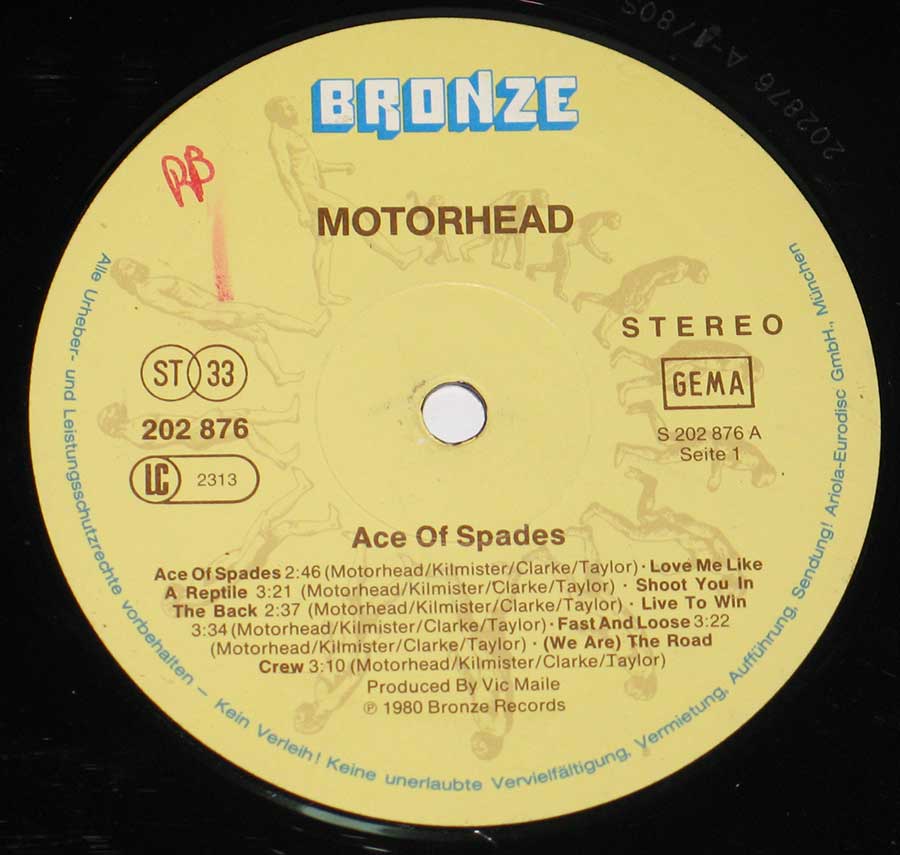
This page documents the West-German Bronze Records LP, catalogue number 202 876, marked with GEMA and the 1980 Bronze credit on the label. That matters to a collector, not because it magically turns the record into a pension plan — calm down, auction dreamers — but because it pins the album to a real European manufacturing trail. You are not just looking at an icon; you are looking at one physical stop in the old Bronze machinery.
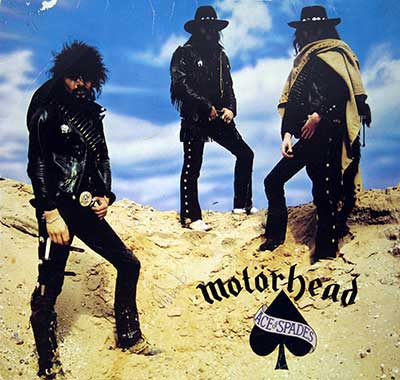
The front sleeve has that outlaw-gambler theatre: desert dust, gunslinger posing, skull-badge menace, and the whole ridiculous-but-perfect Wild West death-card joke. Alan Ballard's photography gives the band enough visual myth without making them look grand. Grand would have killed it stone dead.
I like this kind of sleeve best under a desk lamp at night, when the black areas stop being black and start showing scuffs, handling marks, and the honest little bruises of ownership. A clean digital image tells you what the cover is. The record in your hands tells you where it has been.
The three-man engine
The line-up is the classic wrecking crew: Lemmy Kilmister on bass and vocals, "Fast" Eddie Clarke on guitar, and Phil "Philthy Animal" Taylor on drums. No extra furniture. No keyboard mist. No heroic choir arriving from some misty mountain because apparently the elves were busy.
Lemmy does not sing so much as drive the words into the track with a cracked boot heel. His bass is not tucked politely under the guitar; it grinds at the centre, all midrange dirt and forward motion. Eddie Clarke brings the bite, sharper and more controlled than people sometimes admit. Phil Taylor is the secret danger: not just fast, but pushing, tripping, dragging the whole machine forward with a nervous swing that keeps the album from turning into plain hammering.
Vic Maile's production is the quiet act of discipline behind the racket. He does not polish Motörhead into respectability, thank God. He makes the impact readable. The guitars have teeth, the drums have room to kick, and Lemmy's bass sits there like a stolen engine left running outside the club.
The songs: no velvet rope, no mercy
The title track is the obvious monster, and there is no point pretending otherwise just to sound clever. "Ace of Spades" opens with that riff snapping into place, then everything piles in before common sense can object. It is gambling imagery, yes, but not casino glamour. It is more cigarette burn, bad luck, last drink, wrong table, and the grin of a man who knows he should probably go home.
The rest of the LP is not filler sitting around worshipping the single. "Love Me Like a Reptile" slithers with ugly humour, "Shoot You in the Back" kicks up outlaw dust without getting too romantic about it, and "(We Are) The Road Crew" turns the unseen labour of touring into a grim little badge of honour. "The Chase Is Better Than The Catch" has that nasty, dragging confidence, while "The Hammer" closes the door with no goodbye.
One correction worth making for this page: the displayed track list is labelled as Side One, but it actually lists the full twelve-track album. The LP sequence splits after "(We Are) The Road Crew"; Side Two starts with "Fire Fire" and runs through "The Hammer". Small thing, but record pages are built from small things. Ignore enough of them and suddenly your archive has the posture of a drunk giraffe.
Not scandal, more misreading
"Ace of Spades" did not need a grand controversy to make people nervous. The common misunderstanding is better anyway: outsiders heard noise, speed, dirt, and assumed stupidity. Lazy ears. What makes the album last is not that it is primitive, but that it knows exactly how much refinement to reject.
The lyrics can be crude, the posture can be cartoonish, and the whole thing can smell like leather, beer, petrol, and bad judgement. Fine. That is the price of admission. Motörhead were not asking to be tasteful; they were asking whether your speakers could take a beating.
The album reached No. 4 on the UK album chart, and the single hit No. 15, which still feels faintly absurd in the best way. Imagine that noise elbowing its way into the national chart next to cleaner, safer creatures. Good. The charts needed the dental work.
In America, "Ace of Spades" also became Motörhead's first proper album foothold, handled through Mercury. That did not suddenly make them a neat radio proposition. American radio was not exactly built to cuddle biker-metal filth at breakfast, and Motörhead were never going to soften the blow just because some programme director had delicate curtains.
Why it still bites
The album's afterlife is obvious now, almost too obvious: punk-metal crossover, speed metal, thrash, and a thousand bands discovering that velocity and contempt could be useful tools. But the better way to hear "Ace of Spades" is not as a blueprint. Blueprints are clean. This is more like finding tyre marks outside a burned-out garage and working backwards.
Against the more heroic NWOBHM records of 1980, Motörhead sound stubbornly earthbound. No dragons. No polished destiny. Just a trio hammering a short fuse into twelve songs, with enough swing to keep the thing human and enough dirt to keep it honest.
That is the charm, if charm is even the right word. "Ace of Spades" does not flatter the listener. It grabs the collar, shouts through bad breath, and leaves you holding a West-German Bronze LP that somehow still feels hotter than it has any right to feel.
Forty-plus years later, the title track may be overplayed into pub-jukebox immortality, but the album still has teeth when you play it properly. Not politely in the background. Properly. Loud enough for the room to remember what records were for.
References
- Vinyl Records Gallery: Motörhead - "Ace Of Spades" high-resolution album cover and label photos
- Official Charts: Motörhead - "Ace Of Spades" album chart history
- Official Charts: "Ace Of Spades" single chart note
- Discogs: Motörhead - "Ace Of Spades" release history
- Official Motörhead Website: "Ace Of Spades" 40th anniversary collector's box set
- Louder Sound: "Ace Of Spades" background and release context