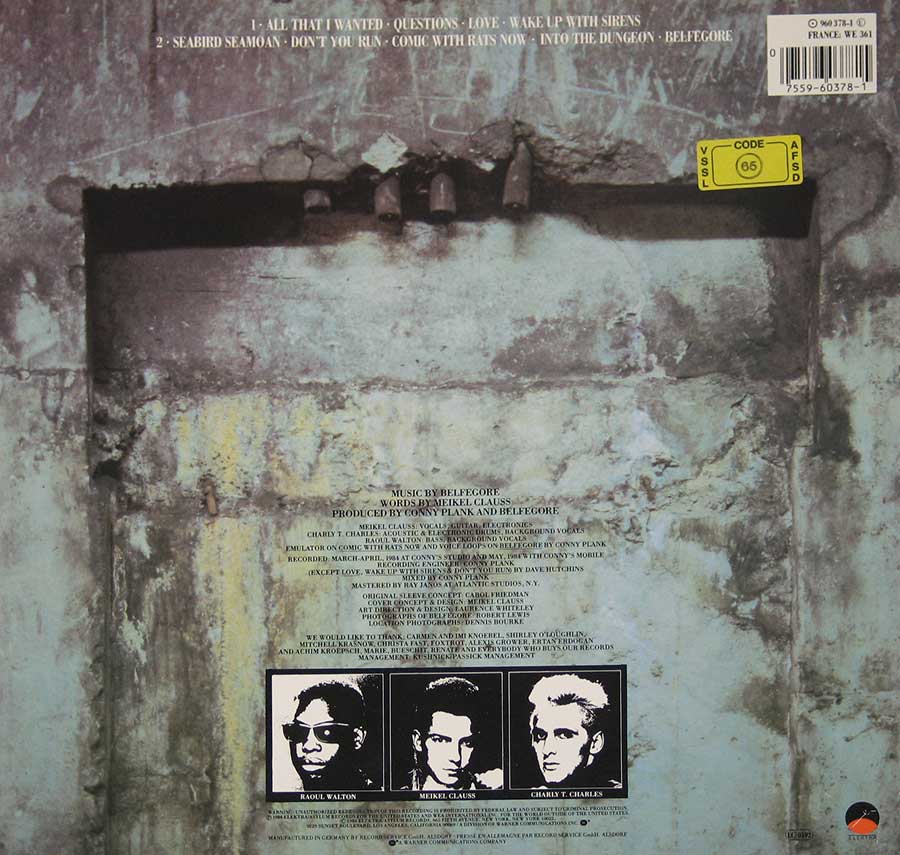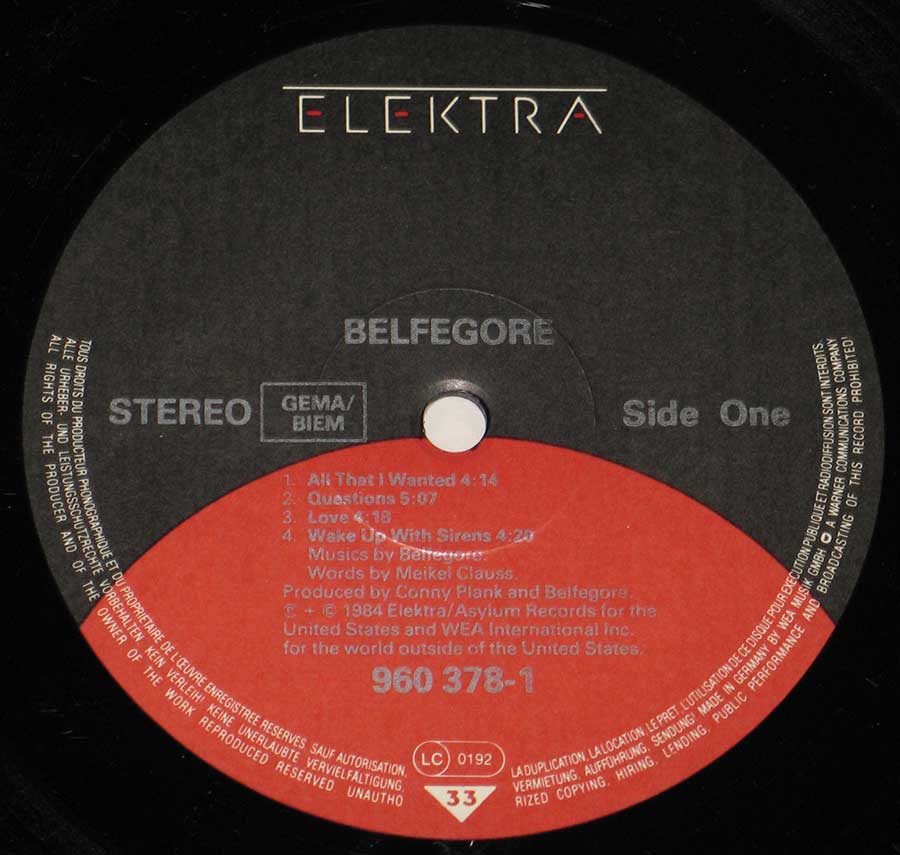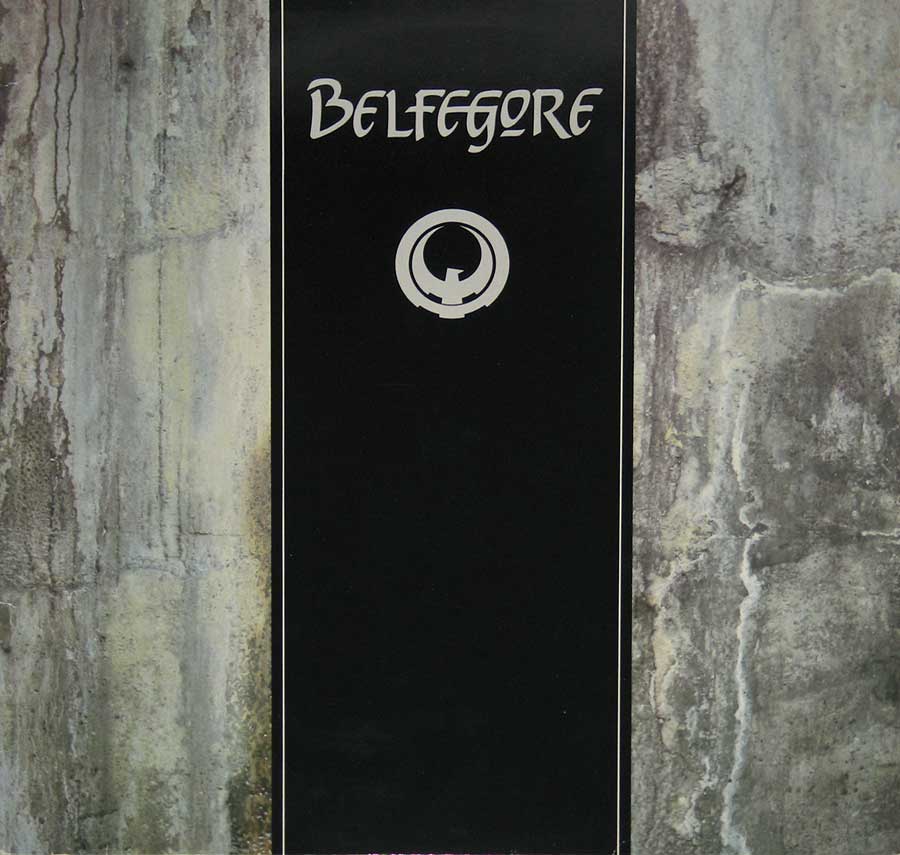
"Belfegore" Album Description:
I first ran into Belfegore the way you often did in the early eighties: by accident, through a sleeve that looked slightly hostile and a name that didn’t bother to explain itself. German band. Düsseldorf roots. That already narrowed the mood. This wasn’t sunshine New Wave. This was colder, sharper, and faintly confrontational.
The self-titled album came out in 1984 on Elektra, which felt almost mismatched at the time. Big label, odd band. Belfegore didn’t sound like something meant to be filed neatly. The record moved like it was testing the room—post-punk edges, gothic tension, synth lines that didn’t soothe so much as stare back. Meikel Clauss sang like he was keeping a private joke, or maybe a warning.
Conny Plank was behind the desk, and you can hear it without checking the credits. Space matters on this album. Air between sounds. Discipline without warmth. Plank had already shaped whole strains of German music by then, and here he doesn’t decorate Belfegore so much as restrain them, letting the tension do the work instead of polishing it away.
I remember flipping the record over more than once just to recalibrate. This wasn’t dance-floor New Wave, and it wasn’t full goth theater either. It hovered somewhere in between, slightly uncomfortable, which is probably why it stuck. Short career, minimal output, no heroic arc—just this LP sitting there, quietly refusing to age politely.
Belfegore never overstayed their welcome. Maybe that helped. The album survives because it doesn’t beg for attention or legacy status. It just sits on the shelf, dark, controlled, faintly aloof. Drop the needle now and it still doesn’t explain itself. Good.