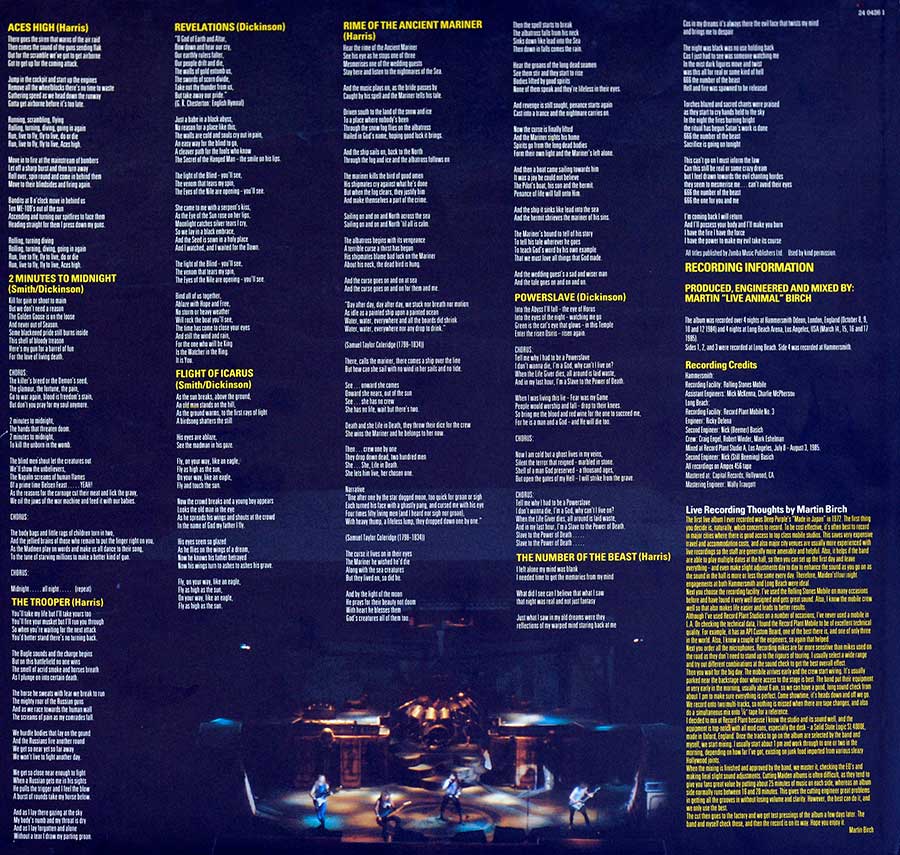
The first live album I ever recorded was Deep Purple's 'Made in Japan' in 1972. The first thing you decide is, naturally, which concerts to record. To be cost-effective, it's often best to record in major cities where there is good access to top-class mobile studios. This saves very expensive travel and accommodation costs. Also, major city venues are usually more experienced with live recordings, so the staff are generally more amenable and helpful. Also, it helps if the band are able to play multiple dates at the hall, so then you can set up the first day and leave everything - and even make slight adjustments day to day to enhance the sound as you go on, as the sound in the hall is more or less the same every day. Therefore, Maiden's tour-night engagements at both Hammersmith and Long Beach were ideal.
Next, you choose the recording facility. I've used the Rolling Stones Mobile on many occasions before and have found it very well designed and gets great sound. Also, I know the mobile unit well so that also makes life easier and leads to better results. Although I've used Record Plant Studios on a number of occasions, I've never used a mobile in. On checking the technical data, I found the Record Plant Mobile to be of excellent technical quality, for example, it has an API Custom Board, one of the best there is, and one of only three in the world. Also, I know a couple of the engineers, so again that helped.
Next, you order all the microphones. Recording mikes are far more sensitive than mikes used on the road as they don't need to stand up to the rigors of touring. I usually select a wide range and try out different combinations at the sound check to get the best overall effect.
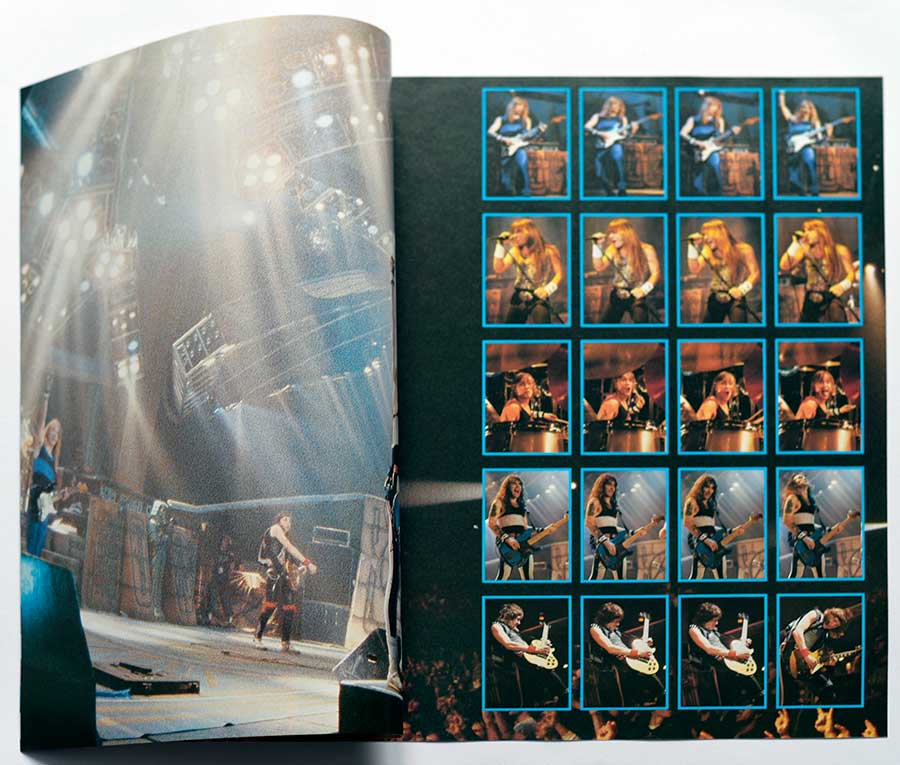
Then you wait for the big day. The mobile arrives early, and the crew starts wiring. It's usually parked near the backstage door where access to the stage is best. The band puts their equipment in very early in the morning, usually about 6 am, so we can have a good, long sound check from about 1 pm to make sure everything is perfect. Come showtime, it's heads down and we go. We record onto two multi-tracks, so nothing is missed when there are tape changes, and also do a simultaneous mix onto 1/4 tape for a reference.
I decided to mix at Record Plant because I know the studio and its sound well, and the equipment is top-notch with all mod cons, especially the desk - a Solid State Logic St 4000E, made in Oxford, England. Once the tracks to go on the album are selected by the band and myself, we start mixing. I usually start about 1 pm and work through to one or two in the morning depending on how far I've got, existing on junk food imported from various seedy Hollywood joints.
When the mixing is finished and approved by the band, we master it, checking the EQs and making final slight sound adjustments. Cutting Maiden albums is often difficult, as they tend to give you great value by putting about 25 minutes of music on each side, whereas an album side normally runs between 16 and 20 minutes. This gives the cutting engineer great problems in getting all the grooves in without losing volume and clarity. However, the best can do it, and we only use the best. The cut then goes to the factory, and we get test pressings of the album a few days later. The band and myself check these, and then the real is on its way.
Hope you enjoy it.
Martin Birch