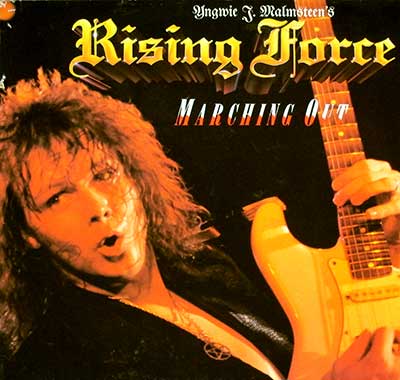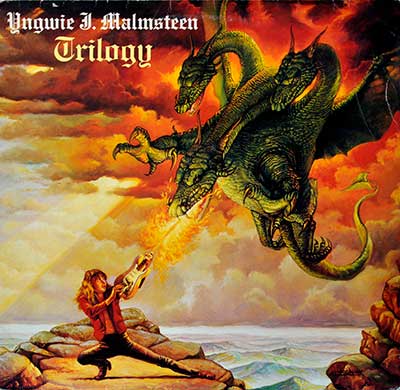
Mark Weiss, Mark “Weissguy” Weiss is the rock photographer whose images basically taught the 1980s how to pose. His origin story is wonderfully punk: in 1977 he got arrested for selling his KISS photos outside Madison Square Garden, and by June 1978 he’d landed a national splash with a Steven Tyler (Aerosmith) centerfold for Circus—then ended up on staff. In the 1980s, he wasn’t just “covering” bands; he was riding alongside them as a tour photographer for artists like Ozzy Osbourne, Bon Jovi, Mötley Crüe, Poison, Metallica, and Twisted Sister, helping lock in that whole glam-and-guts look while it was still hot and loud. Later on, his lens also tracked bigger pop-culture gravity wells—acts like The Rolling Stones, Madonna, and Wu-Tang Clan—but the heart of the Weiss legend is still that late-’70s-to-’80s run where rock didn’t just sound larger-than-life; it looked like it too.
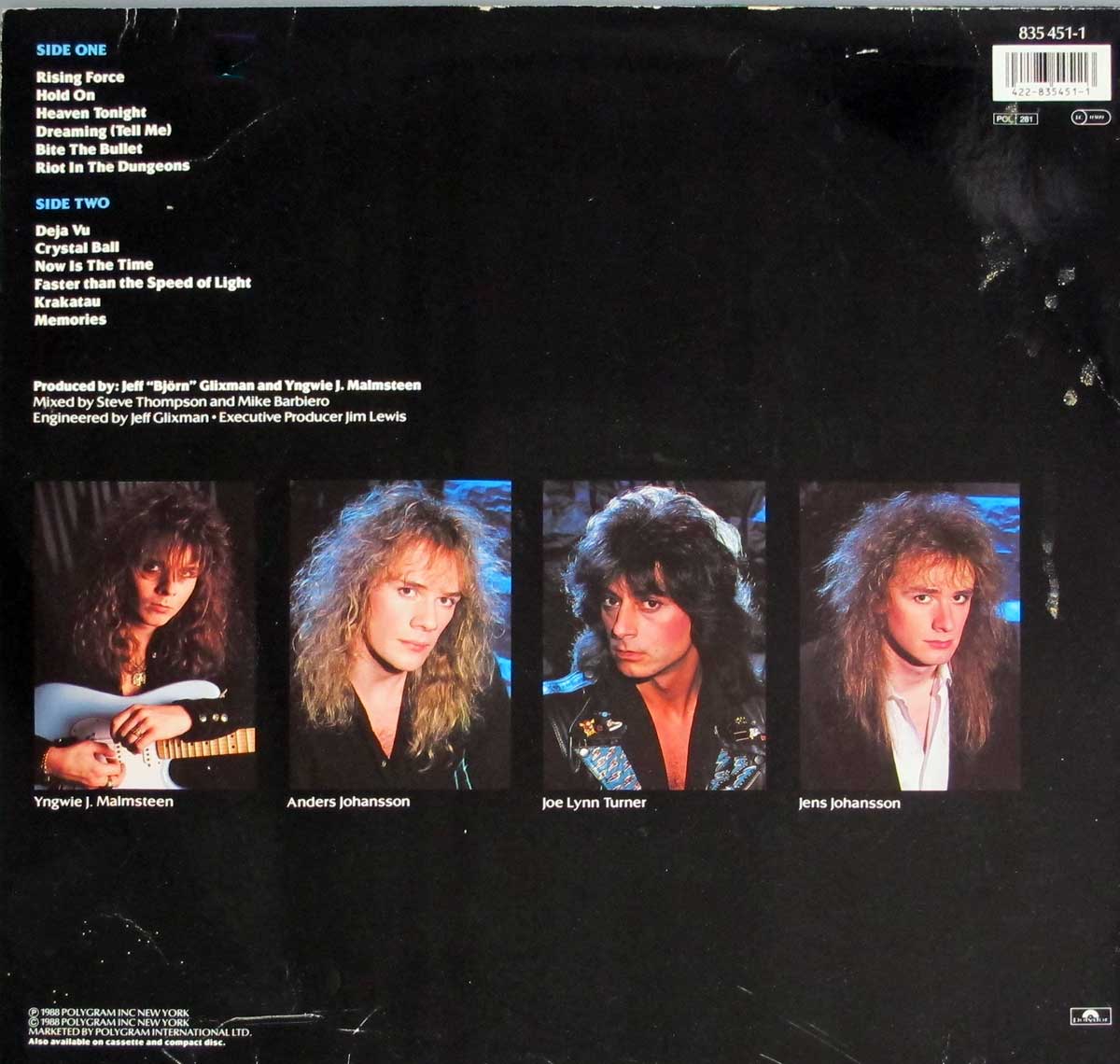
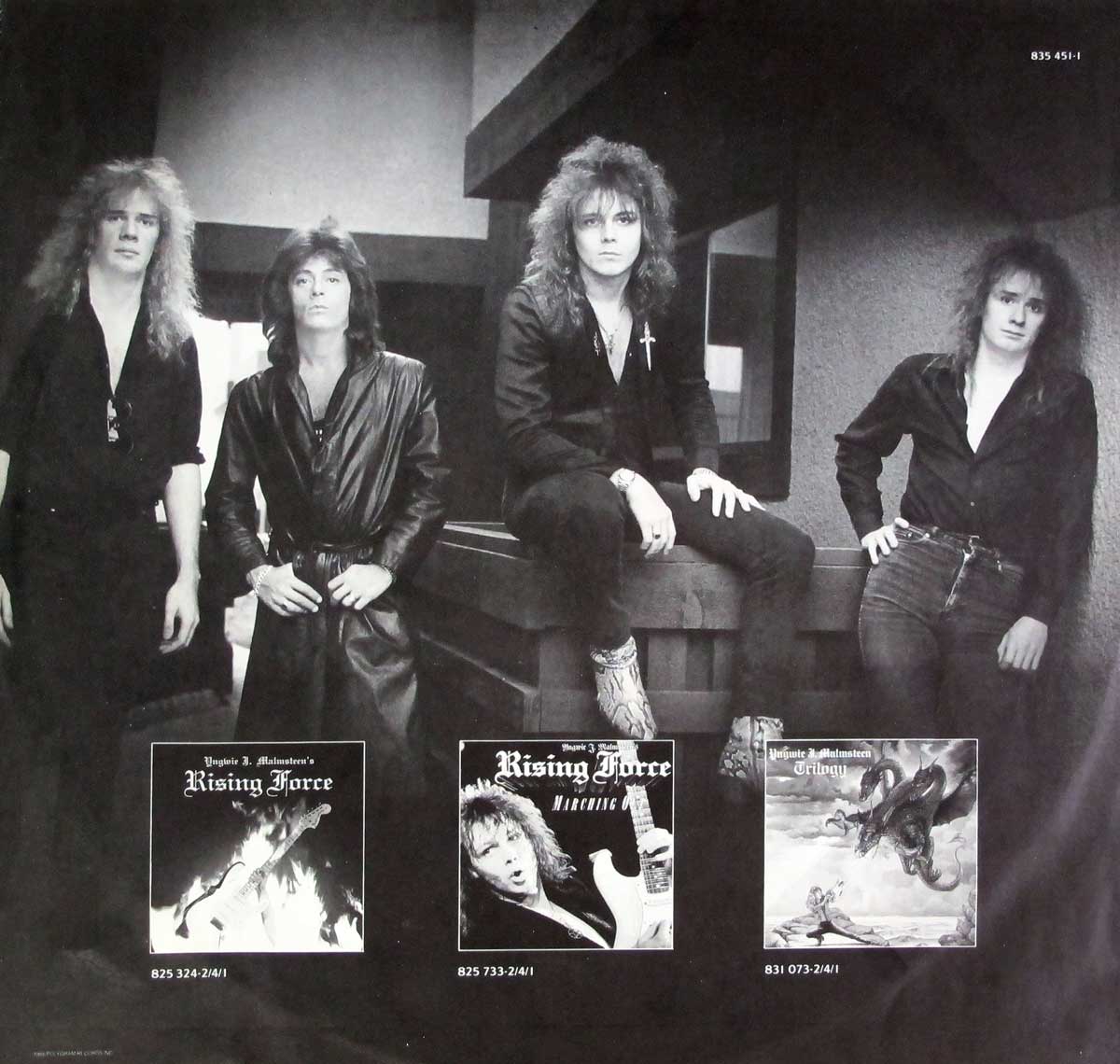
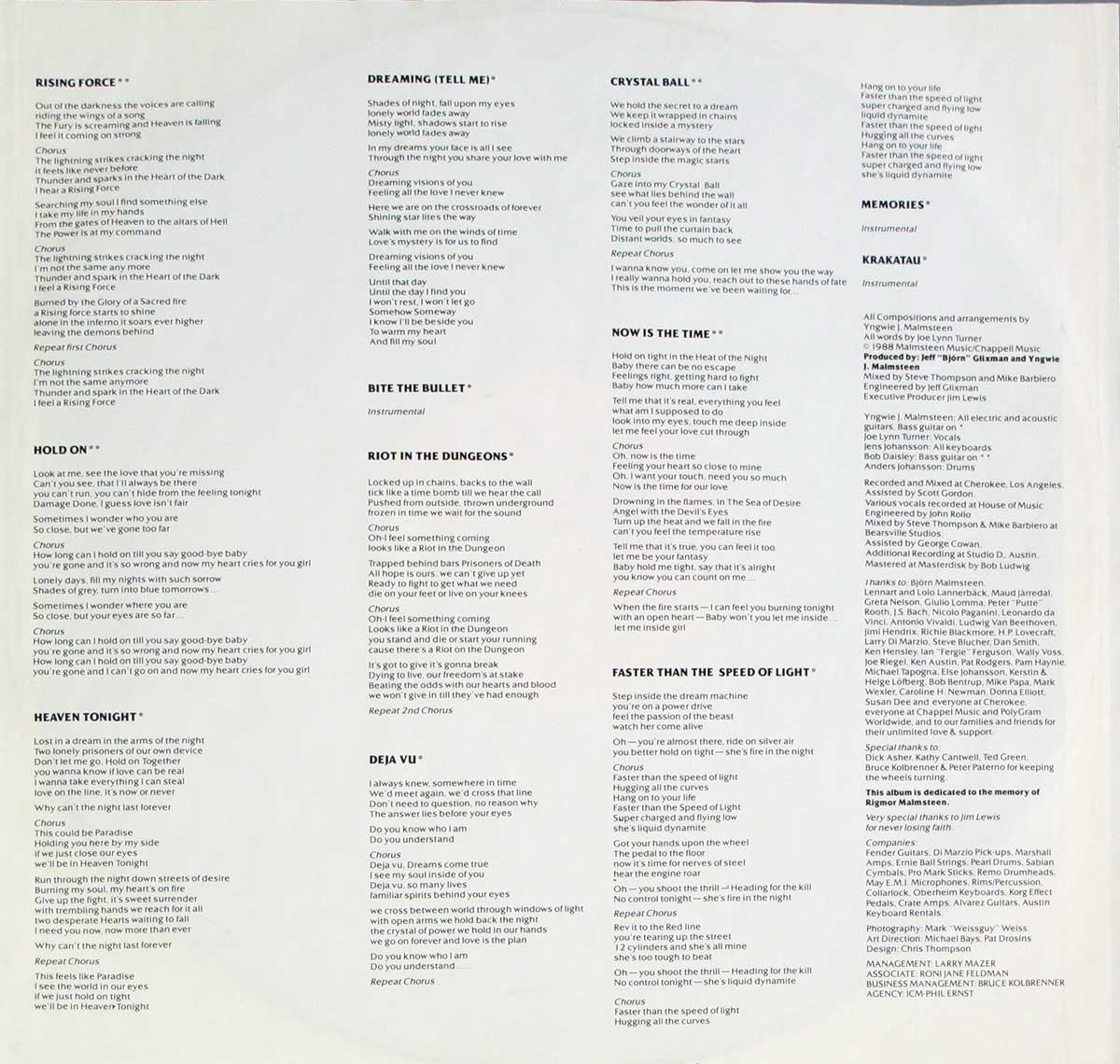
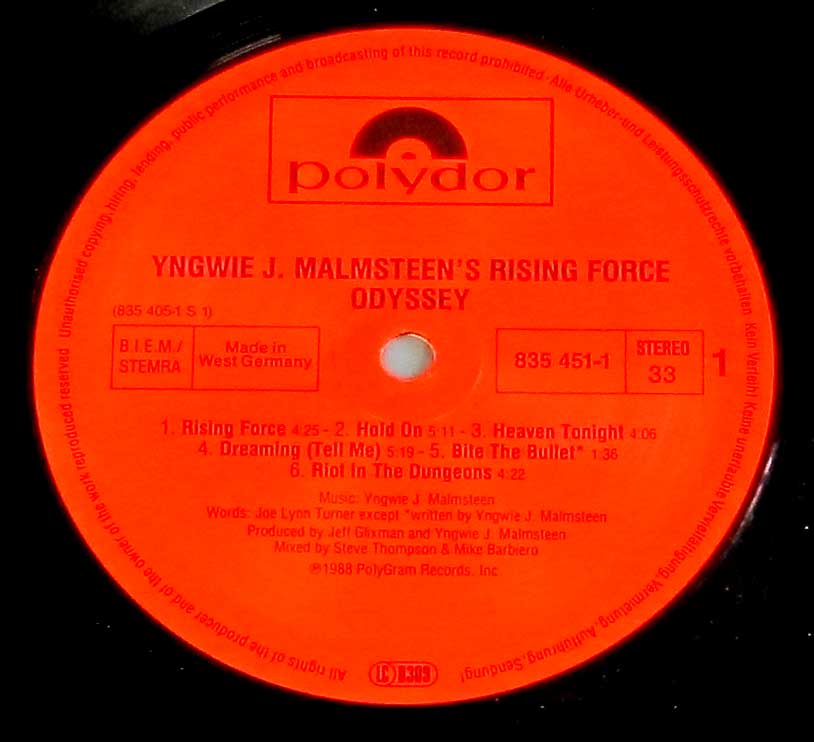
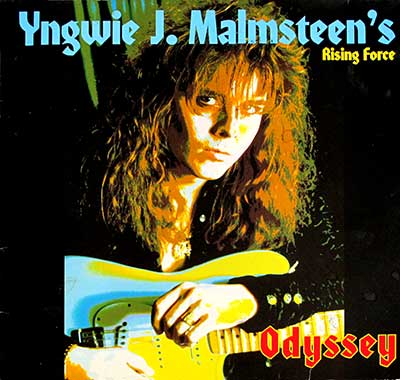
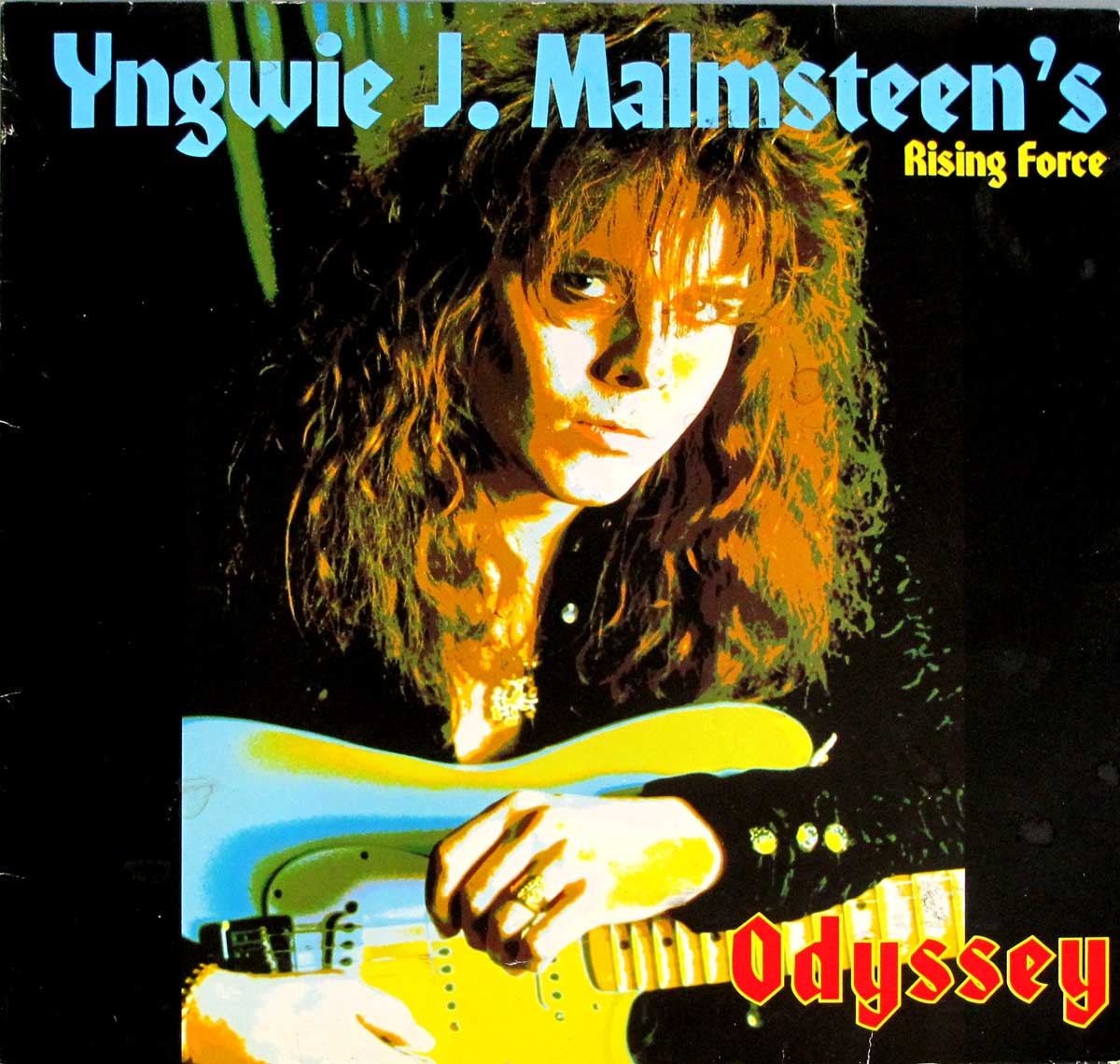
Yngwie J. Malmsteen "Odyssey" Album Description:
In the hairspray-soaked wasteland of 1988, when pop-metal peacocks ruled the MTV airwaves, a Swedish virtuoso named Yngwie J. Malmsteen unleashed a sonic tempest that defied the spandex-clad status quo. His album, "Odyssey," wasn't just a collection of songs; it was a manifesto. A declaration of independence from the saccharine soundscape that dominated the era.
Background
Malmsteen, already a guitar hero for his earlier solo work, took a bold step with "Odyssey." He recruited former Rainbow vocalist Joe Lynn Turner, a move that hinted at a shift toward a more accessible sound. But make no mistake, this wasn't a sell-out. It was a strategic alliance, a way to amplify Malmsteen's neoclassical shredding with a voice that could match his intensity.
Recording
The album, recorded at Criteria Studios in Miami with producer Jeff Glixman (known for his work with Kansas and Black Sabbath), was a sonic marvel. Malmsteen's guitar playing was a force of nature, a whirlwind of arpeggios, sweep picking, and lightning-fast runs. But it wasn't just about technical prowess. There was a sense of melody, a depth of emotion that elevated his playing beyond mere showmanship.
Vocals and Songs
Turner's vocals, powerful and soaring, were the perfect foil to Malmsteen's fretboard fireworks. Songs like "Heaven Tonight" and "Dreaming (Tell Me)" showcased his ability to deliver anthemic choruses while still maintaining a sense of grit and edge.
Controversy and Evolution
"Odyssey" wasn't without its controversies. Some critics accused Malmsteen of sacrificing his artistic integrity for commercial success. Others dismissed Turner's vocals as a poor imitation of David Coverdale, his predecessor in Rainbow. But Malmsteen, never one to shy away from a fight, defended his choices. He saw "Odyssey" as a natural evolution, a way to push the boundaries of his music without compromising his vision.
Instrumental Highlight
The album's centerpiece, the instrumental "Krakatau," was a showcase of Malmsteen's virtuosity. A 10-minute odyssey of its own, it highlighted his mastery of the guitar, from delicate acoustic passages to blistering electric solos. It was a reminder that, even in the face of commercial pressures, Malmsteen was still a guitar god, a true original.
Legacy
"Odyssey" may not have reached the same commercial heights as some of Malmsteen's earlier work, but it remains a landmark album. It's a monument to his unwavering commitment to his craft, his refusal to be pigeonholed or constrained by genre conventions. In a world of hair metal clones, Yngwie J. Malmsteen stood alone, a neoclassical warrior wielding his guitar like a weapon, forging his own path through the musical landscape.