Fates Warning's "No Exit": A Landmark in Progressive Metal
Historical Context
By the late 1980s, heavy metal had splintered into numerous subgenres, with thrash, glam, and traditional metal dominating the scene. Yet, lurking beneath the mainstream metal boom was a growing progressive movement that sought to push the boundaries of musicianship and composition. Fates Warning, already an underground favorite with their earlier releases, took a bold step in 1988 with No Exit, an album that solidified their place in the progressive metal pantheon. The record marked a departure from the band's earlier, more straightforward metal sound, embracing intricate song structures, complex time signatures, and introspective lyricism.
Musical Exploration and Genre Evolution
Before No Exit, Fates Warning leaned heavily on traditional metal influences, with their previous albums channeling the energy of Iron Maiden and Judas Priest. However, the arrival of vocalist Ray Alder, replacing John Arch, signified a shift towards a more progressive direction. Alder’s dynamic vocal range allowed the band to explore new melodic territories, complementing the ambitious songwriting of guitarist Jim Matheos.
The album’s opening title track, "No Exit," is a brief yet haunting prelude, setting the stage for the ambitious compositions to follow. "Anarchy Divine" and "Silent Cries" showcase the band's technical prowess, seamlessly blending aggressive riffs with melodic passages. But it is the sprawling, multi-part epic "The Ivory Gate of Dreams" that truly defines the album. Spanning nearly 22 minutes, this suite weaves through shifting moods and tempos, making it one of the earliest and most accomplished examples of a full-fledged progressive metal odyssey.
Controversies and Reception
Despite its artistic triumphs, No Exit was not without its detractors. Some fans of the band’s earlier, more traditional sound found the new direction alienating. Critics, too, were divided—while many praised the album’s technical brilliance, others found its dense compositions challenging compared to the more accessible works of bands like Queensrÿche. Regardless, the record found an audience among listeners hungry for a more cerebral take on heavy metal, helping to lay the groundwork for future acts like Dream Theater and Symphony X.
Production and Recording
The album was brought to life under the guidance of producer Robert Probert and executive producer Max Norman, a seasoned figure in heavy metal production known for his work with Ozzy Osbourne and Megadeth. Norman’s sharp ear for detail ensured that the album’s intricate compositions were captured with clarity and power. Recorded at Carriage House, Connecticut between October and December 1987, the sessions emphasized precision and depth, allowing the band to explore sonic textures beyond the constraints of traditional metal production.
Differences Between Releases
As with many albums of the era, No Exit saw multiple releases with varying track orders, mixes, and mastering differences. The original vinyl release on Metal Blade Records featured a warm analog mix that accentuated the album’s atmospheric qualities. Later CD pressings, particularly those remastered in the 2000s, offered a crisper, more defined sound that highlighted the intricate guitar work and layered arrangements. Some international releases also included minor artwork and liner note variations, catering to different markets.
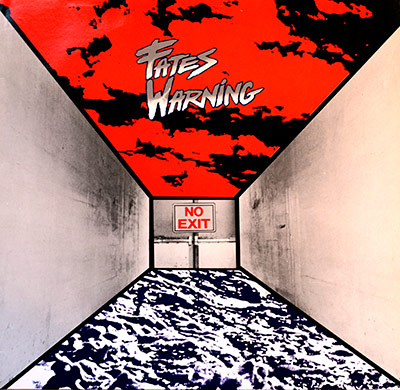
One of the distinguishing features of the original vinyl pressing of No Exit is its label design. This edition bears the iconic Metal Blade Records logo featuring the notorious "Blood Dripping Axe," a symbol synonymous with the label’s underground metal dominance in the 1980s. This particular version is highly sought after by collectors, as later reissues and international pressings often replaced or altered the logo. Due to its historical significance and limited early pressings, copies featuring this emblem—especially in excellent condition with the original inner sleeve and artwork—are considered valuable among vinyl enthusiasts and progressive metal collectors alike.
| Album Fact Sheet: FATES WARNING - No Exit |
|
Music Genre:
Progressive Metal |
|
Album Production Information: The album: "FATES WARNING - No Exit" was produced by:
Robert Probert
for Major Productions
Executive Producer: Max Norman - On Yer Bike
Max Norman – Record producer, sound engineer
Max Norman produced albums that taught me how heavy metal could sound huge without turning to mush. From Ozzy Osbourne’s razor-sharp comeback records in the early ’80s to Megadeth’s ferocious early albums later that decade, his productions are clear, aggressive, and disciplined. I always notice how every instrument has space to punch you in the face, which is harder to pull off than it sounds.
Sound/Recording Engineer(s):
Phil Magnotti , Max Norman
Sound mixing: Max Norman , Phil Magnotti, Roger Prober
t
This album was recorded at:
Carriage House, CT, during October-December 1987
Album cover graphics:
Lew Bryant - The Bland Design Group
Lew Bryant – Illustrator, Album Cover Artwork The quiet craftsman who gave heavy metal its sharp-edged visual bite. Read more... Lew Bryant is an illustrator whose work I first noticed in the early 1980s, when heavy metal sleeves still smelled of ink and rebellion. Active primarily during the late 1970s and throughout the 1980s, he became associated with hard rock and metal acts needing bold, high-contrast imagery that could shout from a record shop wall. I have always admired how Bryant balanced precision draftsmanship with a gritty edge; his figures feel forged rather than drawn. In an era when album artwork had to compete with neon fashion and arena lights, Bryant delivered covers that looked unapologetically loud. His contribution may sit quietly in the credits, but on vinyl, his images still hit like a power chord.
Album photo-art: Mick Rock Photographer for Double Exposure Inc
Mick Rock – British Photographer, Music & Album ArtworkThe camera guy who made glam look dangerous and permanent. Read more... Mick Rock is the British photographer I still call “The Man Who Shot the Seventies,” because he didn’t just document glam—he bottled it. From 1972–1973 he was David Bowie’s official eye through Ziggy Stardust, shooting sleeves, posters and those iconic promo films. In the early 1970s he also caught Iggy Pop at full ignition. By 1973–1974 he was framing Queen as they learned how to look like legends. A Lou Reed invite pulled him to New York in 1974, and through the mid-to-late 1970s he captured Reed’s shift, plus punks like the Ramones and, in 1978, Blondie’s Debbie Harry. What I love is his mix of intimacy and theatre: harsh flash, sharp cheekbones, no polite distance. His photos sell the noise before you even drop the needle. Inner sleeve photos: Pat Prince
|
|
Record Label & Catalognr:
Metal Blade Records RR 9558 1
|
|
Record Format: 12" Vinyl Stereo Gramophone Record
Total Album (Cover+Record) Weight: 230 gram |
|
Year & Country:
1988 Made in Holland
|
-8119.jpg)
-8120.jpg)
-8123.jpg)
-8124.jpg)
-8125.jpg)
-8126.jpg)