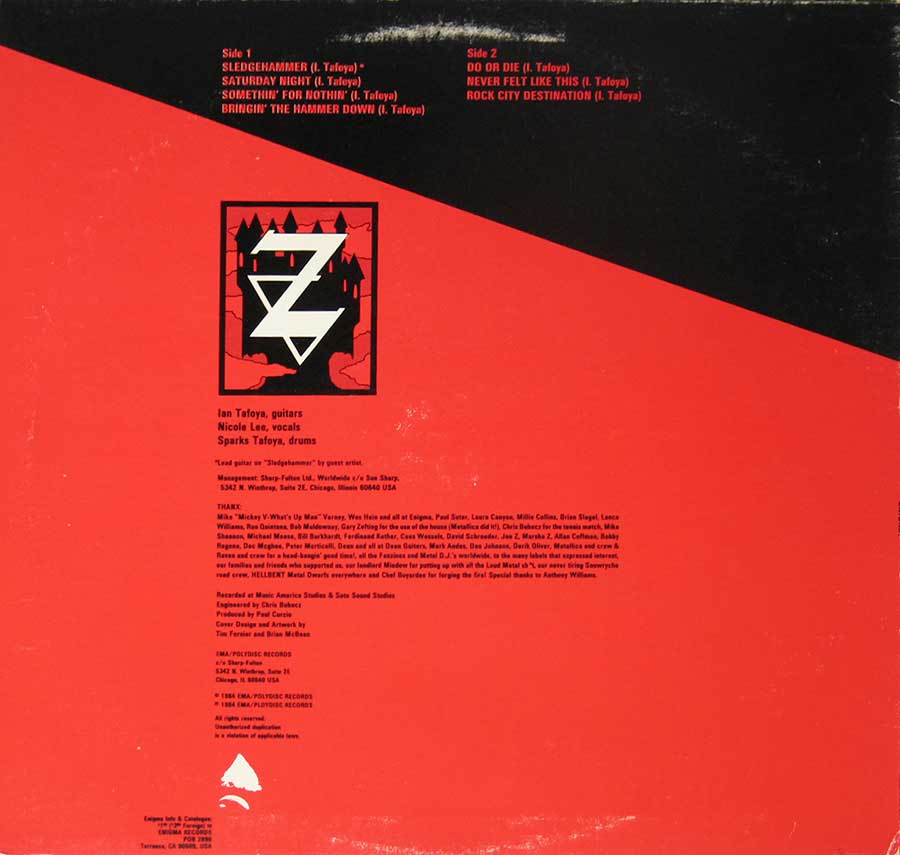
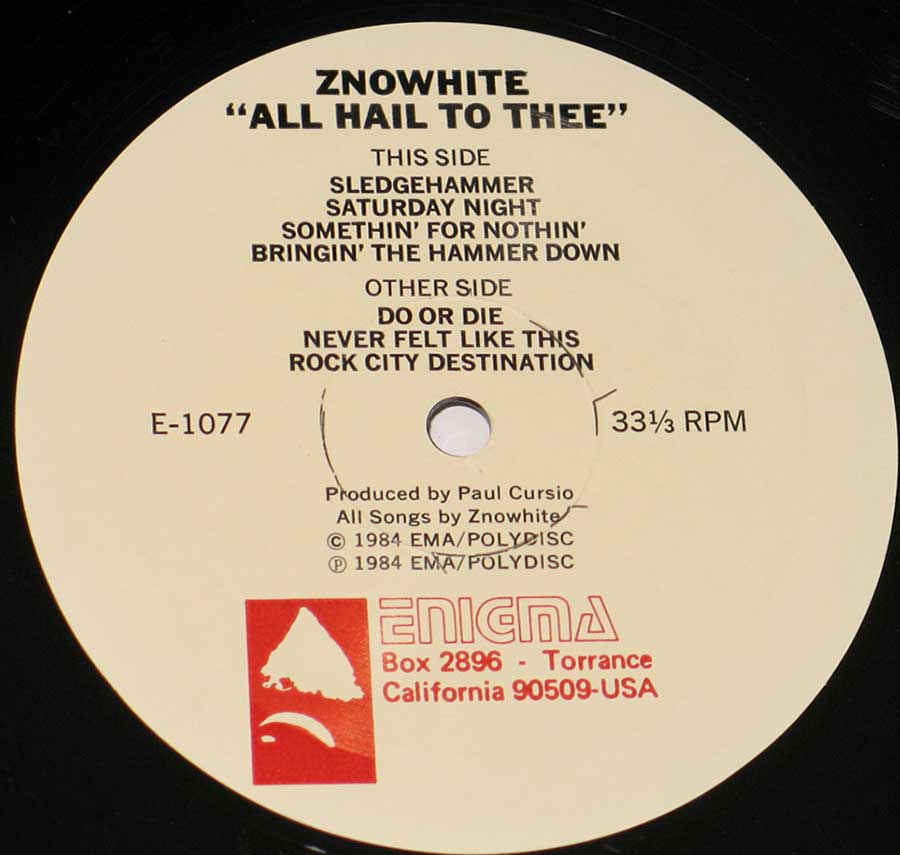
"All Hail to Thee" (1984) Album Description:
"All Hail to Thee" is the kind of 1984 speed metal record that doesn’t waste your time, because it doesn’t think you deserve mercy. Seven songs, under 17 minutes, and every second is built to hit like a straight-line sprint through Chicago concrete: fast riffs, hard snare cracks, and vocals that sound like they’re trying to outrun the decade’s nonsense by pure willpower.
Where this record lands in 1984 America
In 1984, American metal was splitting into tribes at high speed: traditional metal still packed arenas, hardcore punk kept things rough at street level, and thrash/speed metal was starting to weld the two together with a blowtorch. Chicago wasn’t the obvious headline city for that collision, but it had the ingredients: tough club circuits, a punk undercurrent, and a Midwestern stubbornness that didn’t care if the coasts approved.
You can hear that pressure in "All Hail to Thee": it moves with punk impatience but speaks in metal grammar. The riffs are sharp and muscular, the rhythm section pushes like it’s late for something important, and the songs end before they can get cute. If you want a record that explains why speed metal mattered in the early ’80s, this is a compact exhibit with no filler wall text.
Speed metal, defined the 1984 way
Speed metal in this window is not about technical gymnastics; it’s about velocity with purpose. The guitars ride tight, clipped patterns that feel like chain links, the drums keep the engine hot, and the vocals have to cut through like a siren. It’s heavier than punk, leaner than classic metal, and it’s always flirting with thrash without fully turning the corner.
Around the same year, other bands were pushing adjacent corners of the map: some leaned into pure speed, some into full thrash, some into a more melodic heavy-metal glide. "All Hail to Thee" sits right in that transitional lane, and it sounds like a band trying to win the argument in real time rather than waiting for historians to hand out medals.
What the songs are actually doing
The opener "Sledgehammer" sets the rules immediately: short fuse, quick hook, out. "Saturday Night" is the same adrenaline, but with a grin that doesn’t slow the tempo—party energy without the hair-spray theater. "Do or Die" is where the record’s personality snaps into focus: speed as attitude, not just tempo.
Then there’s "Never Felt Like This," which works because it doesn’t pretend to be a power ballad in the soft-rock sense. It’s drama in a metal framework—more tension than comfort—like the band briefly opening a window for air before slamming it shut and getting back to work.
The musical exploration: tight parts, human edges
The playing on this record is disciplined without sounding sterile. The guitars don’t meander; they aim. The drums don’t decorate; they drive. The vocals don’t smooth anything over; they sharpen it, pushing a street-level urgency into music that could have easily turned into generic speed-metal exercise.
That balance is the trick: you get the precision that metal demands, but you keep the friction that makes it feel alive. The songs move like they were built for a small room with loud amps, not a studio designed to sand off the corners.
Key people in the recording
Producer Paul Curcio is central here, because the sound favors punch over polish. The guitars stay upfront and percussive, the drums hit with clarity, and the overall mix doesn’t drown the band in studio gloss. Recorded in July 1983, the sessions capture a group that sounds like it’s trying to prove something fast—before the moment changes and the door closes.
The core lineup on this release—Nicole Lee on vocals, Ian Tafoya handling guitar and bass, Sparks Tafoya on drums—feels like a working unit rather than a rotating cast. It’s compact, focused, and built around forward motion.
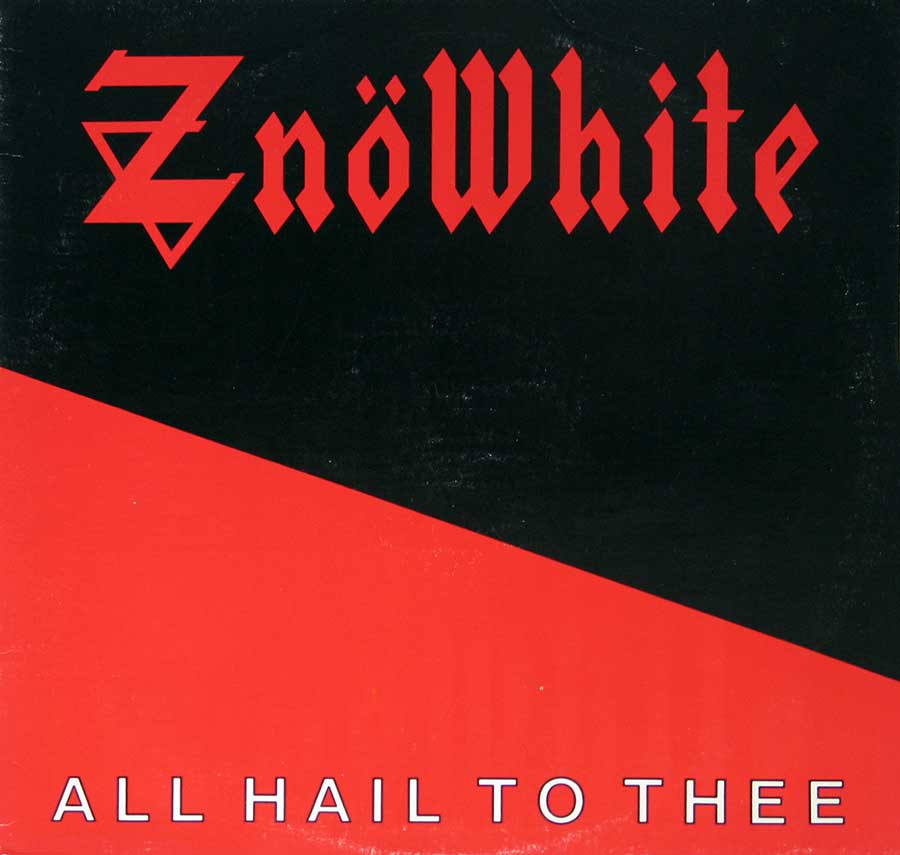
Band history: formation, identity, and lineup shifts
Znöwhite formed in Chicago in 1982, first operating under the name Snowhite before shifting to the stylized Znöwhite/Znowhite version. They moved quickly through early underground visibility, including compilation exposure that plugged them into the broader metal network long before social media made that easy.
Like many bands built in that era’s pressure cooker, the lineup didn’t stay frozen in place. The early years featured changes around the rhythm section while the band kept pushing forward, and later vocalist shifts ultimately reshaped the group’s final chapter.
Controversies: the loud ones and the quiet ones
"All Hail to Thee" didn’t trigger a famous national scandal the way some metal records would a year later when the moral-panic machinery really spun up. But it did arrive in a climate already warming up for that fight—metal was an easy target in American pop culture, and anything fast, aggressive, and unapologetic was going to get side-eyed by default.
The quieter controversy was industry-facing: a Chicago speed metal band fronted by Nicole Lee and driven by the Tafoya brothers didn’t fit the tidy marketing boxes that labels and press leaned on in the mid-’80s. That mismatch didn’t cause headlines, but it shaped how far the record could travel, how it was framed, and how often it was ignored by people who claimed to be paying attention.
Pull quote: Seven tracks, under 17 minutes, and it still feels like a full argument: speed metal doesn’t need length when it has conviction.
Quick listening roadmap
- For the pure speed hit: "Sledgehammer", "Do or Die"
- For the hook-and-run songwriting: "Saturday Night", "Somethin' for Nothin'"
- For the dramatic left turn: "Never Felt Like This"
- For the closer energy: "Rock City Destination"
References
- Decibel Magazine: "The Lazarus Pit: ZnöWhite’s All Hail to Thee"
- Encyclopaedia Metallum: Znöwhite band page (Chicago, years active, lineup)
- Encyclopaedia Metallum: "All Hail to Thee" track listing
- Wikipedia: "All Hail to Thee" (recording date, studios, release basics)
- Apple Music: "All Hail to Thee" (runtime and track list)