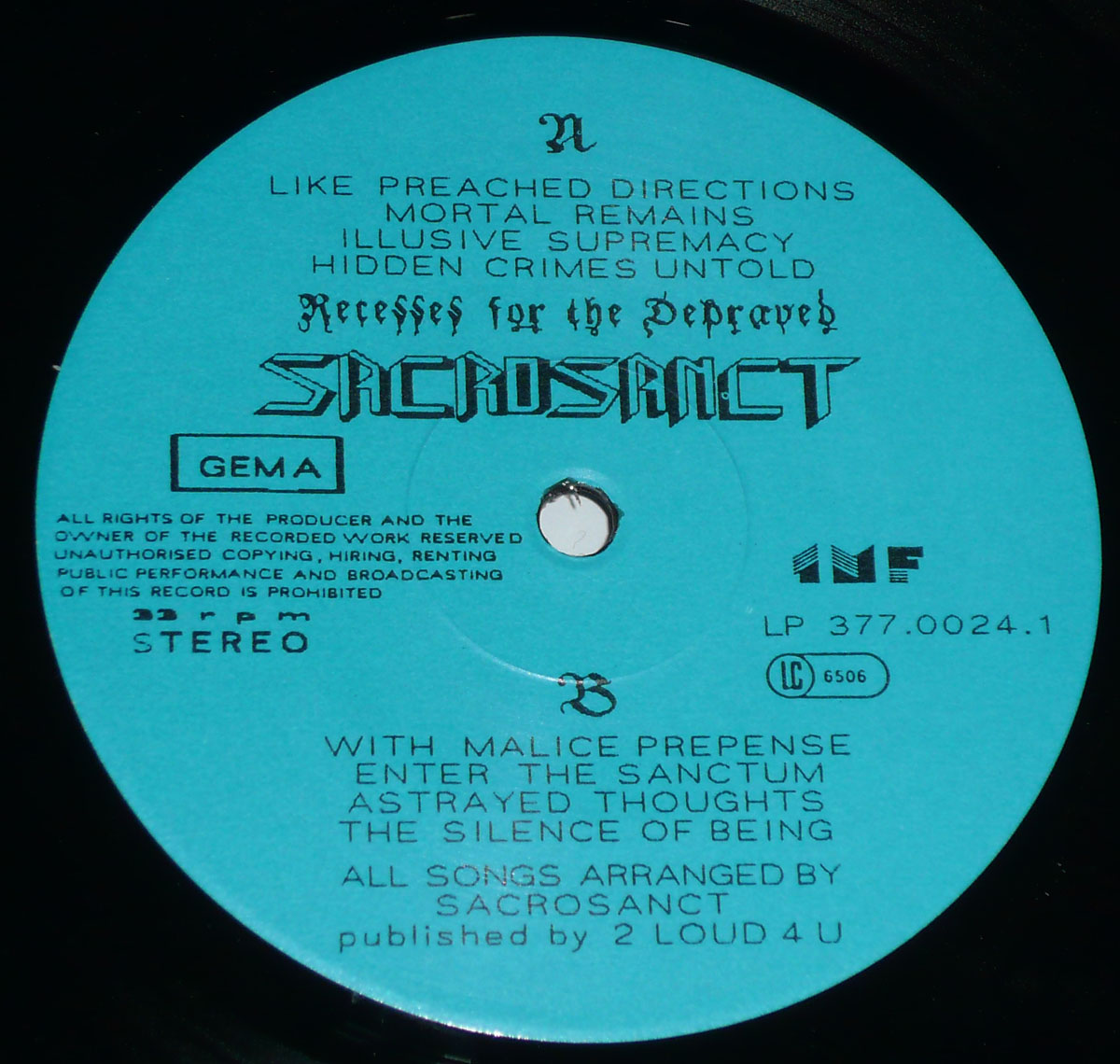
Released in 1991 during a pivotal time in the evolution of heavy metal, Sacrosanct's "Recesses for the Depraved" stands as a testament to the era's relentless push for sonic and artistic boundaries. The Dutch thrash metal outfit dared to delve into uncharted territories, both musically and visually, creating an album that remains a captivating and controversial piece of art.
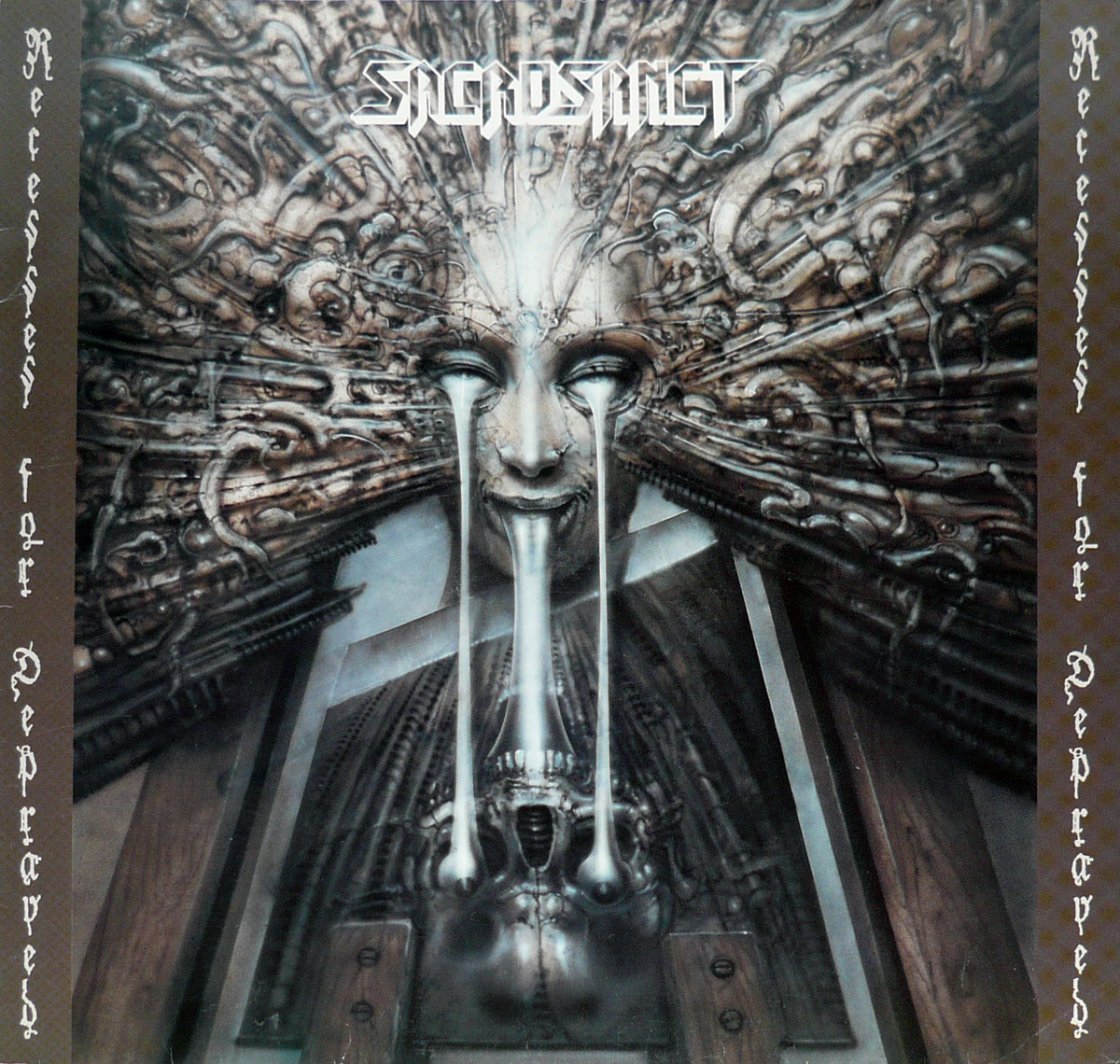
The album's cover art, designed by the renowned Swiss surrealist artist H.R. Giger, immediately sets the tone for the unsettling journey that lies ahead. Giger's signature biomechanical aesthetic, with its nightmarish fusion of organic and mechanical elements, perfectly complements the album's lyrical themes of psychological torment, societal decay, and existential dread.
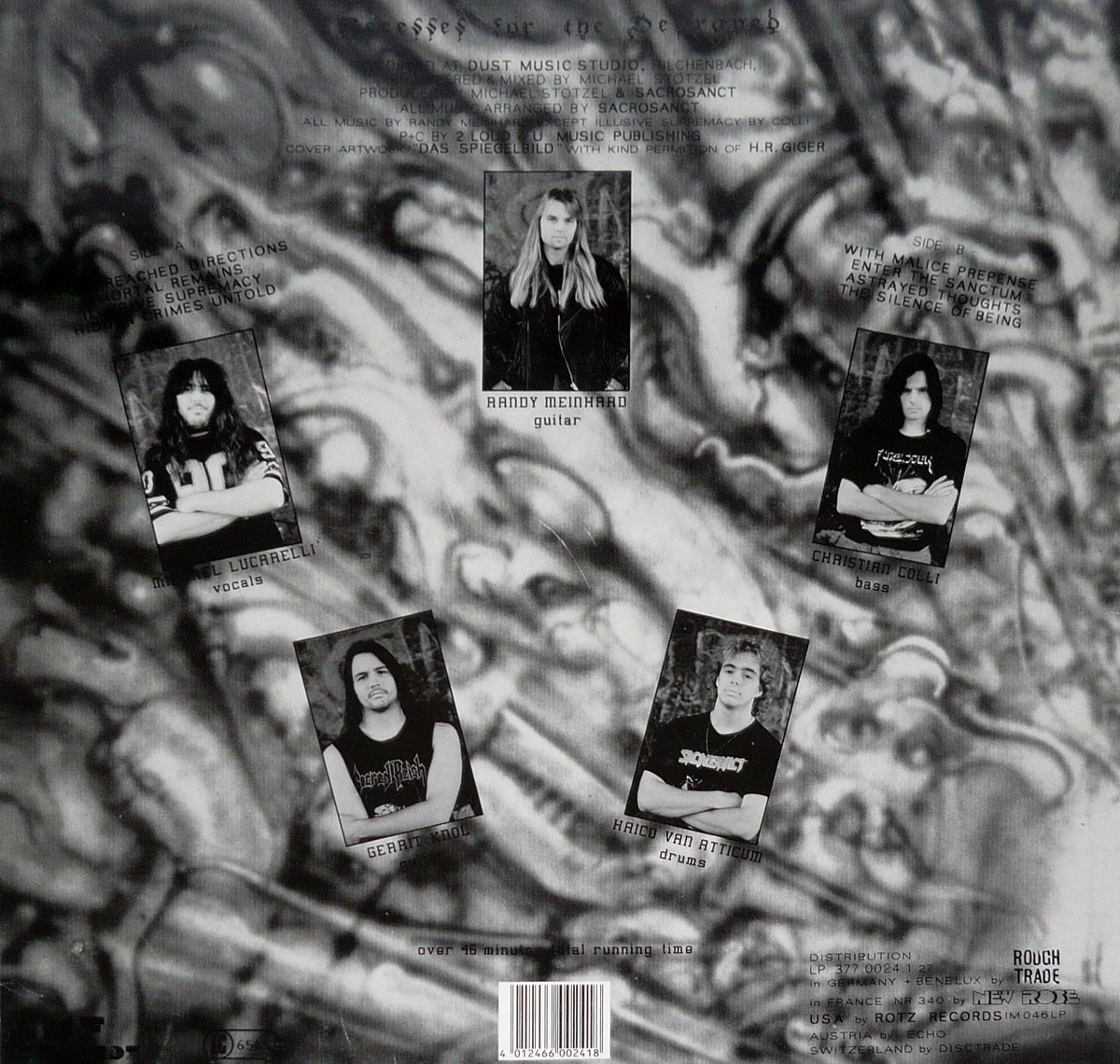
Musically, "Recesses for the Depraved" is a masterclass in technical thrash metal. The intricate guitar work of Randy Meinhard and Gerrit Knol, the thunderous drumming of Haico Van Atticum, and the deep, guttural vocals of Michael Lucarelli combine to create a sonic landscape that is both brutal and beautiful. The album's complex song structures, shifting tempos, and unexpected twists and turns keep the listener on edge, never quite knowing what to expect next.
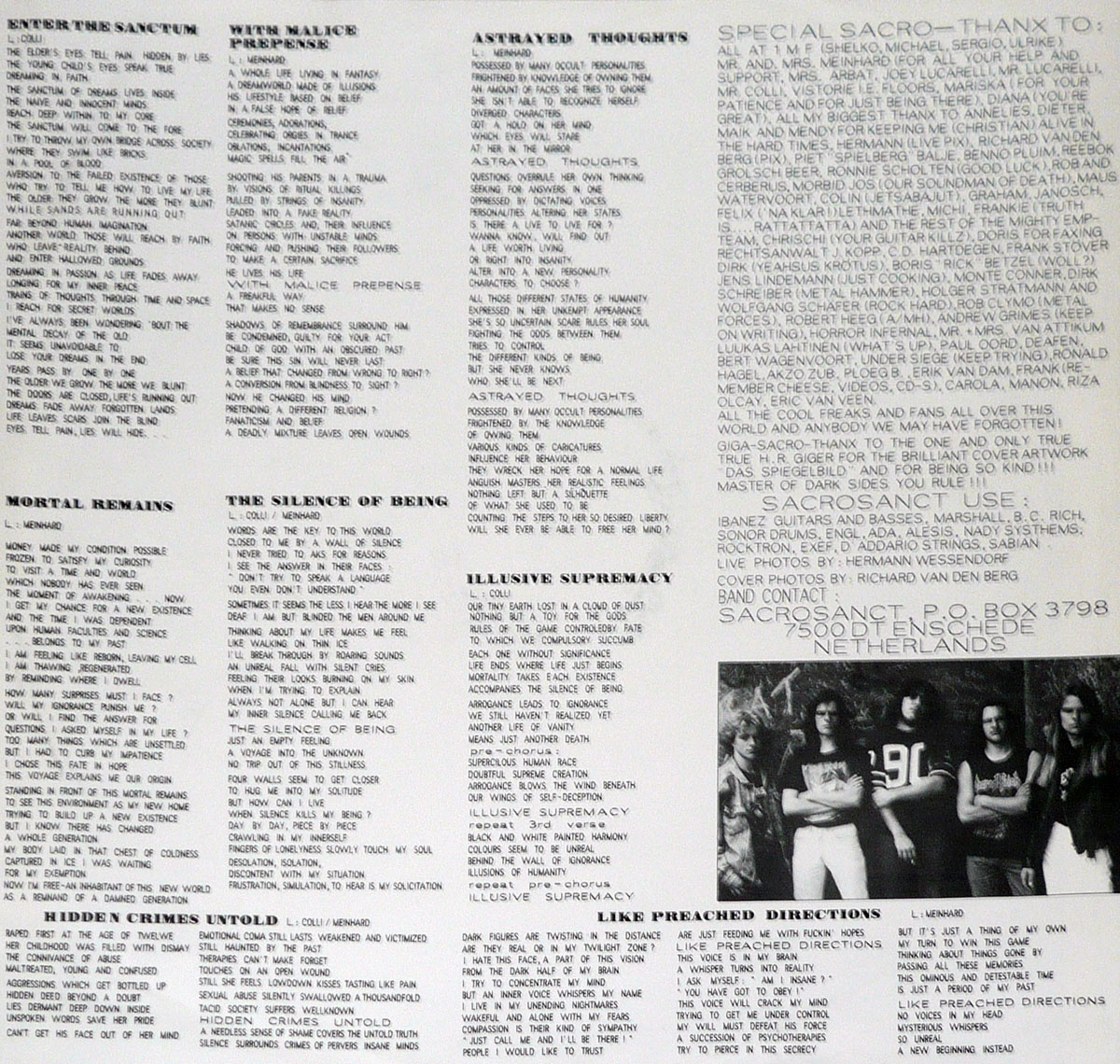
Recorded at Dust Music Studio and mixed by Michael Stötzel, "Recesses for the Depraved" boasts a crisp and powerful production that highlights the band's technical prowess. The album's eight tracks, including standouts like "Like Preached Directions," "Illusive Supremacy," and "The Silence of Being," showcase Sacrosanct's ability to seamlessly blend aggression with melody and complexity.
While the album received critical acclaim for its musicianship and songwriting, it also sparked controversy due to its dark and disturbing imagery. The cover art, in particular, drew criticism for its graphic depiction of violence and sexual themes. However, Sacrosanct defended their artistic vision, arguing that the album was a reflection of the darker aspects of the human psyche and the societal issues of the time.