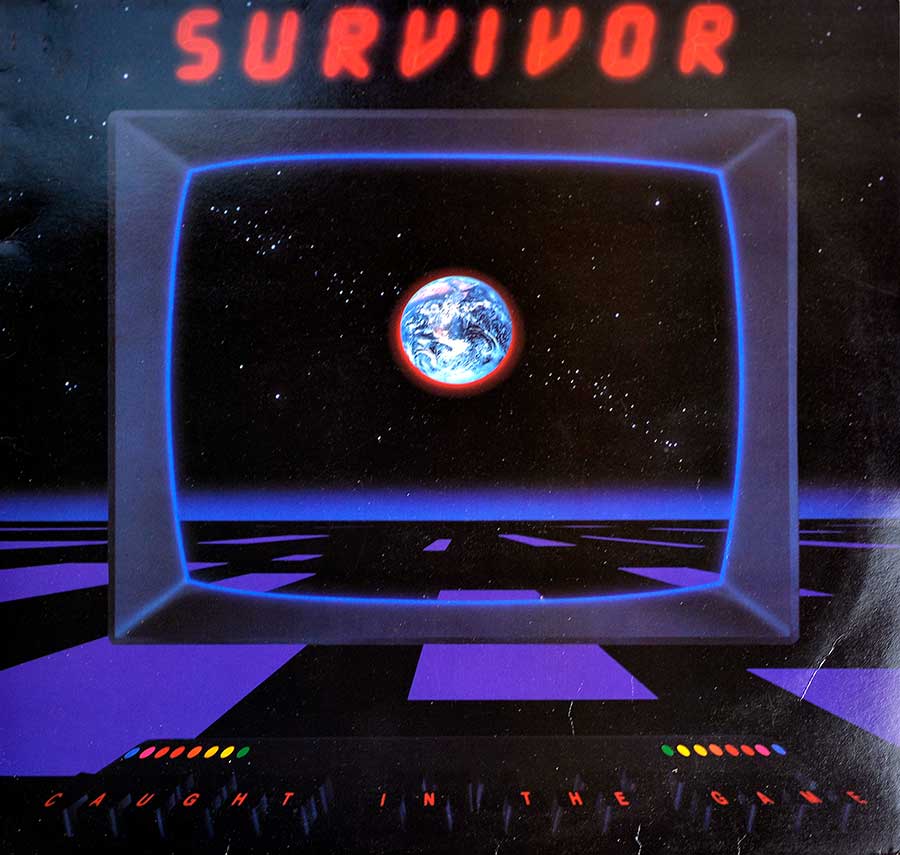
"Caught in the Game" (1983) Album Description:
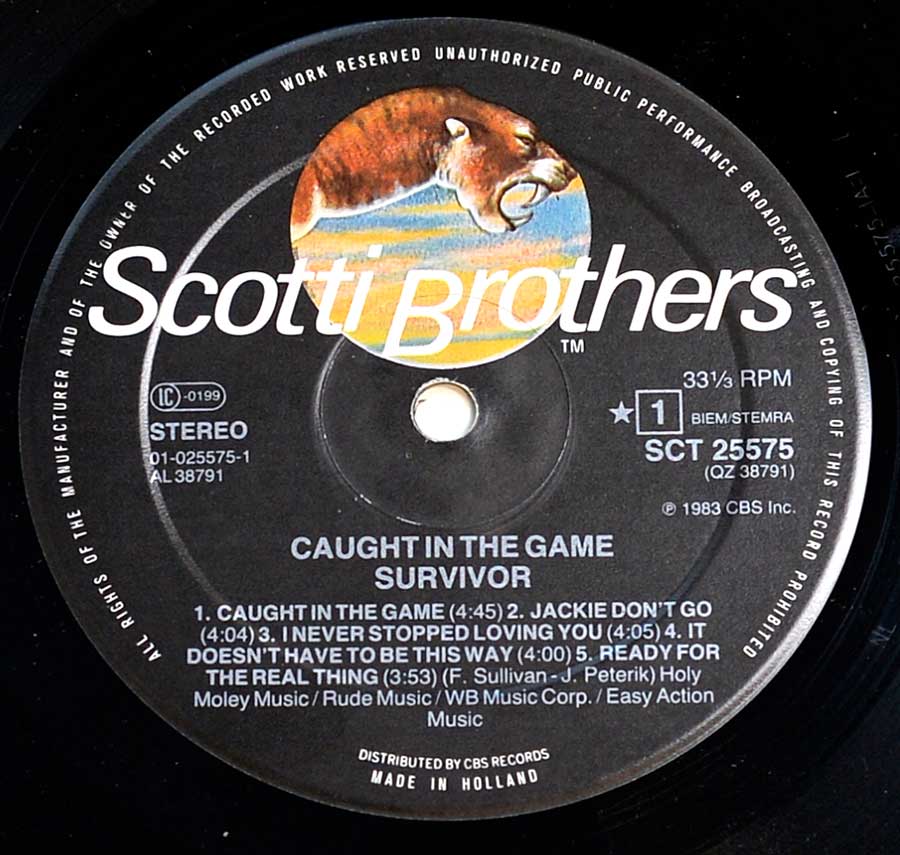
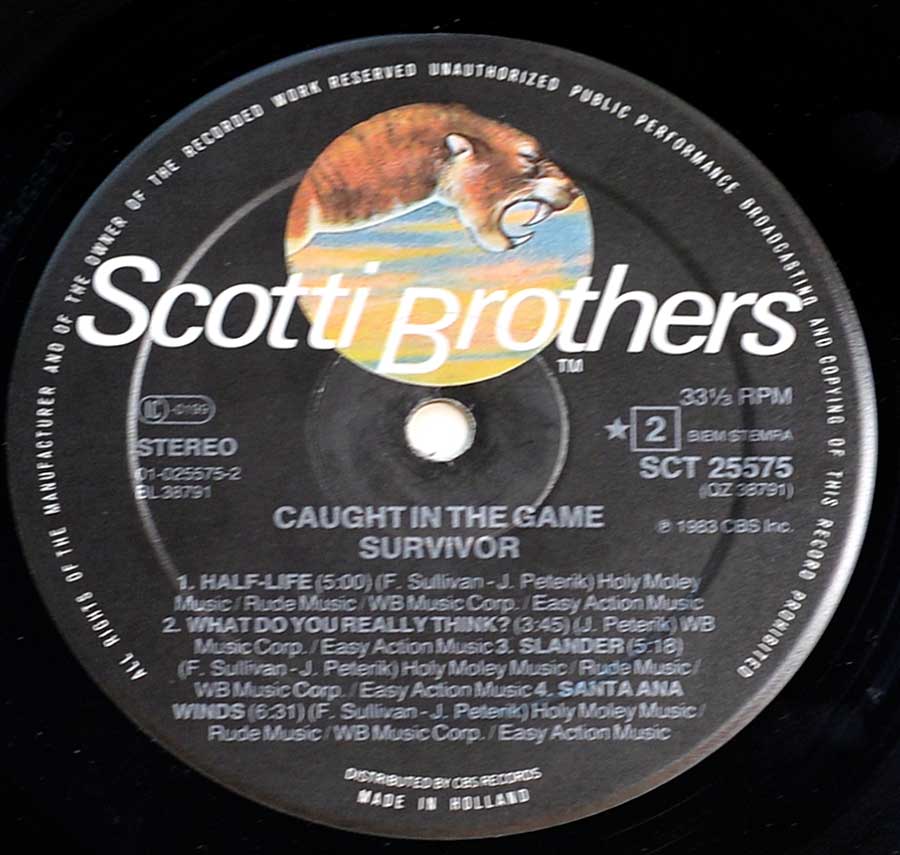
Caught in the Game is Survivor trying to follow a once-in-a-lifetime punch (Eye of the Tiger) with something that still hits hard without living in a movie montage forever. Released in 1983 on Scotti Bros., it sharpens their arena-rock attack into tighter, glossier, radio-aimed hard rock, with guitars out front and choruses engineered to stick. The problem is the same one every breakout band meets at the gate: expectations screaming louder than the amplifiers. This record is the sound of Survivor pushing back anyway.
America in 1983: MTV, muscle, and the corporate-rock arms race
In the U.S. in 1983, rock was getting streamlined for maximum impact: MTV was turning singles into product launches, radio wanted hooks that landed fast, and labels were betting big on bands that could fill arenas. Hard rock and AOR were competing in the same spotlight, and the line between “tough” and “polished” was basically a mixing decision. Survivor walked right into that moment carrying a giant hit and zero room for error.
The broader scene was packed with heavy hitters working the same territory: Def Leppard went glossy and massive, Journey and REO Speedwagon refined the power-ballad machinery, and straight-ahead hard rock was getting louder and more commercial at the same time. It was a year where being “big” wasn’t an insult, it was the job description. Caught in the Game plays that game, but it also tries to keep a fighting stance.
Sound and genre: hard rock with AOR discipline
The album sits in that early-’80s sweet spot where crunchy guitars and bright keys share the same real estate without apologizing. The rhythms are tight, the harmonies are stacked, and the choruses arrive like they’ve been timing themselves with a stopwatch. It’s not punk, not metal, not pop pretending to be rock; it’s hard rock built for radio and arenas, with enough edge left to feel like a band, not a committee.
Calling it “Classic Rock” now makes sense in hindsight, but in 1983 it was contemporary muscle music: lean, shiny, and aggressively catchy. You can hear the push toward a harder sheen, but also the band’s instinct for melody and drama. The result is a record that keeps moving, even when it’s carrying a lot of polish on its back.
Musical exploration: harder edges, brighter surfaces, tighter hooks
Survivor’s move here is refinement, not reinvention: they harden the riffs, tighten the grooves, and aim the vocals straight at the chorus. The guitars keep the bite, but the production keeps everything crisp, so every hit lands clean. It’s the sound of a band trying to be heavier without getting messier, and more melodic without going soft.
The title track comes out swinging with that treadmill urgency, while “The One That Really Matters” leans into the big-sky drama this band was built to deliver. “I Never Stopped Loving You” shows the other side: not a surrender, just a reminder that Survivor always knew how to write a hook with a bruise on it. The album moves between punch and shimmer, and that tension is the point.
Key people behind the record: the band in the producer’s chair
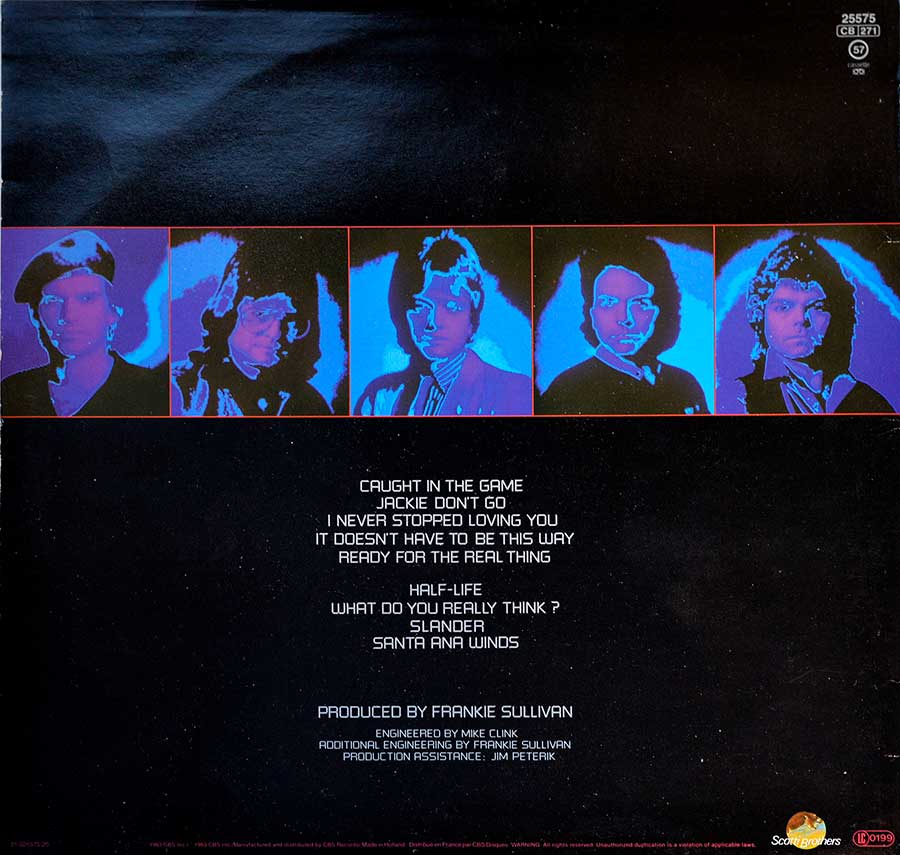
The central decision is simple and telling: producer credit goes to Frankie Sullivan, which means the band is steering its own sound while the industry is screaming for the next hit. Jim Peterik is a key creative engine in this era, shaping the band’s melodic instincts and songwriting discipline. When a guitarist produces his own band at this level, you get clarity and control, and you also inherit the pressure personally.
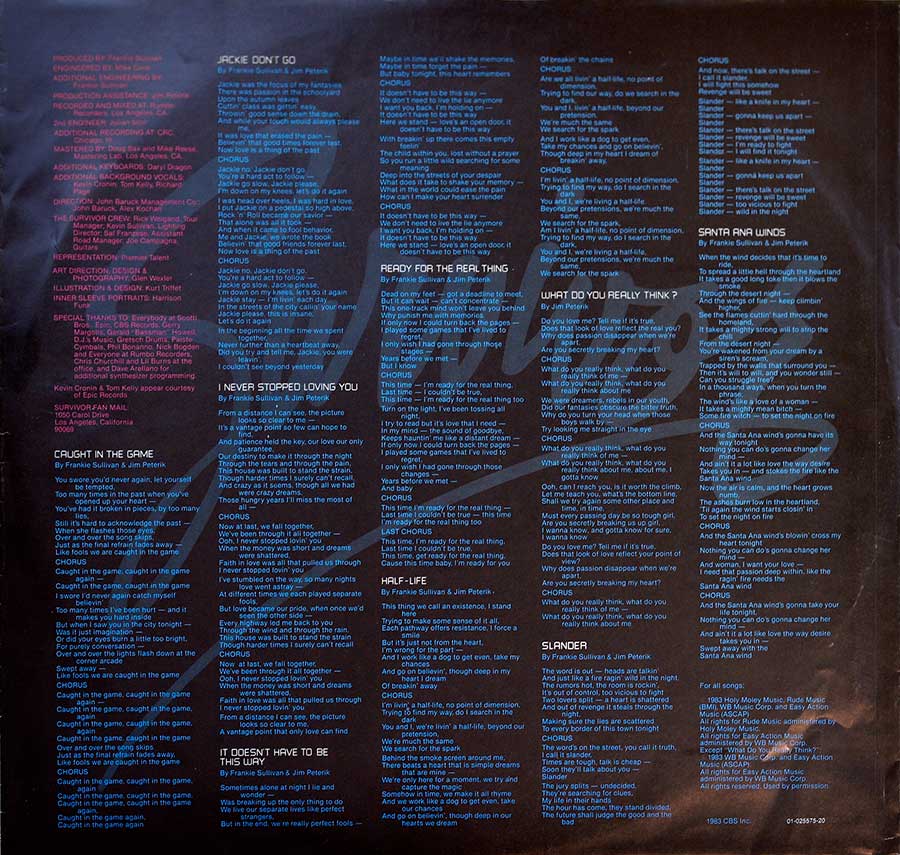
The record’s studio-story is part of its sheen: recorded and mixed at Rumbo Recorders in Hollywood and mastered at The Mastering Lab in Hollywood. Engineer Mike Clink is associated with the sessions, with mastering credits that include Doug Sax and Mike Reese. The visuals were handled by Glen Wexler (art direction, design, photography), with additional design/illustration credit to Kurt Triffet and inner-sleeve photos by Harrison Funk.
After a monster hit, the next album isn’t a record. It’s a court date with the public.
Band timeline: formation, early climb, and a lineup under strain
Survivor formed in Chicago in 1978, built around the songwriting and musical partnership of Jim Peterik and Frankie Sullivan. The early band locked into a classic AOR setup: guitar drive, keyboard lift, and a singer who could sell drama without falling into parody. By 1982, they were no longer just another Midwest rock band; they had a cultural moment on their hands.
Caught in the Game lands right at the hinge point, with Dave Bickler still on lead vocals but facing serious vocal problems that would soon force a major change. The band’s inability to tour at full strength around this period became part of the album’s story in real time, not as mythology later. Not long after, Bickler was out and a new era was coming, whether anyone felt ready or not.
1983 peers: where this album fits in the rock traffic jam
Survivor weren’t alone in trying to balance grit and gloss in 1983. The radio and MTV lane rewarded bands that could hit hard and sing bigger, and a lot of groups were building the same kind of sound-wall with different paint. Caught in the Game fits as a hard-rock/AOR bridge record, sharing DNA with the era’s biggest arena acts.
- Hard rock getting shinier: big riffs, bigger choruses, tighter production
- AOR staying dominant: melody-first writing with muscle underneath
- MTV pressure: songs shaped to land fast and stick
- Touring as proof: bands had to perform the record live to keep momentum
Controversies: not scandal, but real friction over success and sound
The most real “controversy” here is the one fans always stage: the argument over whether a band is “too polished” the second the production gets professional. Coming off a massive hit, any move Survivor made could be framed as selling out, playing it safe, or not playing it safe enough. The album’s cleaner, harder-edged finish gave critics an easy target, even though the band was clearly aiming for impact, not comfort.
The other flashpoint was practical and brutal: vocal health and touring. When a frontman’s voice becomes a medical situation, it turns into a public narrative fast, and the band gets judged as much for logistics as for songs. That pressure doesn’t create tabloid drama, but it does create a fan-base split between empathy, impatience, and the always-helpful demand for perfection.
Quick guide: what to listen for
The record rewards listeners who pay attention to how it’s built, not just how loud it gets. The hooks are engineered, the rhythm section is locked, and the guitars are placed to cut through without turning the mix into mush. It’s a disciplined rock record trying to sound dangerous while staying radio-legible.
- Listen for the guitar/keyboard balance: punch plus shine, not one or the other.
- Notice how choruses arrive early and repeat with small variations for momentum.
- Pay attention to the vocal phrasing: big notes, but with a working-man grit.
Citations / References
- Wikipedia - Caught in the Game (album overview, credits, release date)
- Wikipedia - Survivor (band formation and lineup timeline)
- Discogs - Survivor: Caught in the Game (release variants and credits)
- LouderSound - Survivor interview (context around the post-hit period and touring limitations)
- Spotify - Caught in the Game (album stream)