"BEAU DOMMAGE" (1974) Album Description:
Beau Dommage’s debut didn’t just arrive in 1974, it kicked the door in and instantly made Quebec folk-rock feel like a real, bankable, radio-owning movement instead of a cool local secret. Produced by Michel Lachance and cut at Studio Tempo in Montreal, the record blends street-level storytelling with tight harmonies and a warm, lived-in sound that feels both intimate and oddly cinematic.
Quebec in 1974: culture, language, and a city learning its own voice
Mid-’70s Quebec was deep in identity-making mode: post-Quiet Revolution momentum, language politics heating up, and a public hungry for art that sounded like home instead of an imported blueprint. Montreal had the geography, the neighborhoods, the slang, and the nerves for songs that didn’t pretend life was tidy. This album leans into that reality with the confidence of a band that knows its audience is right there in the next apartment.
The timing mattered because the wider rock world was getting glossy and technically loud, while a lot of French-language culture still carried a built-in suspicion of “rock” as an Anglo vessel. Beau Dommage threads that needle: the attack is gentle, the words are sharp, and the mood is unmistakably Quebec. It’s folk-rock with city grit, not campfire cosplay.
The scene around them: folk-rock turns bilingual, then distinctly Quebecois
In 1974, folk-rock was already a broad church: the harmonies and acoustic shimmer were familiar, but the best bands were using the format to report on real life. In Quebec, that same urge was showing up in groups and writers pushing French-language pop beyond chanson traditions and into band music with arrangements, hooks, and a street map. Beau Dommage lands right in that lane, shoulder to shoulder with the era’s rising Quebec folk-rock and progressive-leaning acts, while still sounding accessible enough to live on the radio.
- They share folk-rock’s core ingredients: vocal blend, acoustic foundation, and narrative writing.
- They add a Quebec signature: local places, local speech, and a humor that doesn’t ask permission.
- They keep it band-tight: keyboards, drums, and ensemble dynamics that move like a unit.
What the record sounds like: warm wood, neon glass, and a steady heartbeat
The album’s texture is its power: acoustic guitars ring with a clean, woody glow while the keyboards add soft light, like storefronts after dusk. The drums don’t posture; they keep the songs upright and moving, letting the melodies do the heavy lifting. When the band leans into fuller choruses, it’s not bombast, it’s lift.
The writing feels observational rather than theatrical, but it still swings between tenderness and punchline timing. You get choruses that land fast, verses that sketch characters in a few strokes, and arrangements that stay nimble even when the songs stretch out. It’s a record that can sound friendly while smuggling in a lot of detail.
Standout songs: postcards from Montreal, side streets included
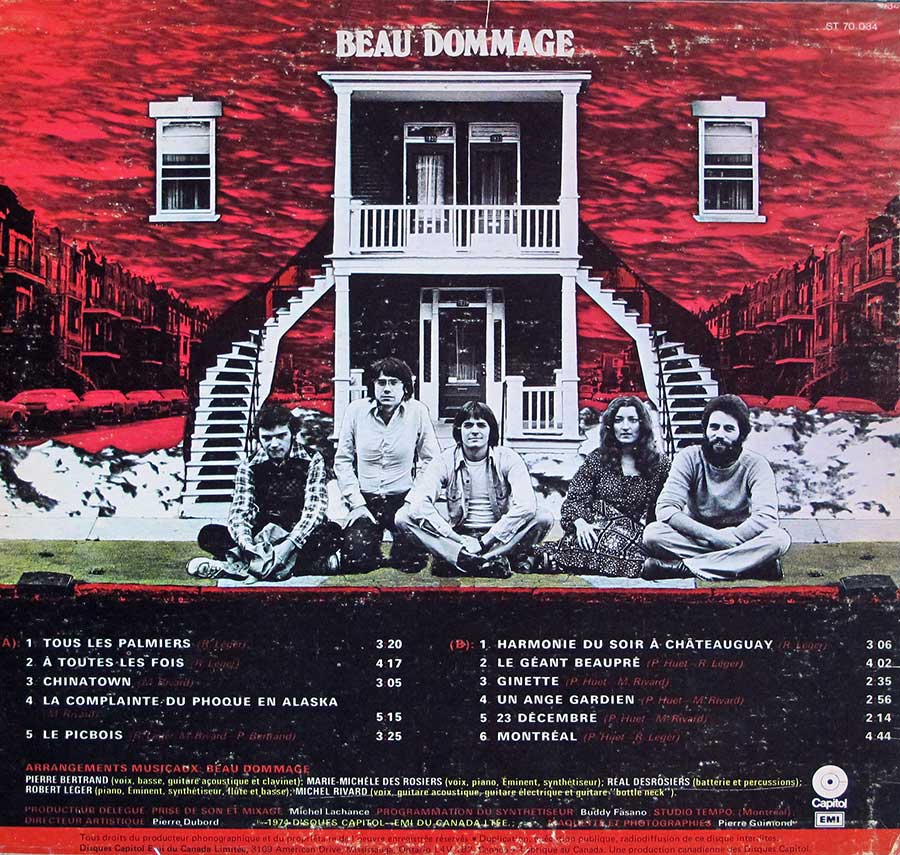
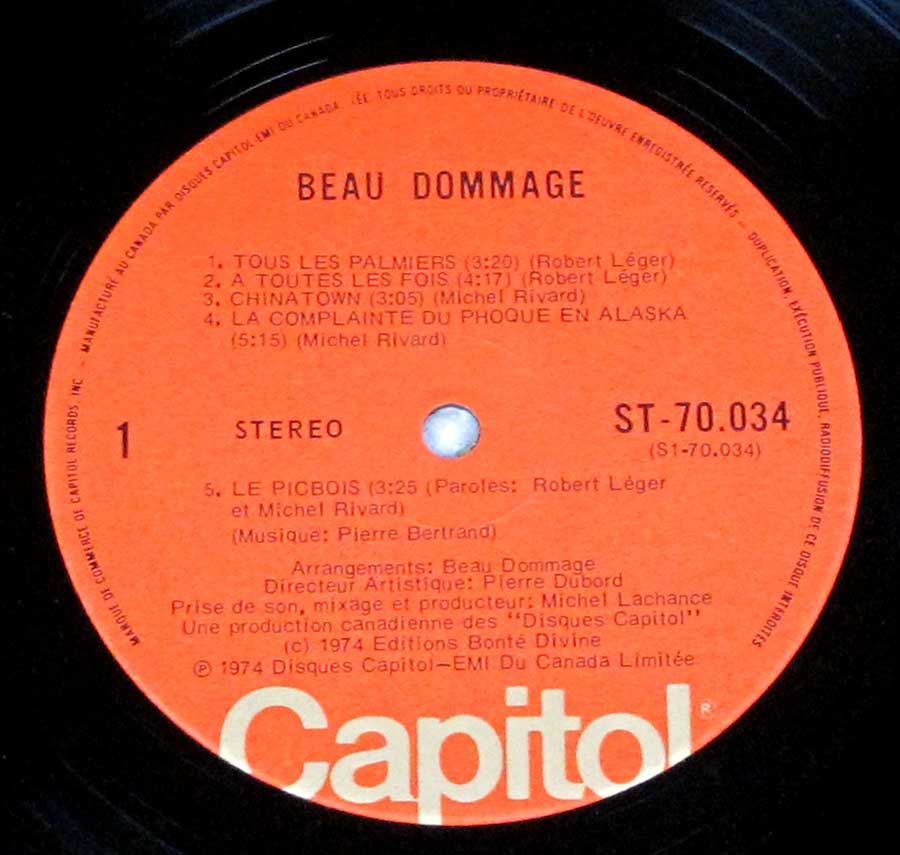
Montréal is the obvious anchor: it turns the city into a feeling, not a skyline, and the melody carries that affection without getting syrupy. Chinatown snaps into focus with quick narrative turns and a band performance that stays crisp and uncluttered. La complainte du phoque en Alaska stretches the frame into something more wistful and surreal, proving they can do more than street reportage.
Even the shorter tracks act like scenes, not filler, with hooks built to stick and details built to replay. The sequencing keeps the listener moving: bright moments, reflective dips, then back to the neighborhood. It’s craft disguised as hanging out.
Musical exploration: a cooperative band with more than one steering wheel
One reason the album feels so complete is that it’s not built around a single dominant auteur; it behaves like a cooperative, with multiple writers and a lyric voice that knows how to sharpen a scene. Robert Leger handles much of the musical architecture, while Michel Rivard and Pierre Bertrand bring their own melodic instincts and character. Pierre Huet’s lyric presence is crucial even when he isn’t a front-line performer.
The arrangements avoid showing off, but they’re quietly sophisticated: keyboards and flute color the edges, acoustic and electric guitars trade roles, and the vocals are treated as an ensemble instrument. It’s pop-minded without turning generic, and local without turning inward. That balance is the trick.
Key people behind the console and the camera
Producer Michel Lachance keeps the sound clean and human, letting the songs breathe instead of pinning them under studio cleverness. Studio Tempo in Montreal gives the record a grounded, present-room feel, like the band is playing a few feet away rather than inside a glass cube. On the visual side, Pierre Guimond’s photography helps frame the band as real people from a real place, not costumed characters.
Pull quote
“The hook is the story, and the story is the place.” That’s the album’s whole move: melodies you remember, scenes you recognize.
Formation and early lineup: a band built for songs, not spotlight
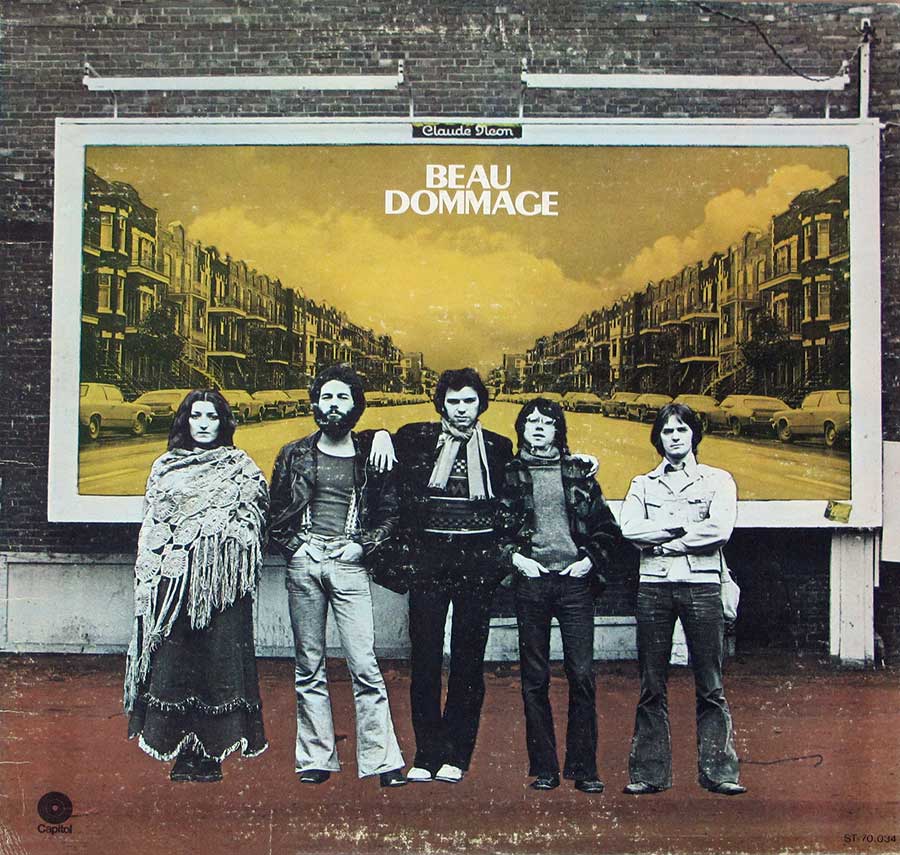
Beau Dommage started as a Montreal project pulling together strong writers and practical musicians, with a setup that valued material over stage spectacle. The early core brought together Pierre Bertrand, Marie-Michele Desrosiers, Real Desrosiers, Robert Leger, and Michel Rivard, with Pierre Huet supplying lyrics that sounded like people actually talk. The band’s early identity is already visible here: harmony-first, story-first, city-first.
The lineup would evolve after the debut period, including the addition of keyboard player Michel Hinton in the mid-’70s, but the basic concept stays the same: multiple brains, one sound. That matters because it explains why the album doesn’t feel like a solo project with backing parts. It sounds like a group that agreed on the point of the whole thing.
Controversies and friction: not scandal, but pressure points
The album didn’t trade in shock tactics, but it still hit nerves, mostly because it refused to behave like “proper” French-language pop. Before Capitol took the chance, the group faced industry resistance that read like gatekeeping: too band-like, too local, too outside the neat categories. Once it broke, it also pushed a cultural argument already simmering in Quebec: whether rock was an Anglo import or a tool French Quebec could claim and reshape.
The other flashpoint was language itself: everyday Quebec speech, humor, and intimacy that some listeners loved precisely because it wasn’t polished for polite company. Songs like 23 décembre later became an easy target for squeamish edits, which tells you what kind of friction was baked in from the start. The “controversy” here is small-c conservative: who gets to decide what French can sound like on the radio.
Why the debut worked: precision dressed as ease
The record’s secret weapon is discipline wearing a casual jacket: tight writing, clear arrangements, and performances that never overplay. The band makes room for lyrics without starving the groove, and they make room for hooks without turning the stories into slogans. It’s the sound of a scene stepping forward and realizing it can carry a full album, not just a single.