"Gradually Going Tornado" (1980) Album Description:
Bruford closed its studio run with Gradually Going Tornado in 1980, a record that proved jazz rock fusion could still feel dangerous even when the decade turned and the headlines belonged to punk, new wave, and whatever else was busy setting guitars on fire. It is leaner and more direct than the earlier Bruford albums, but it still moves like a machine with a pulse: bright surfaces, hard corners, and sudden warmth when you least expect it.
Where it landed in 1980
By 1980, Britain felt like it was changing its skin: a colder mood, tighter money, faster culture, and a rock press that often treated virtuosity like yesterday’s problem. Fusion didn’t disappear, it just stopped begging for arena approval and started sounding like something made for listeners who actually pay attention. Gradually Going Tornado is exactly that kind of record: serious without being solemn, technical without being sterile, and oddly catchy for music that refuses to walk in a straight line.
The band story in one breath
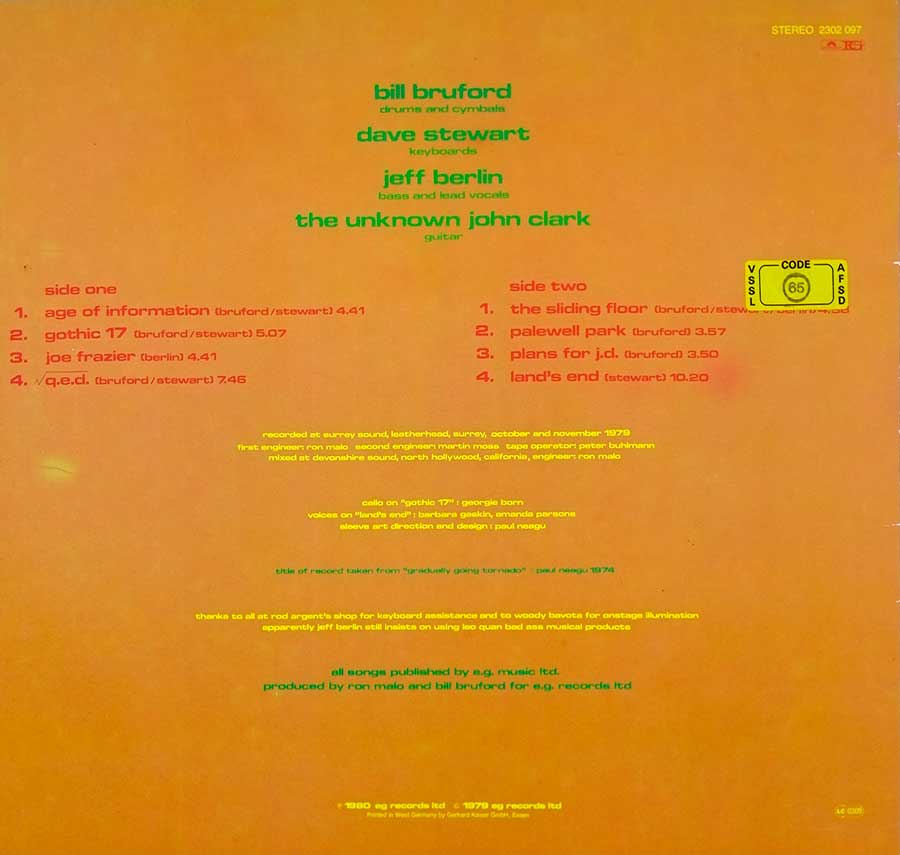
Bruford began as Bill Bruford’s late-’70s laboratory after his big prog years, built around a core that could play complicated material with the snap of a street band. The earlier run featured guitarist Allan Holdsworth, then the chair changed hands and John Clark took over for the final stretch. That swap matters here: the guitar becomes less of a liquid comet and more of a sharp instrument, which pushes the album toward cleaner hooks and tighter turns.
What the record sounds like
This is fusion with chrome on it: crisp drums that ring like struck metal, keyboards that flash between glassy melody and nervous electricity, and bass lines that don’t “support” so much as argue. The sound is bright and pressured, as if the music is trying to outrun the room. When it relaxes, it doesn’t go soft; it just opens space and lets the notes breathe.
Standout moments that tell the whole story
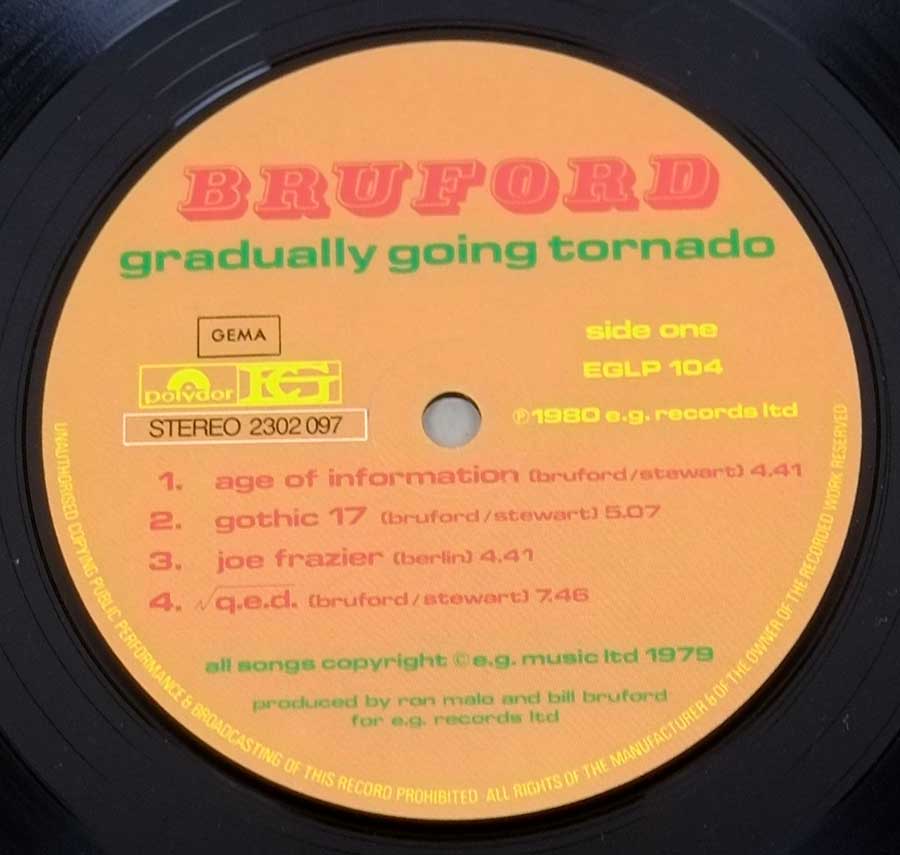
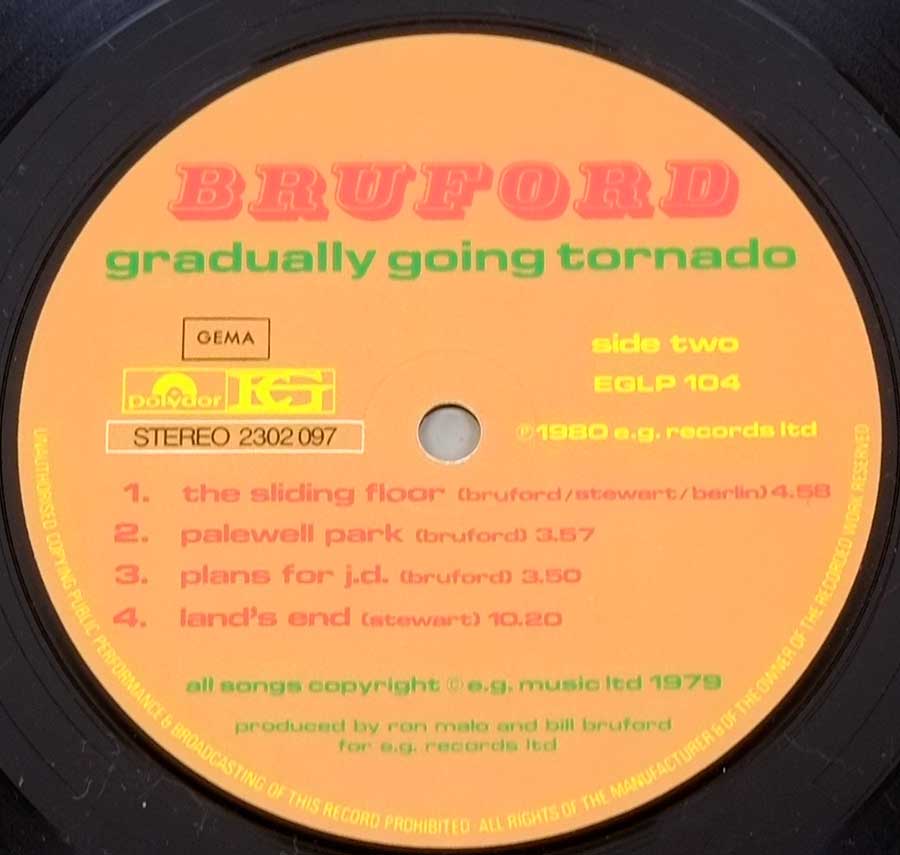
Age of Information hits first with a kind of optimistic sprint, the sort of tune that makes complex rhythm feel like motion instead of math. Gothic 17 adds shadow and tension, pulling the band into that moody, European-prog corner without drowning it in fog. Land’s End stretches the canvas and proves the group could build long-form drama without losing the thread.
Quick listening guide:
- Listen for how the drums stay melodic, not just percussive.
- Notice the bass and keys trading lead roles like they’re passing a live wire.
- Catch the way the arrangements “snap shut” after solos instead of drifting.
The key people behind the glass
Bill Bruford co-produced the album with Ron Malo, and that partnership shows in the discipline of the sound: it is detailed, punchy, and uncluttered, like every frequency had to earn its place. Dave Stewart’s writing and textures steer the music toward melody even when the rhythm is doing gymnastics. Jeff Berlin brings a brash confidence to the low end, and when vocals appear, they feel like another instrument—one that can irritate purists and delight everyone else at the same time.
Recording context that actually matters
Recorded at Surrey Sound in late 1979, the album arrives with a sense of transition baked into it. The late ’70s fusion boom had already produced its monsters, and by this point the question wasn’t “how fast can you play,” it was “can you make it stick.” Gradually Going Tornado answers by tightening the structures, sharpening the attack, and leaving enough melody behind for your brain to hum later.
The small “controversies” that followed it
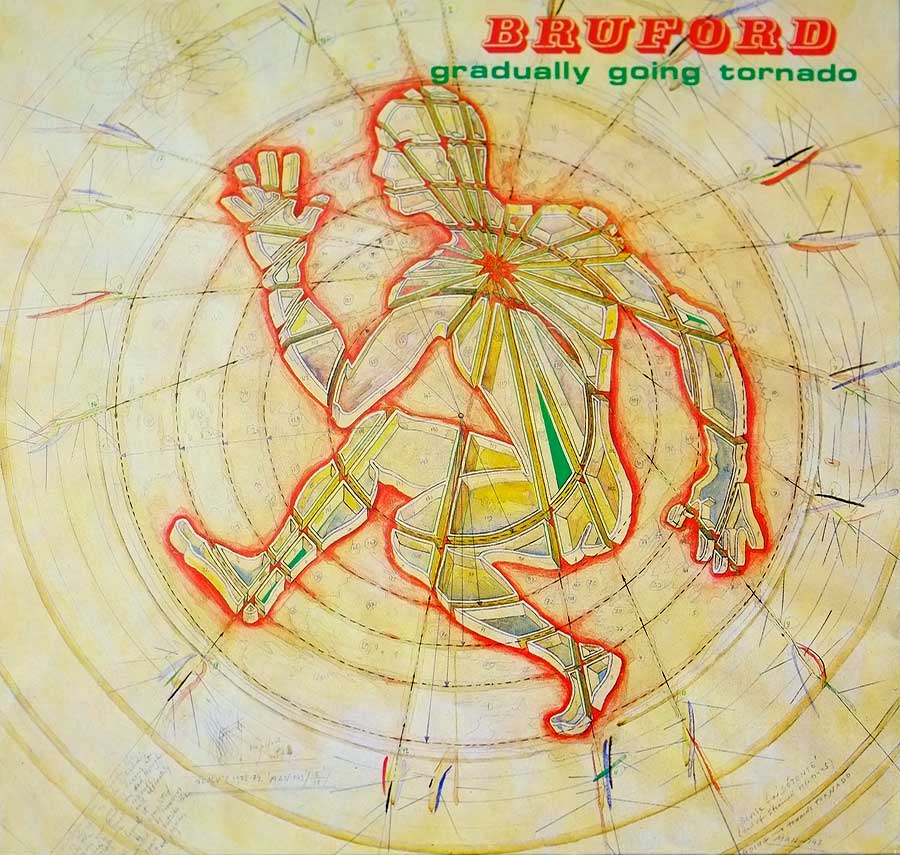
Nobody was getting arrested over this sleeve, but the record still kicked a few anthills. Some listeners bristled at the band’s flirtation with pop-forward momentum on a couple of tracks, as if groove were a moral failure. Others missed Holdsworth’s unmistakable voice and treated John Clark’s presence as a downgrade, even when he served the new direction. And the running gag of billing him as “the Unknown John Clark” only made the debate louder, because musicians are famously chill about status games.
Bruford’s place among its peers
Fusion in this era lived in a neighborhood with several loud houses: the fire-breathing virtuoso tradition, the more atmospheric jazz-rock school, and the prog crowd that wanted compositions with plot twists. Bruford sat at the intersection, borrowing the intensity without turning it into a flex. The result is music that can stand beside the big fusion names of the period without sounding like a footnote, and that’s the real trick.
The real win of Gradually Going Tornado is that it doesn’t sound like a band showing off; it sounds like a band trying to solve a problem in public. How do you keep complexity, keep speed, keep personality, and still land the punch? Bruford answers with an album that moves fast, hits clean, and leaves enough melody behind to prove it wasn’t built just to impress your drummer friends.