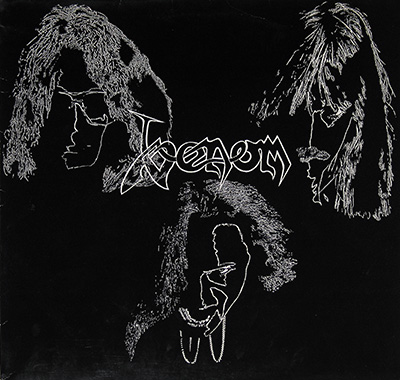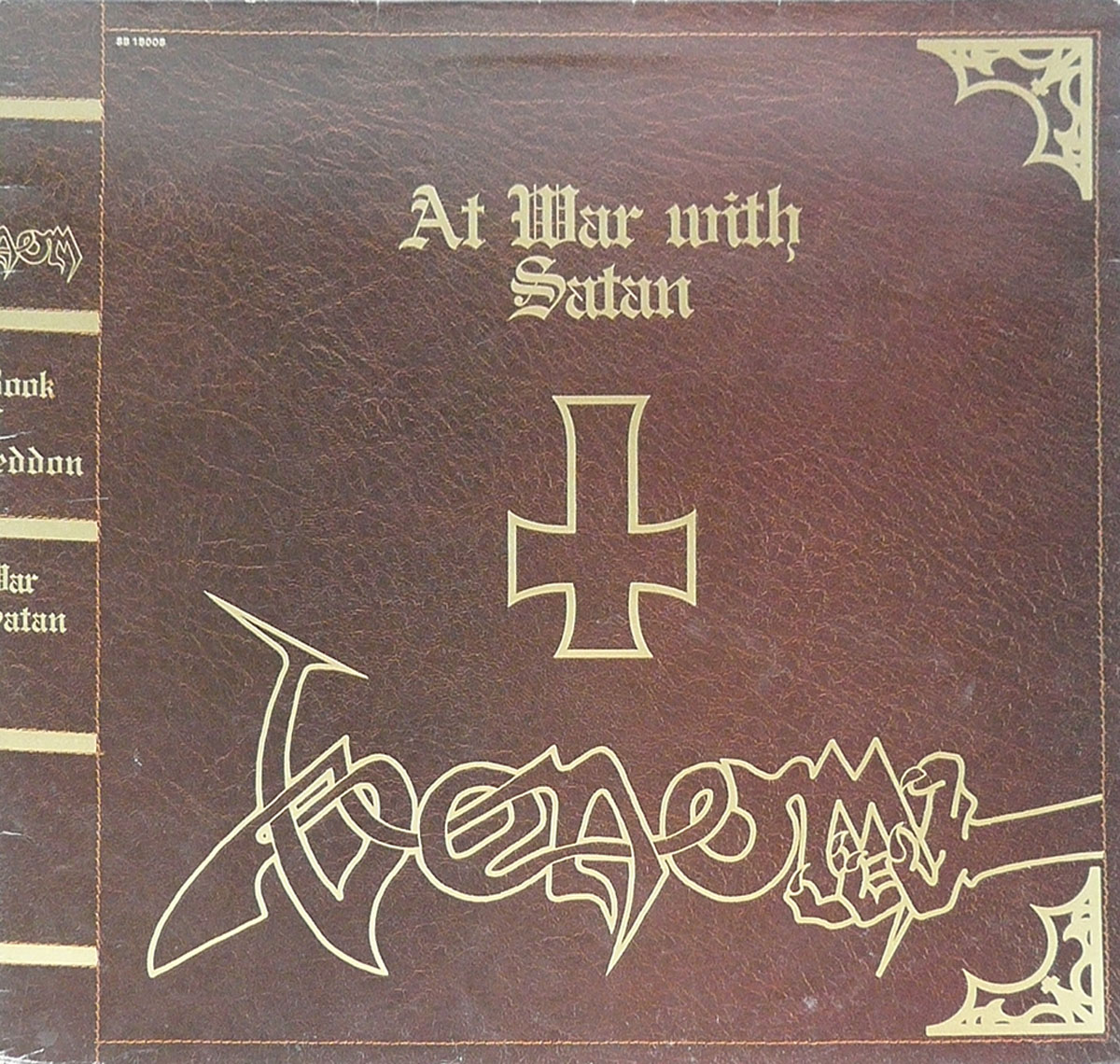
"At War With Satan" (1984) Album Description:
By 1984, Venom were no longer just the grubby Newcastle loudmouths kicking mud over the tidier end of NWOBHM. "At War With Satan" arrived as their third album and pushed the joke, the threat, and the theatre into one swollen, side-long declaration. Where other bands were tightening their craft, Venom made a record that sounded like a pub cellar, a church pamphlet, and a faulty amplifier had been locked in the same room overnight.
The strange bit is that this should have collapsed under its own cape-and-candle nonsense. A near twenty-minute title track? A gatefold dressed up like a forbidden book? Retail panic, gothic quotations, leather-print sleeves, and Cronos barking as if the microphone owed him money? It is ridiculous. And yet, once the needle lands, the thing starts to make its own ugly sense.
Britain in 1984 was not exactly short of metal noise, but the mood had shifted. The first NWOBHM rush had already spat out its hopefuls, heroes, chancers, and pub-stage casualties. Iron Maiden were moving in larger rooms, Def Leppard had already polished themselves for export, and down in the dirtier lanes you had Tank, Raven, Warfare, and Venom keeping the stink of speed, leather, and bad intentions alive. Venom did not sound like they wanted entry into polite heavy metal society. They sounded like they wanted to be thrown out loudly enough to count as publicity.
"At War With Satan" sits in that awkward, fascinating place between NWOBHM, early black metal, speed metal, and the incoming thrash charge. In the same year, Metallica were sharpening the blade with "Ride the Lightning", Slayer were turning nastier with "Haunting the Chapel", Mercyful Fate were bringing theatrical precision, Bathory were dragging the underground further into the cave, and Celtic Frost were starting their own bleak mutation. Venom, bless their filthy boots, had no interest in finesse. They went for volume, nerve, and the sort of satanic pantomime that made nervous adults do half the promotional work for them.
The title track is the big gamble. It eats the whole first side, lumbering through riffs, spoken passages, abrupt shifts, and that slightly cracked epic ambition that makes early extreme metal so much more interesting than clean modern competence. There is drag in it, weight, a bit of mess, and a lot of nerve. It does not glide; it staggers forward with smoke in its lungs.
Side Two snaps back into shorter violence. "Rip Ride" has that nasty forward bite, "Genocide" runs with a blunt street-level shove, and "Cry Wolf" shows that beneath the costume-shop sulphur there was a band learning how to make their chaos land harder. Not neatly. Never neatly. Venom were not building cathedral metal; they were kicking through the side door and nicking the candles.
The classic line-up is the whole point here: Cronos on bass and vocals, Mantas on guitar, Abaddon on drums. Cronos gives the record its broken-glass throat and overdriven bass snarl, Mantas keeps the riffs sharp enough to cut through the fog, and Abaddon hammers the thing along with a loose, clattering force that feels more human than polished. Produced by Venom themselves, the album carries that dangerous advantage of sounding exactly like the band thought it should sound, whether good taste agreed or not.
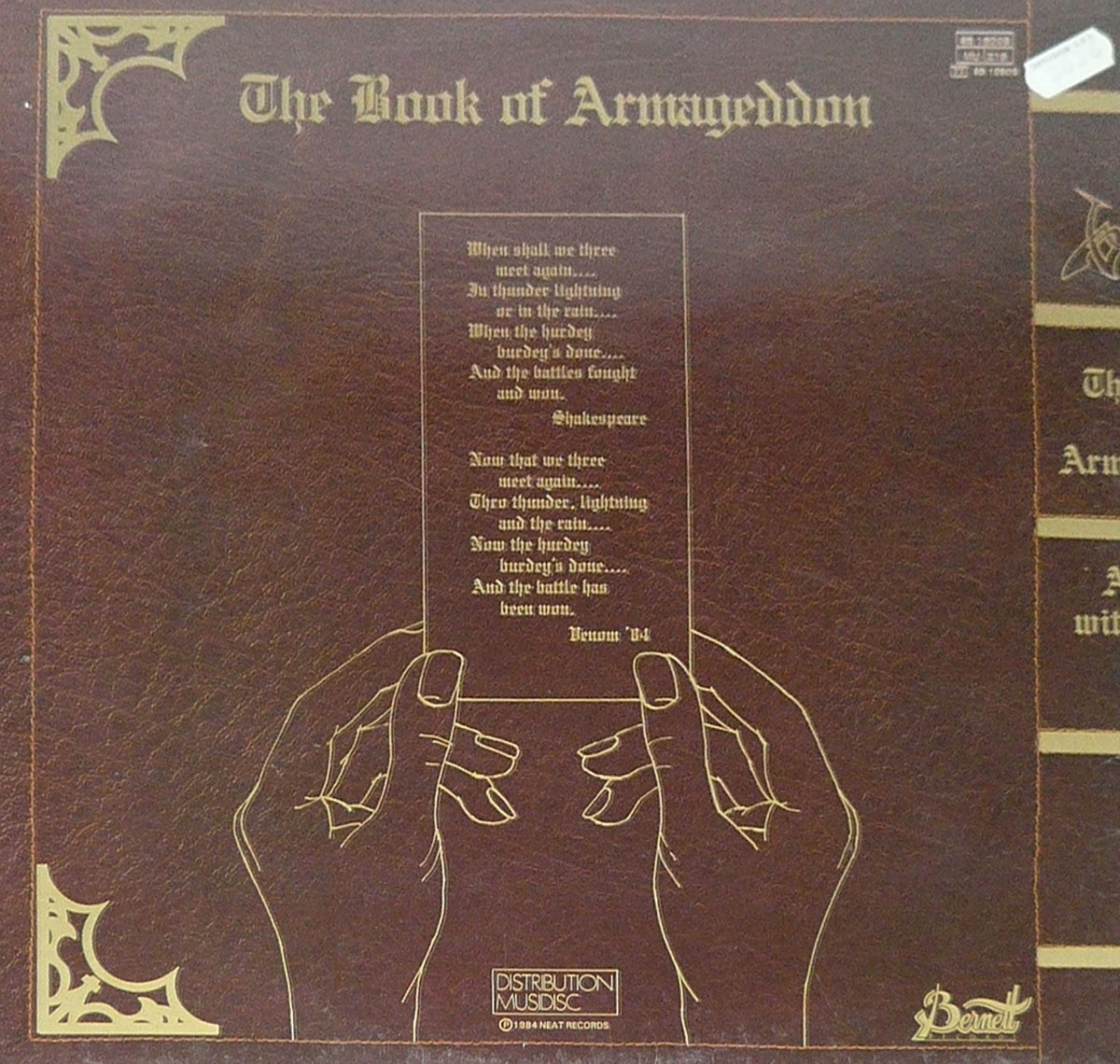
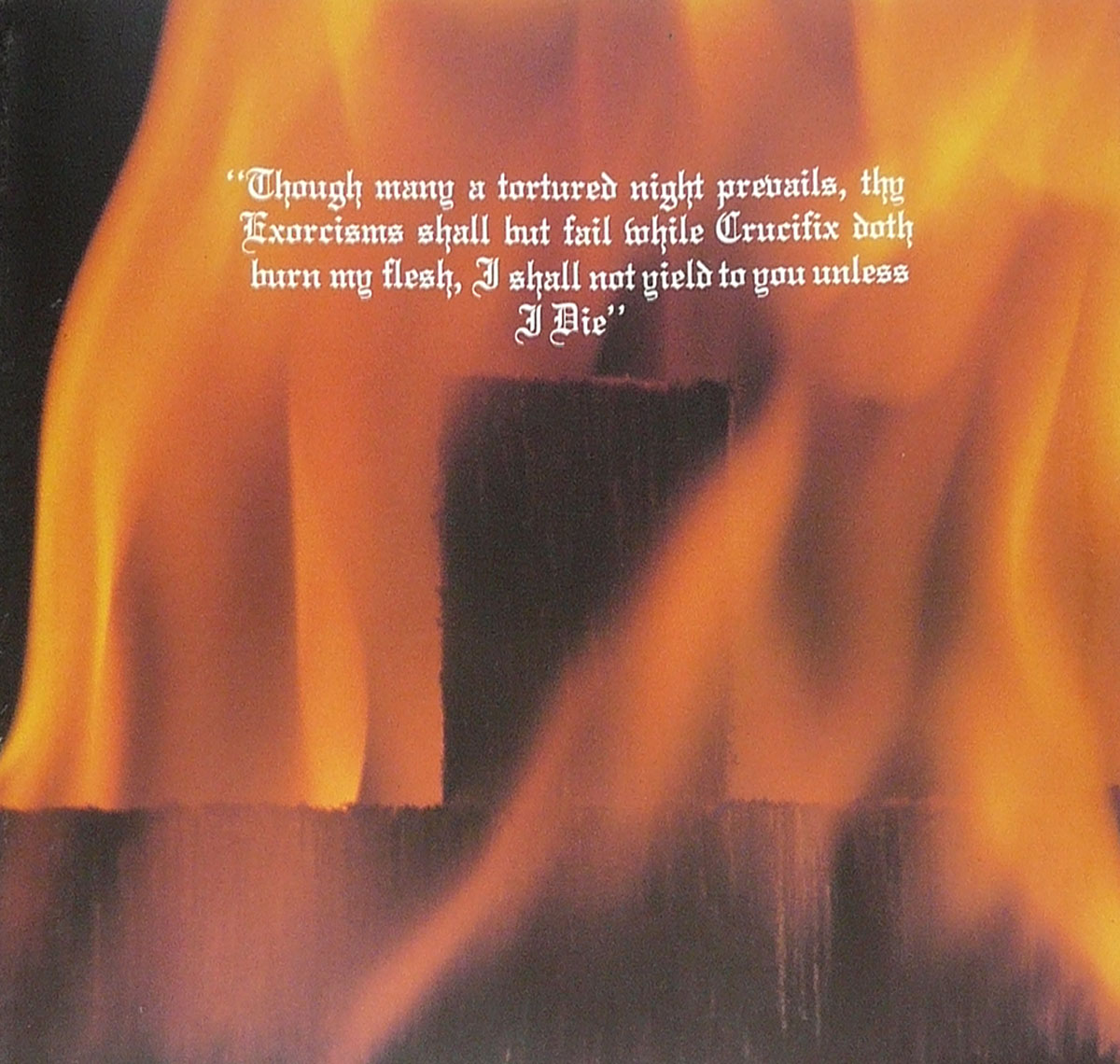
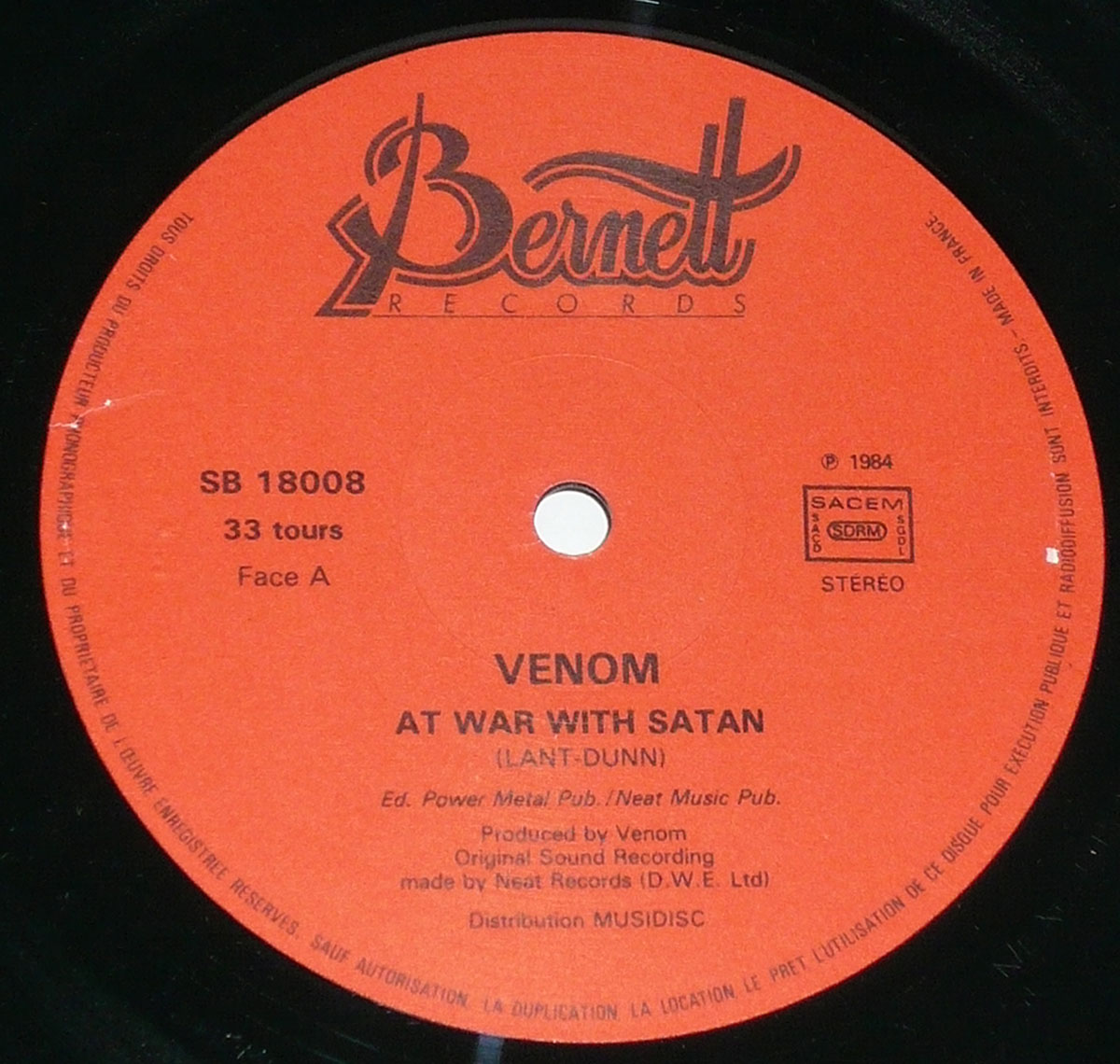
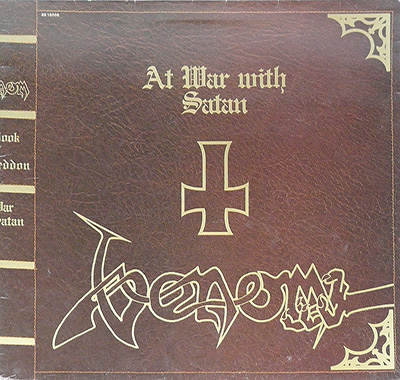
The sleeve helps, and not in some tasteful collector-magazine way. This French Neat / Bernett gatefold pressing turns the album into a mock occult volume: brown leather-print surface, gothic lettering, inverted cross, flame-filled interior, and an orange Bernett label that looks cheerfully bureaucratic beside all the doom. That is the comedy of vinyl collecting right there. One minute Armageddon, the next minute SACEM, SDRM, "33 tours", and a catalogue number doing the paperwork.
The controversy was not imaginary. The album’s anti-Christian imagery and title helped trigger retail unease in the UK, with HMV commonly named among the chains that pulled it from shelves, and WH Smith also appearing in accounts of the withdrawal. Whether every telling of that story has grown extra horns over the years is another matter. Metal folklore does that. Still, the basic effect is clear: the record looked dangerous enough to make shop managers twitch, which for Venom was practically a marketing department with better shoes.
A small late-night truth: this is the kind of LP that feels better with the room slightly too dark and the sleeve open beside the turntable, not because the devil appears, but because the cardboard starts doing half the talking. The fake leather, the flames, the scuffed edges, the label text — all of it reminds you that metal history was not built only from riffs. It was built from objects people handled badly and loved anyway.
"At War With Satan" did not turn Venom into mainstream heavy metal champions, despite the scale of the gesture. Too weird for the clean crowd, too crude for the technicians, too theatrical for anyone with a fear of embarrassment. Good. That is why it still has teeth. It catches a band at the point where their myth, their limitations, and their nerve all collided in public.
Later Venom history would get messier, with departures, returns, reworkings, and the usual metal family arguments conducted at unreasonable volume. But this album belongs to the original dirty triangle of Cronos, Mantas, and Abaddon, before the legend had been laminated. It is not perfect. Perfect would have ruined it.
References
- Vinyl Records Gallery: VENOM - At War With Satan high-resolution album cover photos
- Discogs: Venom - At War With Satan master release and credits
- Encyclopaedia Metallum: Venom - At War with Satan album entry
- MusicBrainz: At War With Satan release credits
- Wikipedia: At War with Satan background and chart context