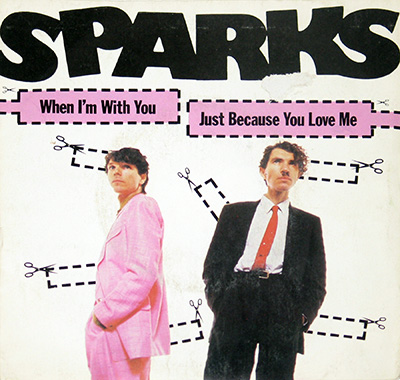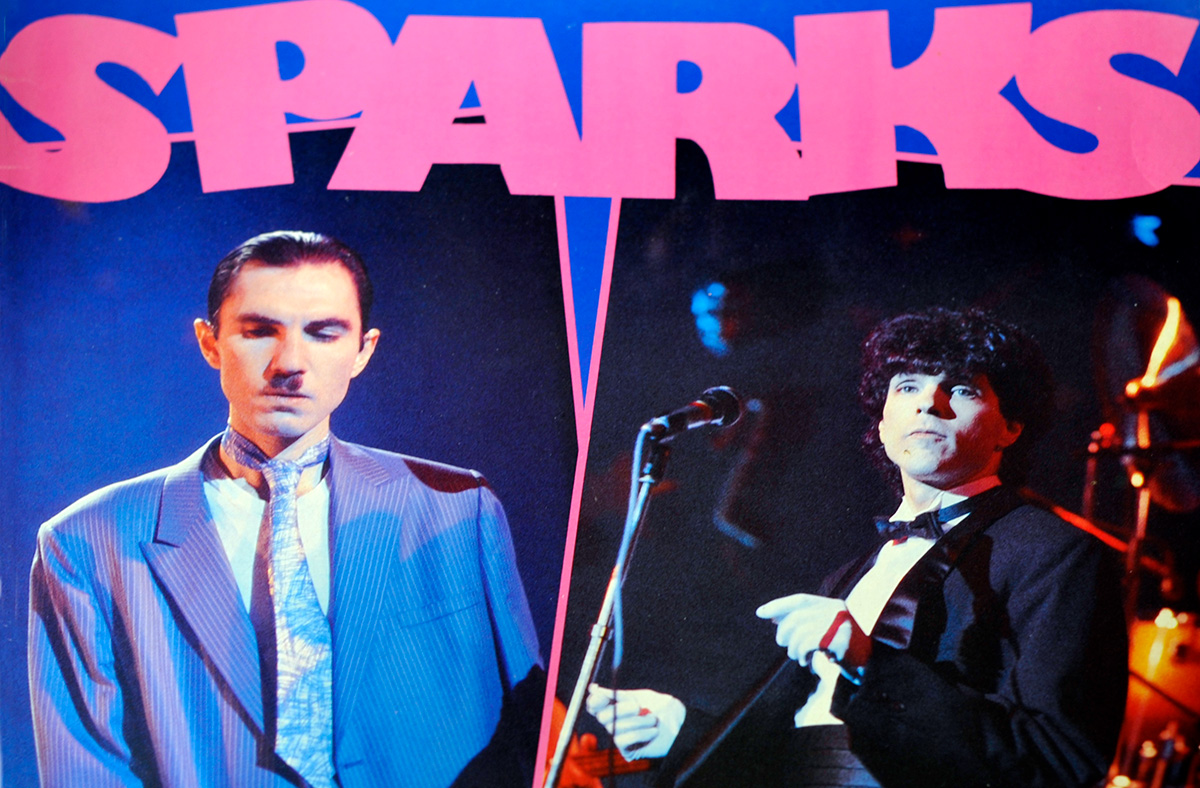
THE SPARKS Band Description:
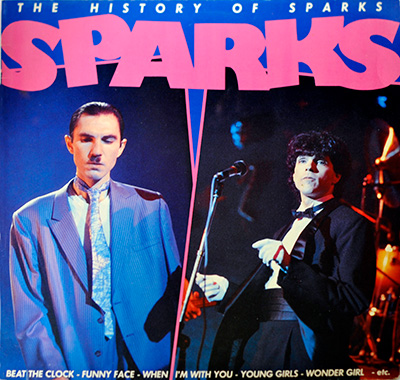
Sparks never felt like a “band” to me so much as two brothers running a controlled experiment on pop music: Ron Mael sitting there like a disapproving librarian, Russell Mael singing like his shoes are on fire. It’s clever, yes. It’s also oddly physical. The songs don’t just land — they strut in, adjust the lighting, and stare at you until you admit you’re entertained.
They started out in Los Angeles (Pacific Palisades) back in 1968 under the name Halfnelson, and you can hear that late-60s/early-70s hunger in the early stuff: sharp guitars, bright keyboard angles, and that falsetto that refuses to behave. Their debut arrived as "Halfnelson" in January 1972 (recorded in 1971, produced by Todd Rundgren), and it doesn’t sound like a band trying to fit in. It sounds like a band trying to escape.
Early on, it was the Maels plus Earle Mankey (guitar), Jim Mankey (bass/guitar), and Harley Feinstein (drums) — a proper five-piece with enough muscle to make the weirdness hit harder. "A Woofer in Tweeter's Clothing" followed in 1972, and it’s the sort of record that makes you picture a roomful of label people blinking slowly, wondering what exactly they just funded. I like that about it. Confusion is underrated.
Then came the move that actually made sense: they went where their kind of eccentric pop got rewarded instead of politely ignored. The real public “moment” is 1974’s "Kimono My House" and the single "This Town Ain’t Big Enough for Both of Us" — peak #2 in the UK, because Britain has always had a slightly higher tolerance for theatrical geniuses and beautiful nonsense. That song still feels like a duel in a neon hallway: tight, dramatic, and completely uninterested in being normal.
By 1979 they didn’t “experiment with electronics” so much as grab the whole machine and drive it through the wall: "No. 1 in Heaven" with Giorgio Moroder. It’s disco, it’s synth, it’s Sparks being Sparks — icy and funny and strangely emotional if you stop demanding that emotions arrive in polite packaging. You can draw a line from that record to a lot of later synth-pop confidence, but honestly, the bigger point is simpler: they reinvented because standing still clearly bored them.
The funny part is that people keep “discovering” Sparks like they’re a lost artifact, when the brothers never really went away — they just refused to play the career game properly. Cult bands usually soften with age. Sparks kept sharpening the knives. If you want safe, tasteful, and background-friendly, there are a million other acts happy to blur themselves into your wallpaper.
References
- Wikipedia: Sparks (band) (overview, origins, timeline)
- Wikipedia: "Sparks" / "Halfnelson" (debut release details)
- Official Charts: "This Town Ain’t Big Enough for Both of Us" (UK peak position)
- Pitchfork: "No. 1 in Heaven" (Moroder era context)
- AllSparks (official): "Halfnelson" release page (credits/lineup)
- AllSparks (official): "A Woofer in Tweeter's Clothing" release page (credits/lineup)
- Vinyl Records and Album Cover Gallery (high-resolution album cover photos)