CLAN OF XYMOX MEDUSA 12" Vinyl LP Album

Album Front Cover Photo of CLAN OF XYMOX MEDUSA Visit: https://vinyl-records.nl/

“Clan of Xymox”, also known as Xymox, are a New Wave band founded in the Netherlands in 1981. In the 1980s they knew moderate success, even scoring a hit single in the United States; they have been referred to as the “founding fathers of New Wave.” Though the band is still active and continues to tour and release records, of the original members only Moorings remains in the band today. This album “Medusa” is the second full length album of Xymox.

Table of Contents

"Medusa" (1986) Album Description:

Lead / Overall Summary

“Medusa” has that strange power to pull you into a room you didn’t even realise you were entering — dim lights, cold air, and the sense that someone just whispered your name from a corner you can't quite see. This is the album where Clan of Xymox stopped flirting with darkness and finally moved in with it. Even after all these years, it still wraps itself around me like a familiar shadow that refuses to take the hint.

Historical & Cultural Context

1986 was not exactly designed for subtlety. Synth-pop went full neon, metal bands were spray-painting their egos on stadium ceilings, and Europe danced like everything was fine. In the middle of that glitter storm, 4AD kept pushing out these atmospheric, moody sonic sculptures — the kind you only appreciate once the party’s over. “Medusa” fit right into that quieter after-hours conversation where the bass thumps softer and everyone’s pretending to be deep.

How the Band Came to Record This Album

Clan of Xymox were coming off early success — the kind that looks fun in photos but is mostly exhaustion and existential renovation behind the scenes. Touring had sharpened them but also cracked them open a bit, and that tension seeps into every track here. You hear a band wanting to evolve, ditching the impulsiveness of the debut and leaning hard into mood-building like they’d suddenly discovered the pleasure of slow poison.

The Sound, Songs & Musical Direction

The record moves like fog over old stone streets — soft at first, then everywhere at once. Songs like Medusa and Agonised By Love feel like journal entries written on a train no one rides anymore, while Back Door slips in with a sharper pulse, reminding you the band still has teeth when they choose to show them. Nothing here is rushed; it’s all deliberate, patient, and beautifully claustrophobic.

Comparison to Other Albums in the Genre

Dark Wave in the mid-80s had its heavyweights — The Cure were busy rewriting sadness into hit singles, Cocteau Twins existed in their own floating dimension, and Dead Can Dance were summoning ghosts with a reverb budget. Xymox, though, sat in a sweet spot between melody and melancholy. “Medusa” didn’t shout to be heard; it simply haunted a different frequency. It’s the record you find when you’re no longer pretending you’re too cool to feel things.

Controversies or Public Reactions

No scandals, no fiery debates, no angry parents’ associations — honestly, the biggest controversy was probably someone insisting the debut was better. A few listeners claimed the album was “too atmospheric,” which is basically code for “I wanted something to dance to, but it made me think instead.” Their loss.

Band Dynamics & Creative Tensions

By this point, the internal chemistry of the band was a mix of ambition, introspection, and the usual unspoken disagreements that make great records more than polite. You can feel that tug-of-war between Ronny Moorings’ brooding drive and the band’s collective urge to stretch their sound. The beauty of “Medusa” is that it shows a group not breaking apart, but leaning into the friction and using it as texture.

Critical Reception & Legacy

The critics weren’t sure what to do with it at first — too gloomy for mainstream New Wave, too melodic for the hardcore goth crypt. But time is kind to albums built on atmosphere instead of trends. “Medusa” aged into a cult classic, the kind collectors talk about with a quiet grin because they know half the people in the room won’t get it. And honestly, that only makes it sweeter.

Reflective Closing

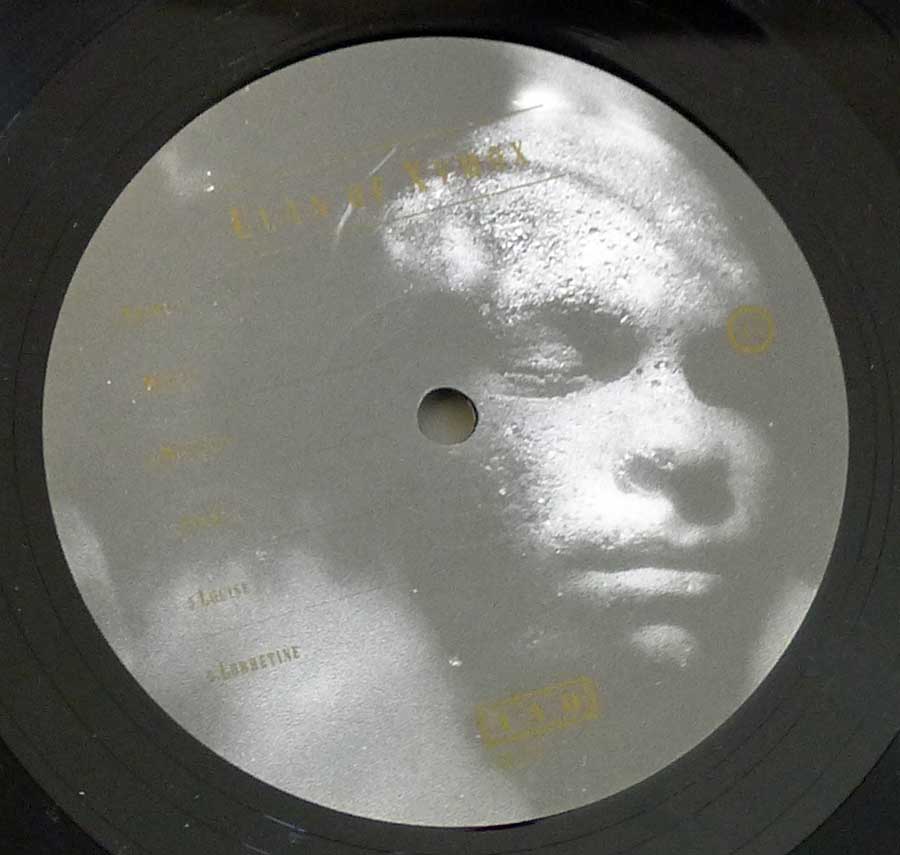
Every time I pull this LP from the shelf, the artwork alone already sets the temperature in the room — the album’s artwork puts me in a black metal depressive mood. Especially the illustration on the album’s record label is a kind of scary, the sort of thing that stares back at you longer than you meant to look. It’s one of those records that doesn’t compete with your memories — it just invites them out. Decades later, “Medusa” still holds that strange, elegant pull, like a soundtrack to every late-night walk I’ve ever taken in my own head.
Album Key Details: Genre, Label, Format & Release Info

Music Genre:

Dark Wave

Label & Catalognr:

4AD – Cat#: CAD 613

Album Packaging

Standard sleeve.

Media Format:

Record Format: 12" Vinyl Stereo Gramophone LP Record
Total Weight: 230 gram

Year & Country:

1986 Netherlands

Production & Recording Information:

Producers:
  • Clan of Xymox – Producer As producer, the band shaped the album’s whole emotional temperature. You feel their fingerprints everywhere: the cold synth beds, the echo-worn guitars, the gothic pulse that lingers like a storm cloud. They steered the sound toward that signature Xymox mix of melancholy and electronics, the kind that pulls you deeper with every spin.
  • John Fryer – Producer Fryer brings that unmistakable 4AD atmosphere: wide, shadowy mixes, vocals wrapped in texture, and a sense of space that almost turns the music into architecture. His production work tightens the edges while letting the emotional haze breathe, giving the album a kind of cinematic gloom that fits Xymox frighteningly well.
Album Cover Design & Artwork:
  • 23 Envelope – Cover Design Their design work gives this record its whole visual mood—a quiet, ghostlike elegance that sits perfectly next to the band’s sound. 23 Envelope always had a way of building worlds in minimal strokes, and here they set the tone before the needle even hits the vinyl: stillness mixed with unease, like a story half-told in shadows.
Photography:
  • Nigel Grierson – Photography Grierson’s photography wraps the album in that dreamy, blurred-edge melancholy he mastered at 4AD. His images never just document—they haunt. The mood, the grain, the half-lit atmosphere… it all feeds into the music’s emotional weather. His photos give the album its face, and honestly, part of its soul. errer">Nigel Grierson Wiki

Complete Track-listing:

Tracklisting
  1. Theme I (2:54)
  2. Medusa (5:53)
  3. Michelle (2:59)
  4. Theme II (1:43)
  5. Louise (5:17)
  6. Lorretine (3:33)
  7. Agonised By Love (5:18)
  8. Masquerade (3:54)
  9. After the Call (5:55)
  10. Back Door (4:52)

Disclaimer: Track durations shown are approximate and may vary slightly between different country editions or reissues. Variations can result from alternate masterings, pressing plant differences, or regional production adjustments.

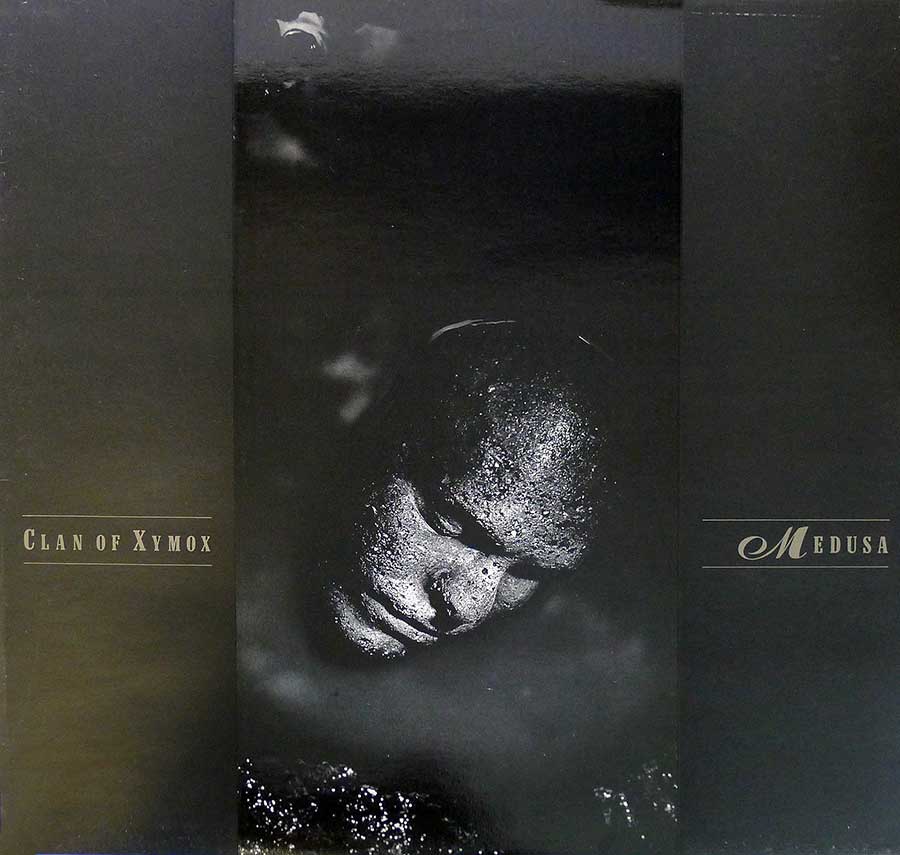
Album Front Cover Photo
Front cover of Clan of Xymox’s “Medusa” LP, showing a matte-black sleeve with a central monochrome photograph of a stone-like human face angled downward, framed by two textured black side panels; the left panel carries the band name in thin serif type, the right panel shows the album title in stylized script, all elements arranged with precise 4AD-era minimalism important for verifying authenticity and print quality.

Front cover of the Clan of Xymox “Medusa” LP, photographed directly from my collection. The sleeve is built around a stark black layout split into three vertical panels. The center panel carries a high-contrast monochrome photograph of a human face, angled downward, covered in what looks like rough stone texture. The image sits slightly off-center, with subtle gradients and surface reflections that show how the printed varnish reacts to light.

Both side panels are solid black but not identical in tone; slight differences reveal the print process and aging of the sleeve. The left side carries the band name Clan of Xymox in thin, precisely spaced serif lettering. The right side mirrors it with the Medusa album title in a stylized script that looks almost engraved. These typographic choices are typical for mid-80s 4AD packaging and help confirm authenticity when comparing different pressings.

The photo’s surface gloss reveals faint streaks from the original manufacturing process as well as natural wear that appears on most surviving copies. Edges of the cover show controlled shadows, giving a clear sense of how the sleeve’s print reflects ambient light. This documentation is useful for collectors who track pressing variations, condition levels, and visual consistency across 4AD releases.

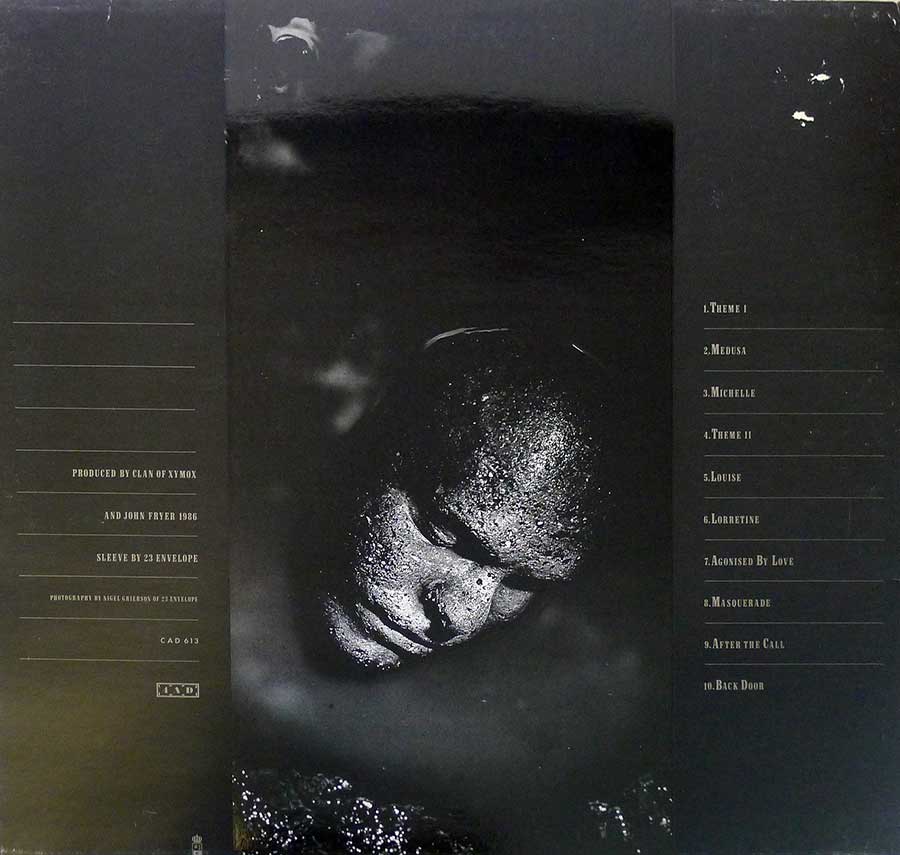
Album Back Cover Photo
Back cover of Clan of Xymox’s “Medusa” LP, repeating the same central monochrome sculpted-face photograph from the front cover, flanked by two black panels; left panel includes production credits in thin serif type, right panel shows full tracklist numbered 1 to 10, all laid out with the same restrained 4AD typography used for verifying pressing authenticity.

Back cover of the Clan of Xymox “Medusa” LP, photographed directly from my shelf. The layout mirrors the front cover almost perfectly: a three-panel black design with the same central monochrome face, textured like a weathered stone statue. Light reflections again show the glossy finish of the print and how the surface has aged over time. Minor speckles and scuffs are visible, exactly the kind of wear most 4AD jackets develop after decades.

The left panel contains the production credits printed in thin serif type: produced by Clan of Xymox and John Fryer, sleeve by 23 Envelope, photography by Nigel Grierson. The typography sits low and tight, consistent with the mid-80s 4AD house style. The bottom corner shows the CAD 613 catalog number printed clearly above the 4AD logo.

The right panel lists all ten tracks in a vertical column, each line separated by faint horizontal rules. The tracklist layout is practical for quick reference when flipping through records. And since the artwork is nearly identical to the front, the sleeve I usually store with the back facing forward on the shelf, simply because it makes checking the tracklist a whole lot easier.

Close up of Side One record’s label
Side One label of Clan of Xymox’s “Medusa” LP, featuring the same sculpted-face artwork printed in a muted silver-gray tone; gold text lists the track titles arranged vertically on the left side; the CAD 613 catalog stamp and 4AD logo appear at the lower edge; the vinyl grooves and center spindle hole frame the design, typical for mid-80s 4AD label aesthetics.

Side One label of the Clan of Xymox “Medusa” LP, photographed directly from my own copy. The label uses a matte silver-gray base with the same sculpted-face artwork found on the sleeve, slightly shifted to fit the circular format. The print texture reveals tiny gloss variations caused by the original ink, and the lighting makes the raised grain of the image stand out clearly. The center spindle hole sits cleanly in the lower third of the artwork.

Track titles are printed in thin gold lettering along the left edge, lined up vertically and spaced evenly. While the gold ink is never razor sharp on these pressings, the slight softness is normal for 4AD labels from this era and helps verify authenticity. The bottom section shows the CAD 613 catalog stamp printed in the same gold tone, with the 4AD logo positioned just above the curve of the vinyl surface.

The photograph also captures the surrounding runout area, where the grooves begin to deepen and the vinyl reflection shifts. This makes it easier for collectors to cross-check label centering, print alignment, and overall pressing condition when comparing multiple copies or identifying worn labels.

All images on this site are photographed directly from the original vinyl LP covers and record labels in my collection. Earlier blank sleeves were not archived due to past storage limits, and Side Two labels are often omitted when they contain no collector-relevant details. Photo quality varies because the images were taken over several decades with different cameras. You may use these images for personal or non-commercial purposes if you include a link to this site; commercial use requires my permission. Text on covers and labels has been transcribed using a free online OCR service.