Album Production Information:
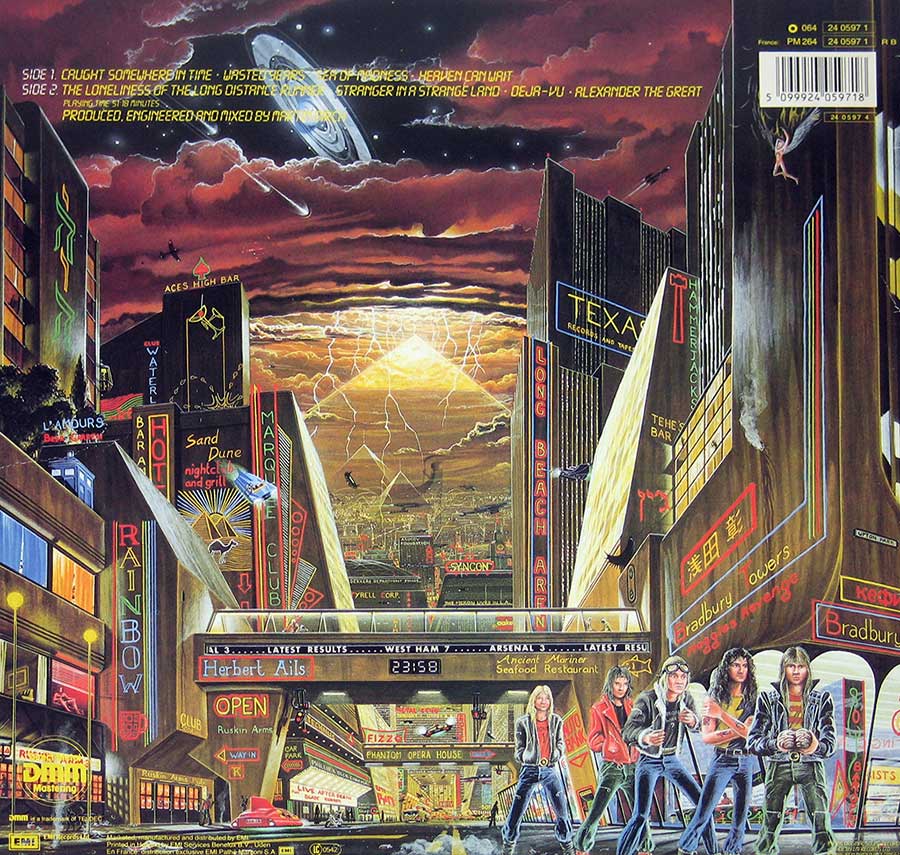
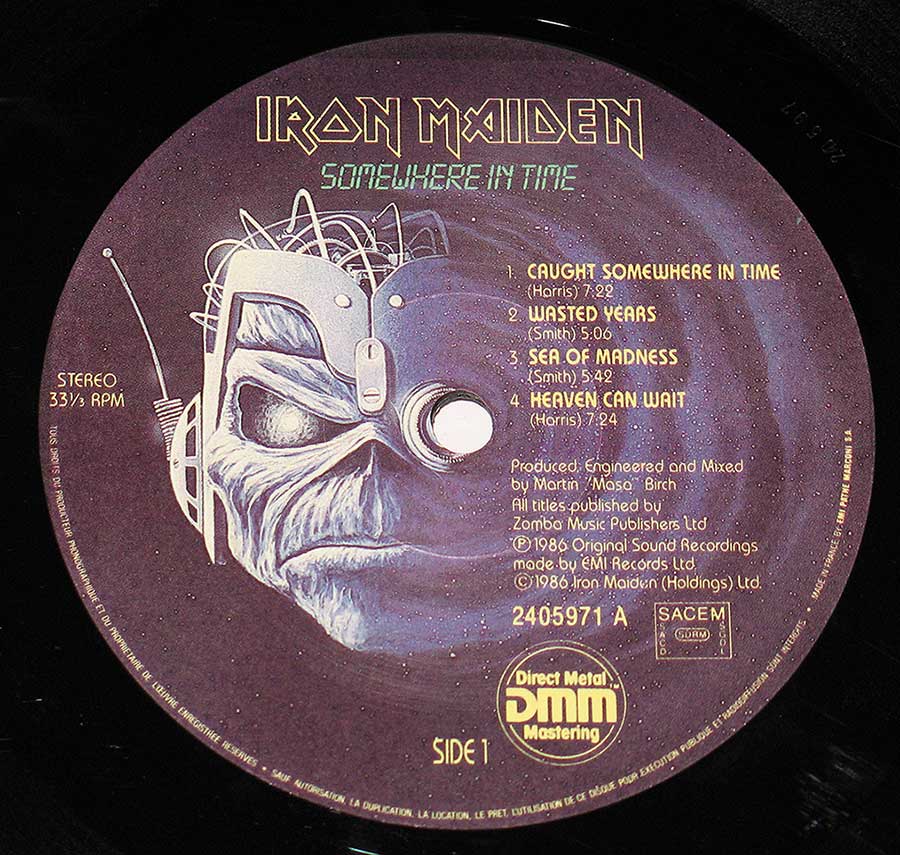
Produced, Engineered and Mixed by Martin 'Mesa' Birch.
Martin Birch – Producer, Sound Engineer
I first noticed Martin Birch on those early Iron Maiden sleeves—the ones with the typography that felt like a threat. At twelve, I didn’t care about "production value"; I just liked that the guitars didn't sound like mud. He was the man behind the sound mixer, the one who made the snare snap like a dry branch in a cold forest. He was "The Headmaster," and we were all just students of his high-voltage curriculum.
Read more...
Birch didn’t just record noise; he organized aggression. By 1972, he was already wrangling the messy brilliance of Deep Purple’s Machine Head, turning Ian Gillan’s banshee wails into something that didn't just clip the tape but lived inside it. In 1980, he pulled off the ultimate renovation, giving Black Sabbath a much-needed shower and a new spine. Heaven and Hell shouldn't have worked, but Martin polished that Birmingham sludge into something operatic and gleaming. It was a pivot that felt like fate, mostly because he refused to let the mid-range get lazy.
Then came the long, obsessive stretch with Iron Maiden from 1981 to 1992. It was a twelve-year marriage to the fader. From the moment Killers (EMC 3357, for those who care) hit the shelves, the sound was physical. He knew how to let Steve Harris’s bass clatter like a machine gun without drowning out the melody—a sonic miracle that still feels fresh. You can almost smell the ozone and the dust on the Marshall stacks when the needle drops on The Number of the Beast. He stayed until Fear of the Dark, then simply walked away. No victory lap, no bloated memoir. He preferred the hum of the desk to the noise of the crowd, leaving us with nothing but the records and a slight sense of abandonment. But then, when you’ve already captured lightning on tape for twenty years, why bother hanging around for the rain?
Boss, Boss Synth and Drum trucks recorded at Compass
Point Studios, Nassau, Bahamas.
- Compass Point Studios (Bahamas)
Compass Point Studios, opened by Chris Blackwell in 1977 just outside Nassau, was less a paradise postcard than a working studio with sea air in its lungs and serious records being made behind the glass. The place mattered because it sounded like nowhere else once the right people got in the room. Grace Jones cut some of her sharpest work there, Talking Heads passed through, the Rolling Stones did too, and even Iron Maiden and AC/DC ended up on that same patch of Bahamian ground. I have always liked studios with a bit of salt and eccentricity in them; they usually beat the sterile ones. Compass Point had both, and you can still hear it on the records if the room is quiet enough and the coffee has gone cold.
Assistant Engineer Sean Burrows,
Guitars, Vocals and Guitar Synth recorded of Wisseloord Studios, Hilversum, Holland.
Assistant Engineers: Albert Boekholt, Ronald Prent.
Tape Op and Tea: Marvin Birch.
Mixed at Electric Ladyland Studios, New York.
2nd Engineer Bruce Buchhalter.
Mastered by George Marino at Sterling Sound, New York City, New York.
George Marino – Mastering EngineerWhen my site brain goes full 1980s metal mode, his name keeps showing up like a hidden signature in the dead wax. Read more... George Marino is one of those behind-the-glass legends who made heavy music feel larger than the room it was playing in. Before the mastering console became his throne, he was a Bronx guitarist doing the NYC band grind in the 1960s with groups like The Chancellors and The New Sounds Ltd. Then he went pro for real: starting at Capitol Studios in New York (1967), and eventually becoming a long-running force at Sterling Sound (from 1973 onward). For a collector like me—living in that sweet spot where 1980s heavy metal, hard rock, and a dash of prog-minded ambition collide—Marino’s credits read like a stack of essential sleeves: Holy Diver (Dio), Tooth and Nail (Dokken), Stay Hard (Raven), Master of Puppets (Metallica), Somewhere in Time (Iron Maiden), Among the Living (Anthrax), Appetite for Destruction (Guns N’ Roses), Slippery When Wet (Bon Jovi), and Blow Up Your Video (AC/DC). That’s the kind of resume that doesn’t just “master” records—it weaponizes them, but with taste. George Marino Wiki
All titles published by Zomba Music Pub Ltd.
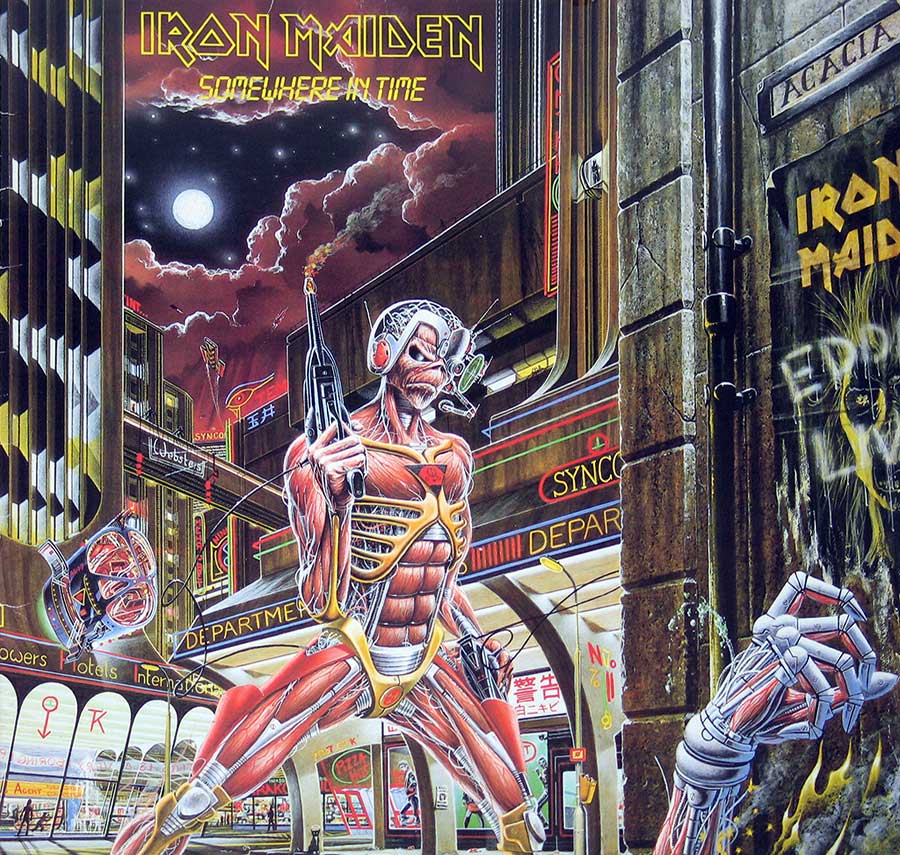
Sleeve Concept and Design: Derek Riggs and Rod Smallwood
Sleeve Illustrations: Derek 'Master Of The Universe' Riggs.
Derek Riggs – Illustrator, Cover ArtistI have always liked the way Riggs made heavy metal look dangerous, not decorative. Read more... Derek Riggs is the British illustrator who gave Iron Maiden its face, its menace, and half its mythology. I still see him as one of the few cover artists who didn’t just package a band, he enlarged it. His run with Iron Maiden began in 1980 with the debut and stretched through the classic 1980s into the early 1990s, before later returns for Brave New World in 2000 and Somewhere Back in Time in 2008. Outside Maiden, he turned up on Budgie’s Nightflight in 1981, Bruce Dickinson’s Accident of Birth in 1997, Gamma Ray’s Power Plant in 1999, and Stratovarius’ Infinite in 2000. That is a proper career, not a side note.
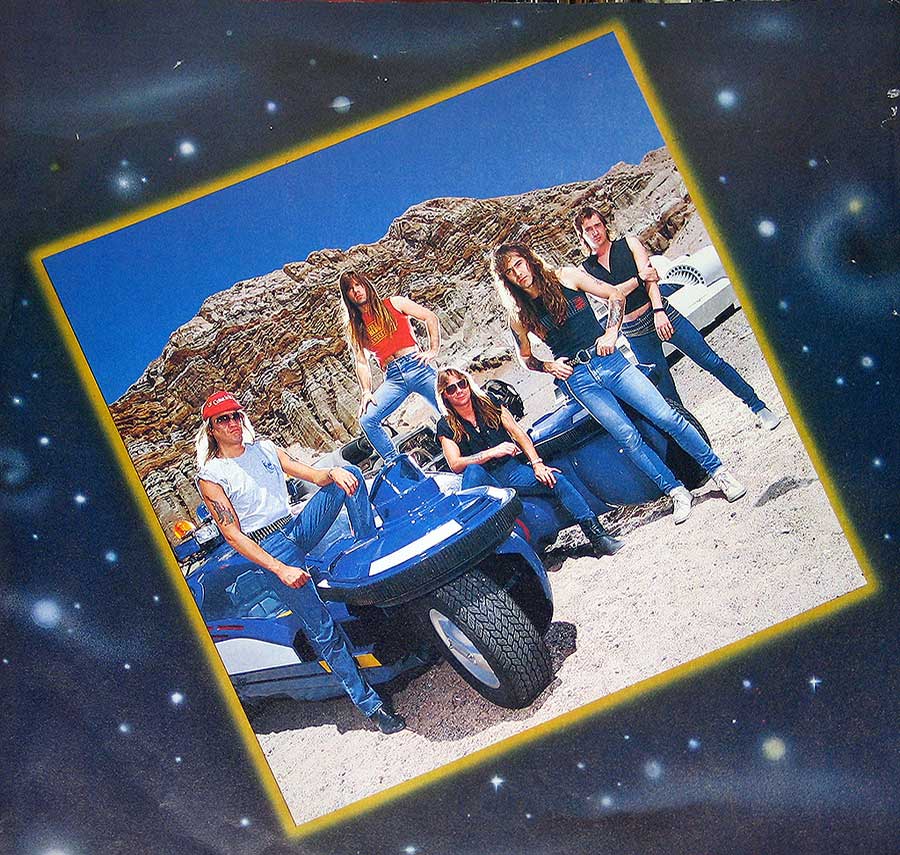
Inner Sleeve Photograph: Aaron Rapoport
Sleeve Preparation: The Artful Dodgers.
The Artful Dodgers were a Hertfordshire-based graphic design company, fronted by Keith Peacock,
Neil Smith, and Michael Faulkner. Known for their sharp, distinctive visual style in the 1980s,
they collaborated with major rock and metal acts, creating memorable sleeve layouts and packaging
that complemented the dramatic artwork of illustrators like Derek Riggs for Iron Maiden.
Iron Maiden is managed by Rod 'Rufus the Red' Smallwood for Sanctuary Music (Overseas) Ltd,
and Andy 'Rzzle Dozzle' Taylor for Sanctuary Music Ltd
|