IRON MAIDEN - Seventh Son Of A Seventh Son 12" Vinyl LP Album

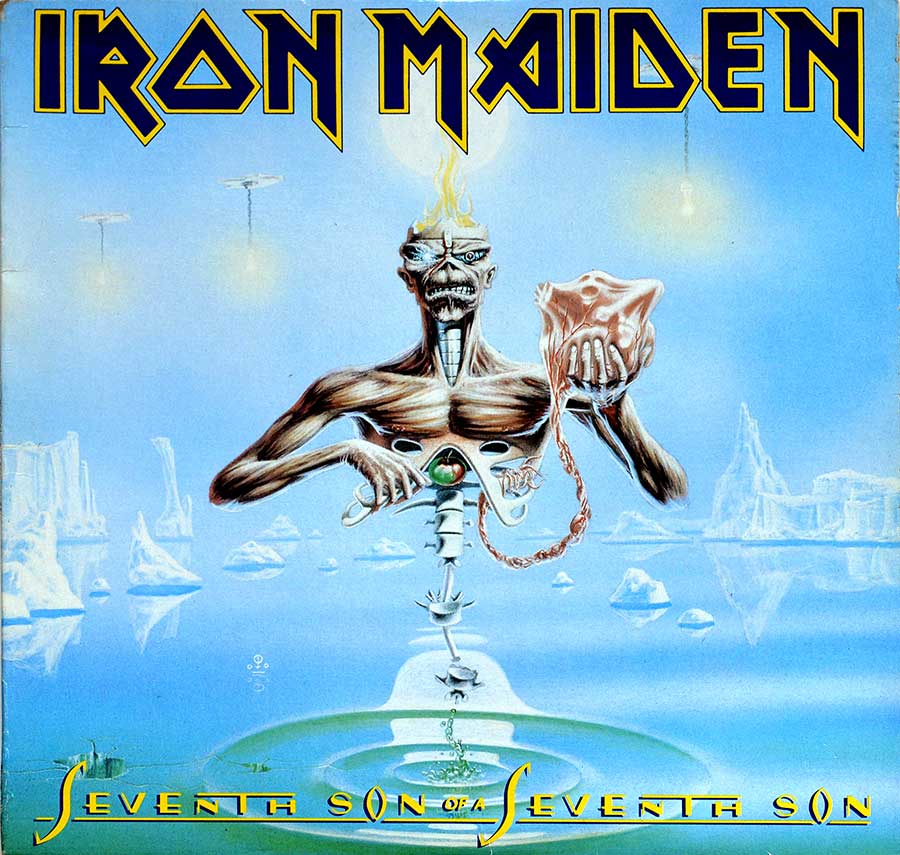
- This is the Canadian release of Iron Maiden's "Seventh Son Of A Seventh Son".

"Seventh Son of a Seventh Son" is the seventh studio album by British heavy metal band Iron Maiden, released in 1988 by EMI in Europe and its sister label Capitol Records in the US. It is the second Iron Maiden release to feature keyboards (played by Michael Kenney) and, along with "The Number of the Beast" and, later, "Fear of the Dark" and "The Final Frontier", debuted at no.1 in the UK charts.

Prophecy Unleashed in the Great White North: Iron Maiden's Seventh Son on Canadian Soil
Album Description:

In the frigid landscapes of Canada, Iron Maiden's "Seventh Son of a Seventh Son" resonated with a unique power, echoing through the vast wilderness and captivating the hearts of metalheads nationwide. Released in 1988, this ambitious concept album marked a significant departure from the band's earlier sound, embracing progressive elements and complex arrangements, while retaining their signature heavy metal power.

Historical Context and Musical Exploration

In the late 1980s, the heavy metal scene in Canada was thriving. Bands like Anvil, Exciter, and Voivod were making waves on the international stage, showcasing the country's diverse and vibrant metal scene. Iron Maiden, already established as global icons, found a passionate and receptive audience in Canada, eager to embrace their latest sonic adventure.

"Seventh Son of a Seventh Son" arrived at a time when the band was pushing the boundaries of their musical expression. Inspired by Orson Scott Card's novel _Seventh Son_, a tale of a young boy born with extraordinary powers and a destiny to shape the world, Iron Maiden embarked on a conceptual journey that would challenge both themselves and their listeners.

Music Genre and Controversies

The album's progressive metal elements, characterized by complex song structures, lush keyboard arrangements, and atmospheric interludes, sparked some debate among fans and critics. Some purists felt that the band had strayed too far from their roots, while others embraced the new direction and praised the album's ambition and creativity.

In Canada, the album was met with overwhelming enthusiasm. Fans were drawn to the album's epic scope, intricate storytelling, and powerful performances. The Canadian release of "Seventh Son of a Seventh Son" solidified Iron Maiden's position as one of the most beloved and influential heavy metal bands in the country.

Production Team and Recording Studio

The album was produced by Martin Birch, a veteran producer known for his work with Deep Purple, Black Sabbath, and Rainbow. Birch's experience and expertise were instrumental in shaping the album's sound and capturing the band's creative vision.

Recorded at Montserrat Studios, a legendary recording facility nestled on a Caribbean island, the album's production was steeped in a unique atmosphere. The studio's isolation and natural beauty provided the perfect backdrop for Iron Maiden to craft an album that would leave a lasting legacy.

A Canadian Metal Legacy

"Seventh Son of a Seventh Son" holds a special place in the hearts of Canadian metal fans. The album's Canadian release coincided with a period of immense growth and creativity in the country's metal scene, and Iron Maiden's music played a significant role in inspiring and influencing a new generation of Canadian metal bands.
Music Genre:

NWOBHM, Heavy Metal 

Album Production information:

The album: "IRON MAIDEN Seventh Son Of A Seventh Son Canada" was produced , Engineered and Mixed by Martin 'Disappearing Armchair' Birch.

  • Martin Birch – Producer, Sound Engineer

    I first noticed Martin Birch on those early Iron Maiden sleeves—the ones with the typography that felt like a threat. At twelve, I didn’t care about "production value"; I just liked that the guitars didn't sound like mud. He was the man behind the sound mixer, the one who made the snare snap like a dry branch in a cold forest. He was "The Headmaster," and we were all just students of his high-voltage curriculum.

    Birch didn’t just record noise; he organized aggression. By 1972, he was already wrangling the messy brilliance of Deep Purple’s Machine Head, turning Ian Gillan’s banshee wails into something that didn't just clip the tape but lived inside it. In 1980, he pulled off the ultimate renovation, giving Black Sabbath a much-needed shower and a new spine. Heaven and Hell shouldn't have worked, but Martin polished that Birmingham sludge into something operatic and gleaming. It was a pivot that felt like fate, mostly because he refused to let the mid-range get lazy.

    Then came the long, obsessive stretch with Iron Maiden from 1981 to 1992. It was a twelve-year marriage to the fader. From the moment Killers (EMC 3357, for those who care) hit the shelves, the sound was physical. He knew how to let Steve Harris’s bass clatter like a machine gun without drowning out the melody—a sonic miracle that still feels fresh. You can almost smell the ozone and the dust on the Marshall stacks when the needle drops on The Number of the Beast. He stayed until Fear of the Dark, then simply walked away. No victory lap, no bloated memoir. He preferred the hum of the desk to the noise of the crowd, leaving us with nothing but the records and a slight sense of abandonment. But then, when you’ve already captured lightning on tape for twenty years, why bother hanging around for the rain?

  • Sound/Recording Engineer(s): Stephane "The Vardengrip" Wissner, Bernd Maier - Studio Boffin

    Mastered by George Marino at Sterling Sound, New York

  • George Marino – Mastering Engineer

    When my site brain goes full 1980s metal mode, his name keeps showing up like a hidden signature in the dead wax.

    George Marino is one of those behind-the-glass legends who made heavy music feel larger than the room it was playing in. Before the mastering console became his throne, he was a Bronx guitarist doing the NYC band grind in the 1960s with groups like The Chancellors and The New Sounds Ltd. Then he went pro for real: starting at Capitol Studios in New York (1967), and eventually becoming a long-running force at Sterling Sound (from 1973 onward). For a collector like me—living in that sweet spot where 1980s heavy metal, hard rock, and a dash of prog-minded ambition collide—Marino’s credits read like a stack of essential sleeves: Holy Diver (Dio), Tooth and Nail (Dokken), Stay Hard (Raven), Master of Puppets (Metallica), Somewhere in Time (Iron Maiden), Among the Living (Anthrax), Appetite for Destruction (Guns N’ Roses), Slippery When Wet (Bon Jovi), and Blow Up Your Video (AC/DC). That’s the kind of resume that doesn’t just “master” records—it weaponizes them, but with taste. George Marino Wiki

  • This album was recorded at: Musicland Studios, Munich, Germany

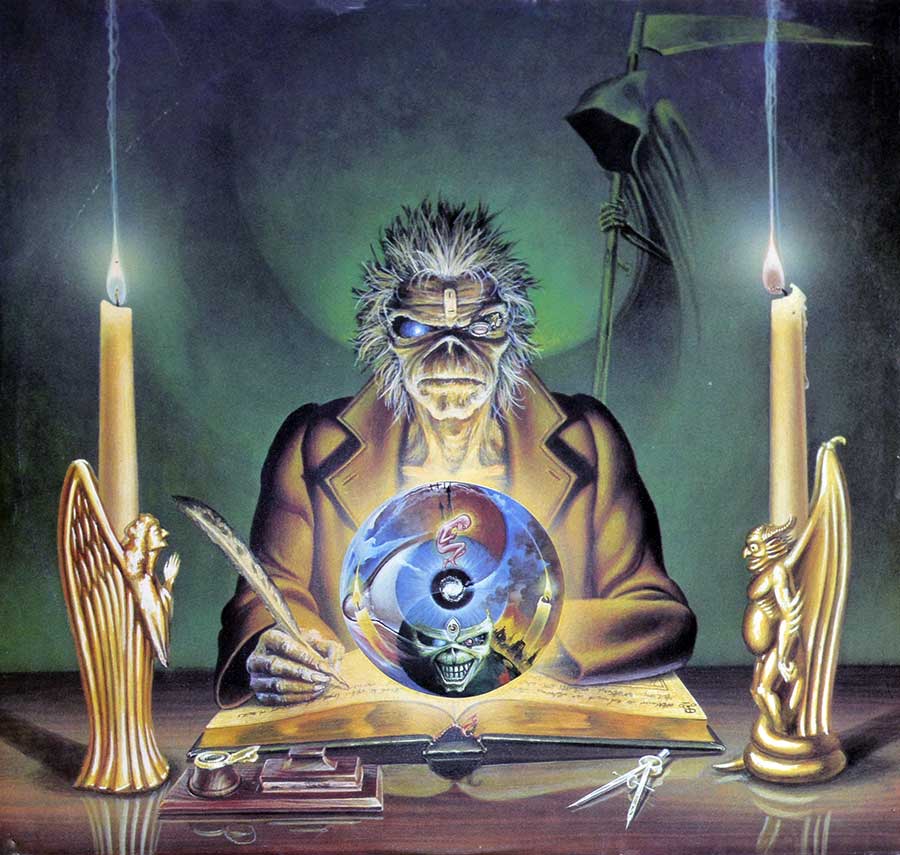
    Sleeve Concept and Design: Derek Riggs and Rod Smallwood

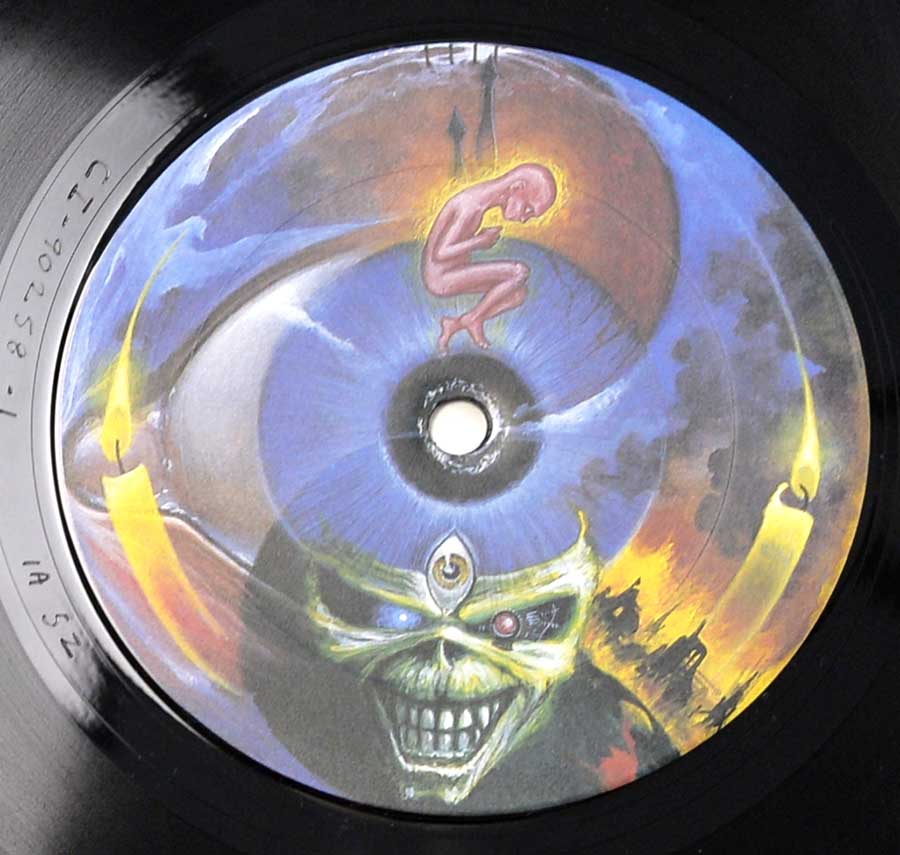
    Sleeve Illustrations: Derek Riggs

  • Derek Riggs – Illustrator, Cover Artist Derek Riggs is the artist who gave Iron Maiden its visual soul by creating Eddie, one of the most recognizable mascots in heavy metal history. Since the band’s 1980 debut, his artwork fused sci-fi, horror, and dark fantasy into covers that were as confrontational and imaginative as the music itself. Riggs’ paintings didn’t just decorate records, they built a world that became inseparable from Maiden’s identity.
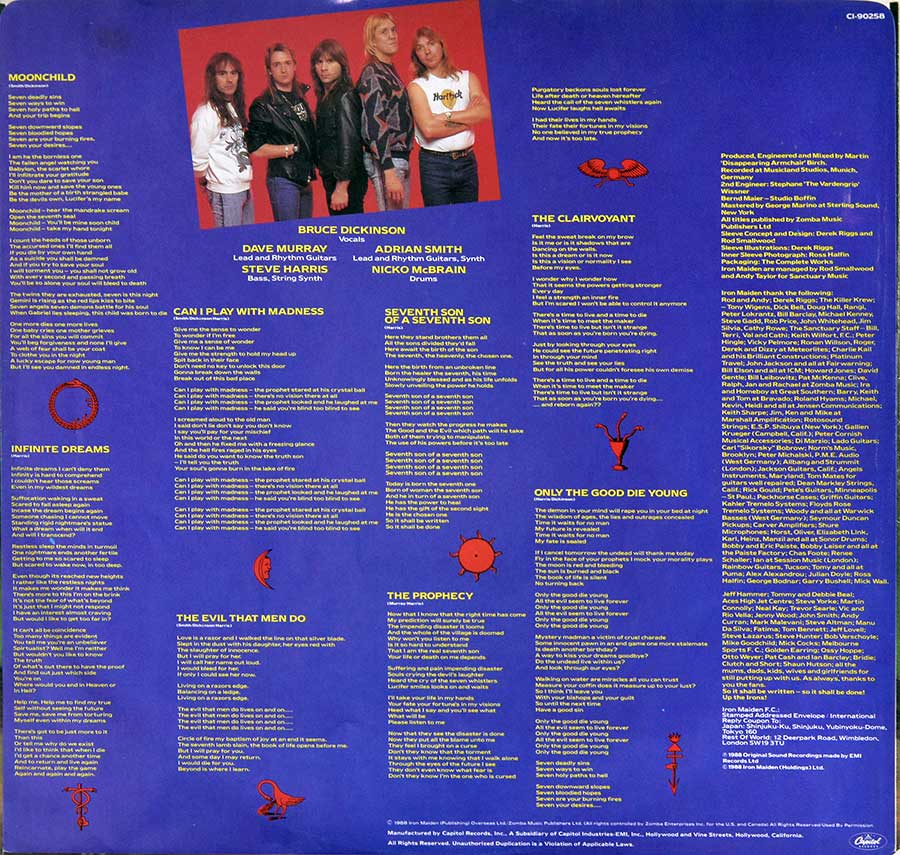
  • Inner Sleeve Photograph: Ross Halfin >

  • Ross Halfin – Photographer Ross Halfin is one of the defining eyes of heavy metal, capturing the genre’s raw power on film since the late 1970s. His photographs of Iron Maiden, Metallica, and Led Zeppelin freeze live intensity, sweat, and backstage reality into instantly recognizable images. More than documentation, his work helped shape how metal looks and feels, turning fleeting moments into permanent pieces of rock history.
  • Iron Maiden are managed by Rod Smallwood and Andy Taylor for Sanctuary Music

    Record Label & Catalognr:

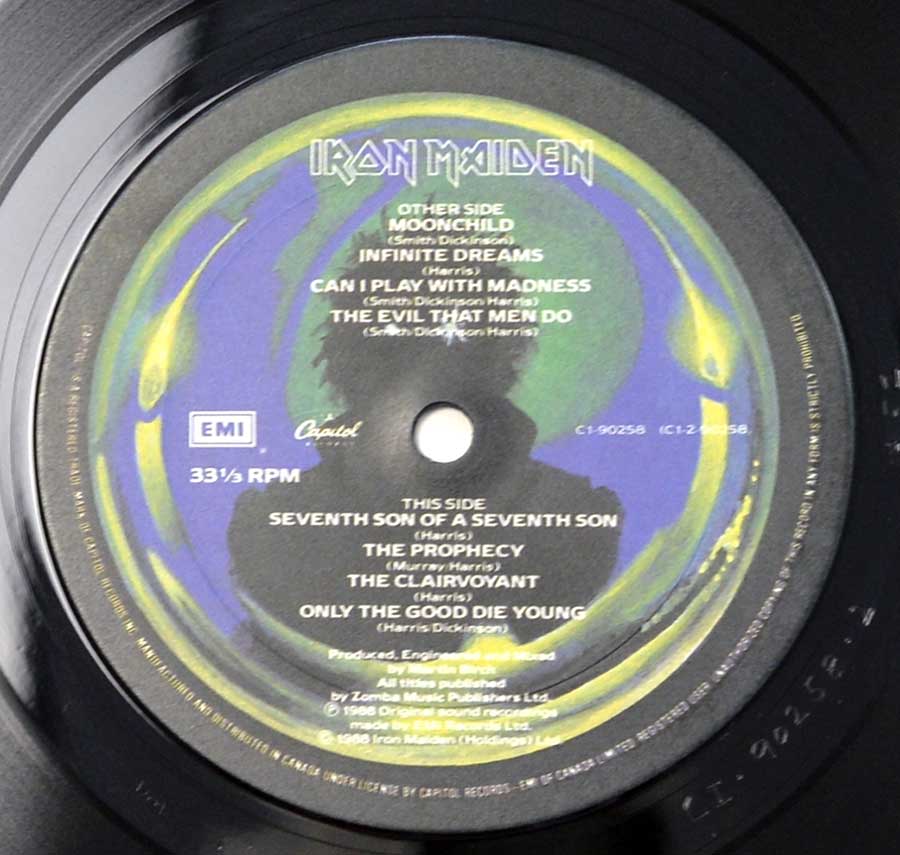
    EMI Capitol Records C1-90258

    Media Format:

    12" Vinyl Stereo Gramophone Record
    Total Album (Cover+Record) weight: 230 gram  

    Year & Country:

    1988 Made in Canada
    Personnel/Band Members and Musicians on: IRON MAIDEN Seventh Son Of A Seventh Son Canada
      Band-members, Musicians and Performers
    • Bruce Dickinson vocals
    • Bruce Dickinson – Singer

      Samson forged the roar; Iron Maiden turned it into a global alarm system.

      Bruce Dickinson, Bruce Dickinson is the rare frontman who can sound like a human air-raid siren and still tell a story. Before the arenas, I track him in Samson (1979–1981) , where the voice sharpened into steel. He joined Iron Maiden in 1981 and powered their classic run through 1993, then returned in 1999 and has stayed ever since. Between the big chapters he kept moving: a solo career from 1990 onward, plus the short, sharp Skunkworks detour in 1996. On stage he’s theatrical without slipping into pantomime—commanding, precise, and oddly disciplined for heavy metal. Timeline: Samson ’79–’81; Maiden ’81–’93 and ’99–now; solo from ’90; Skunkworks ’96. And yeah, never boring.

    • Dave Murray guitar
    • Dave Murray – Guitar

      Maiden’s calm killer: smooth leads, twin-guitar harmony for days, and that melodic bite that makes the “gallop” feel cinematic instead of chaotic.

      Dave Murray (born 23 December 1956, Edmonton, Middlesex, England) is one of the defining lead guitar voices of heavy metal, and in my book he’s the melodic “second spine” of Iron Maiden. His timeline with the band starts early: joining in 1976, getting briefly pushed out in 1977, then returning in 1978 and staying locked in ever since—making him one of the longest-serving members in the whole Maiden saga. During that 1977 gap he spent around six months with Urchin (Adrian Smith’s band), which is a fun little historical glitch in the matrix if you like your Maiden lore messy and human. Beyond the main band, his most notable “outside the mothership” credit is the all-star charity metal project Hear ’n Aid (1985), because apparently even guitar lifers sometimes leave the bunker to do side quests. Dave Murray Wiki

    • Adrian Smith guitar, backing vocals, synth
    • Adrian Smith – Guitarist, Songwriter

      The melodic blade behind Maiden’s heaviest hooks.

      Adrian Smith, Adrian Smith, he writes riffs the way old street poets throw punches: clean, sharp, and memorable. Before the Maiden machine, I hear him in Urchin (1973–1980), already mixing melody with bite. He joined Iron Maiden in November 1980, helped define their twin-guitar gold through 1990, then stepped away as the band’s direction shifted. In the wilderness years he tried A.S.A.P (1989–1990) and led Psycho Motel (1993–1999), plus a stint in Bruce Dickinson’s solo band (1997–1999). Since his return to Iron Maiden in 1999 he’s stayed a key songwriter, while still stretching out with projects like Smith/Kotzen (2020–present). He’s the guy who makes speed feel singable, not just fast for fast’s sake.

    • Steve Harris bass guitar, backing vocals, string synth
    • Steve Harris – Bass Guitar, Songwriter

      Iron Maiden’s engine room: galloping bass lines, history-nerd lyrics, and “captain of the ship” energy baked into every riff.

      Steve Harris (born 12 March 1956, Leytonstone, England) is the rare bassist who doesn’t just hold the floor—he draws the whole blueprint. In my book, he’s the founder and primary songwriter who’s kept Iron Maiden on its rails from 1975–present, with that instantly recognizable “gallop” driving huge chunks of the catalogue. The pre-Maiden grind matters too: first band days in Influence/Gypsy’s Kiss (1973–1974, including a documented gig run in 1974), then the older, blues-leaning Smiler period (1974–1975) where his more ambitious writing basically forced the next step: forming Maiden. Outside the mothership, he’s fronted his own hard-rock outlet British Lion (2012–present), a project that grew out of connections going back to the early 1990s and finally hit the world as his solo debut in 2012.

    • Nicko McBrain drums
    • Nicko McBrain – Drums Nicko McBrain, born 1952, is the powerhouse drummer who has driven Iron Maiden’s thunderous engine since joining in 1982. His playing combines brute force with swing and pinpoint timing, giving albums like The Number of the Beast and Powerslave their unstoppable momentum. Before Maiden, his work with Trust and the Pat Travers Band sharpened his style, culminating in a career that redefined metal drumming.
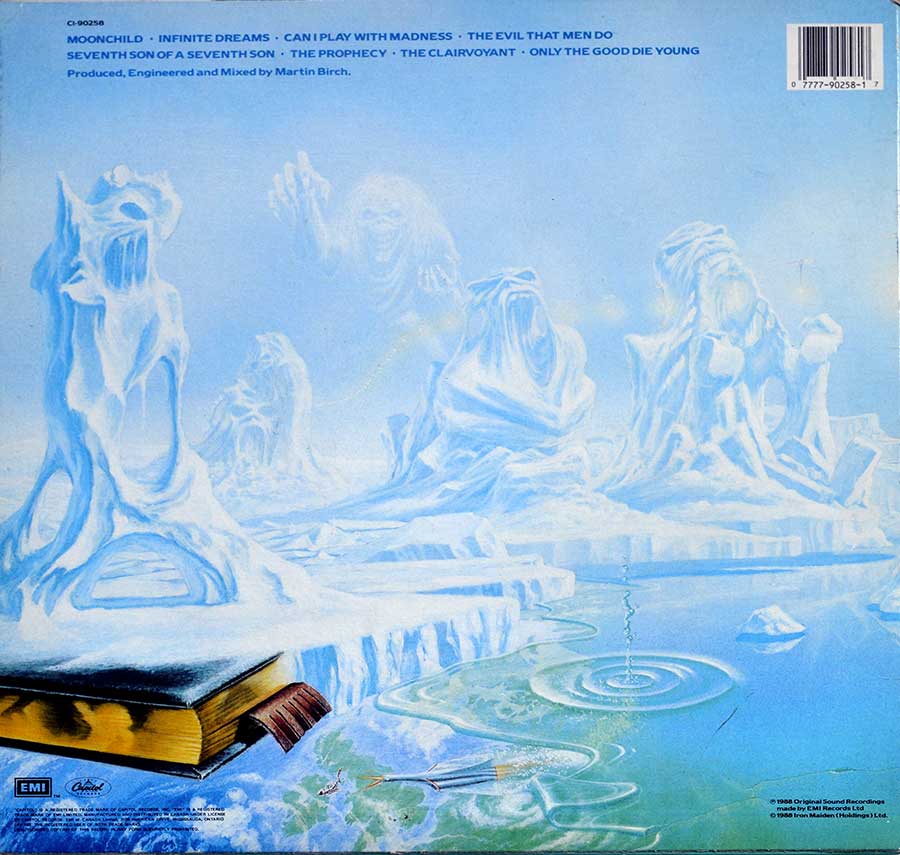
    Complete Track-listing of the album "IRON MAIDEN Seventh Son Of A Seventh Son Canada"

    The detailed tracklist of this record "IRON MAIDEN Seventh Son Of A Seventh Son Canada" is:

      Track-listing:
    1. Moonchild (Adrian Smith, Bruce Dickinson) 5:39
    2. Infinite Dreams (Steve Harris) 6:09
    3. Can I Play with Madness (Smith, Dickinson, Harris) 3:31
    4. The Evil That Men Do (Smith, Dickinson, Harris) 4:34
    5. Seventh Son of a Seventh Son (Harris) 9:53
    6. The Prophecy (Dave Murray, Harris) 5:05
    7. The Clairvoyant (Harris) 4:27
    8. Only the Good Die Young (Harris, Dickinson) 4:41

    IRON MAIDEN - Vinyl Records Discography Home Page