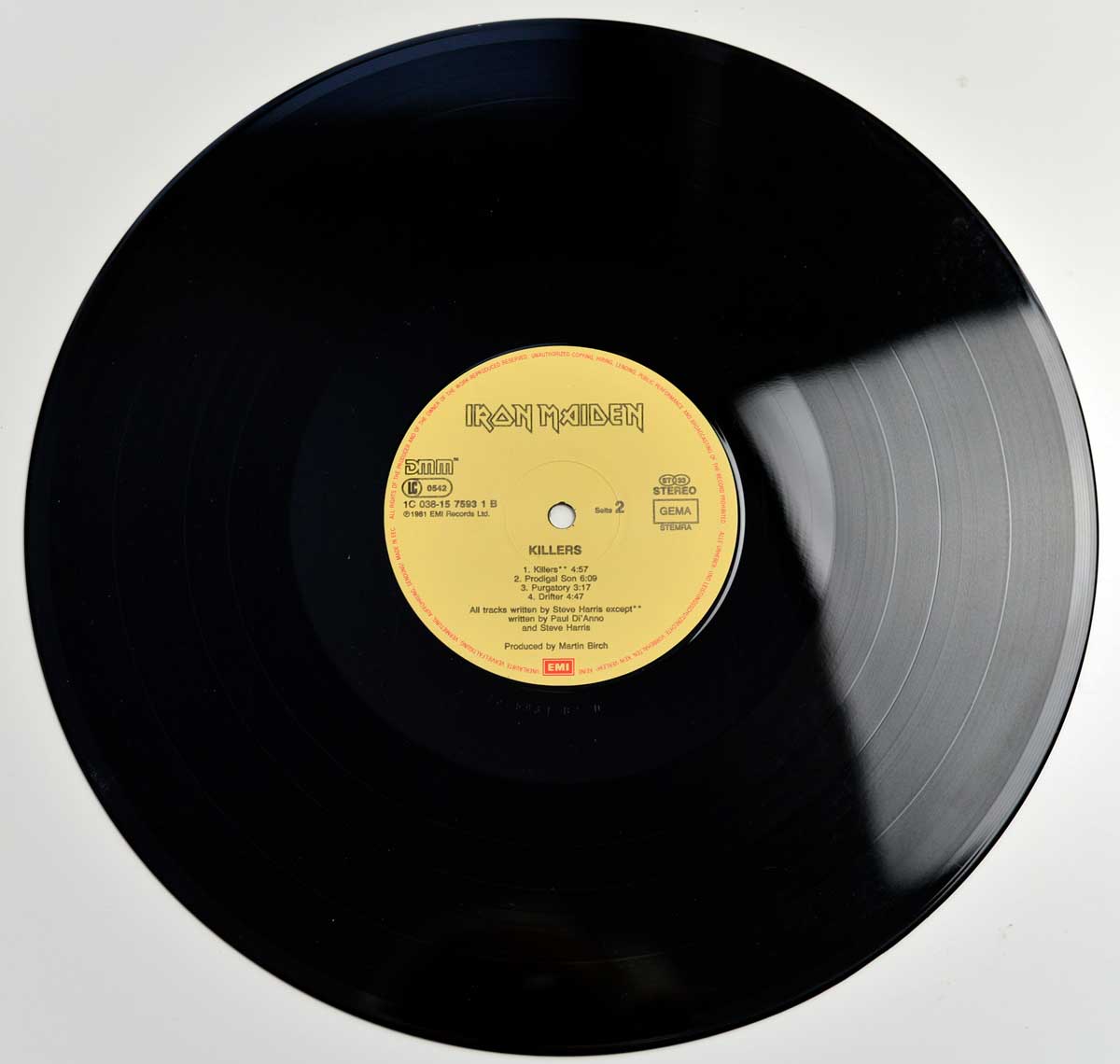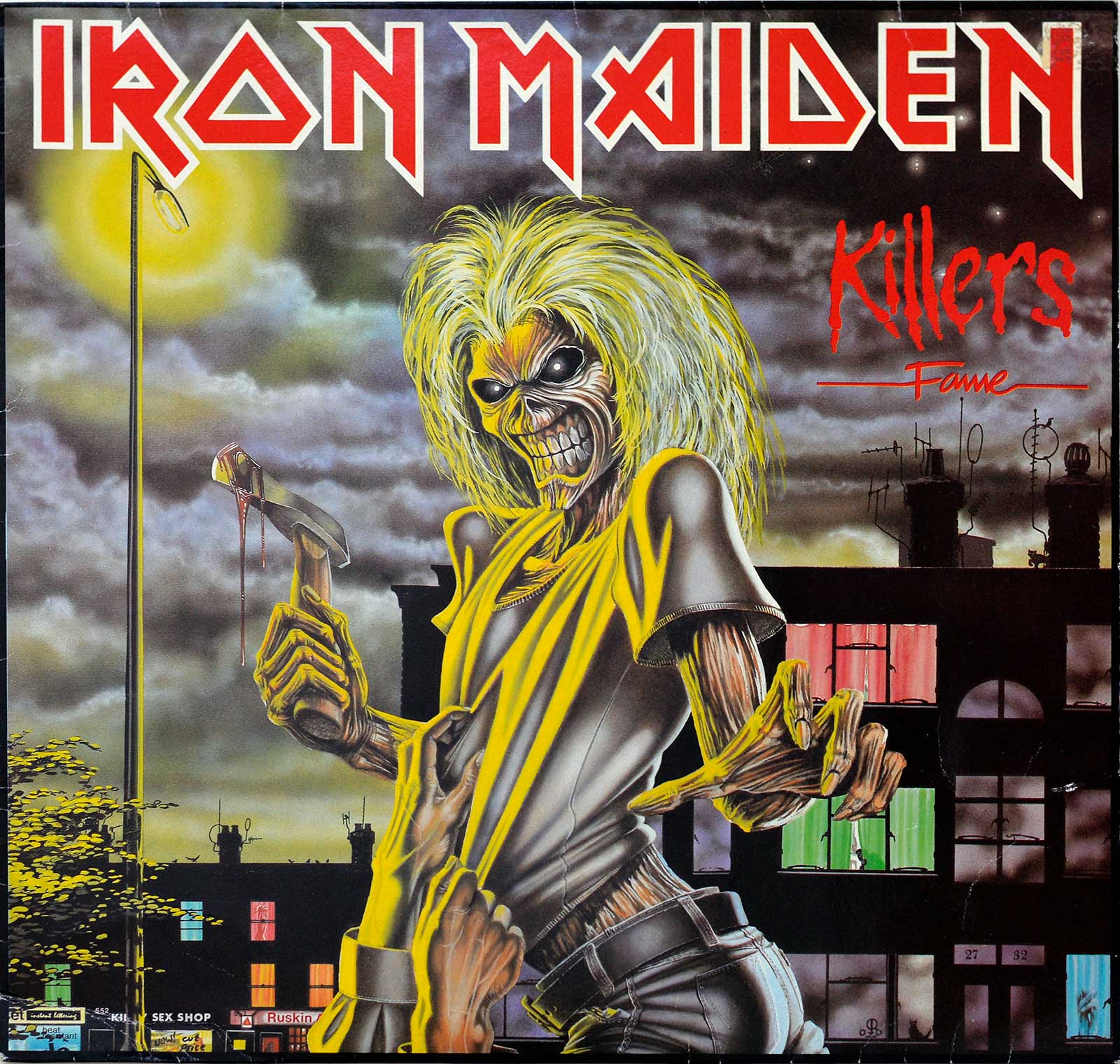
- Fame Germany Release
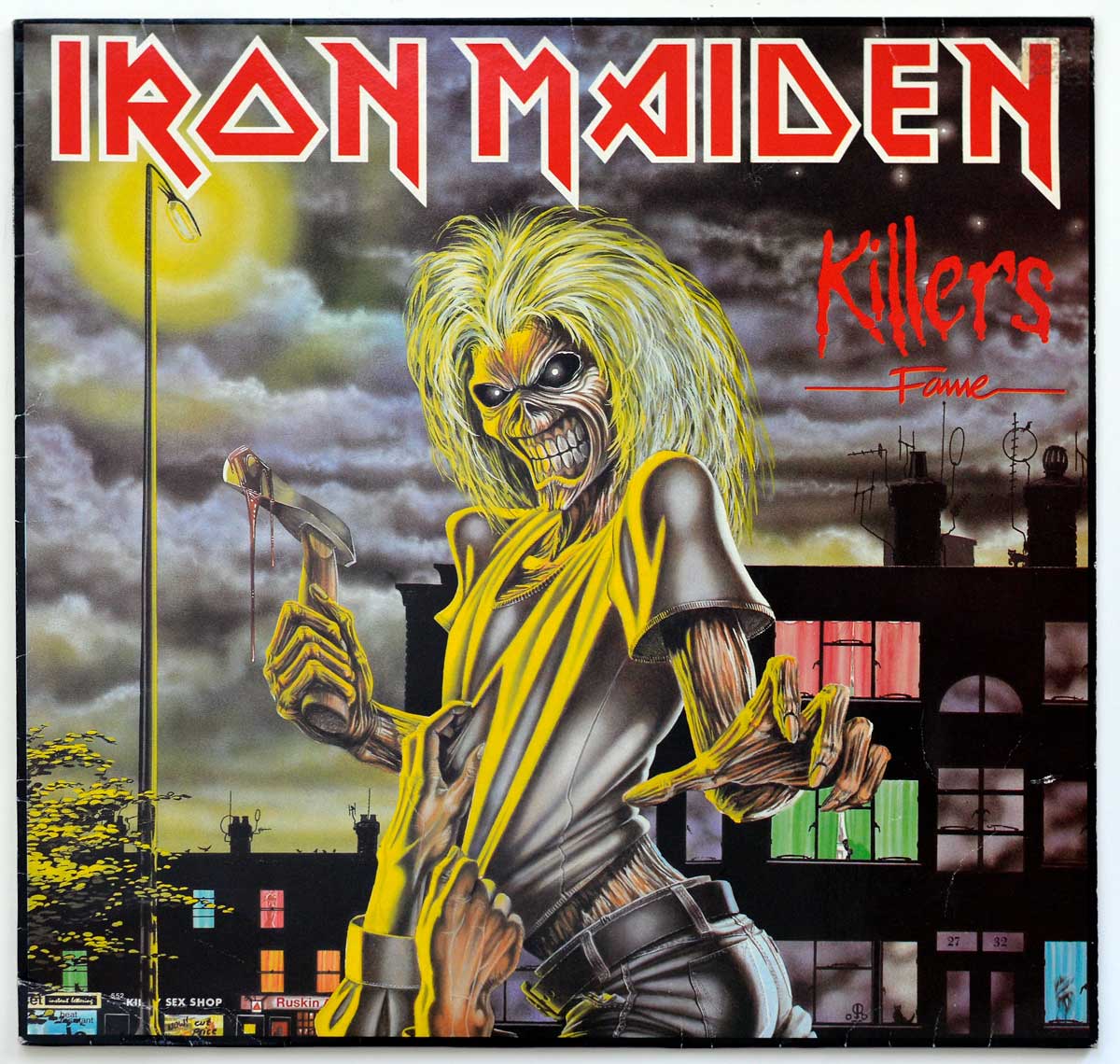
This is the FAME Records release of "Killers" and has the FAME logo printed in the top right of the cover ( just below "Killers" ). Killers is the second album by IRON MAIDEN. It was the first of their albums to feature guitarist Adrian Smith, and the last to feature vocalist Paul Di'Anno, who left the band mid-tour due to problems with alcohol and cocaine. This was also the first album produced by veteran producer Martin Birch who went on to produce their next eight albums before retiring after "Fear of the Dark" in 1992
Heavy metal history was forged when Iron Maiden unleashed their sophomore album, "Killers," in 1981. While the album's UK release remains the standard, the German "Fame" edition on vinyl offers a unique perspective on this metal masterpiece.
The Fame Factor
Released under the EMI subsidiary "Fame," this German edition boasts enhanced audio quality compared to the original UK pressing. The instruments cut through with more bite, showcasing the band's tighter, more ferocious sound. Di'Anno's vocals feel sharper, while the rhythm section of Harris and drummer Clive Burr packs a stronger punch. This sonic upgrade breathes new life into heavy metal anthems like "Wrathchild" and the relentless title track.
Iron Maiden's Raw Power
Beyond its production refinements and altered sequencing, the German "Killers" is a potent reminder of Iron Maiden's ascendence. The album's raw energy and expanding melodic sensibilities are encapsulated in tracks like "Murders in the Rue Morgue" and the haunting "Prodigal Son".
Iron Maiden's "Killers" isn't just another heavy metal anthem. It's a heart-pounding descent into the mind of a deranged stalker.
The song opens with a chilling atmosphere, punctuated by Steve Harris's bassline mimicking the rhythmic rumble of a subway train. Paul Di'Anno's vocals then take center stage, adopting a menacing tone as he describes the killer's predatory gaze, fixated on an unsuspecting victim.
As the song progresses, the music intensifies, mirroring the rising tension. Guitars screech with a sense of urgency, while Clive Burr's drumming evokes the frantic heartbeat of the hunted. Di'Anno's lyrics become increasingly graphic, detailing the brutal act and the chilling aftermath.
"Killers" isn't just about violence, though. It delves into the psychological horror of being stalked. The constant shift between first and third-person narration creates a sense of disorientation, mirroring the victim's terror.
By weaving a chilling narrative into a powerful metal soundscape, Iron Maiden's "Killers" remains a classic of the genre, a testament to their ability to explore dark themes with both musical fury and unsettling detail.
Heavy Metal, NWOBHM
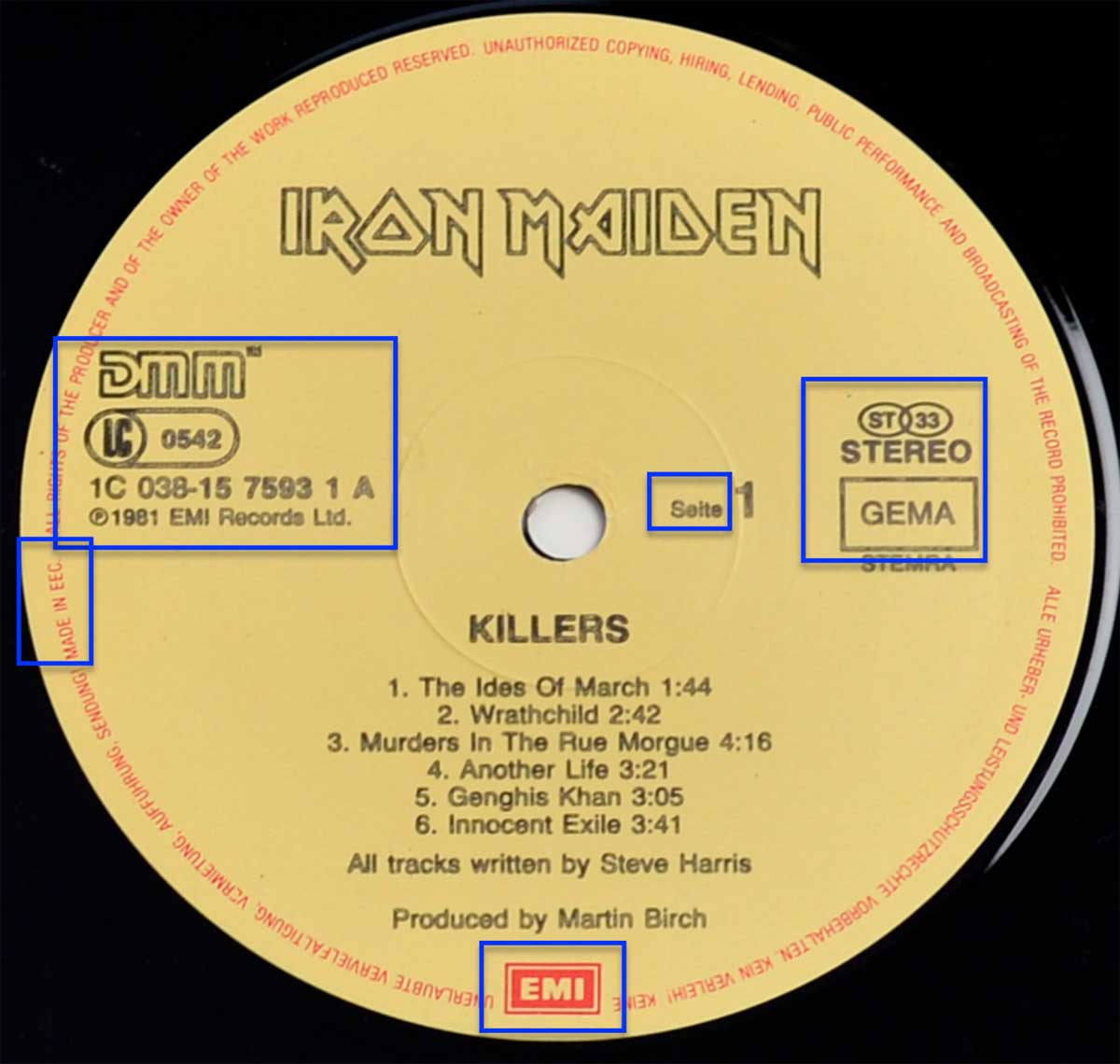
EMI 1C 038-15 7593 1
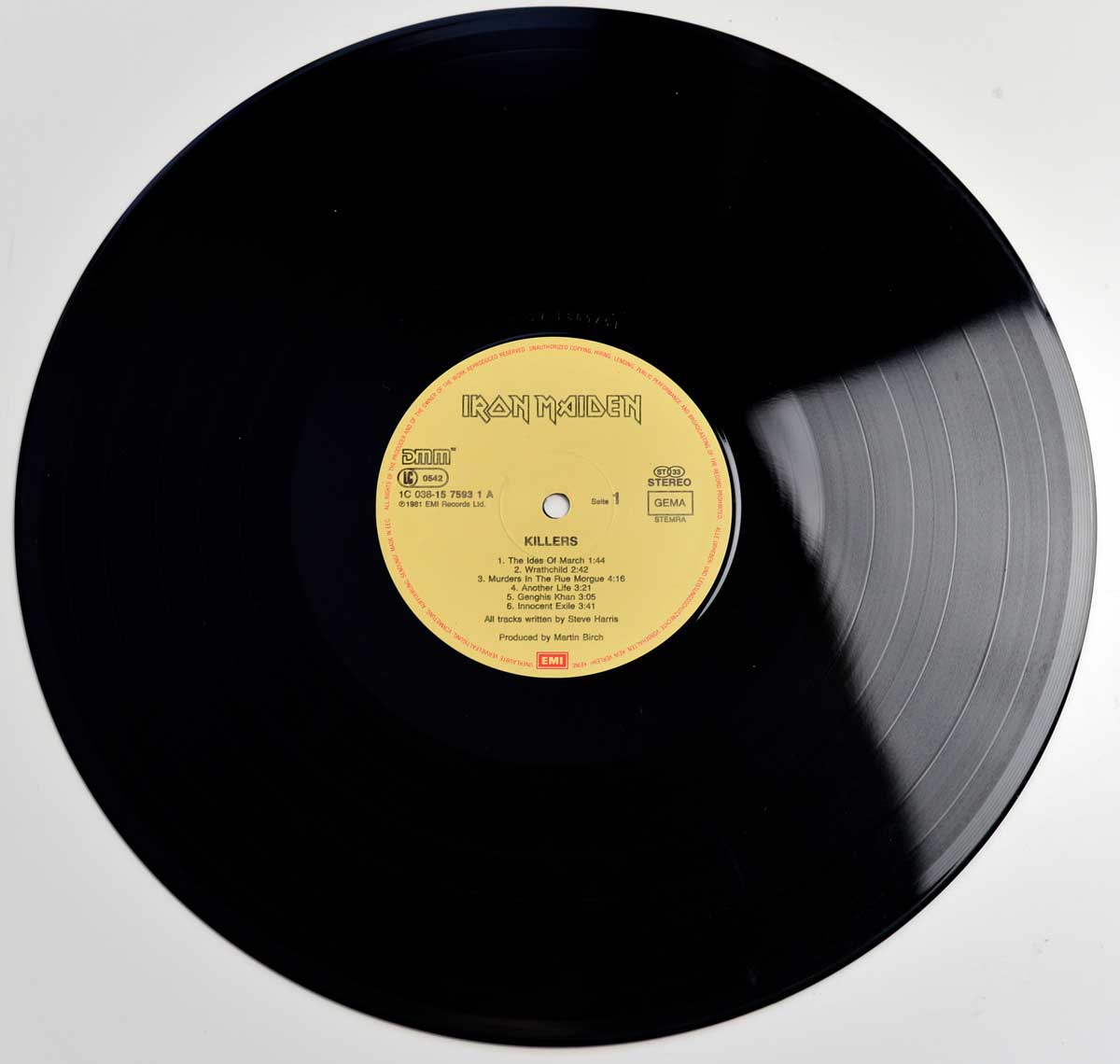
Record Format: 12" Vinyl Stereo Gramophone Record
Total Album (Cover+Record) weight: 230 gram
1981 Made in Germany
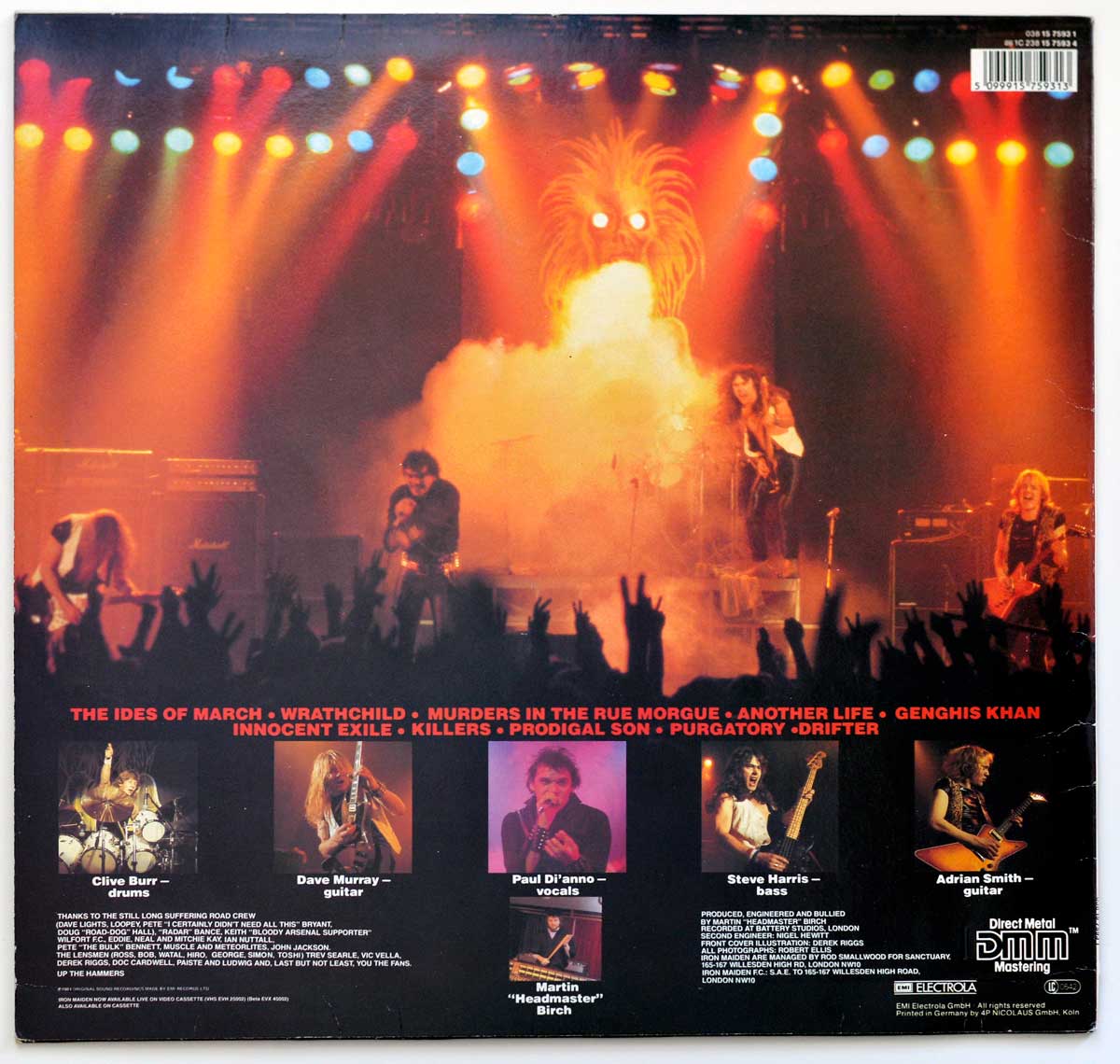
Martin Birch - Producer
Martin Birch - Sound Engineer
Nigel Hewitt - Sound Engineer
Nigel Hewitt a British Sound Engineer who has (during the 1980s) engineered vinyl albums for heavy metal bands like: Def Leppard, Iron Maiden, Dio, Mammoth and others.
This album was recorded at: Battery Studios, London.
Derek Riggs
Robert Ellis - Photographer
The early Maiden groove machine: big feel, sharp fills, and that “Beast-era” punch that still rattles the walls. Read more...
Clive Burr (8 March 1957 – 12 March 2013) is one of those drummers who didn’t just keep time—he gave a band its early backbone. I mainly hear him as Iron Maiden’s rocket fuel from 1979–1982, laying down that urgent, swinging drive on their first run of classic records and helping make the whole NWOBHM thing feel dangerous instead of polite. Before that, he did the London grind with Samson (1977–1978). After Maiden, the timeline gets gloriously nomadic: Trust (1983–1984), a blink-and-you-miss-it week with Alcatrazz (1983), his own Clive Burr’s Escape (1983–1984) evolving into Stratus (1984–1985), the supergroup cameo in Gogmagog (1985), Desperado (1988–1990), and later work with Praying Mantis (1995–1996). His later years were brutally shaped by multiple sclerosis, but the playing legacy stays loud, human, and unmistakably his own—Clive Burr Wiki
Maiden’s calm killer: smooth leads, twin-guitar harmony for days, and that melodic bite that makes the “gallop” feel cinematic instead of chaotic. Read more...
Dave Murray (born 23 December 1956, Edmonton, Middlesex, England) is one of the defining lead guitar voices of heavy metal, and in my book he’s the melodic “second spine” of Iron Maiden. His timeline with the band starts early: joining in 1976, getting briefly pushed out in 1977, then returning in 1978 and staying locked in ever since—making him one of the longest-serving members in the whole Maiden saga. During that 1977 gap he spent around six months with Urchin (Adrian Smith’s band), which is a fun little historical glitch in the matrix if you like your Maiden lore messy and human. Beyond the main band, his most notable “outside the mothership” credit is the all-star charity metal project Hear ’n Aid (1985), because apparently even guitar lifers sometimes leave the bunker to do side quests. Dave Murray Wiki
The OG Iron Maiden throat: street-level grit, punk heat, and zero “polite” in the delivery. Read more...
Paul Di'Anno, (17 May 1958 – 21 October 2024) locked himself into metal history by fronting Iron Maiden from 1978–1981, putting that snarling, rough-cut voice on the band’s early landmark releases. After Maiden, the timeline turns into a proper tour-bus saga: Di’Anno (1983–1985, then revived in the 1998–2001 era), the short, star-stacked Gogmagog detour (1985), Battlezone (1985–1989, back again 1997–1998), a notable studio cameo with Praying Mantis around 1990, and Killers (1990–1997, returning 2001–2003, plus a 2013 regroup). Later chapters include the Brazil-based Rockfellas run (2008–2010) and Architects of Chaoz (2014–2016). The common thread never really changed: that unmistakable, no-varnish vocal attitude that made early NWOBHM feel dangerous in the first place.
Iron Maiden’s engine room: galloping bass lines, history-nerd lyrics, and “captain of the ship” energy baked into every riff. Read more...
Steve Harris (born 12 March 1956, Leytonstone, England) is the rare bassist who doesn’t just hold the floor—he draws the whole blueprint. In my book, he’s the founder and primary songwriter who’s kept Iron Maiden on its rails from 1975–present, with that instantly recognizable “gallop” driving huge chunks of the catalogue. The pre-Maiden grind matters too: first band days in Influence/Gypsy’s Kiss (1973–1974, including a documented gig run in 1974), then the older, blues-leaning Smiler period (1974–1975) where his more ambitious writing basically forced the next step: forming Maiden. Outside the mothership, he’s fronted his own hard-rock outlet British Lion (2012–present), a project that grew out of connections going back to the early 1990s and finally hit the world as his solo debut in 2012.
Note: The images on this page are photos of the actual album. Slight differences in color may exist due to the use of the camera's flash. Images can be zoomed in/out ( eg pinch with your fingers on a tablet or smartphone )