Album Production Information:
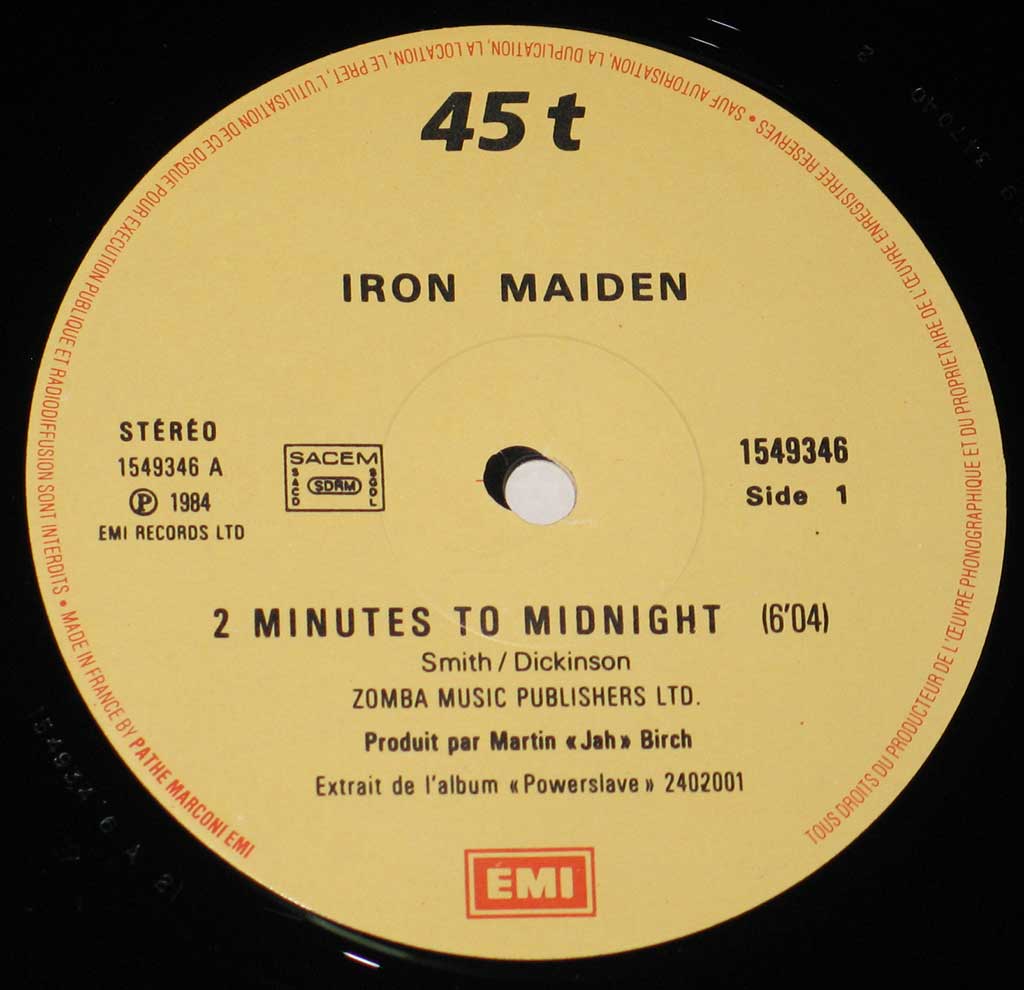
The album: "IRON MAIDEN - 2 Minutes 2 Midnight" was produced by:
Martin "Jah" Birch
Martin Birch – Producer, Sound Engineer
I first noticed Martin Birch on those early Iron Maiden sleeves—the ones with the typography that felt like a threat. At twelve, I didn’t care about "production value"; I just liked that the guitars didn't sound like mud. He was the man behind the sound mixer, the one who made the snare snap like a dry branch in a cold forest. He was "The Headmaster," and we were all just students of his high-voltage curriculum.
Read more...
Birch didn’t just record noise; he organized aggression. By 1972, he was already wrangling the messy brilliance of Deep Purple’s Machine Head, turning Ian Gillan’s banshee wails into something that didn't just clip the tape but lived inside it. In 1980, he pulled off the ultimate renovation, giving Black Sabbath a much-needed shower and a new spine. Heaven and Hell shouldn't have worked, but Martin polished that Birmingham sludge into something operatic and gleaming. It was a pivot that felt like fate, mostly because he refused to let the mid-range get lazy.
Then came the long, obsessive stretch with Iron Maiden from 1981 to 1992. It was a twelve-year marriage to the fader. From the moment Killers (EMC 3357, for those who care) hit the shelves, the sound was physical. He knew how to let Steve Harris’s bass clatter like a machine gun without drowning out the melody—a sonic miracle that still feels fresh. You can almost smell the ozone and the dust on the Marshall stacks when the needle drops on The Number of the Beast. He stayed until Fear of the Dark, then simply walked away. No victory lap, no bloated memoir. He preferred the hum of the desk to the noise of the crowd, leaving us with nothing but the records and a slight sense of abandonment. But then, when you’ve already captured lightning on tape for twenty years, why bother hanging around for the rain?
Sound/Recording Engineer(s):
Frankie Gibson, Bruce Dickinson
Frankie Gibson one of the sound engineer's of the "Iron Maiden" albums "Piece of Mind" and "Powerslave".
Bruce Dickinson was responsible for the engineering of the track "Mission from 'Arry'"
Bruce Dickinson – SingerSamson forged the roar; Iron Maiden turned it into a global alarm system. Read more... Bruce Dickinson, Bruce Dickinson is the rare frontman who can sound like a human air-raid siren and still tell a story. Before the arenas, I track him in
Samson (1979–1981)
, where the voice sharpened into steel. He joined Iron Maiden in 1981 and powered their classic run through 1993, then returned in 1999 and has stayed ever since. Between the big chapters he kept moving: a solo career from 1990 onward, plus the short, sharp Skunkworks detour in 1996. On stage he’s theatrical without slipping into pantomime—commanding, precise, and oddly disciplined for heavy metal. Timeline: Samson ’79–’81; Maiden ’81–’93 and ’99–now; solo from ’90; Skunkworks ’96. And yeah, never boring.
George Marion - Mastering Engineer
George Marino – Mastering EngineerWhen my site brain goes full 1980s metal mode, his name keeps showing up like a hidden signature in the dead wax. Read more... George Marino is one of those behind-the-glass legends who made heavy music feel larger than the room it was playing in. Before the mastering console became his throne, he was a Bronx guitarist doing the NYC band grind in the 1960s with groups like The Chancellors and The New Sounds Ltd. Then he went pro for real: starting at Capitol Studios in New York (1967), and eventually becoming a long-running force at Sterling Sound (from 1973 onward). For a collector like me—living in that sweet spot where 1980s heavy metal, hard rock, and a dash of prog-minded ambition collide—Marino’s credits read like a stack of essential sleeves: Holy Diver (Dio), Tooth and Nail (Dokken), Stay Hard (Raven), Master of Puppets (Metallica), Somewhere in Time (Iron Maiden), Among the Living (Anthrax), Appetite for Destruction (Guns N’ Roses), Slippery When Wet (Bon Jovi), and Blow Up Your Video (AC/DC). That’s the kind of resume that doesn’t just “master” records—it weaponizes them, but with taste. George Marino Wiki
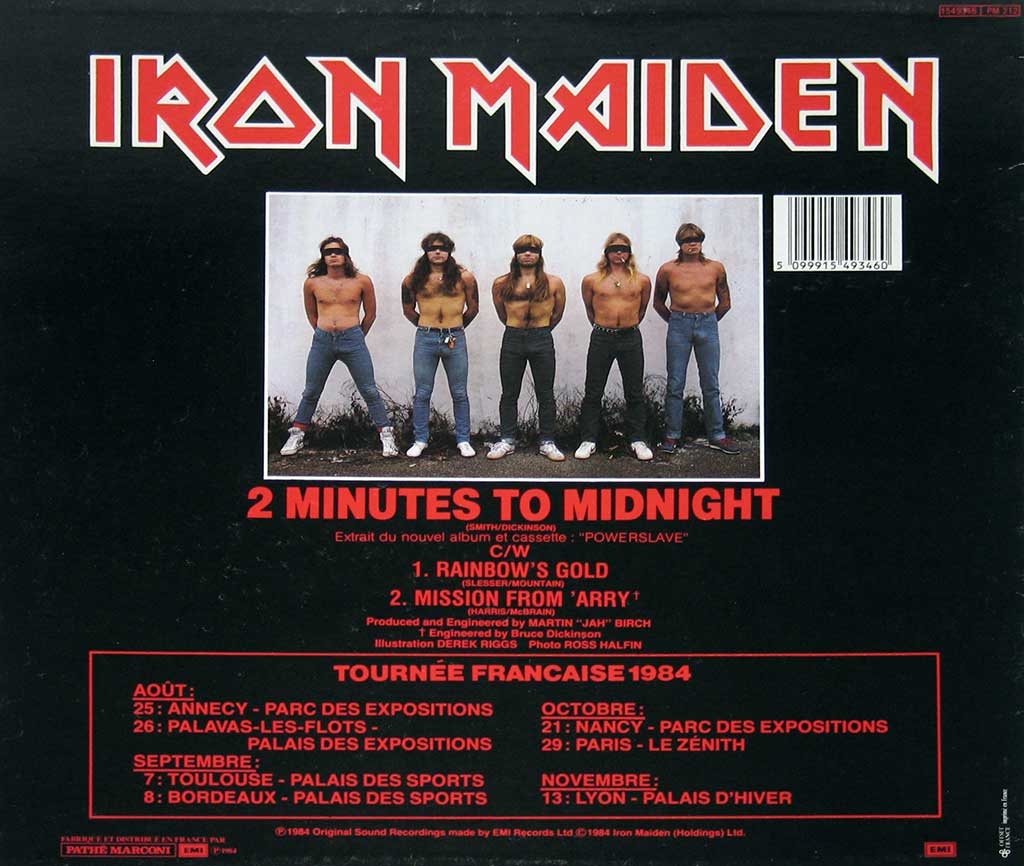
Album cover Photo: Ross Halfin
Ross Halfin – Photographer
The guy who made hard rock look like it smelled: sweat, flash powder, and backstage neon.
Read more...
Ross Halfin is the British lens-slinger who turned loud music into evidence, not decoration. Late 1970s had him cutting his teeth for Sounds, stalking the punk spill—The Clash, The Jam, the Sex Pistols—fast, close, no mercy. From 1980 onward he became Kerrang!’s chief photographer and stayed in that trench for about two decades, which says plenty about stamina. The 1980s pushed him deeper into heavy metal: Iron Maiden, AC/DC, Judas Priest, Black Sabbath—tour buses, arenas, and the occasional glamour that still looked slightly dangerous. Since then the circle widened and hardened: Metallica and the big hard-rock orbit, shot with the same blunt honesty. Trust the timing, trust the grin, distrust the posing.
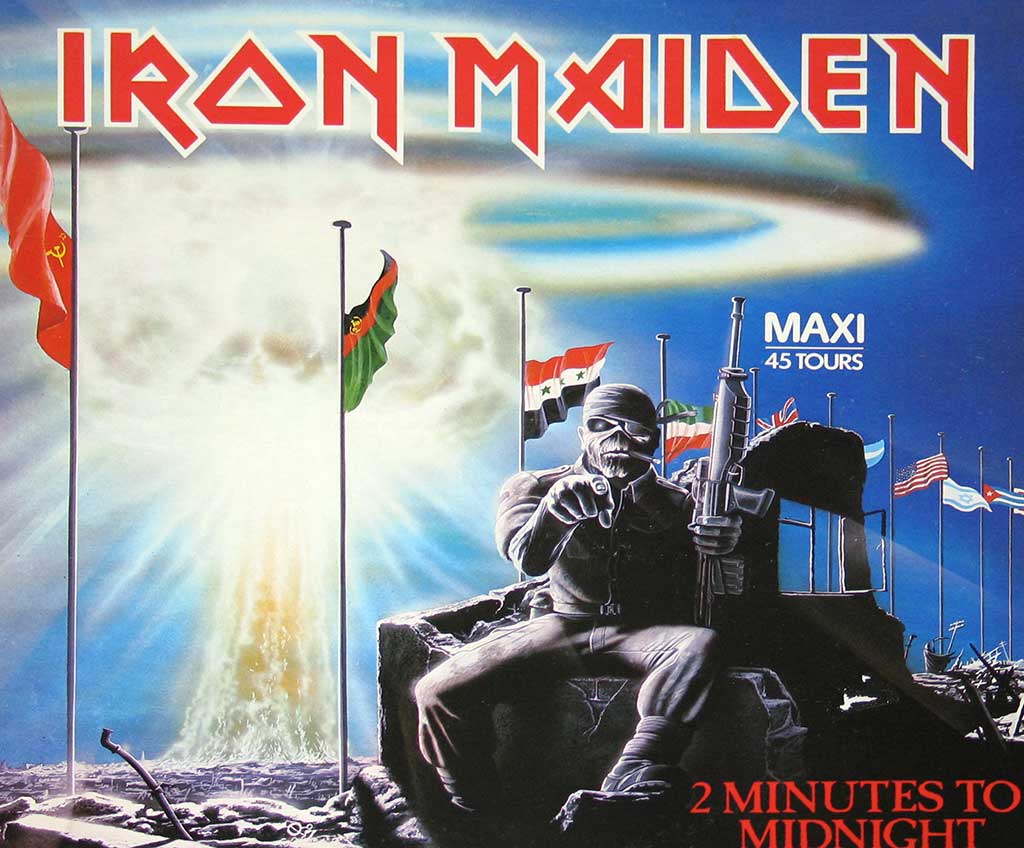
Album cover Illustration: Derek Riggs
Derek Riggs – Illustrator, Cover ArtistI have always liked the way Riggs made heavy metal look dangerous, not decorative. Read more... Derek Riggs is the British illustrator who gave Iron Maiden its face, its menace, and half its mythology. I still see him as one of the few cover artists who didn’t just package a band, he enlarged it. His run with Iron Maiden began in 1980 with the debut and stretched through the classic 1980s into the early 1990s, before later returns for Brave New World in 2000 and Somewhere Back in Time in 2008. Outside Maiden, he turned up on Budgie’s Nightflight in 1981, Bruce Dickinson’s Accident of Birth in 1997, Gamma Ray’s Power Plant in 1999, and Stratovarius’ Infinite in 2000. That is a proper career, not a side note. |