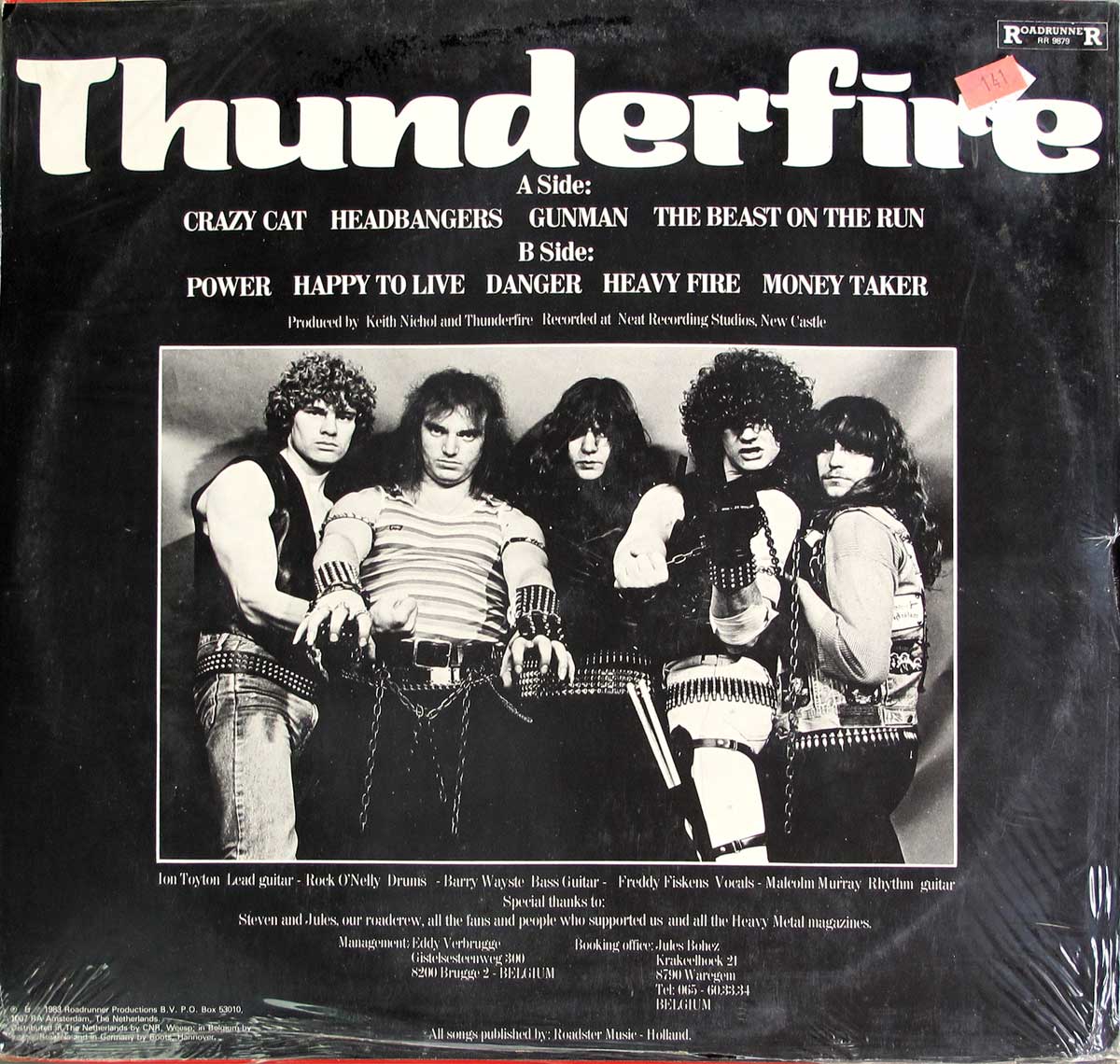
Keith Nichol, producer and sound engineer closely tied to the Neat Records workshop, helped shape the raw NWOBHM racket coming out of Newcastle in the early 1980s. On "Wiped Out", his production keeps Raven fast, sharp, and slightly dangerous around the edges; the sound is not polished into boredom, thank heavens, but left with enough grit to make the speakers sweat.
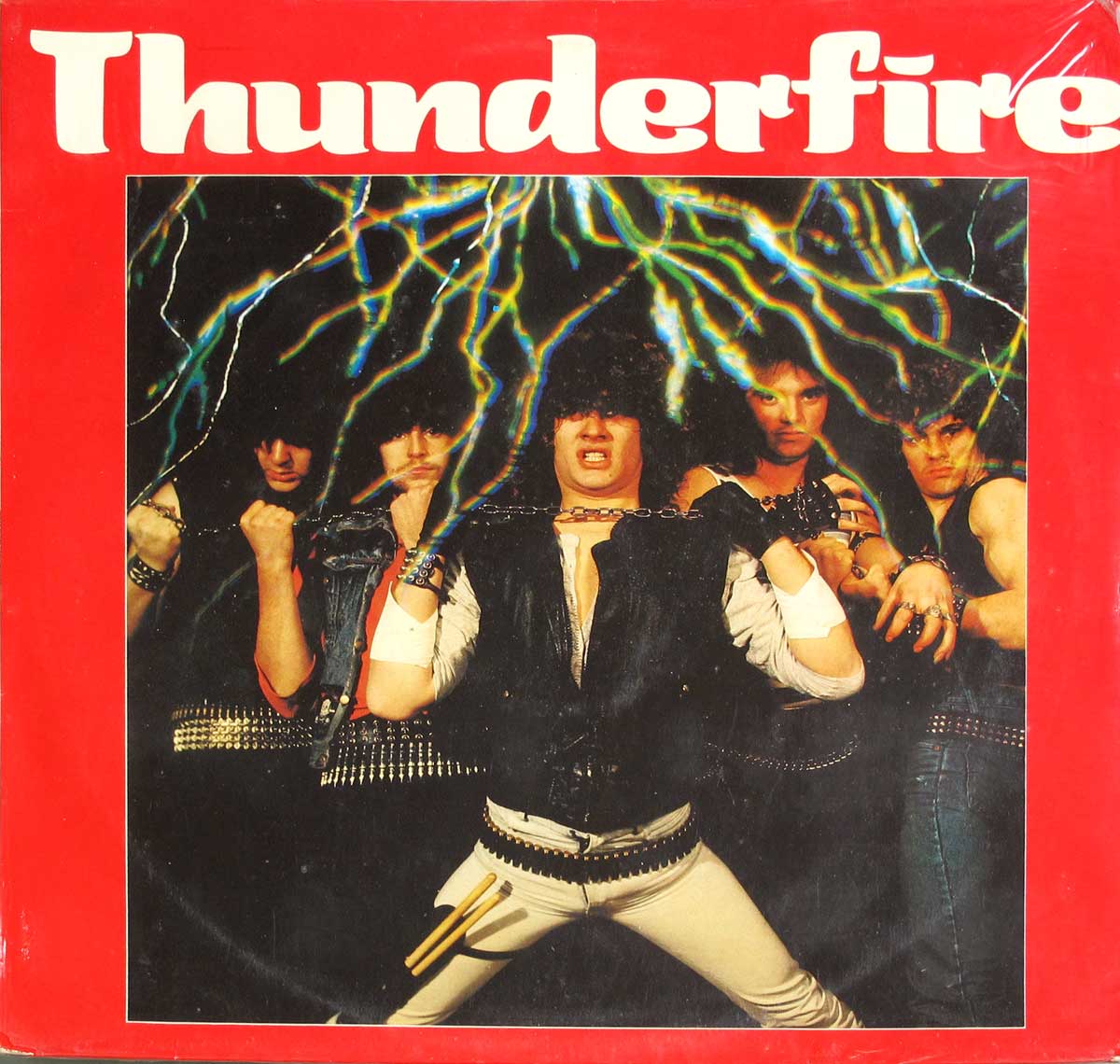
THUNDERFIRE - S/T SELF-TITLED 12" Vinyl LP Album
The self-titled album "Thunderfire" from Belgium emerges as a rare treasure on a 12" LP Vinyl Album. This particular release, still sealed, adds an extra layer of exclusivity, making it a coveted item for collectors. The scarcity and sealed condition enhance the album's desirability, underscoring its unique status in the realm of Belgian metal. "Thunderfire" stands as a testament to the band's musical imprint, and its rarity further solidifies its allure among collectors of rare and sought-after metal releases.