The Almighty: Blood, Fire & Love – A Fierce Fusion of Rock and Punk
Album Description:
Late ’80s. You could feel rock music getting bored with its own reflection. Everything was polished, everything was posing, and half the scene looked like it got dressed in the dark backstage at a deodorant commercial. Then The Almighty show up with "Blood, Fire & Love" and it doesn’t ask permission.
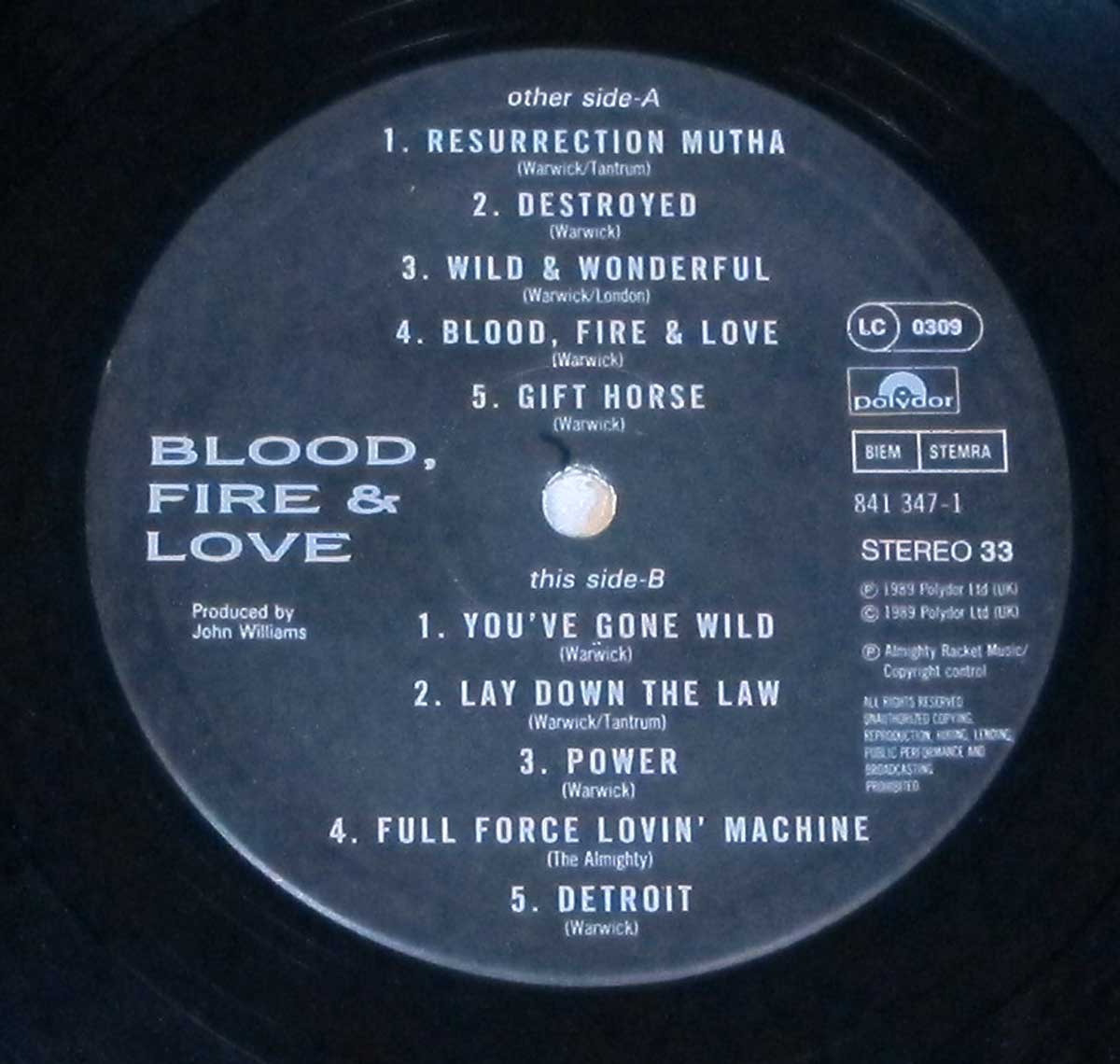
I remember hearing "Resurrection Mutha" loud enough that the room got smaller. Not “wow, what an important opening track” loud — more like: you suddenly stop pretending you’re doing something else. Ricky Warwick doesn’t so much sing as drag the words across the floor and dare you to complain. It’s not delicate. Good.
The record sits in that sweet spot where hard rock still has elbows. There’s punk bite in the way the songs move — especially when "Destroyed" and "Wild & Wonderful" kick in — but it’s not trying to cosplay 1977. It’s tighter than that. More like a band that wants the chorus to land, then wants to hit you again anyway.
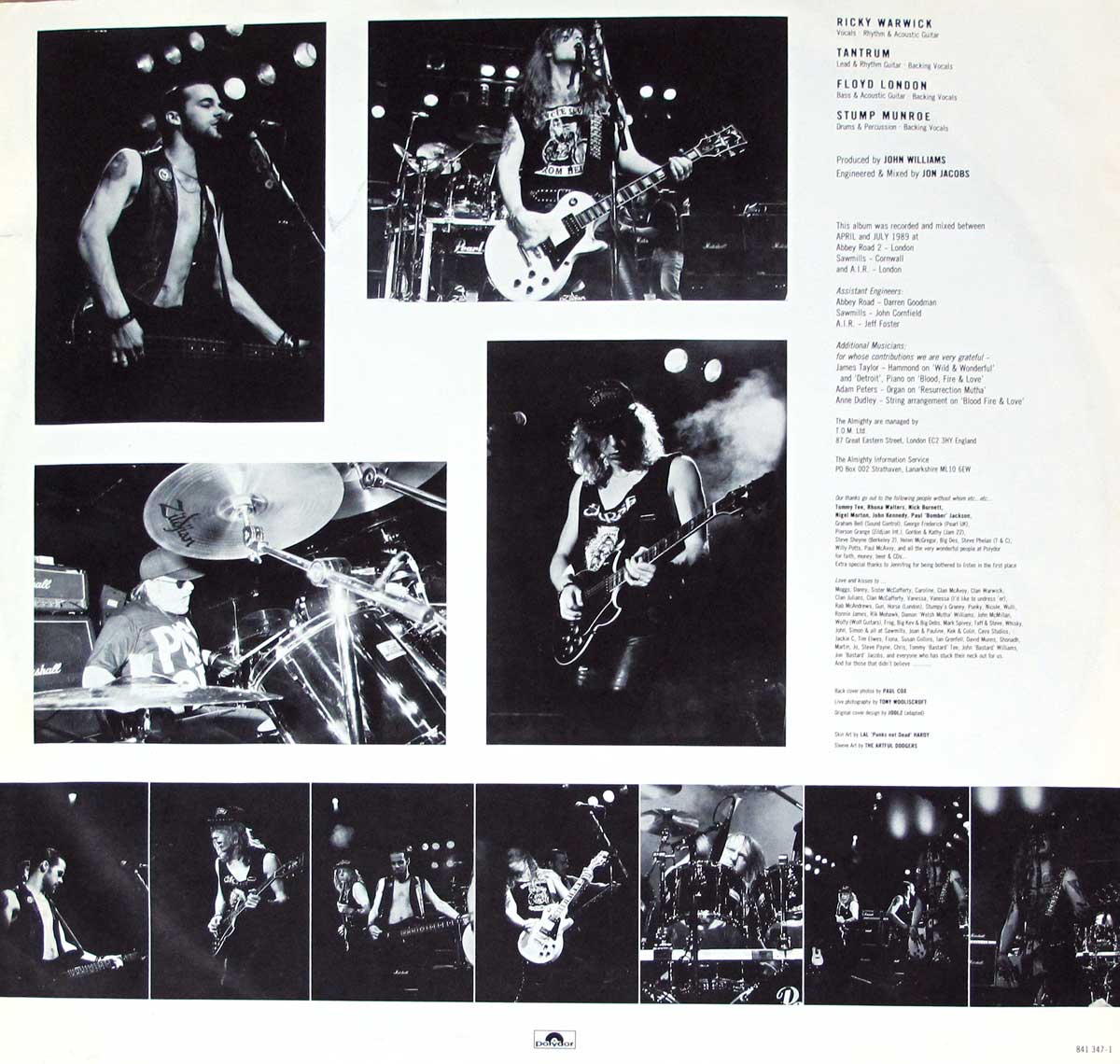
There’s a proper big-studio spine running through it too. It was recorded in April and July 1989, and not in some romantic damp basement: Abbey Road Studio 2, Sawmills in Cornwall, and A.I.R. Studios in London. Producer John Williams keeps the thing muscular without sanding off all the teeth. That balance matters here — because this album dies instantly if it turns into either pure sludge or pure shine.
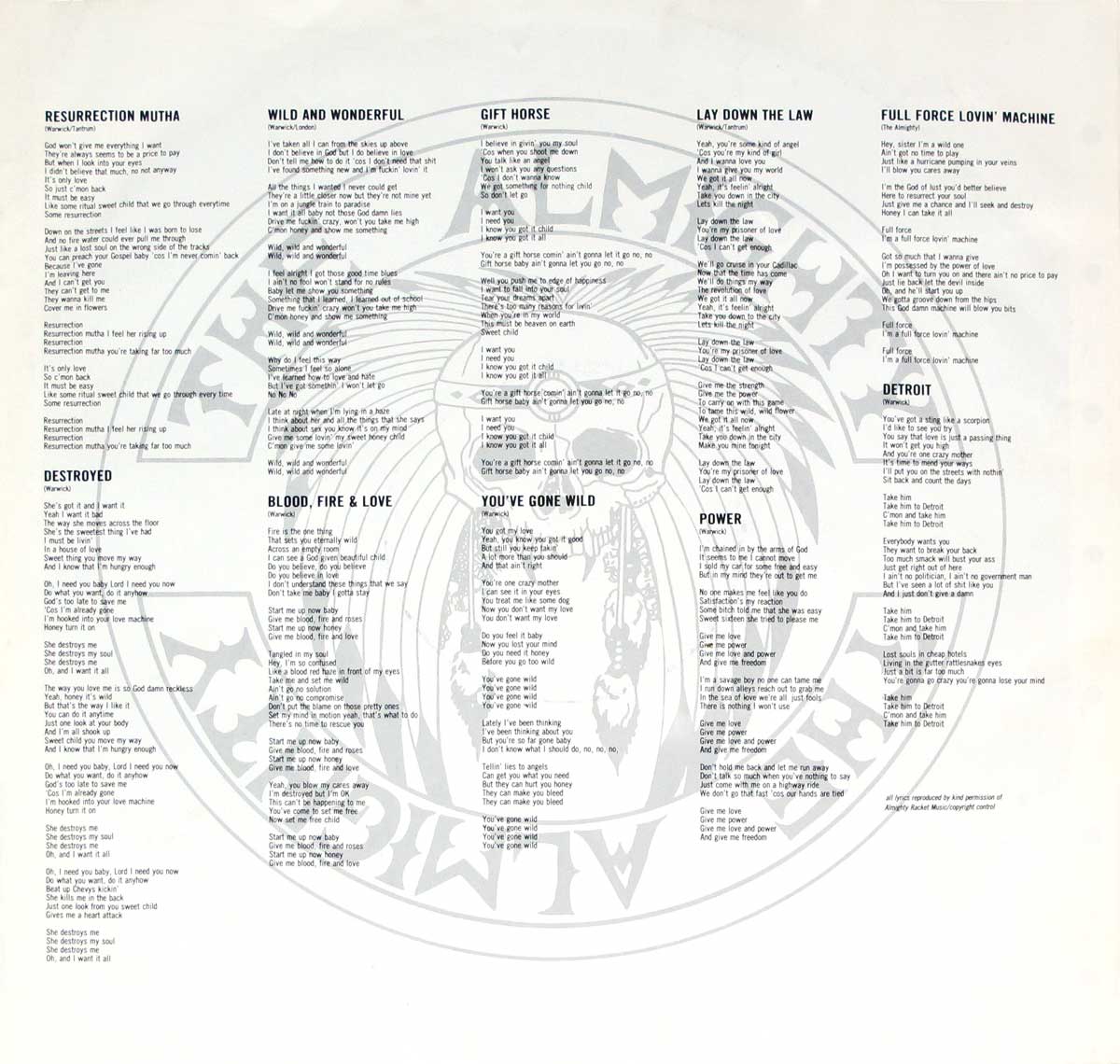
The track list is basically a row of clenched fists with different rings on. "Lay Down the Law" stomps like it’s built for sticky venue floors. "Full Force Lovin' Machine" is exactly as subtle as the title suggests — which is to say, none at all — and somehow it works because the band commits to the dumb fun instead of apologizing for it.
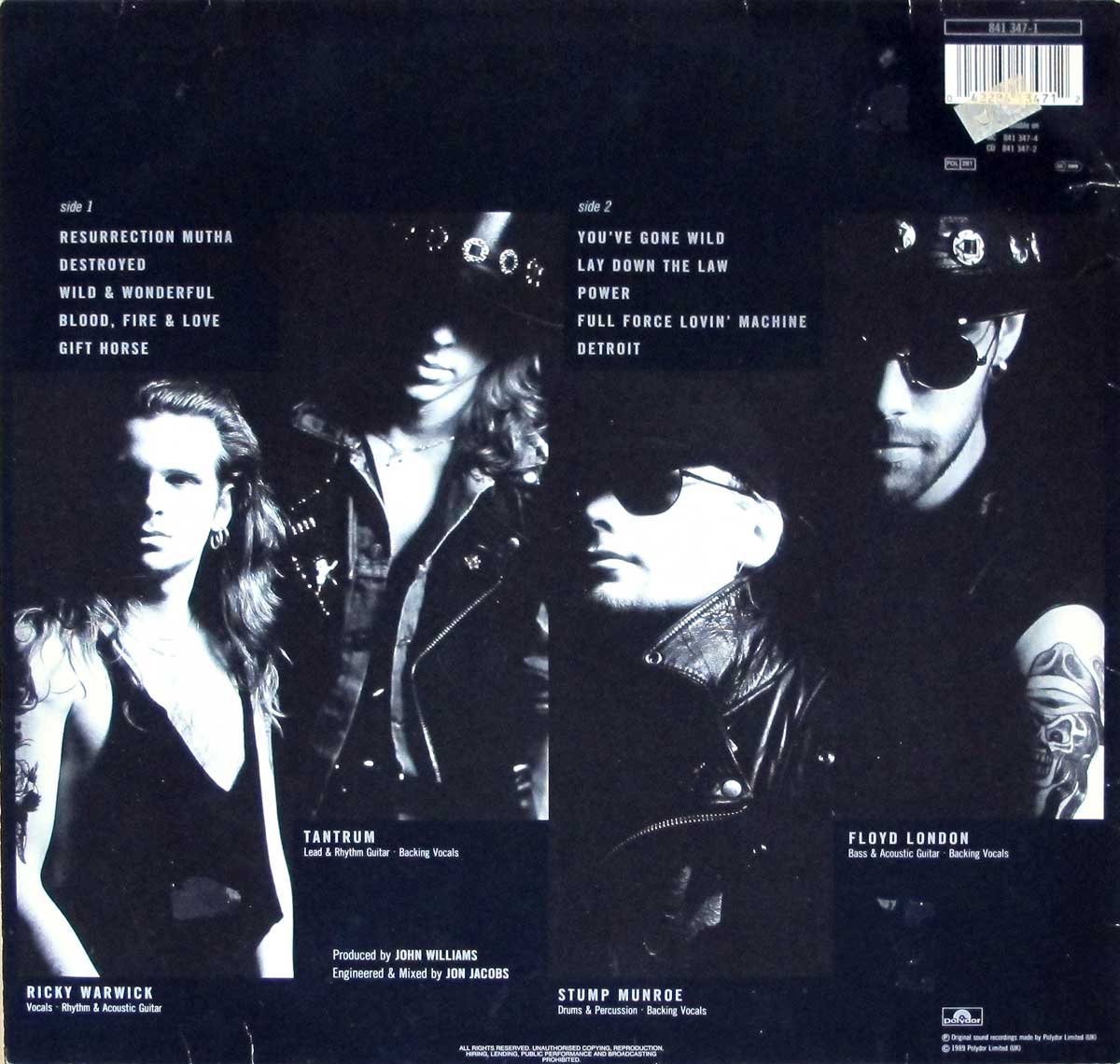
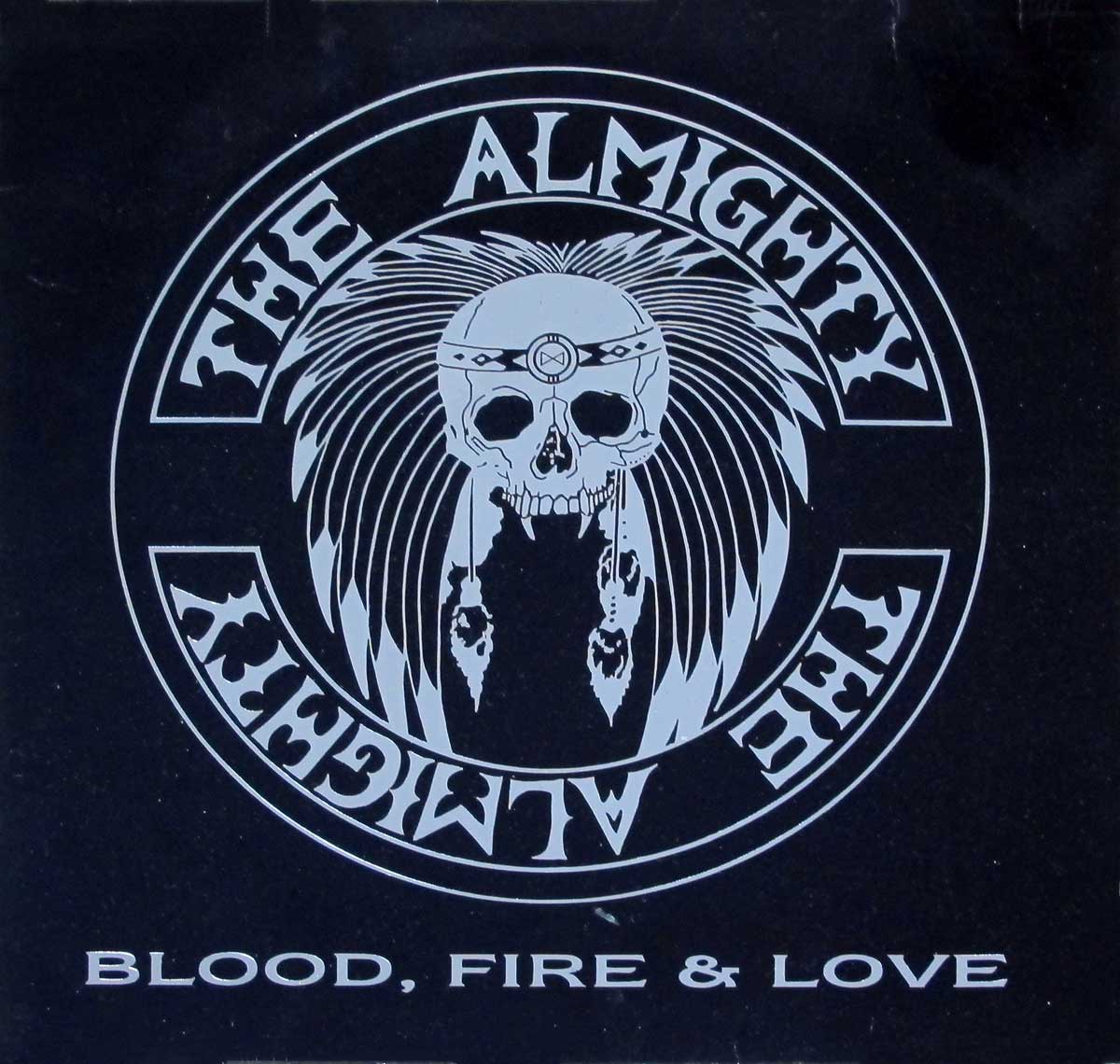
Visually, the releases commonly credit The Artful Dodgers on sleeve art, with Lal “Punks Not Dead” Hardy also appearing in artwork credits, plus photography credits like Paul Cox (back cover) and Tony Wooliscroft (live shots). It fits: the album looks like it wants to start a fight with your turntable. Mine survived. Barely.
And yeah — you can file it under hard rock (that’s the neat label), or you can just admit it’s a debut record that still sounds like a band trying to prove something while the rest of the decade is busy adjusting its eyeliner. I’ll take the proving-something part.