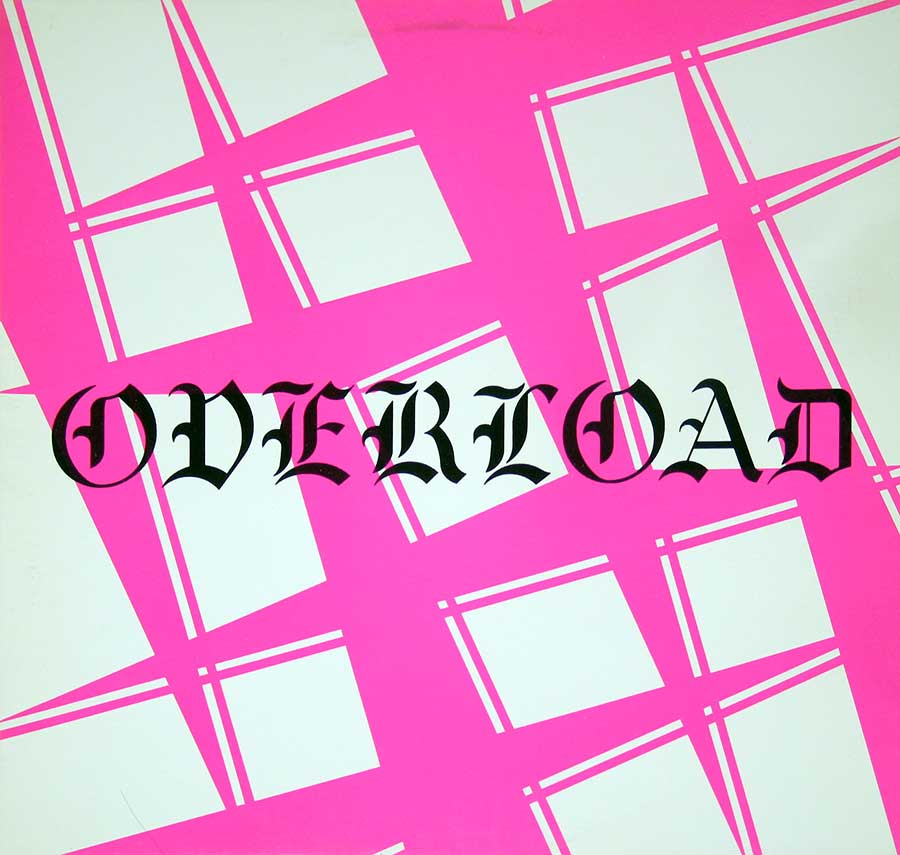
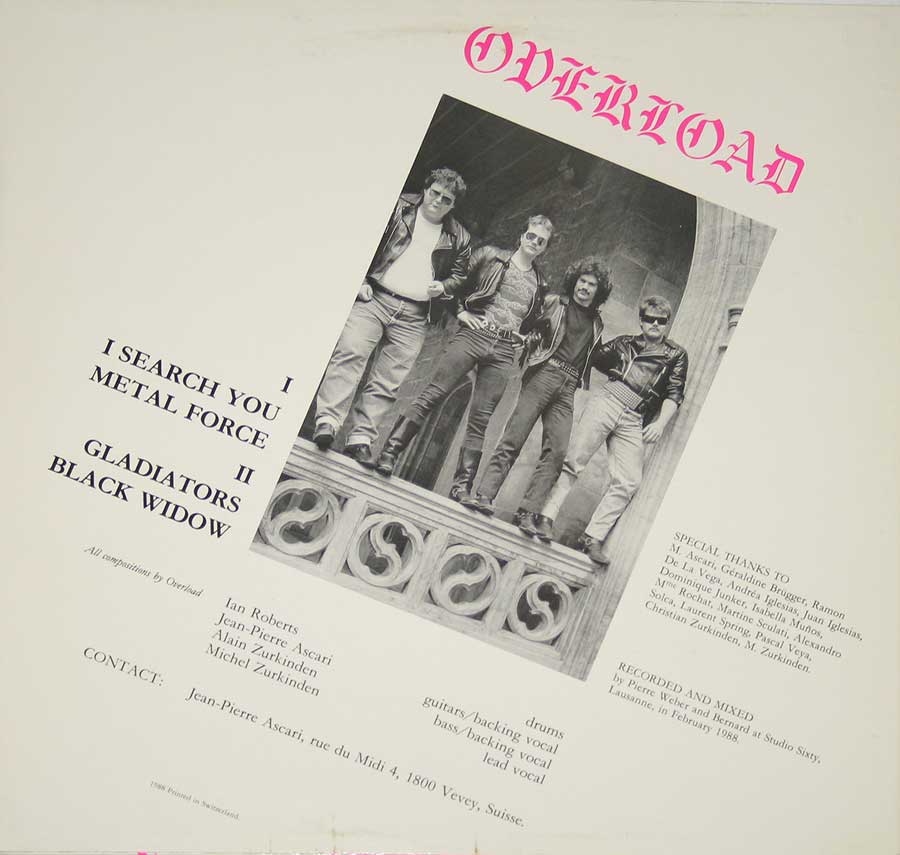
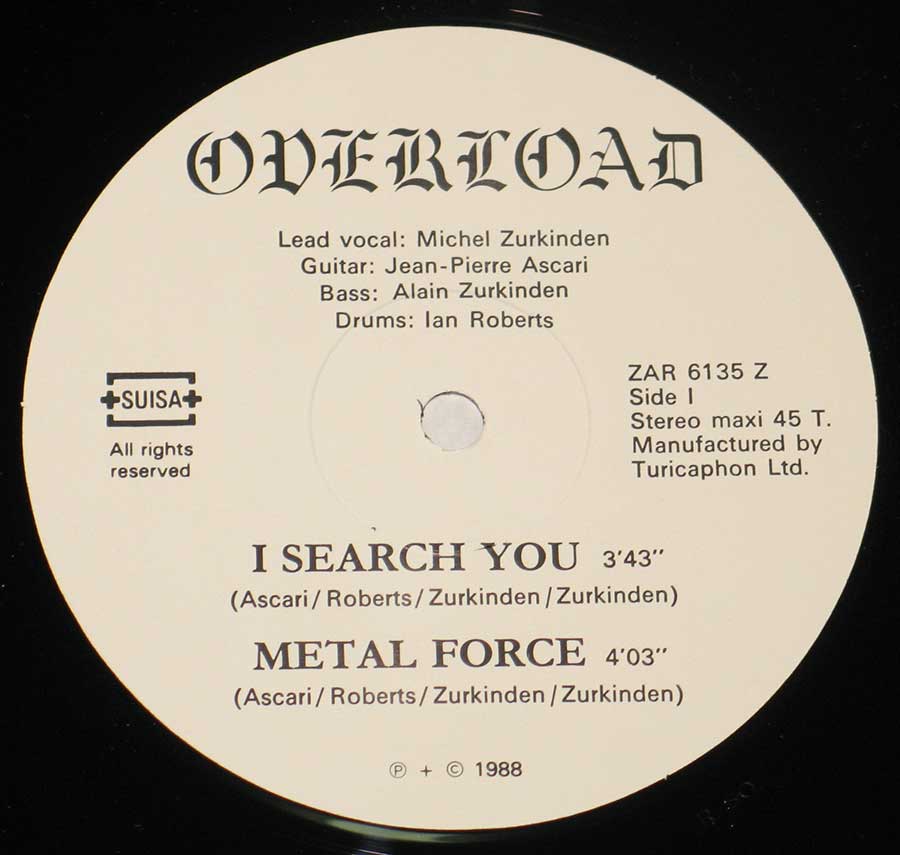
"Overload" (1988) Album Description:
This self-titled mini-album is one of those late-80s Swiss metal artefacts that slipped through the cracks, only to resurface decades later as a collector’s prize. Overload didn’t just release an EP — they dropped a compact, four-track time capsule right as Switzerland’s metal scene was shifting from basement-level obscurity to something resembling an actual movement. The record feels like a spark from a band that arrived fully loaded yet vanished before anyone realized what they had.
Context in Switzerland’s 1988 Metal Landscape
Switzerland in the late ’80s wasn’t exactly drowning in heavy metal bands, but it had its pockets of fire. Krokus and Celtic Frost had already set the tone: loud, weird, dramatic, and unbothered by trends coming from Germany or the U.S. Smaller regional scenes sprouted everywhere — Zug, Zurich, Lausanne — each one throwing up tiny bands who pressed a few hundred records and hoped word of mouth would do the rest. Overload fit exactly into that DIY constellation: ambitious, local, determined, but operating far from the established routes.
1988 was a restless year for metal fans: thrash had peaked, glam was suffocating under its own hairspray, and traditional heavy metal was mutating into dozens of sub-flavours. Overload dove into that swirl with a tone that wasn’t polished enough for glam nor savage enough for thrash — landing instead in that raw, charming middle ground many Swiss bands explored.
How This Record Came to Be
The story starts with brothers Michel and Alain Zurkinden, who formed the core of the band and pulled guitarist Jean-Pierre Ascari and drummer Ian Roberts into orbit. Sources place the band’s roots in the canton of Zug — not exactly the metal capital of the universe, but close enough to the French-speaking part to make the Lausanne recording sessions easy to reach. They hauled their gear to Studio Sixty in February 1988 and cut four tracks with Ascari handling the production. No label scouts, no management circus; just a band trying to leave something behind before life moved on.
They pressed the record independently, which in 1988 basically meant selling copies at gigs, calling record shops yourself, and hoping someone didn’t forget the box of EPs in a rehearsal room. Most Swiss metalheads probably never saw the record in the wild, which explains why copies only started resurfacing once collectors began digging online decades later.
The Sound: Grit, Melody, and Flash
Drop the needle and the first thing you hear is confidence. “I Search You” opens the EP with a melodic edge that hints at the band’s fusion tag — not fusion as in jazz noodling, but fusion as in mixing classic heavy metal riffs with thrash-flavoured urgency. The drums punch forward, the bass has that rough mid-range growl characteristic of small-studio Swiss recordings, and Michel’s vocals cut through the mix with a clean, earnest tone.
“Metal Force” is the closest the record gets to an anthem, the kind of track that probably sounded gigantic in a gymnasium-sized Swiss youth center. Flip the record and you get “Gladiators,” which leans into that late-’80s fascination with heroic imagery — somewhere between Manowar ambitions and European street-level grit. The closer, “Black Widow,” has the EP’s darkest atmosphere, a track that teases what the band might have explored on a full LP if they’d stuck around.
How It Stacks Up Against Its 1988 Peers
Overload didn’t try to mimic their more famous countrymen. They're not as dramatic or avant-garde as Celtic Frost’s “Cold Lake,” nor as polished and stadium-ready as Krokus’s “Heart Attack.” Instead, this EP sits closer to the raw charm of smaller European bands like Germany’s Stormwitch or Belgium’s CROSS FIRE — heavy metal with a handmade feel, more sweat than strategy, and riffs that sound best through a practice amp at unsafe volumes.
What made Overload stand out was their mix of melodic vocals with gritty guitar work. Not every Swiss band in ’88 pulled that off; many leaned fully into either glam gloss or thrash abrasion. Overload lived in between and made it work.
Band Dynamics & Hidden Frictions
You can hear the band’s chemistry on tape — especially between the Zurkinden brothers, who handle vocals and bass like two parts of the same engine. Ascari’s guitar playing steals a lot of the spotlight, and his producer credit hints that he carried much of the artistic direction. Whether that dynamic caused tension or simply reflected his studio experience is unknown, but it explains why the record has a cohesive, deliberate sound unexplained for a debut.
Ian Roberts’ drumming is the wild card. His rhythmic approach gives the EP a punchier, more contemporary feel than many small Swiss releases of the era. Roberts may have been a local British expat or simply had a name that fooled half the fanbase — either way, he grounded the record with a confident, almost international flavor.
Controversies & Public Reaction
Overload didn't stir up scandals or newspaper columns; they weren’t around long enough. Their only “controversy” — if you can call it that — was the EP’s micro-distribution. Many Swiss fans only learned of its existence years later, which sparked mild frustration online (“How did we miss this?”) combined with collector joy (“Finally another Swiss EP to hunt!”). In a scene as small as Switzerland’s, even scarcity becomes a story.
Reception, Legacy & Collector Status
At the time, Overload’s EP made barely a ripple outside their own region. No big tours, no major-label reissues, no MTV miracle. Yet the very things that doomed them in 1988 — small runs, small cities, small budgets — now make the record desirable to collectors. Fans of European underground metal chase this one precisely because it’s so local, so short-lived, and so honest.
Today, the EP functions like a snapshot of Swiss metal’s lost middle class: not famous, not disastrous, just real musicians capturing a moment before life pulled the plug. These four songs smell faintly of rehearsal rooms, cigarette machines, and the sense that anything was possible for exactly one weekend in 1988.