|
Album
Production information
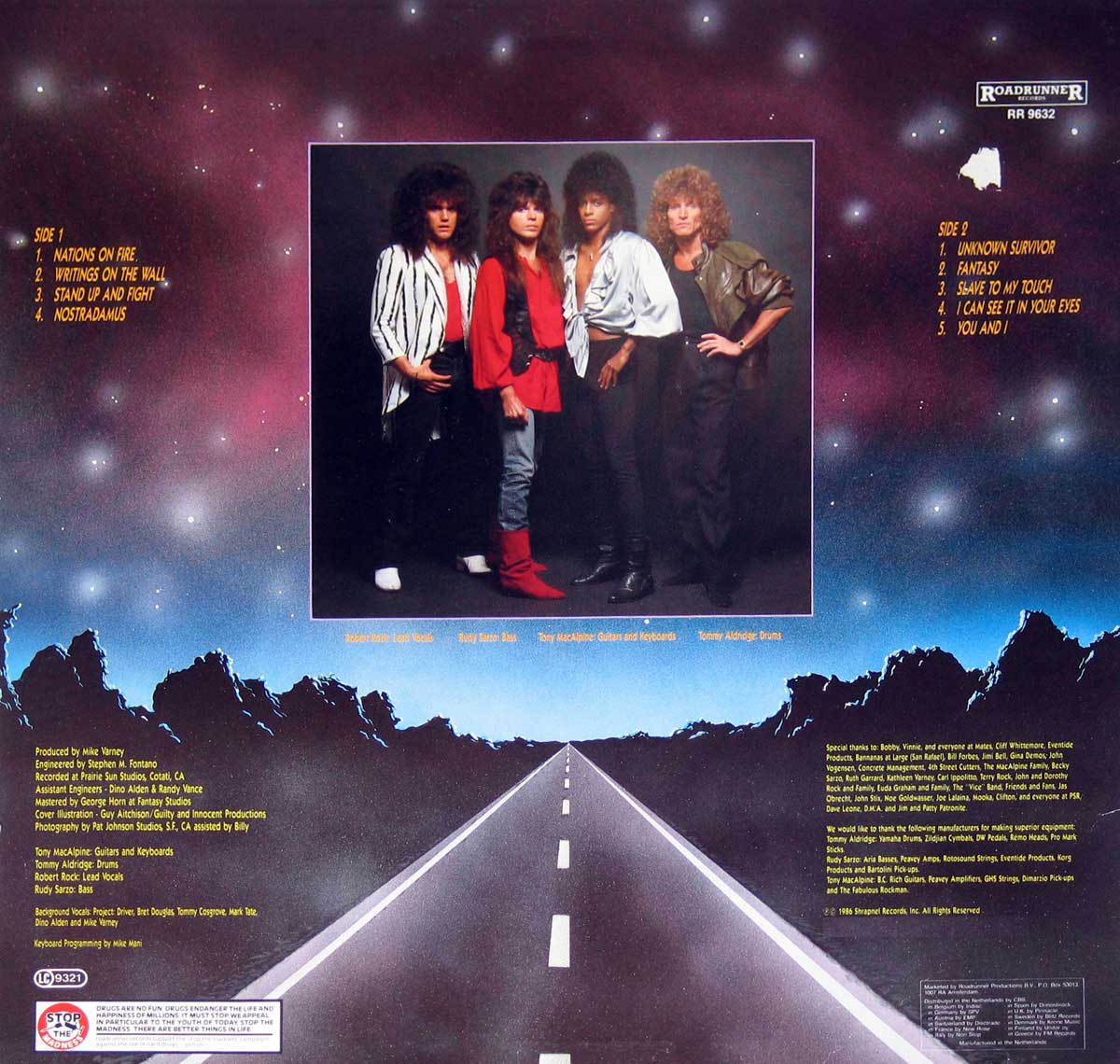
Produced by Mike Varney
Mike Varney – Producer, Shrapnel Records founderThe behind-the-scenes catalyst of the 80s shred boom, with late-70s punk fingerprints all over his origin story. Read more... Mike Varney is the American producer and label boss who turned fast fingers into a business plan. I first clocked him in the late 1970s, thumping bass in San Francisco punks The Nuns, then moving to guitar with the Rocky Sullivan Band. Out in Novato, California, he founded Shrapnel Records in 1980, and by the early 1980s he was hunting new monsters via Guitar Player "Spotlight" and the U.S. Metal compilations. Mid-80s he supercharged the shred boom with releases tied to Steeler (with Yngwie Malmsteen) and Racer X, then kept the pipeline hot for Cacophony, Vinnie Moore, Tony MacAlpine and friends. Later he widened the map with Tone Center and Blues Bureau, still betting on feel as much as speed.
Sound engineer: Stephen M. Fontano Steve Fontano is a renowned music producer and sound engineer whose expertise shaped the sound of 1980s Heavy Metal. Known for his work with W.A.S.P., Racer X, and Tony MacAlpine, his technical mastery brought iconic albums to life. A key figure in the genre, Fontano’s contributions continue to influence music production today. Learn more about his career on the Steve Fontano biography page.
Recorded at Prairie Sun Studios, Cotati, CA
Prairie Sun Recording Studios, located in Cotati, California, has been a pivotal force in rock and metal music, shaping legendary albums with its world-class facilities and expert engineering. Hosting iconic bands from the 1980s onward, it remains a creative hub for artists seeking top-tier sound production. Explore its history and album gallery here.
Assistent sound engineers: Dino Alden, Randy Vance
Dino Alden – Sound engineer, producerThe guy behind that Shrapnel-era snap: fast guitars, clean punch, and not a single ounce of studio perfume. Read more... Dino Alden is an American sound engineer and producer who put chrome on a whole slice of metal without killing the bite. His first band chapter ran with Childhood's End (?-1985), then he slid into the Shrapnel machine: assistant work on M.A.R.S (1986), Tony MacAlpine's "Maximum Security" (1987), Cacophony's "Speed Metal Symphony" (1987) and Racer X "Second Heat" (1987), before engineering/mixing Marty Friedman's "Dragon's Kiss" (1988). After that he drove desks and mixes for Mordred (1989-1991), produced/engineered Imagika (1995-2000), and handled engineering/mixing/production for Zero Hour (1999-2008). Even in the 2000s he kept polishing Friedman's mixes (2002-2009).
Mastered by George Horn at Fantasy Studios
George Horn – Chief Mastering EngineerIf you ever trusted a deadwax whisper more than a press release, chances are his hands were on the last mile. Read more... George Horn is the Bay Area's quiet mad scientist of lacquer, a Chief Mastering Engineer who kept Fantasy Studios (Berkeley) and CBS Studios (San Francisco) sounding expensive without turning everything into plastic. I follow his trail from 1971 at Columbia/CBS (Coast Recorders), to Kendun Recorders in 1978, then the long Fantasy run from 1980 into the 2000s. In the Tom Hidley-designed mastering room built in the late 1970s, he cut and remastered a ridiculous spread: Charles Mingus and other jazz giants, plus rock lifers like Creedence Clearwater Revival, The Grateful Dead and Santana. In 2008 he opened his own Berkeley mastering room, still chasing clarity like it owed him money.
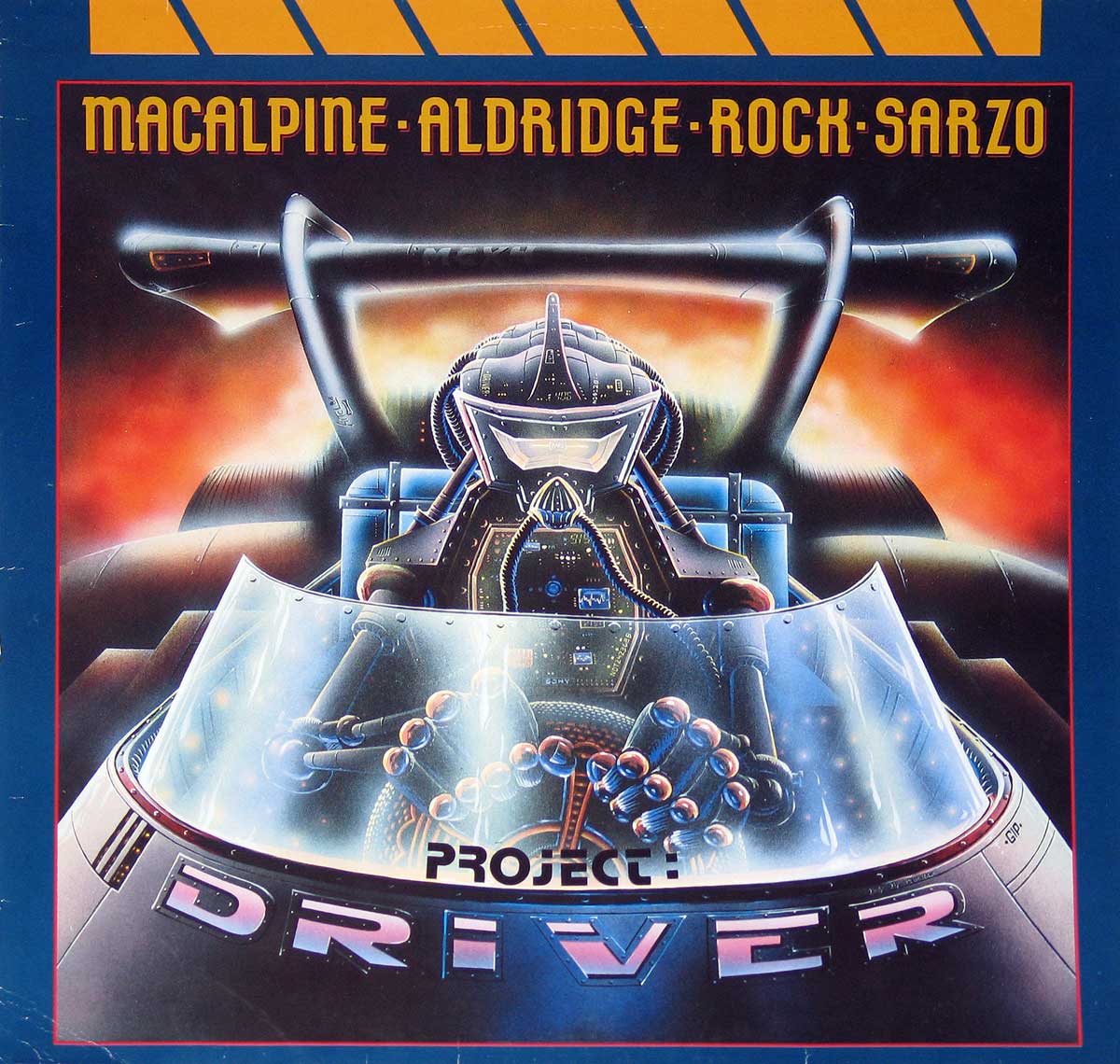
Album cover illustration: Guy Aitchison / Guilty and Innocent Productions
Guy Aitchison has been designing and drawing Heavy Metal album covers during the mid to late-1980s. During this period he has drawn numerous album covers. Since 1988 he apprenticed in Chicago at Bob Olson's Custom Tattooing and became a tattooist. Guy Aitchison has been working often together with Steve Fontano, Dino Alden, and George Horn on the same heavy metal albums.
Photography by Pat Johnson Studios, San Francisco, CA
Pat Johnson, an esteemed American photographer, has left an indelible mark in the world of photography with his remarkable talent for capturing the essence of great personalities in music, sports, and entertainment. Through his lens, he has immortalized some of the most iconic moments in history, creating a visual legacy that continues to inspire and captivate audiences around the world.
more...
Born and raised in the vibrant city of New York, Pat Johnson discovered his passion for photography at an early age. Armed with a camera and an unwavering curiosity, he began honing his skills, capturing the energy and spirit of the people and places that surrounded him. As he delved deeper into his craft, his unique ability to capture the essence of his subjects became evident.
During the 1980s, a defining era in both music and photography, Pat Johnson found himself in the midst of a creative explosion. He became an influential figure in the music industry, collaborating with renowned musicians and contributing to some of the era's most iconic album covers. His distinctive style and innovative approach allowed him to perfectly capture the essence of the artists and their music, turning each album cover into a visual masterpiece.
With his keen eye for detail and an intuitive understanding of his subjects, Pat Johnson worked with a wide array of musicians, including legends such as Michael Jackson, Madonna, Prince, and Bruce Springsteen. His photographs adorned the covers of critically acclaimed albums, becoming an integral part of the music's visual narrative.
Pat Johnson did not limit himself to photographing musicians. His camera wandered into sports arenas, film sets, and crowded stages where the light never sits still for long. Magazines picked up those images because Johnson had a knack for catching people mid-motion — an athlete twisting through the air, a performer leaning into a microphone, a movie star trying to hold a pose while the flash popped. The photos rarely looked staged. They felt like moments stolen between breaths, the sort that make you stop turning the page for a second.
Pat Johnson's ability to establish a deep connection with his subjects, putting them at ease in front of the lens, was a testament to his genuine curiosity and respect for humanity. His photographs were not merely snapshots but narratives that conveyed the essence of each person he photographed, revealing layers of their personality and leaving an everlasting impression on the viewer.
As the years passed, Pat Johnson's work continued to evolve, adapting to changing trends and technological advancements. His photographs not only documented the past but also served as a source of inspiration for aspiring photographers, constantly pushing the boundaries of the craft and redefining what it meant to capture a moment in time.
Today, Pat Johnson's legacy as an American photographer remains unparalleled. His images continue to inspire generations, resonating with their raw emotion and artistic brilliance. His ability to immortalize the great personalities of music, sports, and entertainment in a single frame has solidified his place among the legends of the craft. Pat Johnson's remarkable career serves as a testament to the power of photography, reminding us that a single image has the ability to transcend time and capture the very essence of the human experience.
|