"Fils de la Haine" (1985) Album Description:
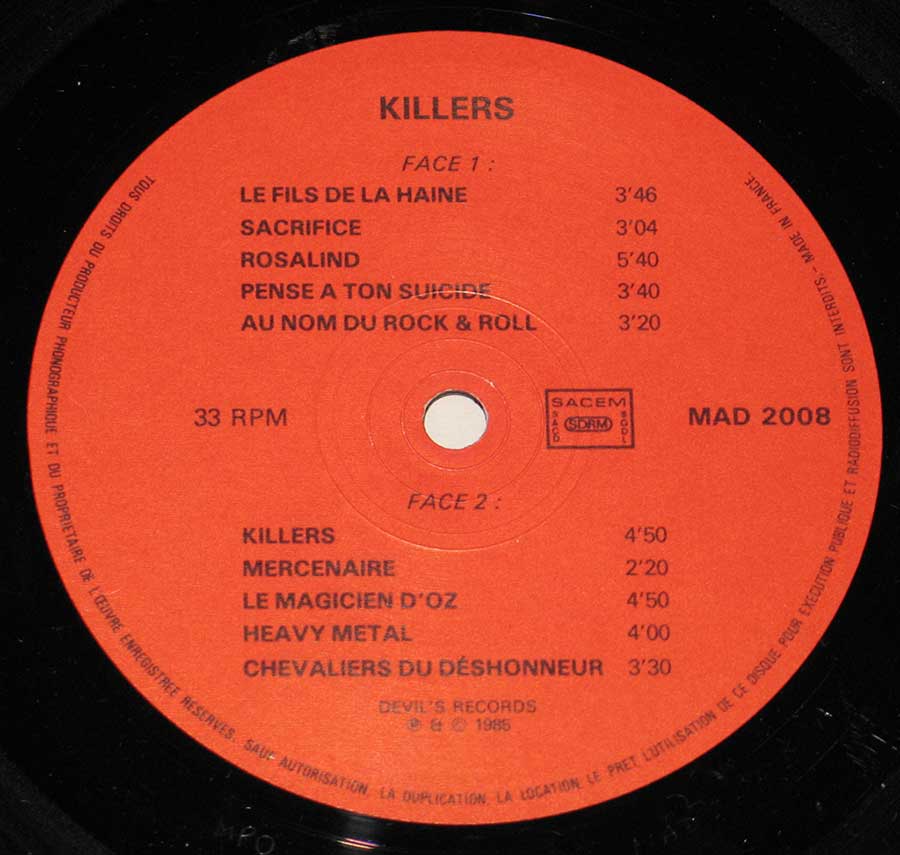
"Fils de la Haine" lands in 1985 with that particular French heavy-metal attitude: sharp collar, no smile, and a fist already cocked. Killers don’t chase glam, don’t chase radio, and definitely don’t chase your approval; they lock into a fast, squared-off grind and let Patrice Le Calvez bark the headlines. It’s a 12" LP on Devil’s Records, cut in France, and it sounds like it was recorded with the doors open to the street so the noise could wander in. Put on "Le fils de la haine" or "Rosalind" and you can practically smell cigarette paper and overheated tubes.
France, 1985: the air in the room
France in the mid-80s is a country arguing with itself in public and trying to look composed while doing it. Unemployment and politics are the dinner-table staples, and the streets keep throwing up reminders that the state can get weird when it feels cornered. Heavy metal, meanwhile, is still an under-lit backroom hobby: small clubs, hand-stapled fanzines, tape trades, and labels like Devil’s Records acting like stubborn little engines that refuse to stall.
So "Fils de la Haine" doesn’t arrive as some polished export product; it shows up like a band van rolling in late, still warm, with the drummer looking for a coffee and the guitarist already tuning by ear. Around them, French peers are pushing their own corners of the same problem: ADX leaning into speed, H-Bomb coming at you like a marching unit, Blaspheme bringing mood and drama, Sortilège chasing grand melodies, Vulcain running on Motörhead fuel, Satan Jokers flashing neon. Same country, different scars.
How Killers got here (and why the lineup matters)
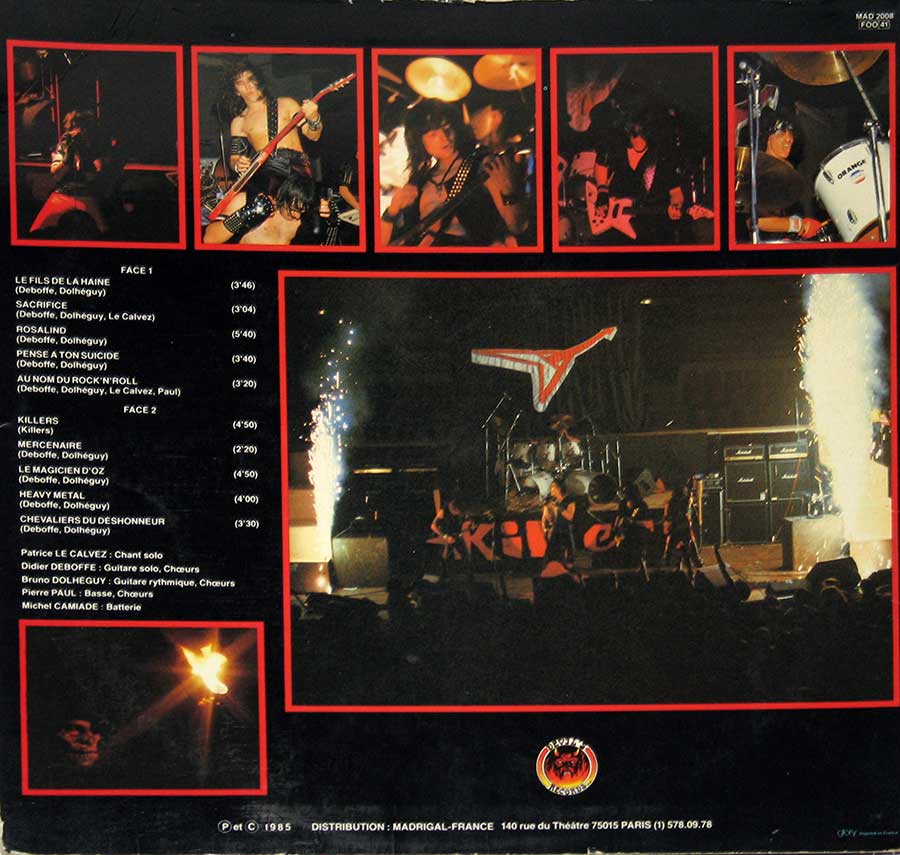
Killers start earlier than most people guess. They’re active from 1982, and before that they’re a cover band called Génocide (1980-1982) working out the basics the hard way: loud rooms, borrowed amps, and the discipline of playing other people’s songs until you’re sick of them. By the time "Fils de la Haine" is tracked, the band is sitting in that classic five-piece formation: Patrice Le Calvez on lead vocals; Didier Deboffe and Bruno Dolheguy on guitars (Deboffe taking lead duties); Pierre Paul on bass; and Michel Camiade on drums (he joins in 1984 and gives the band a tougher spine).
The practical part: this lineup plays like a unit, not a committee. The guitars don’t politely take turns; they crowd each other. The rhythm section doesn’t decorate; it drives. And then history does its ugly little cause-and-effect trick: in 1986 the band splits over social issues, with Dolheguy keeping the Killers name while Le Calvez, Deboffe, Paul, and Camiade break off to form Titan. Listening now, you can hear why that split made musical sense: the chemistry on this record isn’t casual. It’s a shared direction.
Sound: attack, space, and tempo feel
"Fils de la Haine" sits in that heavy/speed pocket where the riffs are built like machine parts and the choruses are made to be shouted by people who don’t usually sing. The guitars are tight and metallic, but not glossy; the edges stay sharp. The drums keep a forward lean, like the whole album is slightly late for something and refuses to slow down to apologize.
Production-wise, the band keeps control (they produce it themselves), and the recording/mixing work is handled by Philippe Ravon at Studio Carat in Bordeaux. You can hear the choice: this isn’t about “clarity” as a lifestyle. It’s about impact. The instruments sit close, the room doesn’t get romantic, and the tracks move with a kind of blunt efficiency that feels earned instead of engineered.
Songs that do the work
Some records want you to admire them. This one wants you to keep up.
- "Le fils de la haine" opens like a door kicked inward: fast start, no warm-up, and vocals that sound like they’ve already been arguing for an hour.
- "Rosalind" stretches out past five minutes without losing tension; the guitars keep finding little corners to slash at.
- "Pense à ton suicide" is the title that makes polite people flinch; musically it’s disciplined, with the kind of hard-edged hook that doesn’t need prettifying.
- "Au nom du rock 'n' roll" is the band planting a flag and daring you to call it corny; it works because they don’t wink.
- "Le magicien d'Oz" shows up as an instrumental breather that still refuses to be soft.
- "Heavy Metal" is the self-identifier, and it’s delivered like a diagnosis, not a slogan.
- "Chevaliers du déshonneur" closes the loop with a lean, marching energy that feels more street than stage.
One small detail I like: backing vocals are handled inside the band (Dolheguy, Paul, Deboffe). It keeps the gang feel intact. No choir, no studio pals, no cosmetics.
The people behind the sleeve (because it matters)
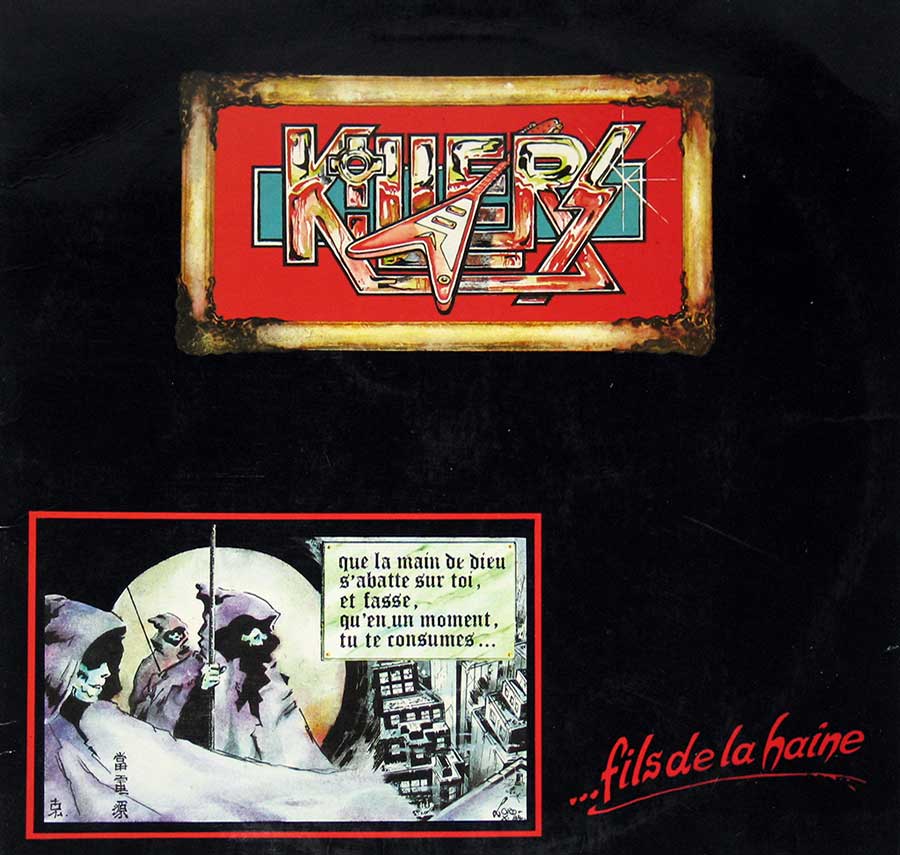
Metal records live and die by how their details get handled when nobody’s watching. The cover art is credited to Xavier Lorente-Darracq, photography to Filguy Padrones, and that matters because this era is still building its visual language: not fantasy for fantasy’s sake, not shock for shock’s sake, but imagery that looks like it belongs to the same streets as the lyrics. It’s the difference between a band that feels local and one that feels like it’s trying on someone else’s jacket.
Controversy, or the lack of it
No big documented scandal hangs off this release, unless you count the usual moral panic from people who read song titles as if they’re legal statements. The real confusion is more boring and more common: people mix them up with Iron Maiden’s "Killers" era, and in later decades the band name gets tangled with the much newer pop-rock "The Killers." This Killers is French, early-80s, heavy/speed, and stubborn about it.
My personal anchor, because I can’t help myself: this is the kind of LP you’d find in a record shop bin with a hand-written divider that just says “METAL (FR)” in black marker, and the guy behind the counter would nod like he’s letting you into a small, slightly secret club. You buy it, take it home, and the first side makes your speakers sound like they’ve got opinions.
References
- Encyclopaedia Metallum: Killers - "...fils de la haine" (album page, credits, studio, release month)
- Encyclopaedia Metallum: Killers (band page, origins, lineup split into Titan)
- Encyclopaedia Metallum: Devil's Records (label page)
- The Corroseum: Devil's Records discography overview
- Encyclopaedia Metallum: ADX - "Exécution" (1985 peer context)
- Encyclopaedia Metallum: H-Bomb - "Attaque" (1985 peer context)
- Encyclopaedia Metallum: Blaspheme - "Désir de vampyr" (1985 peer context)
- Historical backdrop: 1985 Rainbow Warrior affair (broad national mood reference)