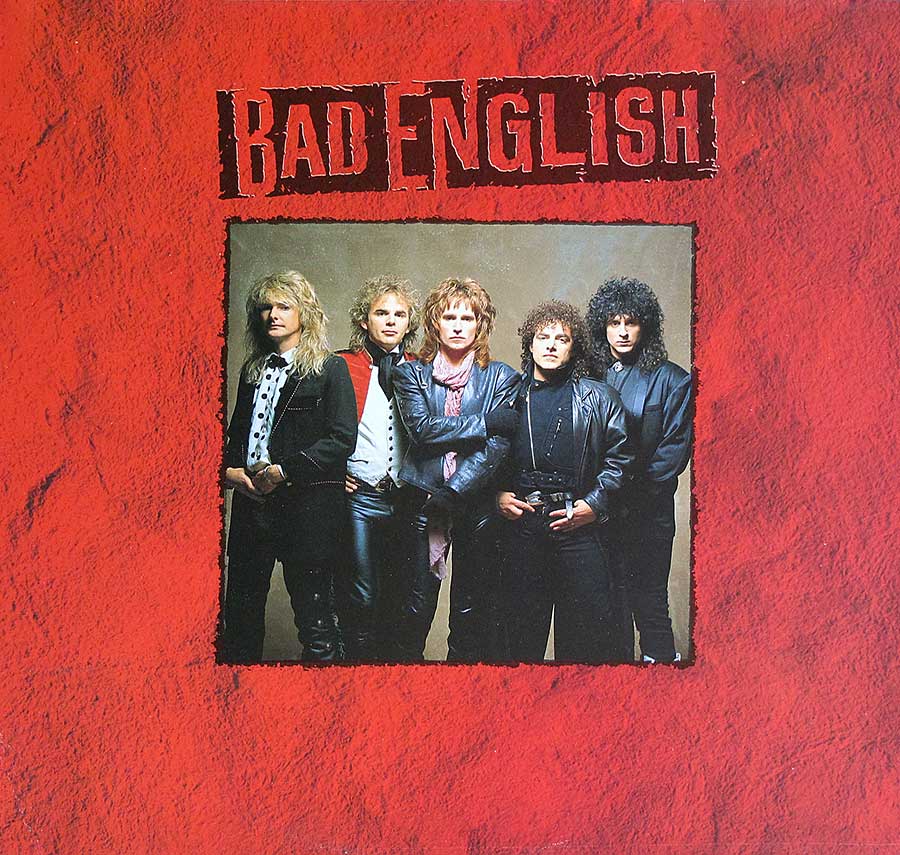
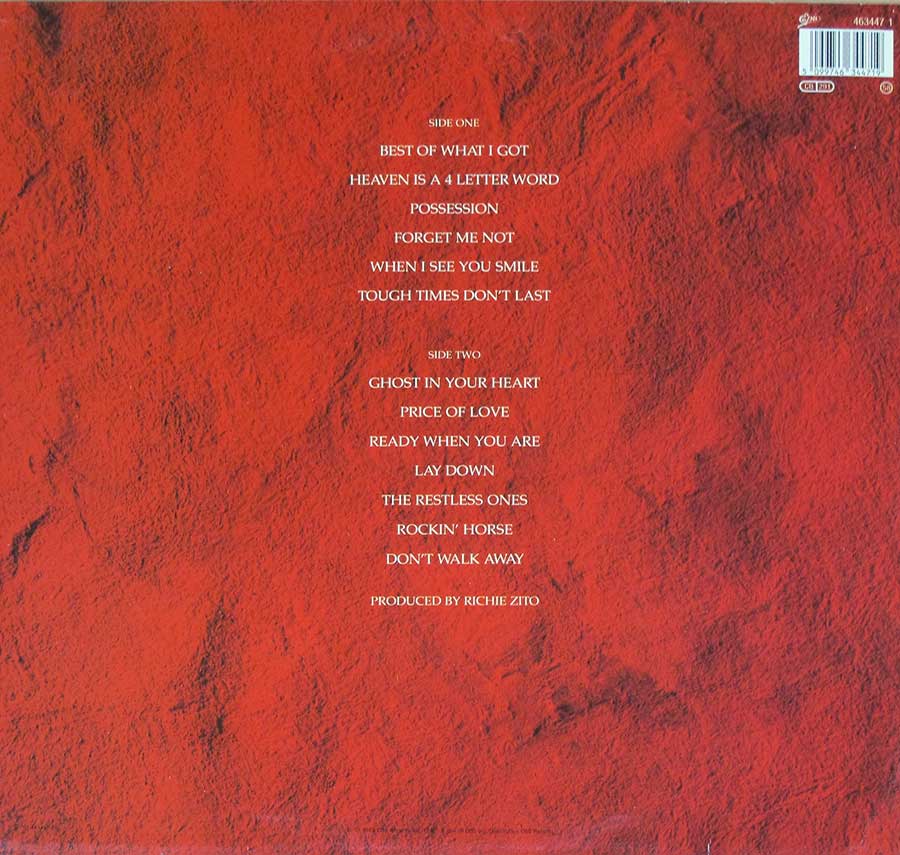
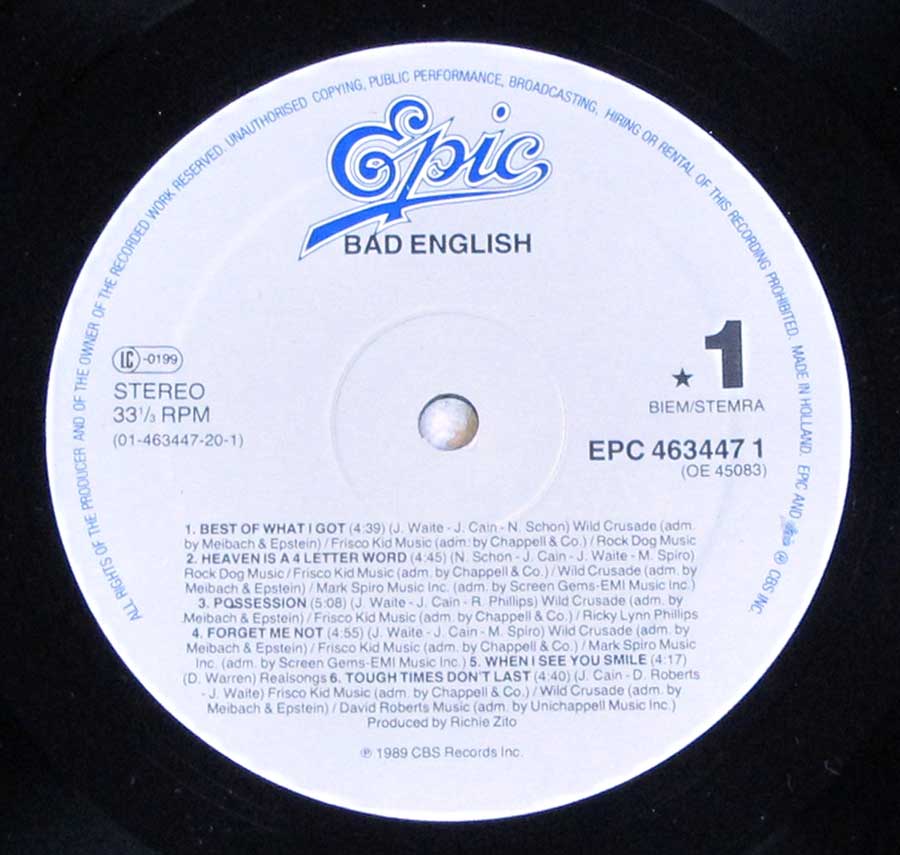
"Bad English - S/T Self-Titled Debut album" (1989) Album Description:
"Bad English - S/T Self-Titled Debut album" is 1989 arena-rock perfection with a supergroup grin and a power-ballad knockout punch, the kind of record that doesn’t whisper “hit single” so much as strut into the room and demand better speakers. It’s glossy, emotional, and built for big choruses, but underneath the polish you can hear real musicianship doing the heavy lifting, not just hairspray and wishful thinking.
1) Introduction on the band and the album
Bad English show up here as a British American Rock statement with one foot in classic rock muscle and the other in late-80s radio dominance. The lineup reads like people who’ve already lived a few musical lives and decided, together, to aim straight for the stadium lights.
2) Historical and cultural context
In 1989, rock was in that weird sweet spot where everything sounded enormous, every chorus wanted to be a slogan, and sincerity came packaged in reverb and confidence. This release coming out of the Netherlands fits the era’s appetite for larger-than-life hooks and big emotions that could travel across borders without needing subtitles. {index=2}
3) How the band came to record this album
You can feel the “we’re not here to mess around” intent in how tightly this debut is presented: a supergroup debut designed to land cleanly, loudly, and immediately. Recorded across a cluster of Los Angeles studios, it’s the sound of a band with resources, urgency, and a very clear mission: make songs that survive the drive home.
4) The sound, songs, and musical direction
The sonic personality here is anthem-first: bright guitars, big keys, and drums that hit like they’re trying to leave dents in the decade. John Waite’s lead vocal sits front-and-center with that aching, dramatic edge that makes even the glossy moments feel human, like the heartbreak is wearing a leather jacket.
The obvious crown jewel is "When I See You Smile", the kind of late-80s power ballad that doesn’t just pull heartstrings, it yanks them like a lawnmower cord. But it’s not only about the slow-dance spotlight; tracks like "Best of What I Got" and "Price of Love" keep the pulse up and prove this band could do more than pose dramatically near fog machines.
5) Comparison to other albums in the same genre/year
In the late-80s hard rock ecosystem, plenty of bands chased hooks, but Bad English leaned harder into adult-sleek songwriting without giving up the arena punch. Where some records from the same year went for street-level grit or glam chaos, this one goes for a clean, high-contrast cinematic sheen: built for radio, but performed by players who actually know how to drive the machine.
- Many 1989 rock releases: bigger hair, bigger attitude, sometimes smaller songs.
- Bad English: bigger songs, cleaner drama, and a “professional” tightness that’s hard to fake.
- Result: a debut that sounds engineered to last longer than the fashion choices.
6) Controversies or public reactions
The page doesn’t flag a specific scandal or backlash around this album, and honestly that tracks: this is not a “controversy” record, it’s a consensus missile. If anything split opinions, it would’ve been the usual late-80s argument: “too polished” versus “turn it up, it’s perfect,” with both sides somehow being correct at the same time.
7) Band dynamics and creative tensions
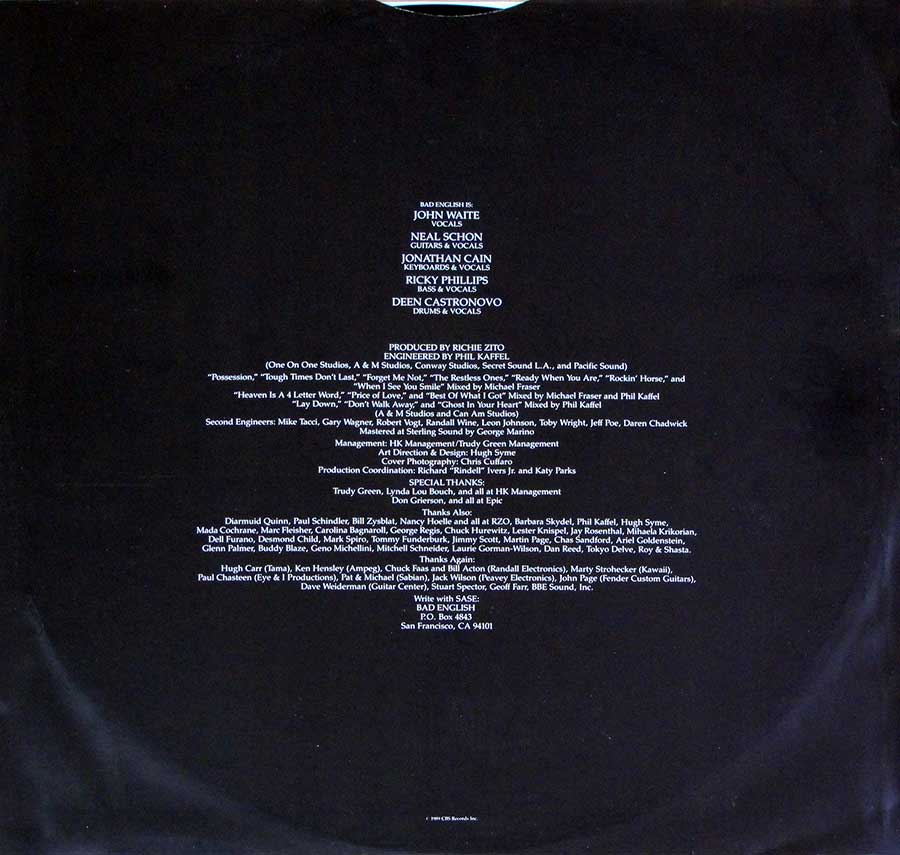
Supergroups always carry that quiet tension between ego and chemistry, and this lineup is stacked: Waite up front, Neal Schon on guitars, Jonathan Cain on keys, plus a rhythm section that can sing while it swings. The impressive part is how unified it feels on record, like everyone agreed the job was to serve the songs first, and argue later in the parking lot.
And yeah: this Neal Schon is the same one whose story intersects with Santana long before Bad English existed, which matters because you can hear that pedigree in the way the guitars move. He doesn’t just “play parts,” he threads lines with a veteran’s sense of melody, the kind of phrasing that comes from growing up inside serious bands and serious stages.
8) Critical reception and legacy
The page calls it a platinum-selling debut, and you don’t need a spreadsheet to understand why: it’s hooky, emotional, and engineered for repeat listens. What’s funny is how records like this get dismissed as “too 80s” until you play them again and remember the secret: craft still counts, and these songs were built with it.
9) Reflective closing paragraph
As a collector, I love albums like this because they’re time capsules that still work in the present tense: you drop the needle and suddenly you’re back in an era where choruses were allowed to be huge and feelings were allowed to be loud. Decades later, the riffs still smell faintly of beer, sweat, and misplaced optimism—and honestly, that’s a fragrance notes list I’ll never unsubscribe from.