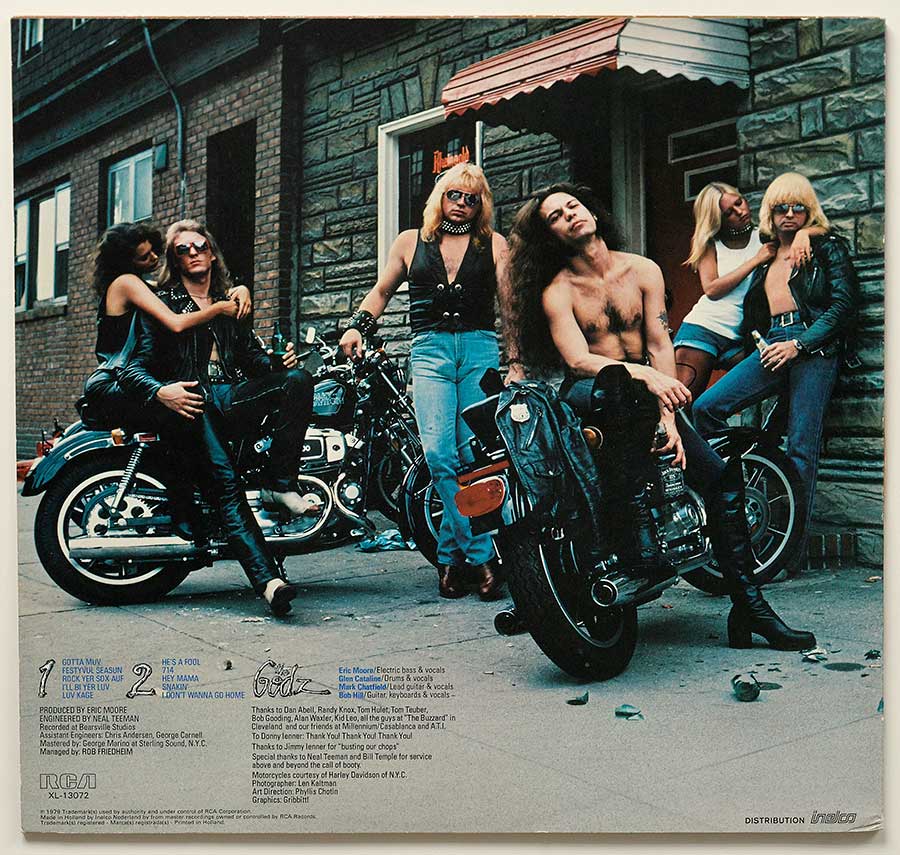
George Marino is one of those behind-the-glass legends who made heavy music feel larger than the room it was playing in. Before the mastering console became his throne, he was a Bronx guitarist doing the NYC band grind in the 1960s with groups like The Chancellors and The New Sounds Ltd. Then he went pro for real: starting at Capitol Studios in New York (1967), and eventually becoming a long-running force at Sterling Sound (from 1973 onward). For a collector like me—living in that sweet spot where 1980s heavy metal, hard rock, and a dash of prog-minded ambition collide—Marino’s credits read like a stack of essential sleeves: Holy Diver (Dio), Tooth and Nail (Dokken), Stay Hard (Raven), Master of Puppets (Metallica), Somewhere in Time (Iron Maiden), Among the Living (Anthrax), Appetite for Destruction (Guns N’ Roses), Slippery When Wet (Bon Jovi), and Blow Up Your Video (AC/DC). That’s the kind of resume that doesn’t just “master” records—it weaponizes them, but with taste. George Marino Wiki
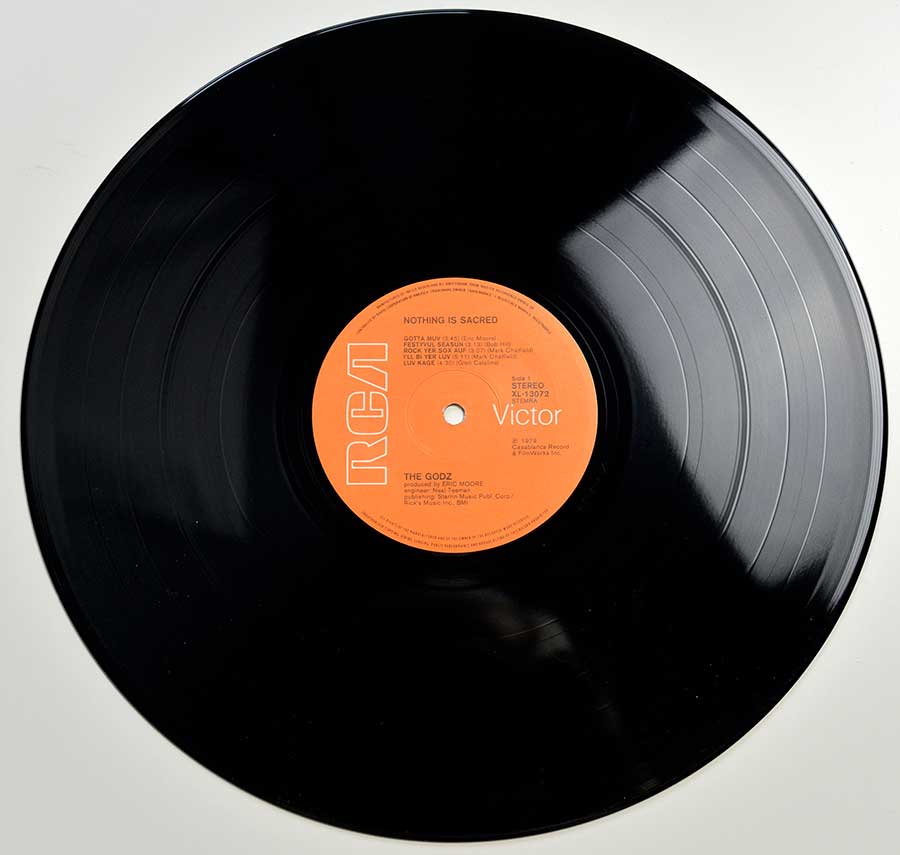
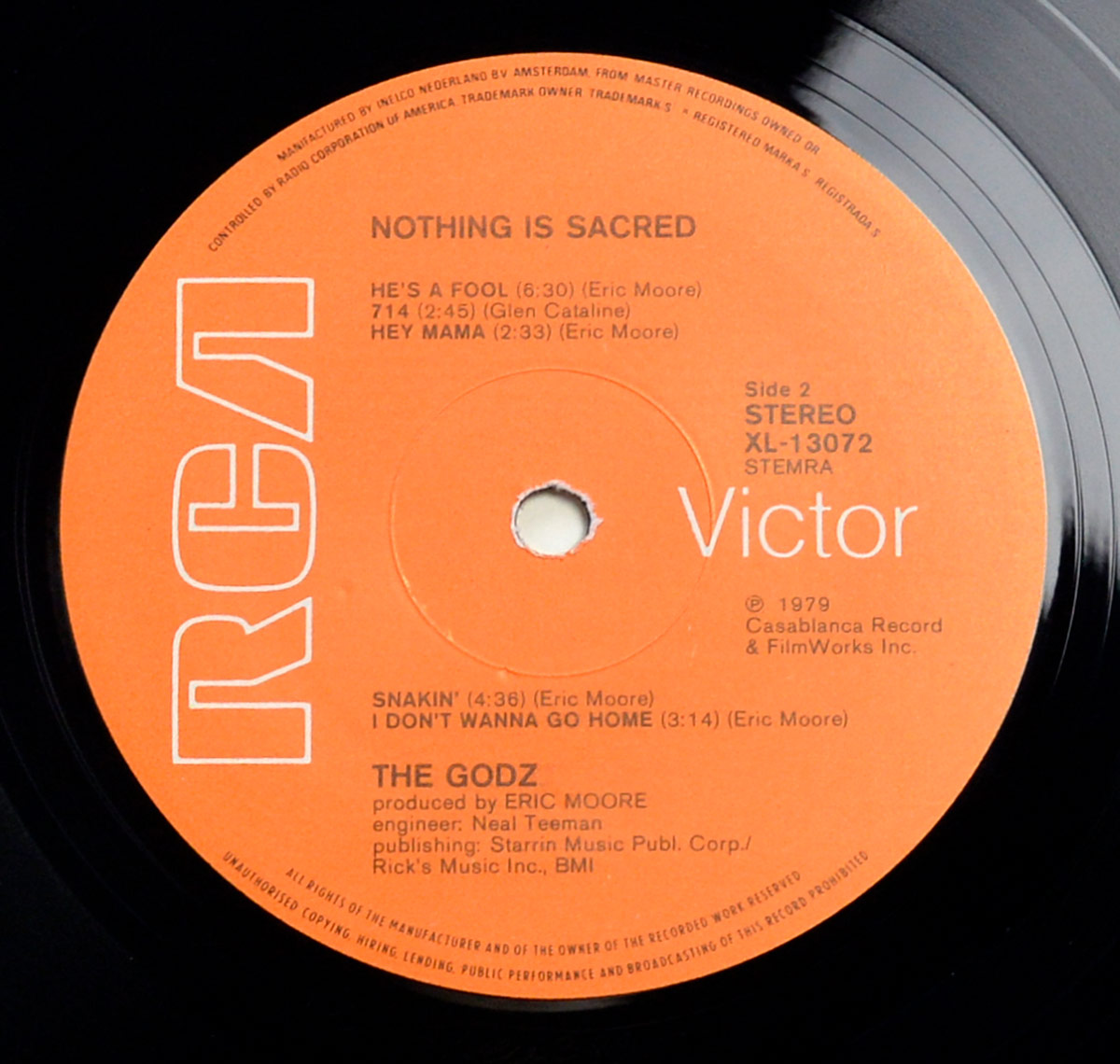
THE GODZ – Nothing Is Sacred 12" Vinyl LP Album
- Outlaw Rock Defiance from Ohio – The Godz Unleash Chaos in a Disco-Soaked World
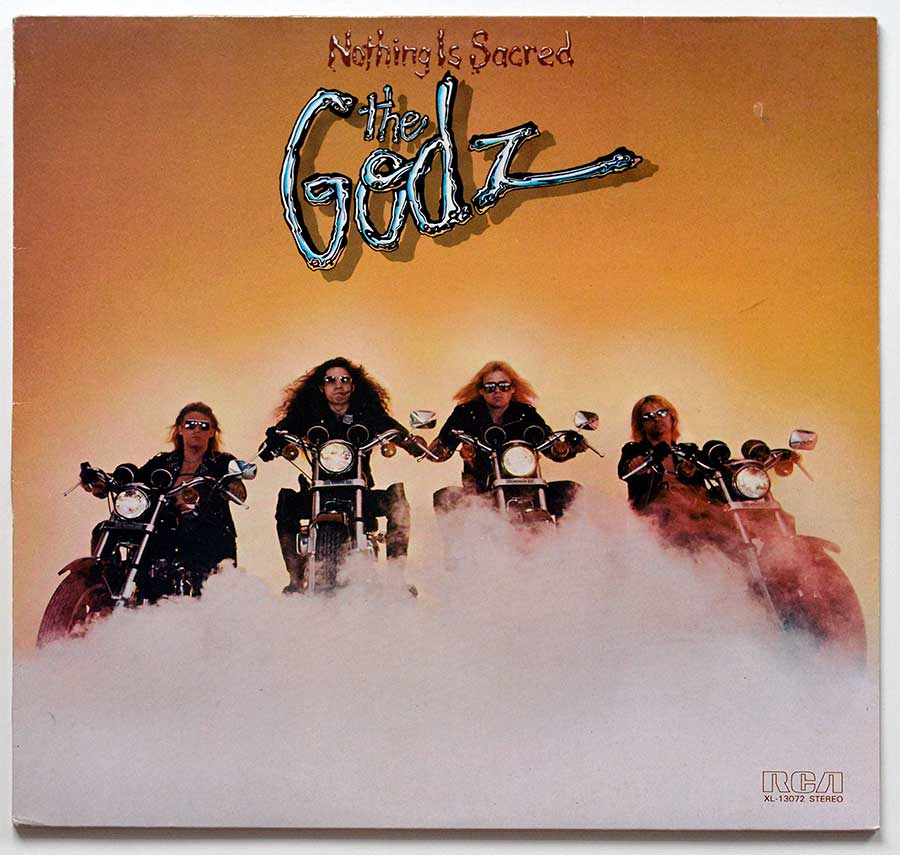
"Nothing Is Sacred" is the second official full length album by the American Hard Rock band "The Godz". "The Godz" is a Hard Rock band from Columbus, Ohio, this band was founded in 1976 and started touring with bands like Kiss and "Cheap Trick" during 1977.