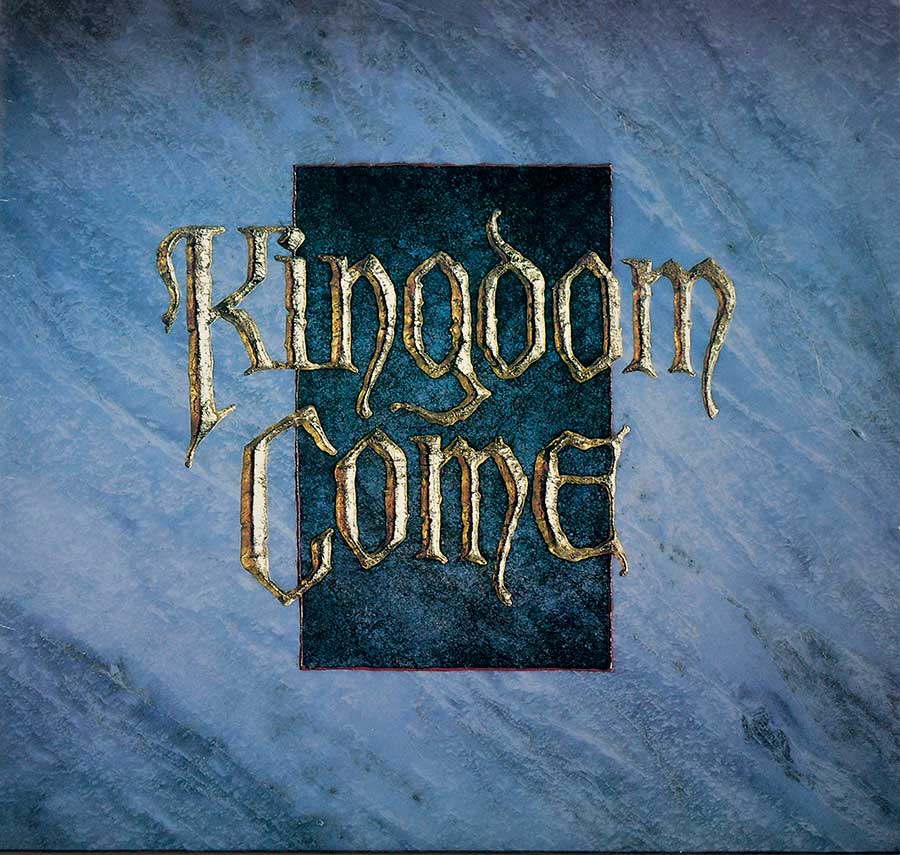
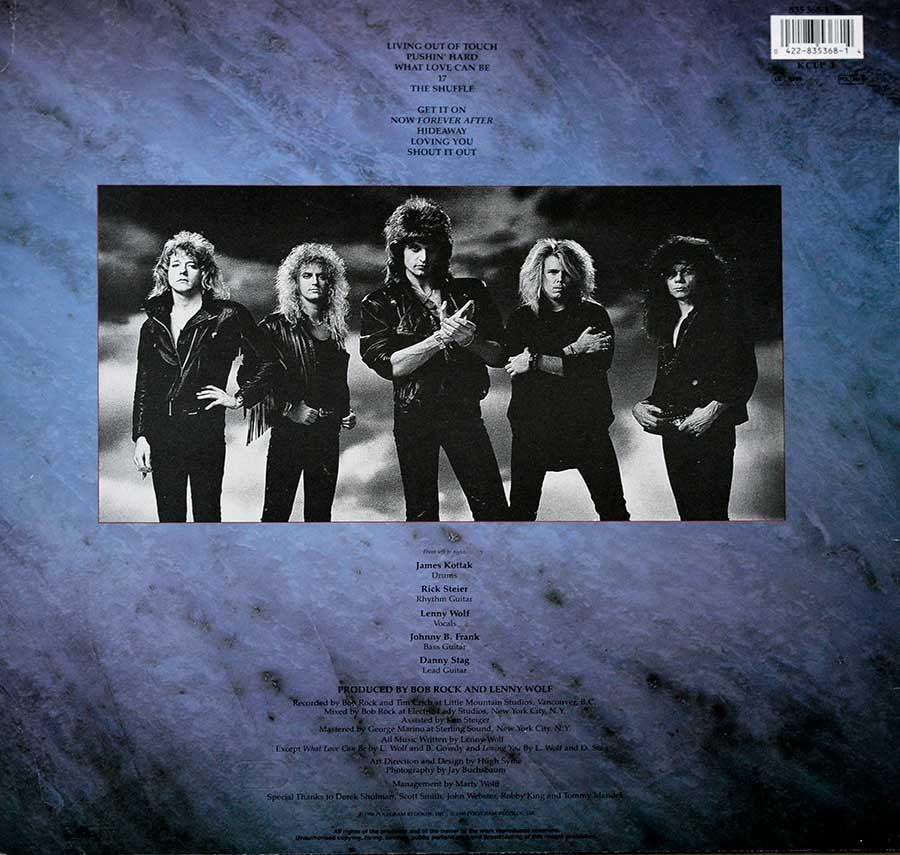
"Kingdom Come," the eponymous debut album by the German hard rock band, is etched into the world of music history as their quintessential work. Presented on a 12" Vinyl LP Album, this release marked the inception of Kingdom Come's powerful presence in the hard rock scene. Widely regarded as their best album, it showcases the band's distinctive sound and solidifies their standing among hard rock enthusiasts. A testament to their musical prowess, this self-titled album remains a cornerstone in Kingdom Come's legacy.
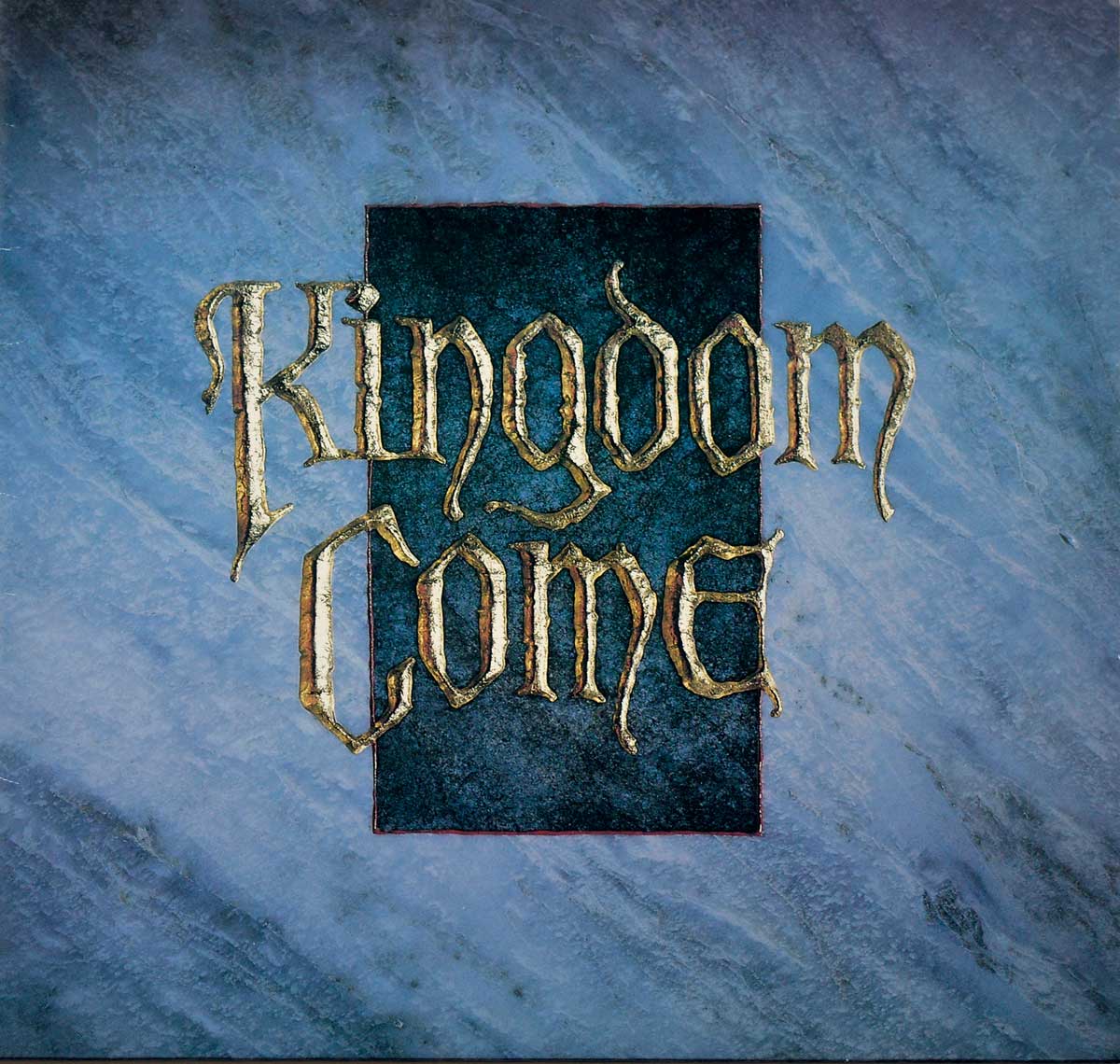
The year was 1988, and the hard rock scene was hungry for a new champion. Enter Kingdom Come, a German band poised to take the genre by storm with their self-titled debut album, released on 12" vinyl LP in West Germany. This record, forever etched in the annals of hard rock history, marked the beginning of a powerful legacy for the band.
Kingdom Come's debut album is widely considered their finest work. It's a showcase of their distinct sound, a blend of classic hard rock influences with a fresh, energetic approach. This LP solidified their place among hard rock enthusiasts and established them as a band to be reckoned with.
The album is a testament to the band's musical prowess. Each track is a demonstration of their tight musicianship and songwriting skills. From the electrifying opener "Living Out of Touch" to the soaring ballad "Now Forever After," the album is a journey through a spectrum of hard rock emotions.
Here's a glimpse into some of the album's highlights:
"Living Out of Touch": This high-octane track sets the tone for the album, showcasing the band's driving rhythm section and Lenny Wolf's powerful vocals.
"What Love Can Be": A powerful ballad that showcases the band's softer side, featuring a guest songwriting credit from B. Gowdy.
"The Shuffle": This track features a scorching guitar solo from Danny Stag, a glimpse into the band's lead guitar prowess.
"Get It On": A return to the album's hard-driving energy, sure to get any head banging.
The album: "KINGDOM COME" was produced by:
Bob Rock and Lenny Wolf
The studio wizard who helped turn hard rock into stadium-sized thunder (and even grabbed a bass for Metallica when the job got awkward). Read more...
Bob Rock, I file his name under "the guy who makes bands sound like they bench-press mountains." He cut his teeth at Vancouver's Little Mountain Sound Studios (starting in 1976), then graduated from behind-the-glass detail freak to full-on hit-forge producer. As a performer he wasn't just a studio shadow: he was in Payola$ (formed 1978), teamed up as Rock and Hyde (1987), released music with Rockhead (1991), and in the ultimate "wait, what?" moment he played all the bass parts on Metallica's "St. Anger" and even served as their live bassist from Jason Newsted's 2001 exit until Robert Trujillo joined in February 2003. Production-wise, his fingerprints are all over huge, loud turning points: Mötley Crüe's "Dr. Feelgood" (1989), The Cult's "Sonic Temple" (1989), and Metallica's self-titled "Black Album" (1991) are basically proof that polish and punch can coexist without filing off the danger. He is the rare producer who can make a band sound bigger without making them sound fake, which is a small miracle in rock history.Bob Rock Wiki
Sound/Recording Engineer(s):
Bob Rock, Tim Crich (Note: TIm Crich also worked on the 1988 Rolling Stones album: "Dirty Work")
This album was recorded at:
Little Mountain Studios, Vancouver
Mixed by
Bob Rock and Ken Steiger at Electric Lady Studios, New York City (Note: Ken Steiger has also worked for Kiss on the album "Asylum")
Mastered by
George Marino at Sterling Sound, New York City
When my site brain goes full 1980s metal mode, his name keeps showing up like a hidden signature in the dead wax. Read more...
George Marino is one of those behind-the-glass legends who made heavy music feel larger than the room it was playing in. Before the mastering console became his throne, he was a Bronx guitarist doing the NYC band grind in the 1960s with groups like The Chancellors and The New Sounds Ltd. Then he went pro for real: starting at Capitol Studios in New York (1967), and eventually becoming a long-running force at Sterling Sound (from 1973 onward). For a collector like me—living in that sweet spot where 1980s heavy metal, hard rock, and a dash of prog-minded ambition collide—Marino’s credits read like a stack of essential sleeves: Holy Diver (Dio), Tooth and Nail (Dokken), Stay Hard (Raven), Master of Puppets (Metallica), Somewhere in Time (Iron Maiden), Among the Living (Anthrax), Appetite for Destruction (Guns N’ Roses), Slippery When Wet (Bon Jovi), and Blow Up Your Video (AC/DC). That’s the kind of resume that doesn’t just “master” records—it weaponizes them, but with taste. George Marino Wiki
Album cover design: Hugh Syme
The guy who made Rush look like Rush (and yes, that Starman). Read more...
Hugh Syme, the rare multi-tool who can make an album cover iconic and also show up as an actual musician, is the name I keep running into whenever a rock record looks suspiciously smarter than it has any right to be. He is a Canadian Juno Award-winning graphic artist and longtime visual architect for Rush, starting with the cover for "Caress of Steel" (1975) and going on to create their famous Starman logo, basically branding half of progressive rock fandom for decades. Before (and alongside) all that visual world-building, he performed as a keyboardist, singer, and co-arranger with the Ian Thomas Band in the mid-to-late 1970s, and later contributed as a keyboard player on several Rush albums; he is also credited as a musician with Tiles, because apparently sleeping is optional when you are Hugh Syme. Hugh Syme Wiki
Album cover photography: Jay Buchbaum
Hard Rock, Glam Metal
Polydor 835 368-1, Polydor KCLP 1
Record Format: 12" Vinyl Stereo Gramophone Record
Total Album (Cover+Record) weight: 230 gram
1988 Made in West-Germany for European Distribution
---
Polydor 835 368-1 Record Label Details: Biem / Stemra
---