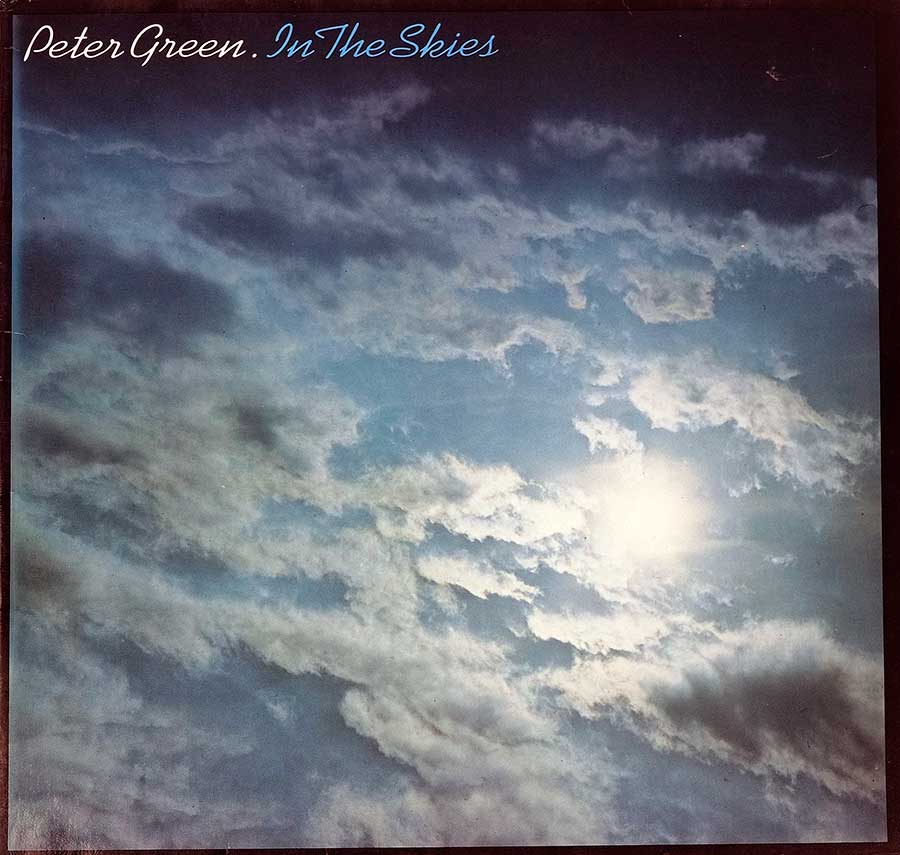
"In The Skies" (1979) Album Description:
The Hook
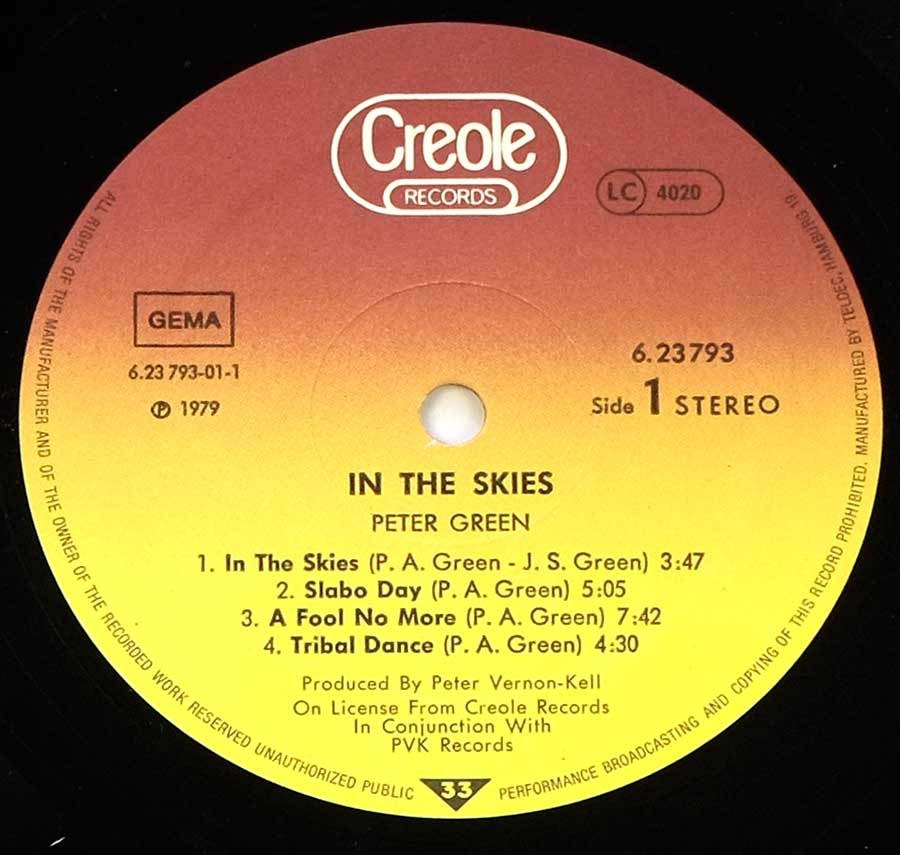
My turntable doesn’t do small talk, and Peter Green doesn’t do fake smiles. In The Skies lands like a comeback letter written in blues-rock ink: clean, human, a little bruised, and weirdly triumphant. Released in 1979 on a German pressing, it’s his second solo album—and the first one after eight years of obscurity, which is basically the music world’s version of being ghosted.
The Era
Late-70s rock was loud in public and complicated in private. Big stages, bigger expectations, and the radio dial that could turn a musician into wallpaper if the story didn’t stay spicy. Dropping a blues-rock record into that moment takes nerve, because blues doesn’t beg for attention—it just stands there, staring.
The Genesis
Context matters: Green wasn’t some random guitarist who wandered into a studio on a dare. Fleetwood Mac existed because he built it, and he lived inside that band from 1967–70. Coming back in 1979 with a solo LP feels less like a “new chapter” and more like a return to the witness stand: the player shows up, tells the truth, lets the notes do the cross-exam.
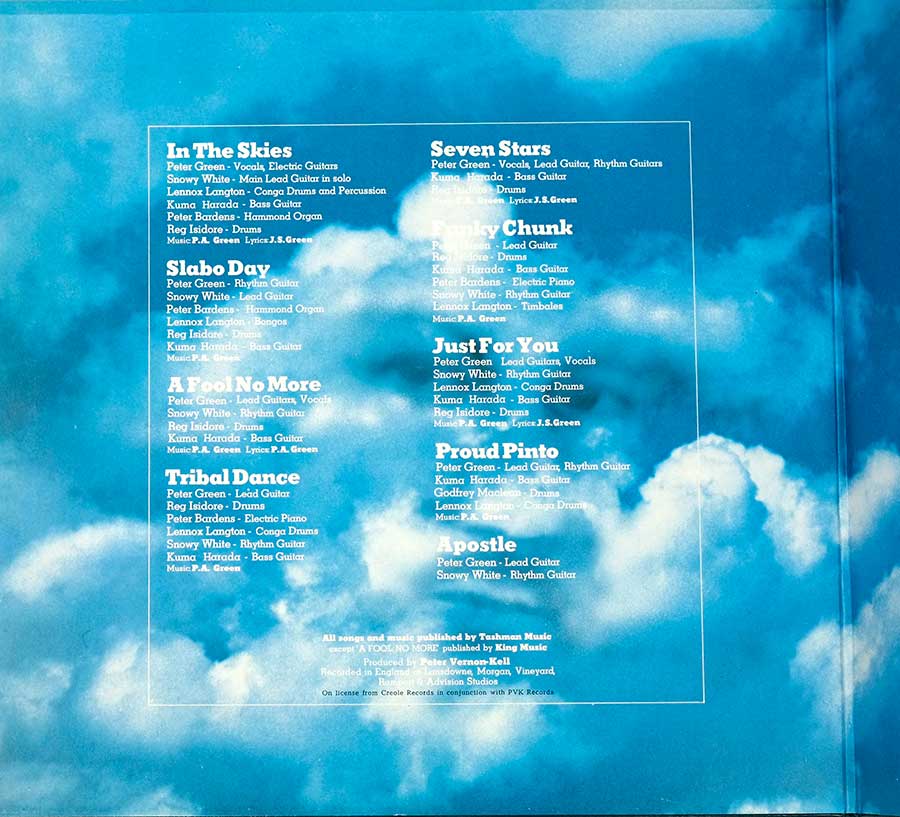
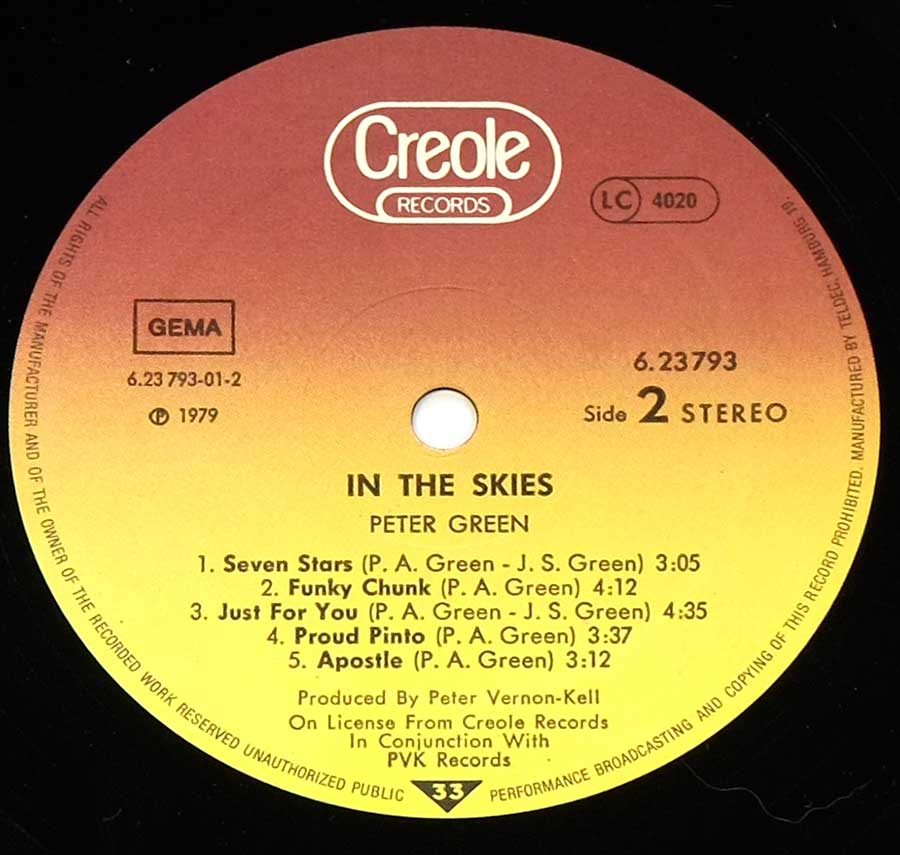
Producer credit goes to Peter Vernon-Kell, and the recording trail runs through Lansdowne, Morgan, and Vineyard studios in England. That’s not a list of rooms—it’s a map of how this album sounds: controlled, present, and built to carry detail when the needle hits the groove.
The Wax
Needle-down on In The Skies and the first thing that shows up is air—space around the guitars, room for the rhythm section to breathe, and that unmistakable Green vibe: melodic lines that feel like they’re thinking out loud. No cap, it’s the opposite of ego-rock. It’s tone as a confession.
Slabo Day stretches out with that slow-burning patience, like the band is daring you to stop listening. A Fool No More goes longer and deeper, the kind of track that makes time feel optional. Tribal Dance adds pulse and movement—percussion gets to talk back, and the groove starts strutting instead of just walking.
Side Two flips the mood in small, satisfying ways. Seven Stars has that quick-hit clarity, Funky Chunk leans into the name with a grin you can hear, and Just For You slides in smooth without turning soft. Proud Pinto and Apostle close things out with a kind of quiet resolve—less fireworks, more afterglow.
The Peer Review
Placed next to the big late-70s rock machine, this record doesn’t try to out-muscle anyone. It wins by being direct, and honestly a little cooler for it.
- Compared to Green’s own Fleetwood Mac blues era (1967–70), the feeling here is more reflective—same DNA, different weather.
- Compared to the tighter, hard-driving blues school that fed players like him, the tempos on this LP often choose space over sprint.
- Compared to glossy rock trends of 1979, In The Skies keeps its hands dirty and its story intact.
The Drama
No tabloid fireworks are spelled out on the page, so the drama stays where it belongs: in the music, not the gossip.
The Friction
The real tension is baked into the headline fact: eight years of obscurity, then a return. That gap hangs over the grooves like a shadow you don’t have to name. The playing answers it anyway—measured, intentional, and allergic to showboating.
The Legacy
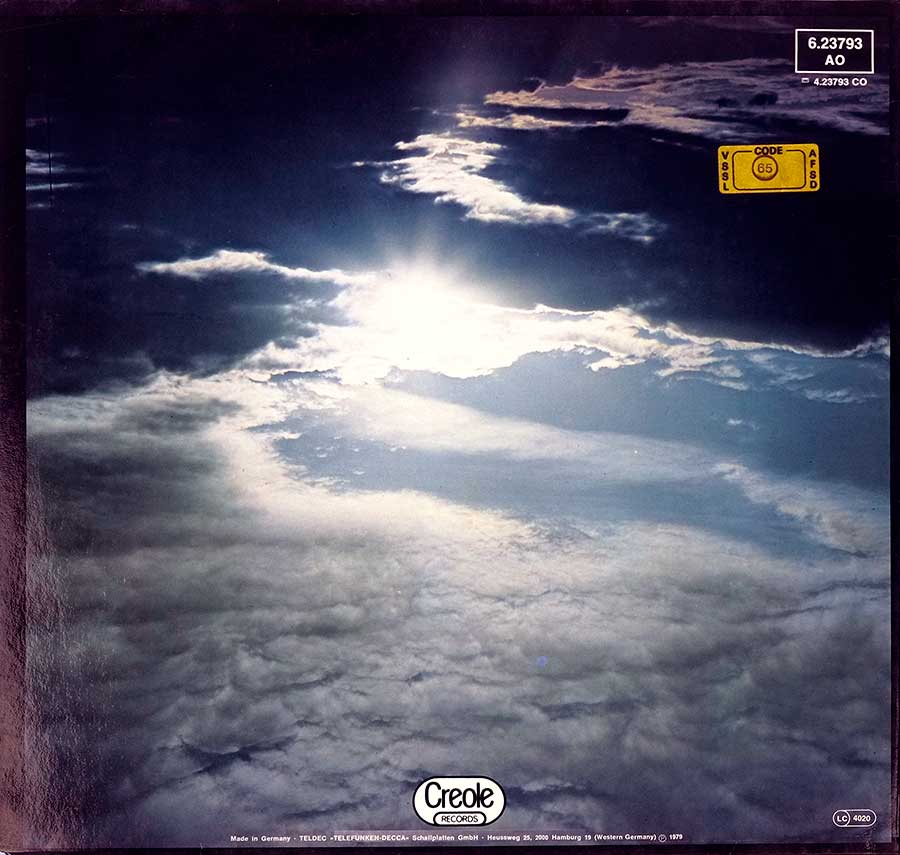
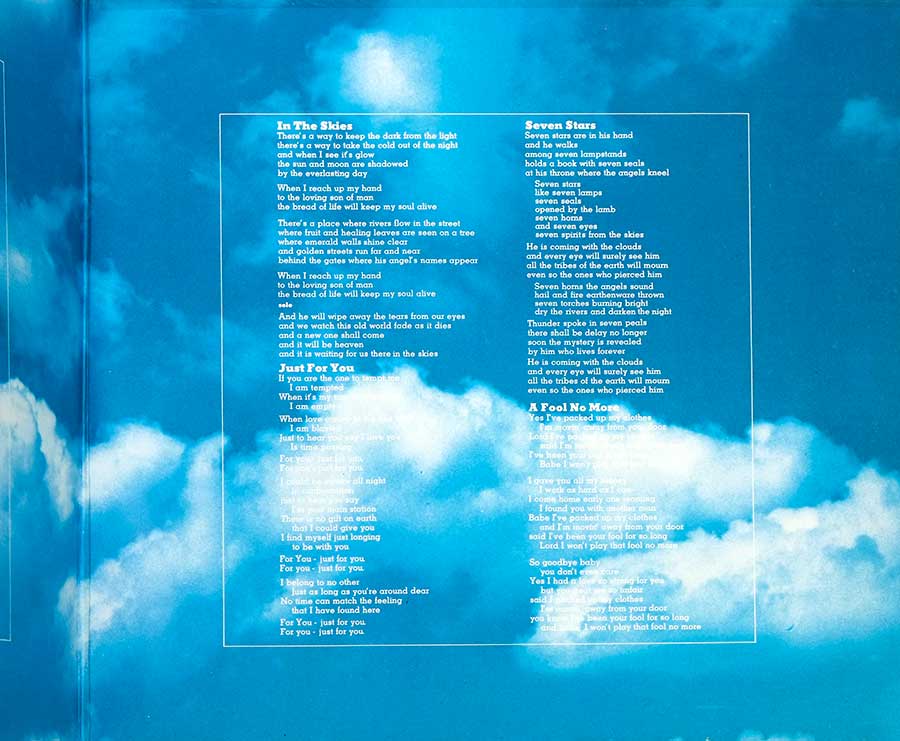
This one lives rent-free in collector brains because it’s a comeback that doesn’t beg. Gatefold packaging helps, sure—those inside pages make the whole thing feel like a proper artifact—but the real keeper is the mood: blues-rock with dignity, recorded clean, and performed by musicians who know when to leave the spotlight empty.
The Fade Out
Sliding the record back into its gatefold feels like closing a book you didn’t speed-read—because this one rewards going back, again and again, until the room is quiet.