Hörzu’s Secret Vinyl Empire: How a TV Magazine Stamped Pink Floyd & Kraftwerk

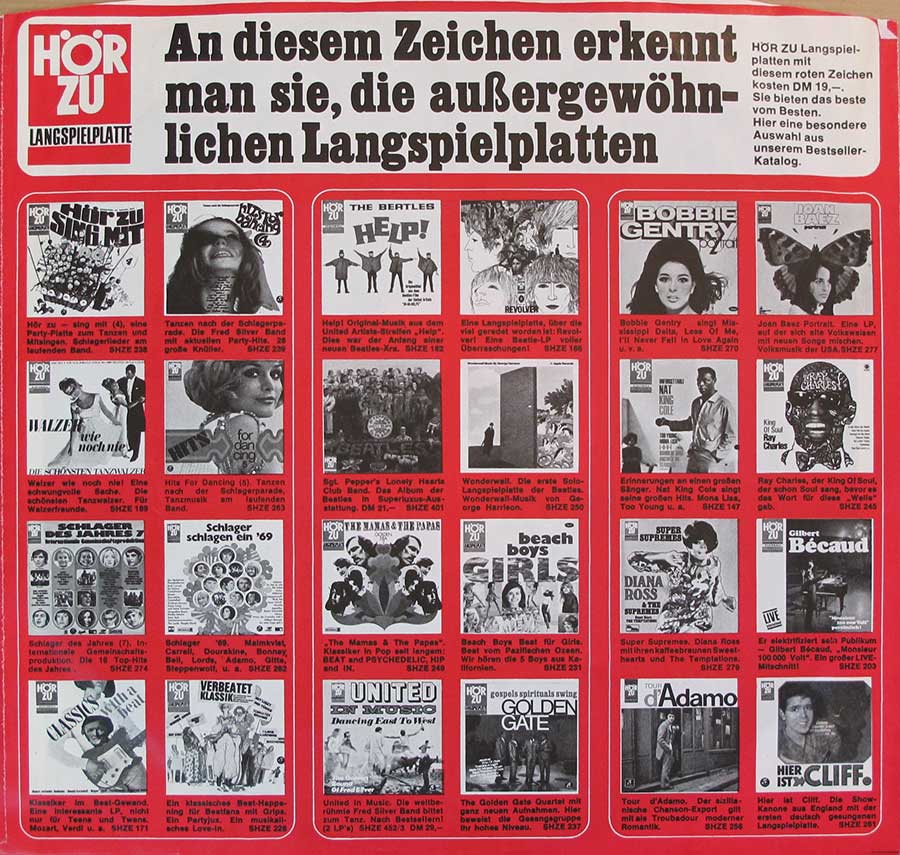
In the German record market of the 1970s and 1980s, Hörzu wasn’t just a TV-guide giant—it quietly became a vinyl “seal of approval,” partnering with EMI/Electrola and stamping its logo on select releases. As a collector, I love the irony: a listings magazine nudging what ended up on the turntable. Spot the mark on Pink Floyd’s Atom Heart Mother or Kraftwerk’s Radio-Aktivität, and you’re holding a slice of West German media muscle—often an early German pressing with that extra whiff of exclusivity. It helped prog and krautrock slip into the mainstream without sounding like homework.


Large Album Front Cover Photo of

"ALBUM TITLE" (YEAR) Album Description:

Calling Hörzu a “music magazine” is like calling a Swiss Army knife a “cute little blade.” It did cover music, sure, but Hörzu was basically Germany’s weekly pop-culture control tower: radio/TV listings first, then celebrity, film, entertainment, and the kind of stuff families actually argued about on the couch.

Hörzu started in 1946 as a radio-program magazine and grew into a full-on mass-market institution as TV took over German living rooms. By the time West Germany was deep into the “we have a television now” era, Hörzu wasn’t just popular—it was ridiculous numbers popular. A historical media study notes it passed a million circulation by 1950 and hit about 4.2 million copies in 1962, with readership so high that “every third” West German was reading it; it also describes Hörzu as the highest-circulation magazine in Europe at the time, peaking around 1969 at roughly 4.3 million copies.

So what does that have to do with the 1970s and 1980s? Simple: the habits and infrastructure were already built, and those decades were basically “TV becomes the national fireplace.” In the 1970s, West Germany gets more television variety, color becomes normal, and the weekly programming magazine becomes a household tool—half planner, half gossip delivery system. Hörzu leaned into that: bigger visuals, more TV-star focus, and the “Goldene Kamera” TV award (started in 1965) as part of its celebrity gravity.

You can see the scale still hanging around into the late ’70s: the German Wikipedia entry lists a 1979 print run of 4,438,600 copies. That’s not “popular,” that’s “this thing lives in basically every waiting room and half the kitchens in the country.”

The 1980s are where the vibe shifts: more channels, more competition in TV magazines, and media tastes fragment. But Hörzu still carried main character energy because it wasn’t only schedules—it was a familiar weekly brand with a mascot (Mecki the hedgehog) and a very curated sense of cozy, mainstream entertainment.

Now, the actual music angle (because you asked, and I’m not dodging it): Hörzu also crossed into music directly through records. The English Wikipedia entry notes that Hörzu produced and released LPs from 1963 as a subsidiary associated with Electrola in Cologne, and in 1968 it launched a more progressive/avant-garde imprint called “HÖRZU Black.” So even though the magazine itself wasn’t a “music mag” in the modern sense, the brand absolutely had fingerprints on what people could buy and hear.

There’s also a sneaky cultural detail that screams 70s/80s popularity: cover art. The German Wikipedia entry points out that in the 1970s and 1980s, artist Jörn Meyer painted 65 Hörzu cover images in a naïve-painting style, and that this both boosted his career and helped the magazine’s popularity. That’s the kind of “weekly household object” flex you don’t get if you’re just another niche title.

Fast-forward context (just to anchor the “was it really that big?” question): Axel Springer’s own press material later bragged about Hörzu’s massive reach, describing it as a top weekly program magazine in Europe with millions of readers. Different era, same energy: this brand spent decades being structurally embedded in German media life.

So yeah: in the 1970s and early 1980s, Hörzu’s popularity wasn’t a trend—it was infrastructure. A weekly cultural dashboard for a country whose evenings increasingly revolved around broadcast schedules, big TV events, and whatever the shared mainstream was that week. And if you cared about music even a little, Hörzu still mattered—because TV, radio, and record-buying were all tangled together in the same living-room ecosystem.

Did Any Hörzu Front Covers Become Famous?
Yep — more “instantly recognizable” than “museum-piece,” but still iconic.

If you’re looking for a single “one-off” Hörzu cover that became a national historic poster on everyone’s wall, that’s not really Hörzu’s lane. Hörzu’s cover fame is more about long-running visual signatures: characters, eras, and a style you can spot from across the room.

1) Mecki: the cover-born mascot that became a brand

The biggest celebrity in Hörzu-land is Mecki, the hedgehog mascot. He wasn’t just a cute inside feature — Mecki became a defining face of the magazine’s identity, and covers featuring him turned into a kind of shared cultural memory for generations of readers.

2) The 1970s & 1980s: the “Jörn Meyer” cover era

For the 1970s and 1980s, a lot of Hörzu’s recognizable look comes from the painted cover run associated with Jörn Meyer. His covers (often seasonal and holiday-themed) helped cement that warm, familiar “weekly household object” vibe — the kind of cover style that makes people go, “Yep, that’s Hörzu,” instantly.

So, are Hörzu covers famous? Not as shock-value headlines — more as comfortingly iconic visuals that became part of everyday life.

Hörzu Label and EMI/Electrola Partnership

Hörzu – a popular German weekly TV/radio magazine – launched its own record imprint in 1963 as a subsidiary of EMI’s German arm (Electrola in Cologne). Rather than recording new content, Hörzu licensed albums from established labels (notably EMI/Electrola, and initially also Teldec/Decca) and released them under the Hörzu brand. This arrangement let EMI leverage Hörzu’s wide readership for promotion, effectively creating special co-branded editions of albums. By 1968, Hörzu even introduced a dedicated progressive music sub-label (the “HÖRZU Black Label”) for avant-garde and rock artists. Many international records (from classical to pop) appeared with the Hörzu logo in Germany – including releases by major EMI acts.

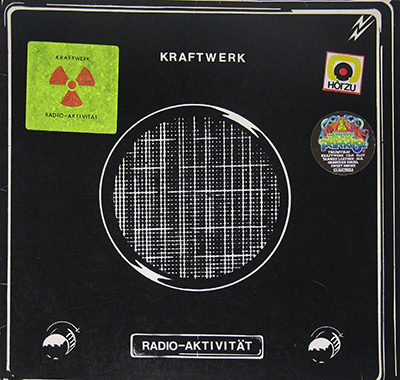
Under this partnership, several Pink Floyd albums were issued in West Germany with Hörzu branding. For example, Pink Floyd’s Atom Heart Mother (1970) was released as a limited “Hörzu Edition” (catalog SHZE 297) via EMI-Electrola/Harvest. This edition, reportedly exclusive to Hörzu’s record club, featured the magazine’s logo on the inner gatefold and record label, indicating its special licensing status. In practice the vinyl and music were the same as the standard Harvest release, but the Hörzu logo signified a collaborative marketing effort. Similarly, German pressings of some Kraftwerk records carried the Hörzu mark due to Kling Klang/EMI’s licensing deals. Notably, Kraftwerk’s 1975 album Radio-Aktivität (Radio-Activity) was first issued in Germany with a small Hörzu logo sticker on the front cover (later pressings had the logo printed on the artwork). This co-branding reflected EMI Electrola’s distribution of the album, with Hörzu lending its name for added visibility. In short, the presence of the Hörzu logo on these Pink Floyd and Kraftwerk LPs stems from a unique publishing/licensing partnership: Hörzu acted as a special imprint or club edition under EMI’s umbrella, allowing popular albums to be marketed as exclusive Hörzu-branded releases in Germany.

Collectible Hörzu Pressings – Sound and Packaging

Label of Kraftwerk’s 1975 “Radio-Aktivität” German first pressing, co-branded with the Hörzu logo (right side) under Kling Klang/EMI.

Today, the Hörzu-branded pressings of Pink Floyd and Kraftwerk are highly valued by collectors for their rarity and distinctive features. In many cases these were early or limited German press runs – effectively “first pressings” – making them scarcer than standard editions. For example, the first Hörzu issue of Pink Floyd’s Atom Heart Mother came out in 1970 before later German re-pressings dropped the Hörzu logo, so the Hörzu-marked version is a sought-after variant. Likewise, the initial batch of Kraftwerk’s Radio-Aktivität included a special Hörzu sticker on the sleeve and even a sheet of 16 stickers (one intended to be affixed as the Hörzu logo on the cover) – unique extras not found with later pressings. Such packaging novelties (e.g. sticker inserts, unique catalog numbers like the “SHZE” series) add to collectability.

Collectors also prize Hörzu releases for their excellent audio quality and occasional exclusive mixes. German EMI pressings of the era were well-regarded, and Hörzu editions are often considered audiophile-grade. A famous example is the German Hörzu edition of the Beatles’ Magical Mystery Tour, which featured true stereo mixes and “exceptionally clear, punchy sound” – demonstrating the high production standards. In the case of Pink Floyd and Kraftwerk, the Hörzu vinyl was pressed by EMI Electrola, ensuring top-notch fidelity. Some Hörzu pressings even offered special audio formats: for instance, a rare Hörzu/EMI quadraphonic LP of Atom Heart Mother was released in the early 1970s . Moreover, packaging quality was superior to many contemporaneous releases – one collector notes that a German Hörzu LP came with “much better” sound and “top notch” packaging (such as plastic-lined inner sleeves) compared to the regular version {index=12}. All these factors – limited availability, unique logos/packaging, and, at times, better sound or mixes – make the Hörzu pressings of Pink Floyd and Kraftwerk albums especially desirable. They represent a distinctive crossover of music and media, where a popular magazine’s imprint on an LP signals a collectible piece of rock history with often outstanding sonic and visual qualities.

HÖR ZU / HÖRZU: The Tiny Space That Drives Collectors Insane

From a 1946 radio guide to a logo on legendary 60s German vinyl labels

HÖRZU started life on 11 December 1946 as “HÖR ZU! Die Rundfunkzeitung”, launched by Axel Springer in the British occupation zone. The two-word branding (often seen as HÖR ZU) stayed in play until around 1972, when the name tightened into “Hörzu/HÖRZU”. Mecki, the hedgehog mascot, actually shows up much earlier (first cover appearance: October 1949). For vinyl nerds: Hörzu is also tied to record releases from the 1960s, and the split “HÖR ZU” mark is famously associated with German Beatles pressings like “Die Beatles” (HZE 117).

“Hör zu” is just German for “listen” — literally “hear (and) to,” but the natural English meaning is “Listen!” or “Listen up.” It’s the informal imperative (the “du” form), so it sounds direct and friendly, like someone nudging you in the ribs before telling you something worth catching. The “ö” matters too: “hör” comes from “hören” (to hear), and with the space it reads like a spoken command, not a brand. Turn it into one word (“Hörzu/HÖRZU”) and it stops being an instruction and becomes a proper name — same vibe shift as “listen to this” becoming “ListenToThis™,” but with better typography.

Around 1972 the magazine’s spelling shifts from “Hör Zu!” to “Hörzu” (one word), which turns it from an actual command (“Listen!”) into a proper brand name you can slap on a masthead, ad, spine, and (yep) record labels without awkward spacing/punctuation drama. That timing also lines up with Hörzu’s bigger mid/late-60s push to look more “TV-age” (more visual, bigger headlines/photos, modernized layout), so tightening the logo into a single compact wordmark is exactly the kind of design decision publishers make when they’re updating the whole package.

  • 11 Dec 1946: First issue as “HÖR ZU! Die Rundfunkzeitung” (Axel Springer, British zone).
  • Oct 1949: Mecki appears on the cover as the magazine mascot.
  • c. 1972: Branding commonly shifts away from “HÖR ZU!” toward “Hörzu/HÖRZU” (two words to one).
  • 2013: Axel Springer agrees to sell Hörzu (and other magazines) to Funke Mediengruppe.
  • Vinyl hook: “Die Beatles” (HZE 117, 1964) is documented as a German HÖR ZU release; collector references describe the red label with the white rectangular HÖR ZU logo.

Index of _NAME_ Album Cover Gallery & 12" Vinyl LP Discography Information

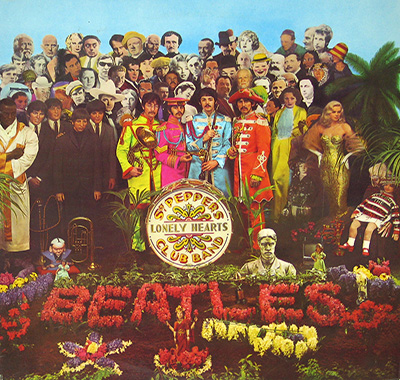
THE BEATLES - Sgt Pepper's Lonely Hearts Club Band album front cover vinyl LP album https://vinyl-records.nl

The Beatles' wild 1967 mind-bender: gatefold art, cut-outs, studio sorcery

THE BEATLES - Sgt Pepper's Lonely Hearts Club Band

"Sgt. Pepper's Lonely Hearts Club Band" is The Beatles at their most psychedelic and fearless: a kaleidoscopic concept-LP where the studio becomes an instrument and the whole era seems to leak out of the speakers. This German Horzu edition leans into the collectible glory, with the original custom cut-outs insert and the iconic gatefold cover photo by Michael Cooper. Part of a set of 4 European releases collectors love to compare.

Sgt Pepper's Lonely Hearts Club Band (German Hörzu Release)
KRAFTWERK - Radio-Aktivität album front cover vinyl LP album https://vinyl-records.nl

The 1975 Kraftwerk LP that turned radio waves into pure sci-fi pop hypnosis

KRAFTWERK - Radio-Aktivität

"Radio-Aktivität" by KRAFTWERK is a pioneering 1970s electronic landmark, captured here as a 1975 Horzu/Kling-Klang 12" vinyl LP. Minimal, machine-cool, and weirdly emotional, it’s the sound of modern life tuning in: clean pulses, crisp melodies, and that unmistakable German futurism that still feels ahead of us.

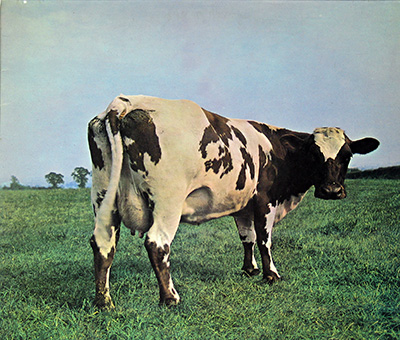
PINK FLOYD - Atom Heart Mother (HorZu Limited Edition) album front cover vinyl LP album https://vinyl-records.nl

The secret-club 1970 Pink Floyd gatefold: minimalist cow cover, maximal prog mood

PINK FLOYD - Atom Heart Mother (HÖRZU Limited Edition)

Pink Floyd’s "Atom Heart Mother" in this 1970 German HÖRZU club-only limited edition is pure collector bait: a minimalist sleeve with no band/album text, the HÖRZU logo tucked inside, and that gatefold vibe that screams “you had to be there.” Musically it’s peak early-’70s prog ambition—big, bold, and gloriously weird on 12" vinyl.

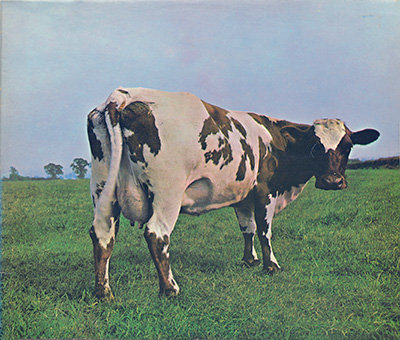
PINK FLOYD - Atom Heart Mother (Germany HÖRZU) album front cover vinyl LP album https://vinyl-records.nl

The German “HÖRZU” detail-nerd edition: logo inside, missing on the label—collector chaos

PINK FLOYD - Atom Heart Mother (Germany HÖRZU)

This is the 1970 German second release of Pink Floyd’s "Atom Heart Mother" tied to HÖRZU: the HÖRZU logo shows up on the inside cover, but weirdly disappears from the record label. That tiny mismatch is exactly the kind of detail collectors obsess over. Same big, ambitious prog trip—just with a sharper “spot the difference” twist on the packaging.