SAVAGE ROSE – In The Plain
- A Portrait That Sounds Like the Music
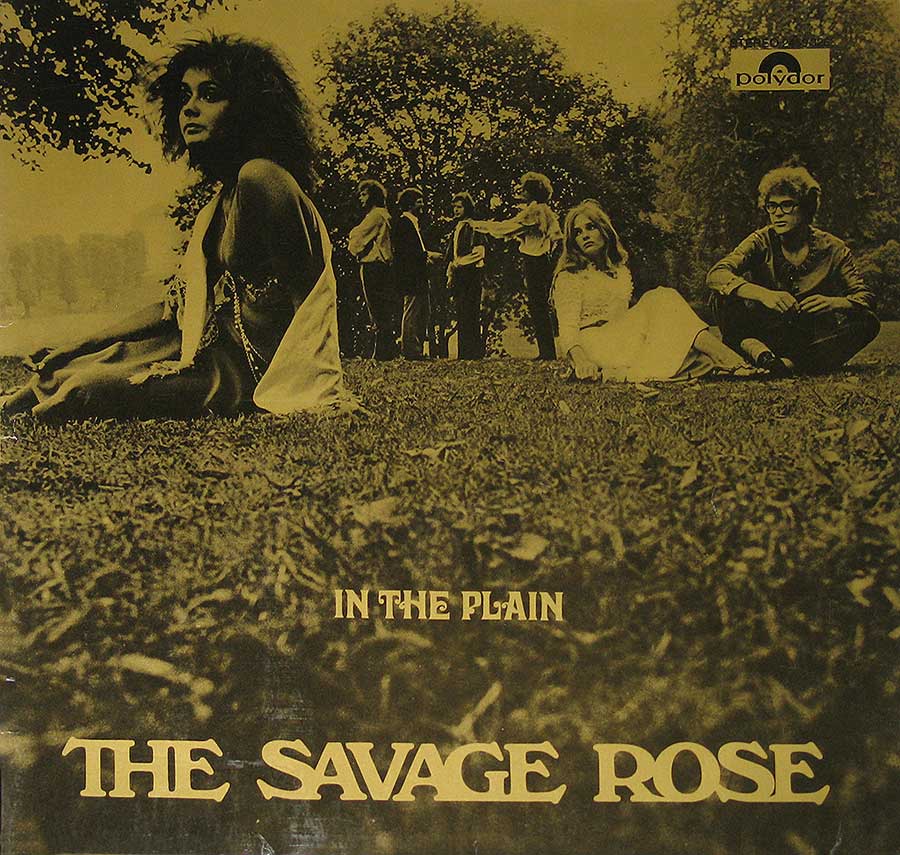
The album cover of Savage Rose’s In The Plain feels less like a band photo and more like an accidental mirror of the music itself. Annisette sits in the foreground, quietly radiating the same raw, emotional power she brings to the vocals — present, vulnerable, and unmistakably central. Just behind her, Thomas appears in that subtle middle ground, close enough to signal a deep creative bond but far enough to avoid any staged sentiment. Their positioning reflects exactly how the music works: her voice out front, his compositions shaping the air around it.
Behind them, the rest of the band stands in a looser, softer formation, echoing the layered textures that fill the record. The natural light, the asymmetry, the relaxed outdoor setting — all of it draws straight from late-60s environmental portraiture, a style that pretends to be spontaneous while secretly arranging emotional depth through distance and perspective. What emerges is a quiet, cinematic tableau that captures the band’s hierarchy, their chemistry, and their sonic identity without a single posed smile.
In one frame, the photograph tells the same story the album tells across its grooves: layered, human, intimate, and driven by the creative axis between Annisette and Thomas.
SAVAGE ROSE – In The Plain High Resolution & Quality Photos
Front Cover Photo Of SAVAGE ROSE – In The Plain
---
Note: The images on this page are photos of the actual album. Slight differences in color may exist due to the use of the camera's flash. Images can be zoomed in/out ( eg pinch with your fingers on a tablet or smartphone )
Annisette sits in the foreground as if someone caught her in a private moment. She isn’t posing; she’s inhabiting the same emotional space the songs live in — vulnerable, soulful, slightly detached from the noise of the world. This is exactly how her voice works in the music: out front, unfiltered, carrying all the rawness without a hint of theatrics. Her posture mirrors the fragility and intensity she brings to the album. She’s turned slightly away, but not withdrawn. More like she’s letting you witness a feeling without handing it to you on a tray. That choice alone tells you this band wasn’t trying to be idols; they were trying to be true.
Right behind her sits Thomas, and this is where the photography turns into storytelling. He’s close enough to signal connection, but far enough to avoid anything staged or sentimental. He’s the composer, the architect of the sound — the person who builds the emotional atmosphere that Annisette pours herself into. The photo catches them in that exact relationship: her in the emotional spotlight, him in the creative shadow right behind her, like the music itself. Their angles echo each other, running along that subtle diagonal line photographers use when they want your eye to travel between two people without stopping. It’s basically visual shorthand for “these two share a wavelength deeper than words.”
And then, further back, almost suspended in the haze of daylight, stands the rest of the band. They’re part of the same world, but on a different plane — exactly how the album layers its sound. You get the intimate, trembling vocals up front; the core melodic and harmonic ideas right behind; and then the communal, swirling textures of the ensemble surrounding it all. That depth-of-field composition — foreground, midground, background — is doing the same job as the music’s arrangement. It’s building an emotional hierarchy without saying a single literal thing.
From a photography perspective, this is textbook late-60s environmental portraiture mixed with documentary staging that only pretends to be effortless. It’s shot outdoors in soft Scandinavian daylight, giving every face an even, gentle tone. No studio lights, no dramatic shadows, nothing artificial. Just natural light wrapping around a group of musicians who look like they were interrupted mid-conversation. The photographer uses asymmetry on purpose — no perfect lines, no geometric balance, no synchronized posing — because asymmetry reads as human, imperfect, real. And real is exactly what the band wanted to project.
The grass, the casual clothing, the open air — all of it taps into that era’s obsession with authenticity and communal identity. But the real magic is in how the depth is structured. You’ve got:
• the emotional point of the music in the foreground
• the creative engine in the middle
• the collective sound in the background
That’s not randomness. That’s composition doing character development.
It’s also using a very sneaky technique borrowed from European art-film cinematography: the “tiered intimacy” shot. The viewer is pulled layer by layer into a small social universe, reading relationships through space instead of facial expression. It’s the same trick filmmakers used to suggest who mattered most in a story without a single line of dialogue.
So what you’re seeing on the cover isn’t just a band photo. It’s a visual mirror of how Savage Rose sounded at that point in their history — layered, human, slightly mystical, emotionally raw, and built around two people who were already moving in sync long before their personal lives caught up with their artistic chemistry. The album plays like an intimate conversation stretched across a landscape. The cover looks exactly the same.
That’s why this photo sits so deeply with me: it isn’t trying to sell you Savage Rose. It’s trying to let you feel them before the first note even hits.
The Early Savage Rose: Family Ties, Fierce Voices, and Vinyl That Still Hits Hard
Savage Rose has always been one of those bands where the music tells the story faster than any biography. The group formed in 1967, and the creative pulse came straight from Thomas and Anders Koppel. Their combination of classical training, raw experimentation, and absolute conviction is what shaped the band’s entire identity.
Thomas was the main architect of that early sound. His piano work and compositions gave the band its emotional core, while Anders handled organ, percussion, and the unusual textures that helped Savage Rose stand out in the late-60s psychedelic scene. They didn’t do it alone, though — the original lineup included several other musicians whose playing gave those first albums their depth.
Before things shifted, Thomas was married to Ilse Maria Lanser (later known as Ilse Maria Koppel). She contributed to the band’s early recordings, adding subtle but important colors like harpsichord and vocal layers. These details are exactly what pull me back into the vinyl sleeves again and again, especially when comparing early Polydor pressings.
From the very beginning, the unmistakable voice at the front was Annisette Hansen. She didn’t arrive later — she was part of the initial formation, and her voice was the emotional spearhead of everything Savage Rose recorded. That mix of vulnerability and attack gave the band its identity long before any personal relationships developed behind the scenes.
Over time, the creative bond between Thomas and Annisette grew into a personal partnership, and they eventually married. That connection kept the heart of Savage Rose remarkably stable across decades, even as lineups shifted and the musical landscape changed. Their shared artistic drive is a big part of why the band’s early catalog still feels so focused and fearless.
Albums like “In the Plain” (1968, their second studio record) and “Refugee” (1971, their fifth) show exactly how quickly the band evolved. The blend of psychedelic rock, folk, classical influences, and gospel energy makes these records a joy to handle as a collector. Every pressing variation — Polydor layouts, RCA Victor label fonts, dead-wax etchings — adds another layer to the story.
Whenever I study those sleeves and spin those records, it becomes clear how tightly the band’s personal history is woven into its sound. The family connections, the lineup changes, the push toward new musical territory — it all reinforces why Savage Rose remains one of Denmark’s most distinctive contributions to late-60s and early-70s rock.
Thomas Koppel
Co-founder, pianist, composer. Married first to Ilse Maria, later to Annisette.
Ilse Maria Koppel
Early contributor (harpsichord, vocals). First wife of Thomas.
Ilse Maria Koppel → Ilse Maria Lanser
Annisette Koppel
Lead vocalist and founding member. Later married Thomas.
"Anisette always sparks the same memory for me: a tiny bar in Marseille where the bartender swore it was “sunshine in a glass.” The drink was so sweet and perfumed it felt like liquefied licorice candy, and the locals tossed it back effortlessly. Every sip came with a lecture about tradition, pride, and how people like me never fully understand it."
Annisette Koppel → Annisette Hansen
Polydor 2459 326 , 1969 , Germany
Savage Rose - In The Plain
"In The Plain" drops into that dreamy zone where acid-psych meets chamber-like drama, with Annisette driving the whole thing using vocals that feel one breath away from combustion. The Koppel brothers lock in those haunting melodic lines that make the album feel both raw and strangely elegant. A standout Polydor issue that still hits harder than most late-60s psych releases.
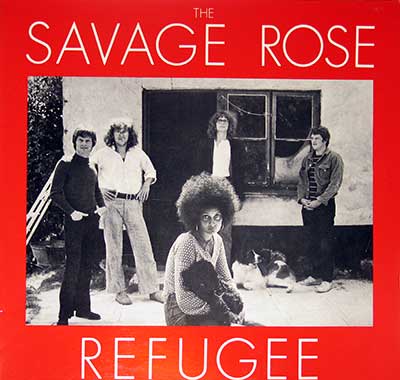
Gregar Records / RCA Victor LSP-10353 / ATRS-5847 , Germany
Savage Rose - Refugee
"Refugee" is the fifth studio album by Danish Acid/Psych Prog Rock band Savage Rose, released in 1971. The record expands their dramatic sound with more elaborate arrangements and intense vocal work, marking a pivotal moment in their early catalogue.